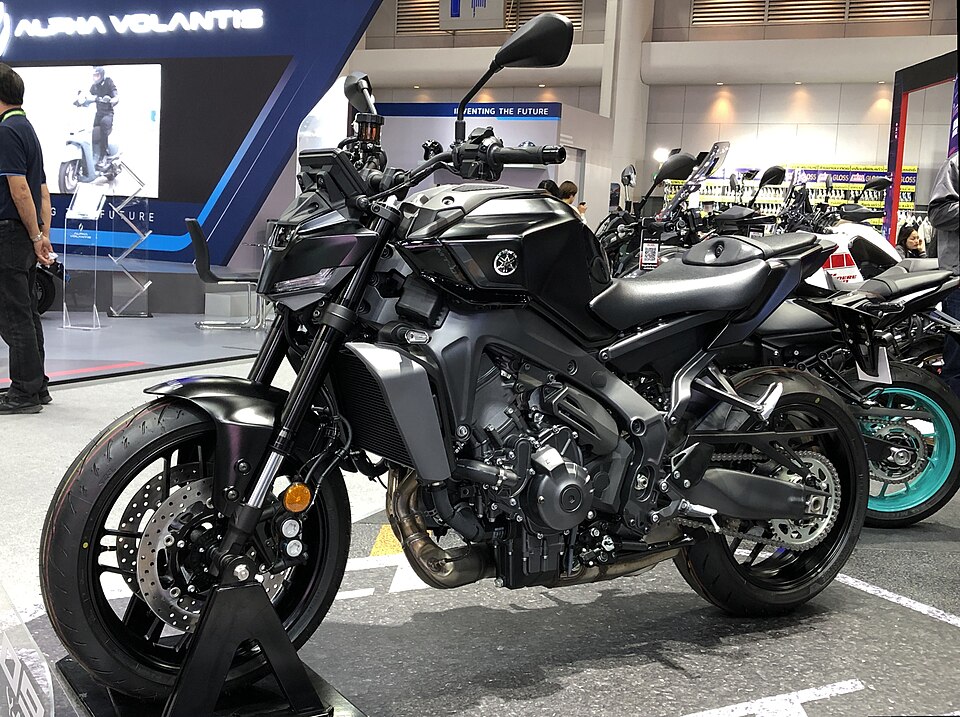
Some motorcycles want to be admired. The MT-09 just wants to misbehave. Yamaha’s middleweight naked has spent years perfecting the art of the cheeky, wheelie-happy hooligan, and the latest version refines that recipe without sanding off its edges. It is the bike that reminds you why you got your licence in the first place — an antidote to sensible, delivered with a grin.
What makes it so beguiling is that all this mischief comes wrapped in a genuinely usable everyday machine. Light, torquey and keenly priced, the MT-09 slots into a commute as happily as it terrorises a mountain road, and that breadth is exactly why it has become one of the best-selling nakeds on the planet.
The CP3 triple: master of midrange
At the core sits the 890 cc CP3 inline-triple, and it is one of the great engines at any price. With 117 hp and a thick 93 Nm of torque arriving low in the rev range, it fires the MT out of corners with a surge that feels punchier than the numbers suggest. The crossplane crank hands it a hard-edged, slightly unhinged growl that no parallel-twin can imitate.
Roll the throttle open in the meat of the midrange and the front wheel skims skyward in the first two gears — the MT-09 is a natural-born wheelie machine, and the electronics let you decide how much of that you want. It is not the fastest thing here on paper, yet the way it deploys its performance makes it feel gloriously, addictively rapid on any real road.
Every few years the adventure-bike class convinces itself that the answer to “go anywhere” is a bigger engine, another screen, and one more menu of ride modes than anyone will ever cycle through in the dirt. Yamaha looked at that arms race, shrugged, and kept building the Ténéré 700 almost exactly as it always has. In 2026, that stubbornness looks less like nostalgia and more like the smartest engineering decision in the segment.
This is a bike that still measures success in kilos and Newton-metres rather than menus and megabytes, and against a field of rivals that have grown heavier, pricier and more electronically dense with every generation, that restraint has aged brilliantly. We got back on the T7 to see whether the formula still holds up in 2026 — and whether simple is still a compliment once you have ridden everything else in the class.
What actually changed for 2026
The honest answer is: almost nothing, and Yamaha would probably take that as a compliment. There is no bigger engine, no new dash, no sudden electronics overhaul. What you get is a fresh colourway or two and some detail running changes under the skin, riding on the same basic recipe Yamaha nailed at launch and has had the discipline to leave alone ever since.
That is not laziness, it is confidence. Where rivals feel obligated to reinvent themselves every couple of years to justify a new brochure, Yamaha has let the World Raid and Extreme variants soak up the extra kit — bigger tanks, crash protection, rally-spec suspension — while the standard Ténéré 700 stays the accessible, unfussy entry point into the family. For 2026 it remains exactly what made it a cult hit in the first place: a proper rally bike you can actually afford and actually live with.
The CP2 twin: still the whole point
Strip away the badge and the Ténéré’s 689 cc CP2 parallel-twin is the reason none of the rest matters much. It makes a modest-on-paper 72 hp, but the figure that actually shapes the riding experience is 68 Nm of torque arriving at just 6,500 rpm, and Yamaha’s crossplane crank gives it a lumpy, characterful pulse that feels closer to a big single than a conventional twin.
On a technical trail that translates into something rarer than horsepower: trust. You can meter the throttle over rocks and roots without the engine snatching or stalling, and there is enough low-down shove to loft the front over a ledge without slipping the clutch to death. It will see 190 km/h if you are patient about it, but that has never been the point — this engine’s real talent is making difficult terrain feel unhurried, and it has built a reputation for shrugging off neglect that far more complex rival engines simply cannot match.
A rally chassis that still means it
The chassis is where the Ténéré 700 quietly embarrasses bikes costing twice as much. A slim, 21-inch-front tubular-steel frame, a fully adjustable 43 mm upside-down fork and a rally-honed riding position add up to a bike that feels like it was actually designed by people who race in the desert, rather than one dressed up to look like it was.
At 204 kg kerb weight, it is meaningfully lighter than most of the class, and that number matters more off-road than any spec sheet suggests. Picking the bike up after a low-speed tip-over, muscling it through a rutted climb, or simply standing on the pegs for hours at a time is a different experience entirely when there is not an extra 20 or 30 kg to manhandle — and it still holds a fast road line composed enough for the motorway blast between trailheads.
Where the simplicity costs you
None of this comes free, and Yamaha has never pretended otherwise. There is no cruise control on the standard bike, the electronics package amounts to switchable ABS and not much else, and the 16-litre tank is stingy next to adventure-touring rivals built around three-figure daily distances. Riders chasing radar-guided cruise control or cornering traction control should look elsewhere; the T7 simply does not offer it.
The seat is on the firm, tall side too, at 875 mm, and taller riders will get on with it far more easily than shorter ones. None of these are surprises to anyone who has followed the bike since launch, but they are worth stating plainly: this is a machine that asks you to want less kit in exchange for less weight, less cost and less to go wrong.
The Ténéré 700 has never tried to win the spec sheet. It has spent nearly a decade quietly winning the argument that matters more — the one about what an adventure bike is actually for.— Diego Marroquín
Who it's for
- Riders who want to properly explore off-road, not just look the part
- Anyone who values low weight and mechanical simplicity over gadgets
- Buyers priced out of premium adventure bikes who refuse to sacrifice real capability
- Taller riders comfortable with a tall, purposeful seat height
- Owners who would rather service a simple twin themselves than pay a dealer for a complex one
For the better part of a decade, asking which naked bike offers the best value in Britain has had a boring, one-word answer: Yamaha’s MT-07. It arrived in 2014 as a bit of a happy accident, a cheap parallel-twin wrapped in an unglamorous steel frame, and somehow became the default entry on almost every learner’s, commuter’s and downsizer’s shortlist. That is a remarkable run for any motorcycle to sustain, and reputations built that early tend to calcify into assumption rather than fact.
But assumption is exactly what I want to test here, because the naked-bike middleweight class in the UK has quietly become the most competitive corner of the entire market. Suzuki’s GSX-8S undercuts nothing and still manages to feel like the smarter buy on a spec sheet. Honda’s CB750 Hornet turned up with a genuinely thrilling engine and a badge that opens doors at resale. Kawasaki refreshed the Z650 rather than letting it fade quietly, and Triumph’s Trident 660 keeps sniping from the same price bracket with a triple that sounds better than anything else here. So does the MT-07 still deserve the crown, or has nostalgia been doing its marketing for it? I have ridden all of them back to back this year, and I have a clear answer.
The Rivals Have Actually Turned Up
Let’s give the competition its due, because for years the MT-07 barely had any. That is no longer true. The GSX-8S borrows a 776cc parallel twin from Suzuki’s own V-Strom, and it feels like a genuinely more sophisticated machine at a standstill: a proper TFT dash, a chassis that turns in with real precision, and a fit and finish that makes the Yamaha’s switchgear feel a generation older than it actually is. The Honda CB750 Hornet is sharper still. Its 755cc twin spins harder and more eagerly than either rival, and Honda has wrapped it in bodywork that looks like it costs more than it does. Kawasaki’s Z650, smaller in displacement but sharper than ever, undercuts everything here on price and remains a genuinely lovely, unintimidating first big bike. None of these are also-rans anymore. They are proper, considered motorcycles, and any one of them would make a perfectly sensible purchase.
This matters because the MT-07’s original pitch, that nothing else this cheap is this good, depended on a vacuum that no longer exists. The gap in outright competence has closed, and in a couple of isolated categories, like dash quality or braking feel, I think the newer bikes have actually nosed ahead. If this were purely a showroom beauty contest judged on spec sheets and first impressions, I am not sure the MT-07 wins anymore.
The Engine That Still Wins Arguments
Which is why the CP2 engine matters so much to this argument. Yamaha’s 689cc crossplane twin produces a relatively modest 73 hp, well down on the Hornet’s peak figure and a few horses shy of the GSX-8S, and on a spec sheet that looks like a weakness. Ride it, and it stops looking like one almost immediately. The 270-degree crank gives the motor an uneven, lumpy firing order that translates into real, chest-level torque from just above idle, with 67 Nm arriving at only 6,500 rpm, low enough that you rarely need to visit the upper half of the tacho at all. It pulls cleanly out of roundabouts in a gear too tall, shrugs off a pillion and a full tank, and never asks you to work for the fun the way a peakier engine sometimes does.
The Hornet’s engine is the more thrilling thing to rev out, and I will not pretend otherwise; it wants to be worked and rewards you when you do. But the MT-07’s motor is the one that is genuinely more usable on a wet Tuesday commute, and usability, not lap times, is what most owners are actually buying. There is also something the spec sheet cannot capture: character. The CP2 has a slightly agricultural, off-beat thump that makes even gentle riding feel eventful, and after eleven years on sale it remains one of the most likeable engines in motorcycling at any price, let alone this one.
Price Is Not the Whole Picture
On sticker price alone this class is closer than the reputations suggest; a few hundred pounds separates most of these bikes once you are actually stood in a UK dealership. But that is the wrong way to compare them, because the MT-07’s real advantage has never really been the RRP. It is everything that follows the purchase.
The middleweight naked class is where most riders actually live, and no two bikes define its extremes better than these. The Yamaha MT-09 is the people’s champion — loud, torquey, keenly priced and gloriously unhinged. The Triumph Street Triple 765 RS is the connoisseur’s choice — sharper, more expensive and dripping with the kind of hardware you normally find on machines costing far more. Both use a three-cylinder engine, both weigh a shade under 200 kg, and both will humble far pricier metal on a good road.
Yet they feel like they were designed by people who would never agree on lunch, let alone motorcycles. One is a hooligan in a leather jacket; the other is a scalpel in a tailored suit. That is exactly why this fight is so instructive — it forces you to decide what kind of rider you really are before a single kilometre is covered.
Engine character
Yamaha’s 890cc CP3 triple is a masterclass in low-end thump. With 117 hp and a fat 93 Nm arriving early, it surges out of corners like a much bigger bike, all guttural bark and effortless roll-on. It feels naughty at every throttle opening, positively daring you to loft the front. Triumph’s 765cc unit, derived directly from the Moto2 spec engine, chases a different high: 128 hp at a lofty 12,000 rpm, a screaming top end and a crispness that rewards riders who love to rev right to the redline.
In the real world the Yamaha feels faster in the mid-range and lazier to ride, happy to lug from any gear on a lazy Sunday. The Triumph asks you to work the gearbox and wring it out, then repays you with a sweeter, more musical delivery and a top-end shriek that borders on addictive. The MT-09 is the more relaxing daily engine; the Street Triple is the more thrilling one when the road opens up.
Chassis and handling
Here the price gap shows itself. The Street Triple RS arrives with fully adjustable Showa forks, an Öhlins STX40 rear shock, Brembo Stylema calipers and sticky Pirelli rubber — a genuine track-ready specification straight from the crate. It steers with delicious precision and holds a line as if bolted to a rail. The MT-09 uses more modest KYB suspension that, while much improved on recent models, can feel busy and under-damped when you truly attack a bumpy back road at pace.
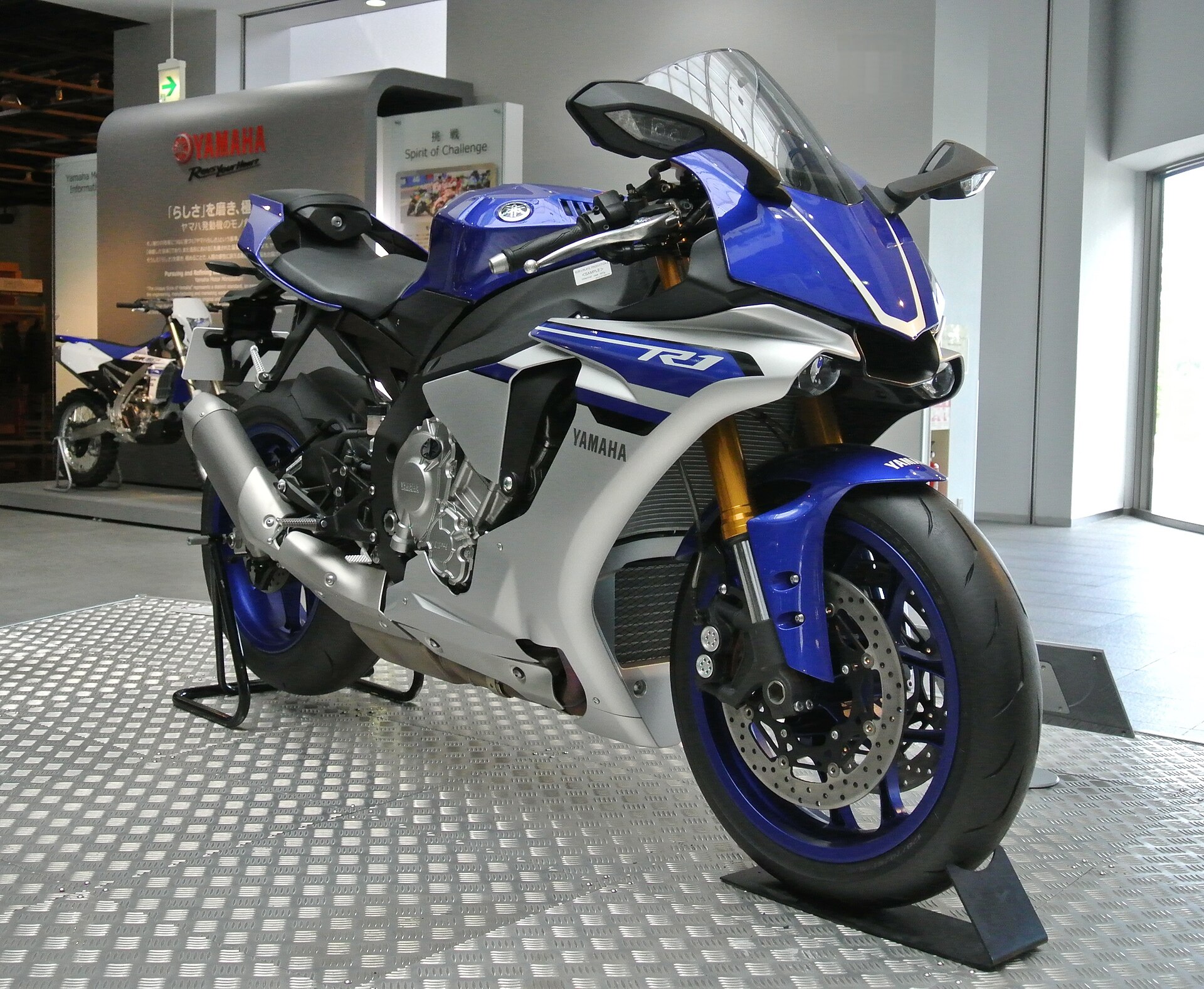
While European rivals chase ever-higher horsepower and ever-larger wings, two Japanese icons soldier on with quiet dignity. The Yamaha YZF-R1 and the Suzuki GSX-R1000R are the elder statesmen of the litre class — machines whose fundamental designs predate the current electronics arms race, yet which remain devastatingly capable and, crucially, attainable to riders who could never justify European exotica.
Both make around 200 hp, both have carried riders to world titles, and both offer a riding experience rooted in feel rather than gimmickry. The question is not whether they can still cut it — they emphatically can — but which of these old-guard warriors best rewards a rider today, in a world that increasingly prizes electronic wizardry over mechanical soul.
Engine and character
The R1’s crossplane inline-four is its signature. That uneven firing order gives it a burbling, V-twin-like snarl at low revs before it erupts into a banshee wail near the 13,500 rpm redline, producing roughly 200 hp. It feels connected and analogue, the throttle relaying grip information with rare honesty. The Suzuki’s 999.8cc engine takes a different route to a similar peak: 202 hp helped by a clever variable valve system that fattens the mid-range so it pulls hard from surprisingly low down.
On track the R1 feels more exotic and demands commitment near the redline, punishing the timid but rewarding the brave. The GSX-R1000R is the friendlier road engine, its broader torque curve and 118 Nm making it flexible and forgiving on real routes where you rarely see the top of the rev range. One rewards aggression; the other rewards patience. Both are gloriously, licence-threateningly fast.
Chassis and handling
Yamaha’s aluminium Deltabox frame and magnesium subframe make the R1 feel taut and razor-edged, happiest when hurled at an apex by a confident rider with clear intent. The GSX-R1000R answers with Suzuki’s balanced, planted chassis and superb Showa Balance Free forks that deliver remarkable feel over bumps. It is arguably the more forgiving, more communicative package on an imperfect surface, whereas the R1 is the sharper instrument in genuinely expert hands.
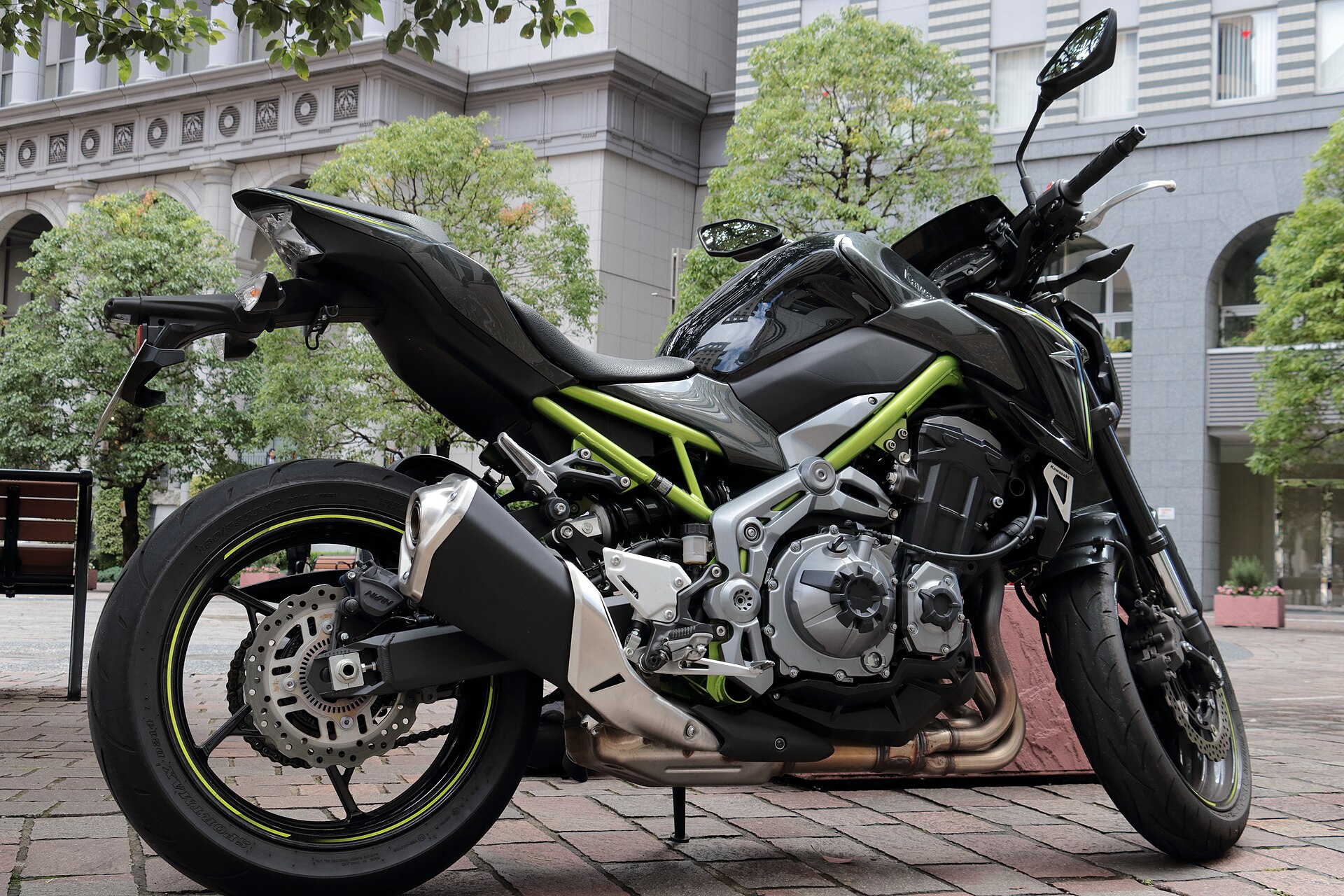
If the middleweight naked is the smart buyer’s sports bike, then the Kawasaki Z900 and Yamaha MT-09 are its two most popular graduates. Both hover around a hundred-and-twenty horsepower, both cost about the same as a modest hatchback, and both promise huge fun without the wrist-ache and insurance nightmares of a full superbike. Yet they go about it in wonderfully different ways, and choosing between them reveals a lot about the rider.
The Z900 is the smooth operator; the MT-09 is the wild child. It comes down to whether you prefer the silky sweep of an inline-four or the torque-drunk shove of a triple — a decision as much about temperament as performance.
Engine and delivery
Kawasaki’s 948cc inline-four is a paragon of refinement. Producing 125 hp and 98.6 Nm, it delivers its power in a long, linear, buttery surge that never feels intimidating and sings a classic four-cylinder note as the revs climb. It is the more sophisticated engine, happy to trickle through traffic or scream toward its redline with equal grace. The MT-09’s 890cc CP3 triple is the extrovert: 117 hp but a punchier, earlier hit of torque that lifts the front wheel and demands you hold on tight.
In the numbers game the Kawasaki has more peak power, but the Yamaha feels faster and more mischievous below 7,000 rpm, which is exactly where most road riding actually happens. The Z900 is the better engine for smoothness and gentle touring; the MT-09 is the better engine for grins, wheelies and general hooliganism. Both, refreshingly, are easy to live with day to day.
Chassis and weight
Weight is the MT-09’s ace. At around 193 kg it is noticeably lighter than the roughly 212 kg Z900, and you feel that 19-kilo gap in every direction change and every tight car park. The Yamaha flicks from side to side with playful ease, while the Kawasaki feels more substantial and planted — reassuring at speed but harder work through a series of tight switchbacks. Both use adjustable suspension that has improved markedly with each generation.