For the better part of a decade, asking which naked bike offers the best value in Britain has had a boring, one-word answer: Yamaha’s MT-07. It arrived in 2014 as a bit of a happy accident, a cheap parallel-twin wrapped in an unglamorous steel frame, and somehow became the default entry on almost every learner’s, commuter’s and downsizer’s shortlist. That is a remarkable run for any motorcycle to sustain, and reputations built that early tend to calcify into assumption rather than fact.
But assumption is exactly what I want to test here, because the naked-bike middleweight class in the UK has quietly become the most competitive corner of the entire market. Suzuki’s GSX-8S undercuts nothing and still manages to feel like the smarter buy on a spec sheet. Honda’s CB750 Hornet turned up with a genuinely thrilling engine and a badge that opens doors at resale. Kawasaki refreshed the Z650 rather than letting it fade quietly, and Triumph’s Trident 660 keeps sniping from the same price bracket with a triple that sounds better than anything else here. So does the MT-07 still deserve the crown, or has nostalgia been doing its marketing for it? I have ridden all of them back to back this year, and I have a clear answer.
The Rivals Have Actually Turned Up
Let’s give the competition its due, because for years the MT-07 barely had any. That is no longer true. The GSX-8S borrows a 776cc parallel twin from Suzuki’s own V-Strom, and it feels like a genuinely more sophisticated machine at a standstill: a proper TFT dash, a chassis that turns in with real precision, and a fit and finish that makes the Yamaha’s switchgear feel a generation older than it actually is. The Honda CB750 Hornet is sharper still. Its 755cc twin spins harder and more eagerly than either rival, and Honda has wrapped it in bodywork that looks like it costs more than it does. Kawasaki’s Z650, smaller in displacement but sharper than ever, undercuts everything here on price and remains a genuinely lovely, unintimidating first big bike. None of these are also-rans anymore. They are proper, considered motorcycles, and any one of them would make a perfectly sensible purchase.
This matters because the MT-07’s original pitch, that nothing else this cheap is this good, depended on a vacuum that no longer exists. The gap in outright competence has closed, and in a couple of isolated categories, like dash quality or braking feel, I think the newer bikes have actually nosed ahead. If this were purely a showroom beauty contest judged on spec sheets and first impressions, I am not sure the MT-07 wins anymore.
The Engine That Still Wins Arguments
Which is why the CP2 engine matters so much to this argument. Yamaha’s 689cc crossplane twin produces a relatively modest 73 hp, well down on the Hornet’s peak figure and a few horses shy of the GSX-8S, and on a spec sheet that looks like a weakness. Ride it, and it stops looking like one almost immediately. The 270-degree crank gives the motor an uneven, lumpy firing order that translates into real, chest-level torque from just above idle, with 67 Nm arriving at only 6,500 rpm, low enough that you rarely need to visit the upper half of the tacho at all. It pulls cleanly out of roundabouts in a gear too tall, shrugs off a pillion and a full tank, and never asks you to work for the fun the way a peakier engine sometimes does.
The Hornet’s engine is the more thrilling thing to rev out, and I will not pretend otherwise; it wants to be worked and rewards you when you do. But the MT-07’s motor is the one that is genuinely more usable on a wet Tuesday commute, and usability, not lap times, is what most owners are actually buying. There is also something the spec sheet cannot capture: character. The CP2 has a slightly agricultural, off-beat thump that makes even gentle riding feel eventful, and after eleven years on sale it remains one of the most likeable engines in motorcycling at any price, let alone this one.
Price Is Not the Whole Picture
On sticker price alone this class is closer than the reputations suggest; a few hundred pounds separates most of these bikes once you are actually stood in a UK dealership. But that is the wrong way to compare them, because the MT-07’s real advantage has never really been the RRP. It is everything that follows the purchase.
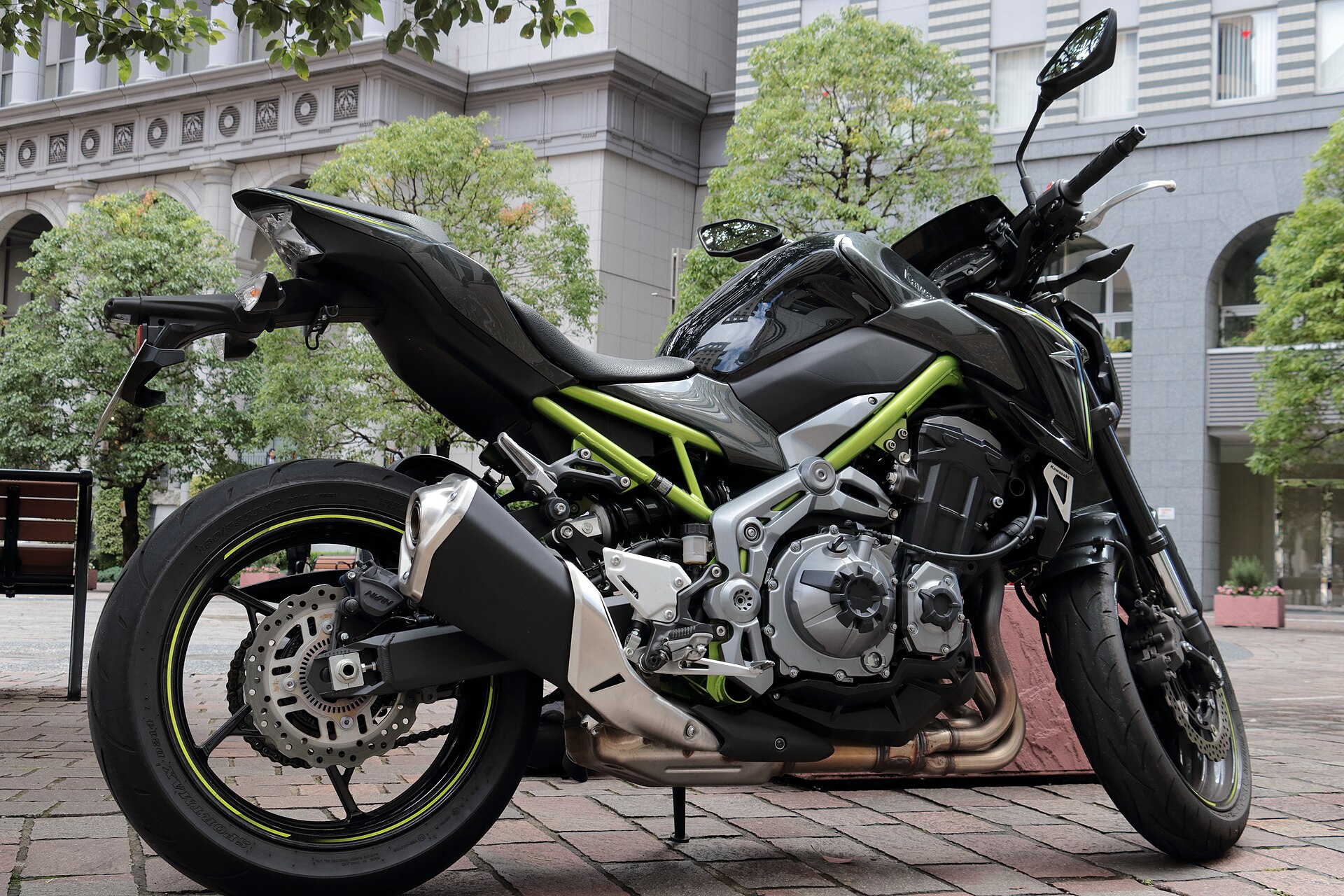
In an era when middleweight nakeds increasingly lean on twins and triples to hit a price, Kawasaki has quietly kept faith with the inline-four — and the Z900 is all the better for it. Here is a machine that delivers the creamy, revvy character of a four-cylinder engine, dresses it in menacing Sugomi bodywork, and asks a price that undercuts almost everything with comparable performance.
The result is one of motorcycling’s great value propositions. The Z900 does not chase headlines with radar cruise or carbon wheels; it simply nails the fundamentals of a fast, smooth, good-looking street bike, then leaves change in your pocket. For a huge swathe of riders, that is exactly the right set of priorities.
The joy of an inline-four
The 948 cc four is the heart of the appeal. Producing 125 hp and 99 Nm, it serves up the smooth, linear delivery that only a four can, spinning freely and cleanly to a soundtrack that hardens into a proper metallic snarl near the top of the rev range. There is enough midrange to make it flexible in town and enough top-end fizz to reward a hard ride.
It is not the torque monster that a big twin is, so you work the gearbox a little more to keep it on the boil, but that is part of the charm — the Z900 encourages you to ride it, to chase revs and hunt gears. A 3.5-second sprint to 100 km/h and a 240 km/h top end confirm there is nothing sluggish about this bargain.
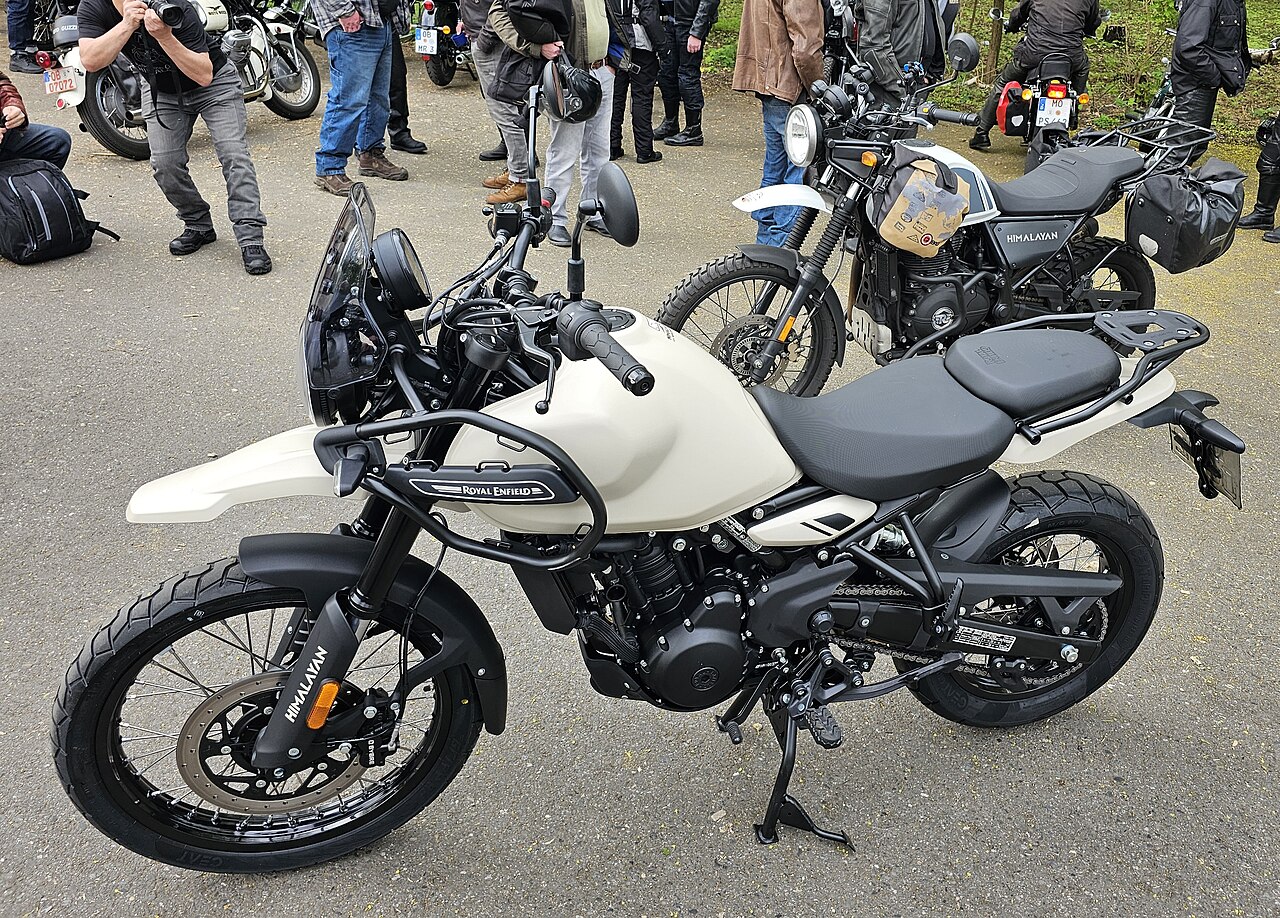
Adventure motorcycling has quietly become an expensive habit, with flagship machines now costing as much as a small car and weighing nearly as much too. The Himalayan 450 is Royal Enfield’s cheerful rebuttal. Here is a genuinely capable adventure bike, built to tackle the world’s roughest roads, that costs less than the accessory catalogue of some of its rivals — and it is all the more likeable for it.
This is not the crude, underpowered Himalayan of old, either. The 450 is a comprehensive reinvention, built around an all-new engine and chassis, and it transforms the bike from a charming budget curio into a serious, modern proposition. For new adventurers and hard-up dreamers alike, it changes the conversation entirely.
The Sherpa engine: modest but eager
The new liquid-cooled 452 cc single, named Sherpa, is the making of this bike. Producing a genuine 40 hp and 40 Nm, it is willing, flexible and far more refined than the old air-cooled lump it replaces. It pulls cleanly from low revs — ideal for picking a line up a rocky climb — and revs out with real enthusiasm when you want to make progress on a flowing back road.
This is not a fast motorcycle in outright terms, cracking 100 km/h in a leisurely 6.9 seconds and topping out around 150 km/h. There is some vibration high in the rev range, and sustained motorway cruising is not its forte. But for the winding, unhurried, exploratory riding this bike was built for, the Sherpa has exactly the right character and just enough power.
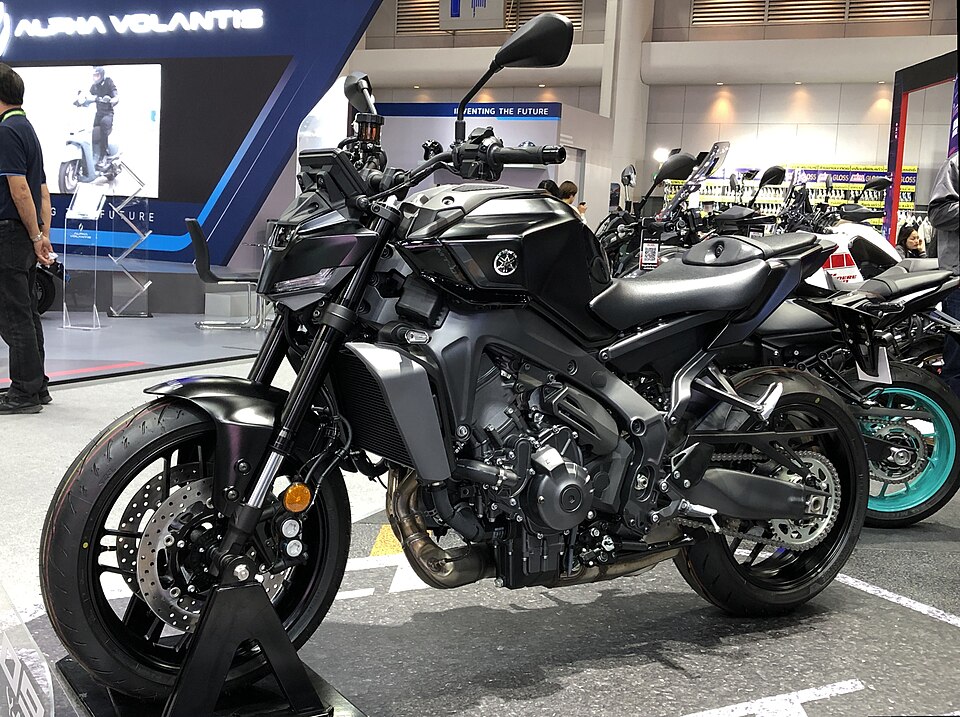
If the middleweight naked is the smart buyer’s sports bike, then the Kawasaki Z900 and Yamaha MT-09 are its two most popular graduates. Both hover around a hundred-and-twenty horsepower, both cost about the same as a modest hatchback, and both promise huge fun without the wrist-ache and insurance nightmares of a full superbike. Yet they go about it in wonderfully different ways, and choosing between them reveals a lot about the rider.
The Z900 is the smooth operator; the MT-09 is the wild child. It comes down to whether you prefer the silky sweep of an inline-four or the torque-drunk shove of a triple — a decision as much about temperament as performance.
Engine and delivery
Kawasaki’s 948cc inline-four is a paragon of refinement. Producing 125 hp and 98.6 Nm, it delivers its power in a long, linear, buttery surge that never feels intimidating and sings a classic four-cylinder note as the revs climb. It is the more sophisticated engine, happy to trickle through traffic or scream toward its redline with equal grace. The MT-09’s 890cc CP3 triple is the extrovert: 117 hp but a punchier, earlier hit of torque that lifts the front wheel and demands you hold on tight.
In the numbers game the Kawasaki has more peak power, but the Yamaha feels faster and more mischievous below 7,000 rpm, which is exactly where most road riding actually happens. The Z900 is the better engine for smoothness and gentle touring; the MT-09 is the better engine for grins, wheelies and general hooliganism. Both, refreshingly, are easy to live with day to day.
Chassis and weight
Weight is the MT-09’s ace. At around 193 kg it is noticeably lighter than the roughly 212 kg Z900, and you feel that 19-kilo gap in every direction change and every tight car park. The Yamaha flicks from side to side with playful ease, while the Kawasaki feels more substantial and planted — reassuring at speed but harder work through a series of tight switchbacks. Both use adjustable suspension that has improved markedly with each generation.
Every learner rider in Australia has stood in a dealership doing the exact same piece of mental arithmetic: this bike costs three or four thousand dollars less than that one, so it must be the smarter buy. I have watched a lot of new riders make that call over the past few years, and I have watched an uncomfortable number of them make it twice — because the cheap bike they bought to save money turned out to be the single most expensive motorcycle they will ever own.
That is not a typo. The cheapest LAMS-legal bike on the showroom floor is very often the one that costs the most once you tally up what actually happens to it over two or three years of ownership: the resale value that quietly evaporates, the maintenance bills that shouldn’t exist on a bike this young, and the near-certainty that you will be trading it in for something bigger before your restriction is even close to lifting. Buying cheap on a learner bike rarely saves you money. It mostly just delays the bill, with interest.
The Sticker Price Is a Trap
Australia’s Learner Approved Motorcycle Scheme exists for good reason — it keeps new riders off machines that could genuinely hurt them, using a power-to-weight cap of roughly 150kW per tonne to decide what qualifies. What the scheme does not police is build quality, parts availability or how gracefully a bike ages, and that gap is exactly where the bargain end of the market lives. A sub-$6,000 single-cylinder learner special and a properly engineered 650 or 660 twin can both wear a LAMS sticker and sit on the same dealership floor, and on a finance calculator they look like two versions of the same decision. They are not.
The cheap end of that list is dominated by small-capacity machines built to hit a price point rather than a standard. Budget suspension that never improves no matter how many clicks you turn, switchgear that starts to rattle within a year, fasteners and finishes that corrode faster than they should, and a thin dealer network that may not stock parts locally because import volumes are too small to justify it. None of that shows up on the spec sheet in the brochure. All of it shows up on your second or third service invoice, usually right when you can least afford the surprise.
Why Cheap LAMS Bikes Lose Their Shirt at Resale
Resale is where the maths really turns against the bargain bike. Every learner in the country is shopping the same handful of cheap models for the same reason — the lowest number on the windscreen — which means the secondhand market for them is permanently flooded with near-identical bikes, all listed by riders trying to move on the moment their twelve months of restriction feel over. Buyers know this. They also know these bikes were bought to be cheap rather than kept, and they negotiate accordingly. You are not selling a motorcycle; you are competing with everyone else who bought the same one, trying to sell it in the same narrow window.
Compare that against something like the Kawasaki Z650 or Yamaha MT-07. Both sit toward the pricier end of the LAMS bracket, both are proven, long-running models with a decade of reputation behind them, and both attract buyers well beyond the learner segment — riders coming off their restriction who want to keep the exact bike they are already riding, not just newcomers hunting for the cheapest way onto the road. A wider, more willing pool of buyers at resale time is worth far more to your bank balance than the few thousand dollars you saved walking in the door, and it shows up every time one changes hands.
The Bike You Outgrow Is the Bike You Buy Twice
The second, quieter cost of the cheap option is that you outgrow it embarrassingly fast. A restricted single that already feels breathless merging onto the highway on day one is not going to feel more capable in month ten, once your skills, your confidence and your commute have all grown past whatever it can offer. I meet riders constantly who bought the cheapest thing on the lot, spent a year wishing it had another gear’s worth of overtaking urge, and then sold at a loss to finally buy the bike they wanted from the very start.
That is buying a motorcycle twice, and Australia’s transfer costs make sure you feel every part of it. Stamp duty on the transfer, fresh registration and CTP, a new insurance policy set up from scratch, and very likely a trade-in offer that reflects exactly how many other learners are offloading the same cheap model that same month. None of that is optional, and none of it appears in the finance calculator when you are standing in the showroom chasing the lowest figure on the sticker.
What "buying twice" really costs you
- Stamp duty and transfer fees, paid a second time in full on the replacement bike.
- A trade-in or private-sale price dragged down by every other learner selling the same cheap model that month.
- A second round of insurance setup, often landing on a worse premium than your first policy.
- Months of riding confidence lost while you nurse a bike that already feels behind you.
- Dealer margin and finance or brokerage fees, already paid once, now cheerfully paid again.
The cheapest bike in the showroom is really just a loan against your own future upgrade — and the interest rate on it is brutal.— Hana Kobayashi, Features Writer
The Smarter End of the LAMS Market
Spend a little more upfront and the whole equation flips. The Kawasaki Z650, Yamaha MT-07, Honda CBR650R and Triumph Trident 660 all sit toward the pricier end of Australia’s LAMS bracket, and all four are worth every extra dollar they ask for. Each comes from a manufacturer with a genuine Australian dealer network, each has years of proven reliability behind it in exactly this market, and — crucially — each is restricted rather than built small to begin with. That distinction matters far more than most new riders realise until they have felt it for themselves.
A restricted 650 or 660 keeps its full-size chassis, its proper brakes, its real-world weight distribution and its flexible, torque-rich engine character even while output is capped to satisfy the LAMS power-to-weight rule. It feels like a grown-up motorcycle that happens to be dialled back, not a small motorcycle straining to feel adequate at every set of lights. That is the difference between a bike you merely tolerate for a year and one you are almost sorry to see de-restricted when the time finally comes.
On paper this looks like a mismatch — a modestly powered single-cylinder budget bike against a sophisticated middleweight triple costing more than twice as much. But adventure riding has always been about far more than horsepower, and the Royal Enfield Himalayan 450 has arrived with genuine ability and a price that forces every rider to ask a hard, honest question: how much motorcycle do I actually need?
The Triumph Tiger 900 is the accomplished, do-everything adventurer that has earned its reputation over many years. The Himalayan 450 is the plucky underdog that has grown up dramatically with its new liquid-cooled engine. This comparison is less about which is objectively better and more about where your money and your ambitions truly meet on the map.
Engine and performance
The Himalayan’s new 452cc liquid-cooled Sherpa single produces around 40 hp and 40 Nm — modest figures on paper, but delivered with a friendly, tractable spread that suits gentle trails and unhurried touring perfectly. It will happily cruise at highway speeds, though it runs out of puff for rapid overtakes and heavily loaded climbs. The Tiger 900’s 888cc triple, with roughly 108 hp and 90 Nm, lives in an entirely different dimension: effortlessly fast, richly torquey and blessed with a wonderful off-beat exhaust note.
If your riding involves long motorway stints, heavy luggage or a passenger, the Tiger’s power is genuinely transformative and makes light of any road. If your world is back roads, gravel and the occasional highway blast, the Himalayan has just enough grunt, and its gentler pace encourages a slower, more contemplative and arguably more rewarding kind of adventure altogether.
Chassis and off-road
Both bikes come genuinely equipped for the dirt, which is where the Himalayan surprises most. It rides on a 21-inch front wheel with long-travel Showa suspension and a manageable, low-slung feel that flatters less experienced off-road riders. At around 196 kg it is only slightly heavier than the Tiger, but its gentler power delivery makes it feel far more benign when the going gets loose and technical. The Tiger, especially in Rally trim, offers more suspension quality and outright capability, but demands more skill to exploit safely.
I have spent this year riding everything the industry can throw at me — adventure bikes taller than some of my colleagues, sport-tourers bristling with radar, superbikes with more electronics than a fighter jet. And after all of it, the machine I keep reaching for on my own time, the one I would spend my own money on tomorrow, is the plainest thing in the garage: a naked bike. This is not nostalgia or contrarianism. It is a conclusion I have been dragged toward, slightly against my will, by the sheer good sense of the things.
The naked bike, the roadster, the streetfighter — whatever you want to call it — has quietly become the most rational purchase in motorcycling. In a market drunk on fairings, adventure-bike cosplay and ever-taller seats, the humble naked does more of what actually matters, for less money, with fewer compromises. I know how that sounds coming from someone who reviews the exotic stuff for a living, but that is precisely why I trust the conclusion. Let me make the case.
You Pay for the Bits That Matter
Strip a bike of its bodywork and something interesting happens to the price. Take the Yamaha MT-09: it shares its brilliant triple-cylinder engine and much of its chassis with faired and touring stablemates, yet costs thousands less because you are not paying for acres of plastic and a heated fairing you will use twice a year. The money instead goes where it counts — into the motor, the suspension, the brakes. You are buying the mechanical soul of a motorcycle without the expensive costume wrapped around it. In a year when every other price has climbed, that honesty feels close to radical, almost like a rebuke to the whole industry.
The Performance Is Absurd Now
Anyone still picturing the naked bike as a soft, entry-level option has not ridden one lately. The KTM 1390 Super Duke R produces performance that would embarrass a superbike from a few years ago, with an upright riding position that makes it usable on real roads rather than only on a track. Even the middleweights are extraordinary: the Aprilia Tuono 660 offers most of the thrills of a full-fat hyper-naked at a fraction of the weight, cost and intimidation, and it will run rings around heavier machines the moment the road turns interesting. The naked category is no longer the compromise. On a twisty public road, it is frequently the superior tool, full stop.