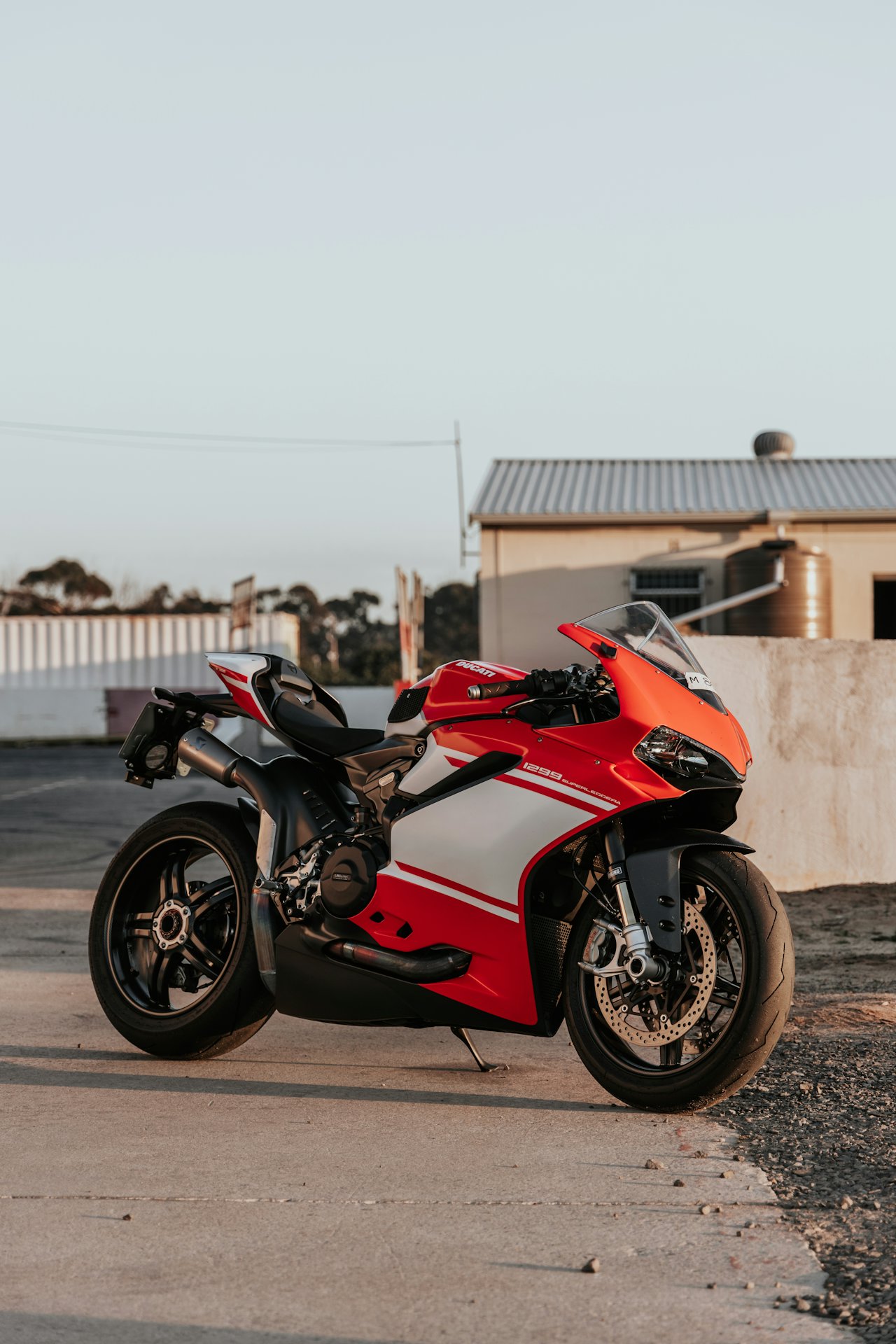
Tread depth is not a grip guarantee. It is a legal minimum, chosen by regulators who have never had to trail-brake into a roundabout in the dark with a lorry’s spray hanging in the air ahead of them. Ride enough wet miles and you learn that the gap between “legal” and “safe” can be measured in bike lengths, not millimetres — and by the time you find that out, it is already too late to matter.
Every wet-weather near-miss story I have heard from other riders circles back to the same quiet assumption: they checked their tread with a coin, saw it clear the wear bars, and considered the job done. Treating a tread-depth check as a pass/fail safety certificate is, I think, the single most dangerous piece of received wisdom in motorcycling. It is technically true and practically false, and that gap is exactly where people get hurt.
The Tread Depth Trap
Most markets set a legal minimum around 1.6mm across the central portion of the tyre. Fall below it and you’re riding illegally. Stay above it and you’re, on paper, compliant. But wet grip doesn’t fall off a cliff exactly at the legal line — it degrades continuously from the day the tyre leaves the mould, and the last couple of millimetres of tread are doing wildly more work in the rain than the first few. A tyre at 2mm is not “nearly as good” as one at 5mm in the wet. It’s a different tyre.
The grooves in a tyre aren’t decoration — they’re a pumping system, channelling water out from under the contact patch fast enough that rubber actually touches road instead of riding on a film of water. Halve that channel depth and you’ve roughly halved its evacuation capacity, while the water on the road hasn’t gone anywhere. At speed, on a worn rear through standing water, the margin between gripping and aquaplaning can vanish in the time it takes to register the throttle is open.
Why This Myth Refuses to Die
Part of the reason tread depth dominates is that it’s the only wet-grip number anyone actually tests you on. A roadworthiness check measures tread across a groove with a gauge — it says nothing about compound hardness, and it never will, because there’s no cheap, universal roadside test for that. Legal minimums exist to catch the worst offenders, not to certify good wet-weather performance. Riders quietly translate “passed the check” into “safe tyre,” and any guidance on ageing tends to live in small print nobody reads before a tyre goes on the bike.
Rubber Doesn't Age Like Wine
Here’s the part almost nobody checks: a tyre doesn’t need to be worn to be dangerous. Rubber compound hardens with age regardless of mileage, through UV exposure, ozone, heat-cycling and plain oxidation. A bike sitting in a garage all winter is still ageing its tyres. The soft, tacky compound that keys into wet tarmac’s microscopic texture when new slowly turns glassier and less pliable — and a hardened tyre with plenty of tread left can grip dramatically worse in the wet than a half-worn tyre that’s still supple.
Storage conditions matter more than most riders assume. A tyre kept in a sunlit garage, strapped outdoors under a cover, or fitted to a bike parked near an exhaust or radiator will harden faster than one kept cool and shaded. Two tyres from the same batch and the same mileage can end up in noticeably different states purely because of where the bikes lived — which is exactly why mileage alone is as unreliable a proxy as tread depth.
Every tyre carries a date code moulded into the sidewall, usually four digits: week, then year of manufacture. Find it. Read it. The general guidance most experienced riders and racers work to is that a tyre five to six years old deserves serious scrutiny regardless of remaining tread, and one approaching a decade should be treated as suspect no matter how good it looks.
Pressure: The Cheapest Safety Upgrade You're Ignoring
If compound age is the invisible killer, pressure is the one riders actively sabotage themselves on. Run a tyre soft and the contact patch balloons and distorts, tread blocks squirm under load, and the edges of the patch lift first — right when you need every millimetre of rubber biting into wet road. Run it hard past spec and the patch shrinks to a narrower strip, cutting the very contact area you’re relying on to push water aside. Neither mistake announces itself until you’re already leant over in a bend that has gone wrong.
Pressure also drifts with temperature and time, not just punctures. A tyre spot-on in summer heat can sit several psi low once mornings turn cold, and slow seepage through the rubber itself bleeds pressure over weeks with no leak at all. Check cold, before the bike has moved, against the figure on your bike’s own placard — not the maximum moulded into the tyre’s sidewall, which is a structural limit, not a recommendation. Treat pressure as something needing rechecking on a schedule, not something you set once and trust forever.
- Read the date code. Four digits on the sidewall, week then year — treat five-plus years as a serious question, not a formality.
- Look, don’t just measure. A dull, slightly glassy sheen or fine cracking at the base of the tread grooves signals hardening that tread depth alone won’t show.
- Press a thumbnail into the tread rubber. Fresher compound gives slightly; hardened compound feels closer to a hockey puck.
- Check pressure cold, against your bike’s placard, at least monthly — and always before a long wet-weather ride.
- If you have the comparison, brake hard from low speed in a safe, empty, wet car park on the tyre in question versus a fresh one. The difference is not subtle.
- When tread depth and tyre age disagree — plenty of rubber left, but the tyre is old — trust the age.
A tyre with four millimetres of tread and five hardened years underneath it isn't a safe tyre. It's a slick wearing a costume.— — Sam Fairweather, Latestnewbike.com
An American bagger doesn’t corner like a sportbike, brake like a naked, or care about lean angle the way a track bike does. What it does have to do is carry 700 to 900-plus pounds of motorcycle, plus a passenger, plus saddlebags and probably a tour-pack, down an interstate at 75 mph in a crosswind, on exactly two contact patches. Choose the wrong tyre for that job and you won’t just lose a bit of grip — you’ll get a rear that squares off in a few thousand miles, a front that goes light and vague at highway speed, or a sidewall that simply isn’t rated to carry what you’re asking it to.
Most bagger owners shop tyres the way they shop pipes: by brand loyalty, tread pattern, or how wide they can go before the fender needs cutting. That’s backwards. On a Harley Road Glide, Street Glide or Indian Challenger-style tourer, the tyre spec sheet — profile, load index, speed rating, and how the front and rear are engineered together — matters more than on almost any other class of motorcycle. This guide is about getting that right, not about which brand has the coolest tread pattern on the shelf.
Profile: Why It Matters More on a Bagger Than Anywhere Else
Tyre profile — the cross-sectional shape, essentially how rounded or squared the tread is — decides how a motorcycle transitions from upright to leaned over. On a sportbike this is about quick flickability into a hairpin. On a bagger it’s about something more fundamental: whether hundreds of pounds of loaded steel and two riders tips into a corner smoothly or fights you the whole way in.
Baggers run long wheelbases, typically in the 64 to 67-inch range, with heavily raked front ends and most of the weight sitting low and well back toward the rear axle. A rounder-profile tyre lets that mass roll into a lean progressively; a flatter, more squared profile — often the result of wear rather than original design — makes the same bike want to stand upright mid-corner and then drop in abruptly once it passes the flat spot. That’s exactly the kind of surprise you don’t want with a passenger on the back.
This is also why profile-related wear deserves more attention on a bagger than on almost anything else you’ll ride. Because baggers spend the overwhelming majority of their miles upright on the highway, the rear squares off faster and more predictably than it would on a bike ridden with more variety of lean angle. Once that happens, the bike starts to feel reluctant to turn and then falls into the corner rather than rolling into it — a handling change that shows up well before the tread is legally worn out.
Load Rating: What a Fully Loaded Two-Up Tourer Actually Weighs
Every tyre carries a load index molded into the sidewall — a number, paired with a speed-rating letter, that corresponds to the maximum weight that tyre can safely carry at speed. It’s one of the most important specs on a bagger tyre and the one riders check least. A replacement tyre can look identical to the original fitment, wear a respectable tread pattern, and still carry a lower load index than the tyre it’s replacing.
Do the math honestly before you buy. Start with your bike’s kerb weight, add a passenger, add saddlebags and a tour-pack loaded for a real trip rather than an empty test ride, and you’ll often find a fully dressed two-up tourer is asking its rear tyre to carry close to, or beyond, half a ton once you include the bike itself. Manufacturers spec the front and rear to cover that scenario at the bike’s rated gross weight; the mistake happens when riders swap to a wider or lower-profile tyre for looks and never check whether the load index still covers a fully loaded, two-up trip.
Speed rating matters here too, particularly if you’re chasing a wider custom rear. Going wider than stock sometimes means moving to a tyre line with a lower speed rating than the one it replaced, which is a bad trade for a motorcycle that’s going to spend hours at sustained interstate speed with a full load on board. If in doubt, match or exceed the load index and speed rating molded on your original tyre rather than just eyeballing the size.
Mileage: What All That Weight Does to a Rear Tyre
Weight is the enemy of tyre life, and baggers carry more of it, more consistently loaded, than almost any other motorcycle on the road. A rear tyre hauling a passenger, luggage and a torquey V-twin’s worth of throttle down the interstate simply won’t last as long as the same tyre on a solo commuter bike, and in my experience the rear on a heavily used two-up tourer often needs replacing at something like a third of the mileage the front will manage, sometimes less on serious touring miles through hot climates.
The single biggest lever you have over that number is pressure, checked cold, before the ride, with your own gauge rather than a forecourt airline. Bagger tyre placards typically list a higher rear pressure for two-up and loaded riding than for solo use, and running the solo figure with a passenger and full bags is one of the fastest ways to overheat and prematurely wear a rear tyre. It costs nothing and takes thirty seconds; there’s no excuse for skipping it on a bike this dependent on its rear contact patch.
Everything your motorcycle does — accelerating, braking, steering, staying upright — happens through two contact patches no bigger than the palm of your hand. No suspension upgrade, no electronic aid and no amount of horsepower can overrule the grip of your tyres. That makes understanding them the highest-value knowledge a rider can carry, and the good news is that the essentials are far simpler than the marketing suggests.
In this guide we will demystify the three things that actually change how your bike feels and grips: the rubber compound, the profile of the tyre, and the pressure you run. Get these right for your bike and your riding, and an ordinary machine can feel transformed.
Compounds: Grip Versus Longevity
A tyre’s compound is the recipe of its rubber, and it is always a trade-off between outright grip and how long the tyre lasts. Softer compounds grip harder and warm up faster but wear out sooner; harder compounds go the distance but need more heat and care to trust. Manufacturers tune this to the tyre’s purpose, so the trick is simply matching the type to how you ride rather than chasing the stickiest rubber you can find.
- Sport-touring tyres — the sensible default, balancing all-weather grip with high mileage.
- Sport and hypersport tyres — softer, sharper and quick to warm, but shorter-lived.
- Track and slick tyres — maximum grip when hot, unsafe on cold or wet roads.
- Adventure tyres — rated by their road-to-dirt split, from 90/10 to knobbly 20/80.
- Dual-compound designs — a harder centre for mileage with softer, grippier shoulders.
Temperature is the hidden variable in all of this. Every compound has a working range, and grip is compromised until the rubber reaches it, which is why a track tyre feels terrifying on a cold road and a hard touring tyre needs a few kilometres to come good. This is also why the first corners of any ride deserve respect. Match the compound to the temperatures and conditions you genuinely ride in, not the ones in the brochure photographs.
Reading the Sidewall
The sidewall is a data sheet if you know how to read it. A marking such as 180/55 ZR17 tells you the width in millimetres, the aspect ratio as a percentage of that width, the speed rating and the rim diameter in inches. Look too for the four-digit date code inside an oval: the first two digits are the week and the last two the year of manufacture. Even a tyre with plenty of tread is best replaced once it is around five to six years old, because rubber hardens and cracks with age regardless of use.
It is also worth understanding the difference between radial and cross-ply construction, and between tubed and tubeless fitment. Most modern sports and touring bikes run tubeless radials, which run cooler and offer a more stable contact patch at speed, while many spoked wheels traditionally need an inner tube unless designed for tubeless use. Fitting the wrong construction, or mixing a radial with a cross-ply on the same bike, upsets the handling and is best avoided entirely.
Profile and How a Bike Steers
Profile is the cross-sectional shape of the tyre, and it has a direct effect on handling. A more pointed, sportier profile falls into corners quickly and feels eager to turn; a rounder, more touring-oriented profile steers more slowly but feels stable and planted. Fitting a tyre with the wrong profile for your bike, or mismatching front and rear, upsets this balance and can make a bike feel nervous or reluctant. Always fit tyres as a matched pair to the sizes your manufacturer specifies.
Wear changes the profile over time, and not for the better. A rear tyre that has covered many motorway miles develops a flattened central band, which makes the bike feel reluctant to tip in and then fall suddenly past the flat spot — a sensation often mistaken for a mechanical fault. This squaring-off is normal, but it is a clear sign the tyre is past its best for spirited riding even if tread remains. Replace before the handling degrades, not long after.