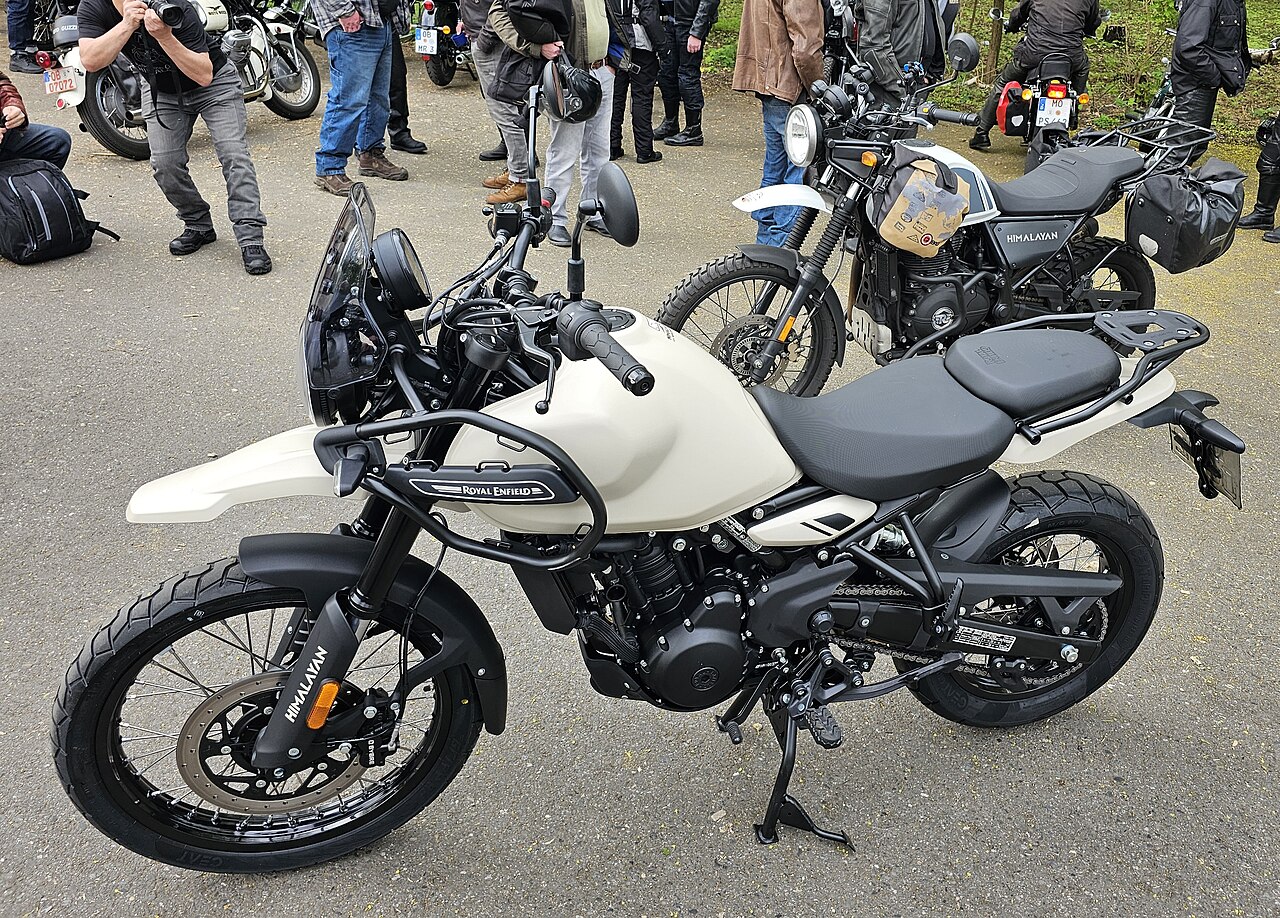
Every new rider eventually asks the same question at the dealership: do I want an engine that talks back, or one that simply gets on with the job? The Triumph Speed 400 and Honda CB500 Hornet answer that question in almost opposite ways, and both are among the best learner-friendly, A2-licence-eligible naked bikes money can currently buy. One is a thumping single with genuine character; the other a smooth-spinning twin with a noticeably higher ceiling. Choosing between them is really choosing what kind of rider you want to become.
I have spent weeks swapping between the two — commuting on one, hammering a favourite set of B-roads on the other, then doing it all again in reverse — and the gap between them is far more interesting than a spec sheet suggests. This is not a case of one bike being simply better. It is a case of two very different answers to the same brief, and the right one depends entirely on which side of the single-versus-twin argument you fall on.
Two philosophies for the same licence
Both bikes are built to slot neatly under A2 licence power limits in markets that use them, and both are aimed squarely at riders who want something more grown-up than a 125 but are not yet ready — financially or otherwise — for a litre-class weapon. The Triumph uses a single 398 cc TR-series cylinder, producing a modest 40 hp. The Honda counters with a 471 cc parallel-twin making roughly 47.5 hp, which not coincidentally sits right at the ceiling most A2 riders are permitted to ride.
That difference in approach shows up everywhere on both machines, not just under the tank. Triumph has leaned into simplicity and feel; Honda has leaned into refinement and a wider useful rev range. Neither is chasing outright drama, but they get there — or deliberately avoid it — by completely different routes.
Engine character: a thumping single versus a smooth twin
Thumb the Speed 400’s starter and you get a proper single-cylinder bark, a light off-beat thrum through the pegs that makes the bike feel more alive at a standstill than its modest output suggests. There is real, usable shove low down — 37.5 Nm arrives by 6,500 rpm — and the whole package pulls with an eager, slightly rough-edged charm that many riders will find genuinely endearing rather than crude. It is an engine that wants you to notice it working.
The Hornet’s twin, by contrast, is the more sophisticated instrument. It spins up with none of the single’s vibration, delivers a fatter 43 Nm of torque, and simply keeps pulling further up the rev range than the Triumph can manage. Where the Speed 400 signs off and starts to feel breathless, the Honda is only just getting into its stride. On a fast sweeping road that translates into a genuinely quicker bike — not dramatically so, but enough that you notice it every time you overtake.
Neither engine is wrong. The single rewards you with feel and character at everyday speeds; the twin rewards you with headroom and a smoother, more relaxed motorway cruise. If you already know you will eventually want more performance, the Hornet’s extra ceiling is the one that ages better. If you want a bike that feels interesting the moment you thumb the starter, the Speed 400 wins that argument outright.
Weight, seat height and low-speed confidence
This is where the Triumph claws back real advantage. At a claimed 170 kg kerb weight against the Hornet’s 189 kg, the Speed 400 is a genuinely different physical proposition at walking pace — wheeling it out of a tight parking space, catching it on an unexpected camber, or simply muscling it around at a fuel stop all feel noticeably easier. For a nervous new rider still building confidence, that gap matters far more than it looks on paper.
Seat height tells a similarly close story: 790 mm on the Triumph versus 785 mm on the Honda, both comfortably low enough for shorter riders to get both feet flat. Riding position diverges more than the numbers suggest, though. The Speed 400’s bars and pegs put you in a compact, slightly forward-leaning stance that suits shorter riders and tight urban streets but can feel cramped for anyone over six feet on a long ride, while the Hornet’s roomier reach and extra chassis heft translate into a more settled, less nervous feel once you are up to motorway speed rather than picking through traffic.
Price and running costs
The Speed 400 undercuts the Hornet meaningfully at the till, starting from $4,995 against a Honda that starts closer to $7,000 depending on market. That gap buys a lot of insurance, gear and fuel for a new rider on a tight budget, and it is arguably the single biggest reason the Triumph has become such a strong seller among first-time big-bike buyers.
Running costs favour the Speed 400 too, at least on paper. A single cylinder means fewer moving parts to service, and Triumph’s pricing strategy has clearly been built around undercutting rivals at every stage of ownership, not just at the point of sale. Insurance follows a similar pattern for the youngest riders shopping this class: the Speed 400’s lower purchase price and mechanical simplicity tend to attract friendlier premiums, which matters enormously when you are also budgeting for gear, a course and your first set of tyres. The Hornet is not punishingly expensive to run or insure — Honda’s reliability reputation and dealer network remain formidable — but its twin-cylinder hardware and higher new price nudge it into a slightly costlier bracket throughout ownership.
Who actually grows into which bike
The Speed 400 suits the rider who values feel over outright pace — someone commuting daily, learning the ropes on a manageable, characterful machine, and who is happy to sell up and move on once their licence restrictions lift and their skills outgrow it. It is a brilliant first proper motorcycle precisely because it never pretends to be anything more than that, and it does the job with real style and a genuinely premium-feeling chassis for the money.
The Hornet suits the rider who wants one bike to cover both the learner years and a good chunk of what follows. Its higher power ceiling, smoother cruising manners and slightly more grown-up feel mean it will not feel outgrown the moment restrictions lift in the way a smaller single eventually can. If you are the sort of rider planning to keep your first big bike for several years rather than trade up immediately, that extra headroom is worth the additional outlay.
Modern-classic bikes are a wonderful lie. They dress up thoroughly contemporary engineering — fuel injection, ride-by-wire throttles, ABS, traction control — in bodywork borrowed from an era when none of that existed. Nobody tells this lie better than the Kawasaki Z900RS and the Triumph Speed Twin 1200, two bikes that spend all day pretending to be forty years old while quietly being some of the most competent naked machines currently on sale.
I put real miles on both, back to back, on the same loop of fast dual-carriageway and tight, cambered B-roads. What emerged was not a knockout, but two entirely different arguments for what a retro roadster should feel like under your hands. One is a smooth, howling inline-four wrapped around a Z1 silhouette. The other is a gorgeously finished parallel-twin that trades outright pace for a tactile richness the Kawasaki simply cannot fake.
Engine character: the four versus the twin
The Z900RS runs Kawasaki’s 948cc inline-four, retuned from the standard Z900’s version for a fatter midrange, and it is a genuinely lovely engine. Power lands around 109 hp at 8,500 rpm, with 98.5 Nm arriving at 6,500 rpm, and the delivery is silky from idle to redline. There is a building, mechanical howl as the tacho sweeps past 7,000 rpm that no twin can replicate — this is the sound the whole bike is built around, and it does not disappoint.
Triumph’s Speed Twin 1200 counters with its 270-degree, 1,200cc parallel-twin, good for roughly 103 hp at 7,750 rpm and a meatier 112 Nm arriving much lower down, around 4,250 rpm. On paper it trails the Kawasaki at the top of the rev range. On the road it rarely matters, because the Triumph is already shoving you toward the next corner while the Z900RS is still building revs. This is a torque-first engine, and it feels like one from the first twist of the wrist.
Neither engine is objectively “better” — they are simply chasing different feelings. The Kawasaki rewards a rider who likes to work through the gears and chase a note; the Triumph rewards one who wants to feel a punch in the chest at 3,000 rpm and not think about the gearbox again until the next roundabout. If you have ever argued about whether a V8 or a straight-six sounds better, you already know which side of this you land on.
Handling and how each one carries speed
Weight tells an important part of this story. The Z900RS is a genuinely heavy retro bike at around 215 kg kerb, and you feel every one of those kilograms at low speed and in tight, technical turns — it wants a firm hand to change direction quickly. The Speed Twin 1200 is only marginally lighter on the spec sheet at roughly 216 kg, yet it feels noticeably more agile in the real world, largely down to how that mass is carried low and central around the twin’s compact crankcase.
Through faster, sweeping corners the Kawasaki settles into a reassuring, planted stance and its non-adjustable-at-the-front-but-still-composed suspension soaks up mid-corner bumps without drama. The Triumph’s fully adjustable Marzocchi fork and Öhlins-style rear shock (on higher trims) give it a noticeably more premium ride quality — more feel at the bars, better control over broken surfaces, and a chassis that flatters a rider trying to carry speed rather than merely permitting it.
Neither bike is a sportbike wearing a disguise, and neither pretends to be. But if you spend your weekends hunting apexes on a favourite road, the Speed Twin’s superior damping and sharper front-end feedback will have you grinning earlier and more often. The Z900RS is happy to follow along at a slightly more relaxed pace, and honestly, most owners of either bike will never find the limit of what’s on offer here.
Build quality and finish
This is where the gap between these two widens most dramatically, and it is the single biggest reason the Triumph costs what it costs. Run your hand over the Speed Twin’s tank, its brushed engine covers, the machined fins on the cylinder head, the twin analogue clocks — everything feels like it was finished by someone who cared. Paint depth, switchgear weighting, the satisfying click of the indicator stalk: this is a bike built to be looked at as much as ridden, and it rewards close inspection in a way few naked bikes at any price manage.
The Z900RS is not shoddy — far from it — and its teardrop tank and round headlight nail the Z1 silhouette with real conviction. But get up close and the Kawasaki’s switchgear, some of its plastics and its slightly generic instrument cluster reveal a bike built to a tighter cost target. It looks the part from ten feet away, which is exactly where most onlookers will admire it, but the Triumph looks the part from ten inches away too, and that difference is exactly what premium pricing is supposed to buy.
Price and everyday value
Here the Kawasaki claws back real ground. The Z900RS starts at roughly $12,649, undercutting the Speed Twin 1200 by a meaningful margin — Triumph’s twin typically lands closer to the $13,500 mark once you factor in the higher-specification variants most buyers actually want. For that saving you get a faster-revving, more powerful engine on paper and a badge with its own considerable heritage cachet in most markets.
Running costs favour the Kawasaki too, at least on paper: four-cylinder engines are famously long-lived, parts availability is broad, and service intervals are undemanding. The Triumph’s premium components — that adjustable suspension in particular — cost a little more to maintain over a long ownership, though nothing about the Speed Twin is remotely exotic or fragile. Think of the price gap less as “cheap versus expensive” and more as “good versus better,” because that is really what you are paying for.
Ask a paddock full of journalists to name the finest middleweight naked and the same answer surfaces again and again: the Street Triple 765 RS. Triumph’s flagship roadster has become the yardstick, the bike everything else is politely compared to and quietly beaten by. It is fast without being frightening, sophisticated without being cold, and it does the whole job with a mechanical charm that borders on addictive.
Part of that magic is the badge’s Moto2 connection — Triumph supplies the engines for the world championship’s middleweight class, and the road-going triple wears that heritage lightly but unmistakably. This is a naked bike engineered by people who race, and every control speaks of that obsession with feel.
The 765 triple: the perfect middle way
The 765 cc inline-triple is the star turn, and it is arguably the sweetest engine configuration ever fitted to a road bike. Making 128 hp at 12,000 rpm, it hands you the low-down flexibility of a twin, the top-end urgency of a four, and a sound all its own — a hard, metallic wail that builds to a howl as the tacho sweeps round. There is simply no bad place in the rev range.
It pulls cleanly from 3,000 rpm, gathers pace with an eager, elastic surge through the midrange, and then charges to a redline that begs to be chased. The up-and-down quickshifter is beautifully judged, and the fuelling is spot on — the RS never feels highly strung, yet it will happily post a 3.3-second sprint to 100 km/h and a genuine 250 km/h if you let it stretch its legs.
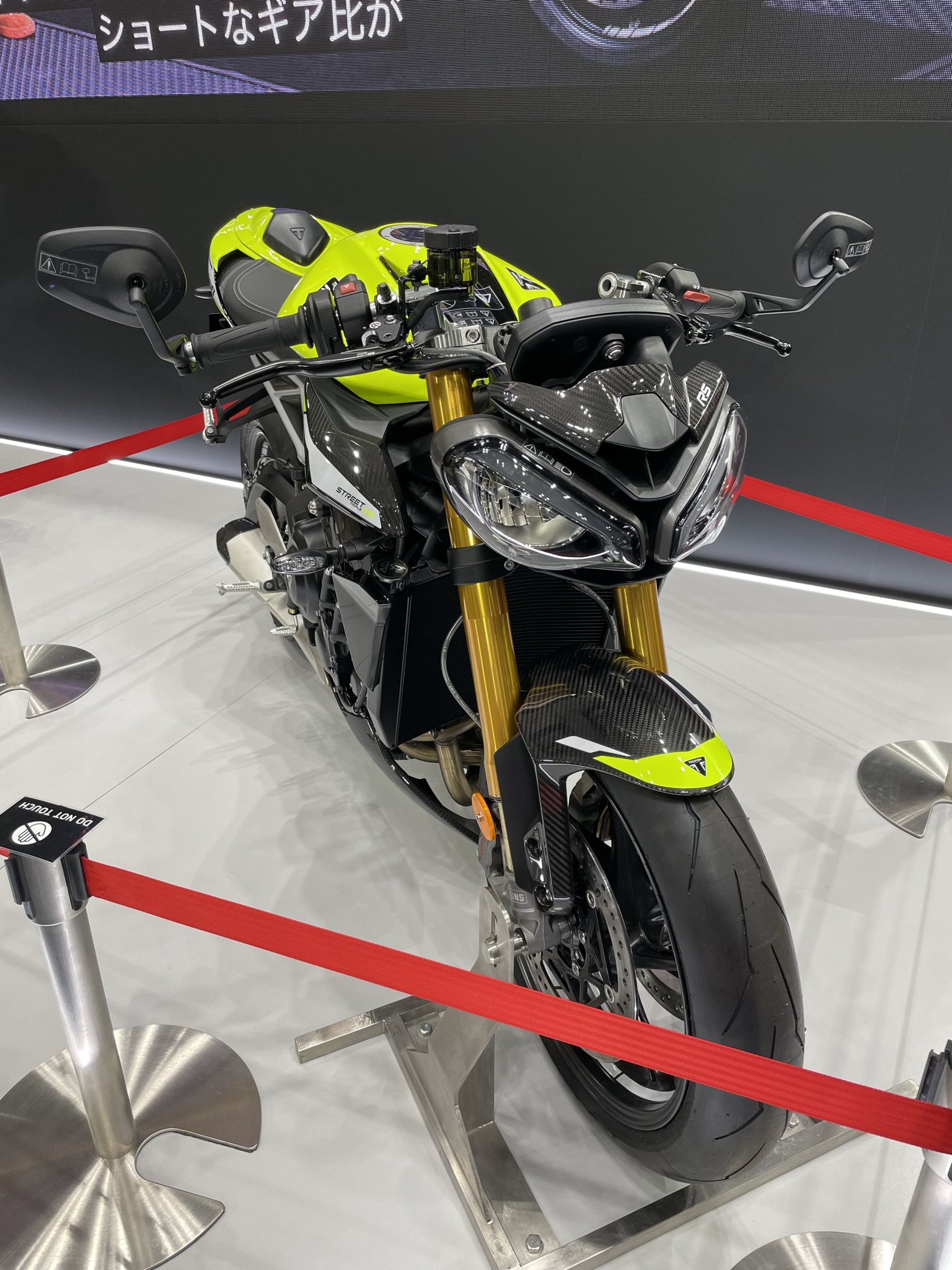
Every used Triumph I have watched change hands this year has passed through the same choke point: a dealer’s part-exchange desk, where a single number gets written on a whiteboard and presented as fact. It is not fact. It is a starting position dressed up to look final, and it is built, deliberately, to separate you from more of your bike’s value than you would ever accept if you understood how the figure was reached. I have sat in enough of these offices, on the other side of test-bike loan paperwork, to know exactly how the trick works.
None of what follows requires you to distrust every person who works at a Triumph dealership; most are decent, and the good ones will volunteer plenty of this themselves if you ask the right questions. But the system they operate inside is not built for your benefit, and pretending otherwise is how riders leave real money on the table. So here is the mechanism underneath the bonnet: how the trade-in number gets calculated, which used Triumphs the market has quietly turned against, and exactly when and how to push back.
The Trade-In Number Is Built to Work Against You
Ask any dealer for a part-exchange figure and they will run your bike through a trade guide, the same wholesale reference every dealer in the country consults, and quote you something close to the bottom of that range. That number represents roughly what your bike would fetch sold at auction, in bulk, in a hurry, to another trader. It is not what the dealer will then charge for your exact bike once it is cleaned up and sitting on their own forecourt with a full retail markup attached. The gap between those two figures, trade and retail, is the dealer’s entire profit motive on the used side of the business, and your part-exchange offer sits deliberately at the bottom of it.
The trick works because it is presented as a single, simple number, so you never see that gap for yourself. A salesperson who says “we can do $8,000 against your bike” has already decided what they can resell it for and reverse-engineered the trade-in figure to protect the difference. The fix is almost embarrassingly simple: get an independent trade valuation before you walk in, from more than one source, and treat the dealer’s number as an opening bid rather than an honest appraisal. Once you can say the guide value out loud, in the room, and separate it from whatever they hope to resell your bike for, the whole tone of the conversation changes.
Why Some Used Triumphs Fall Off a Cliff
Not every used Triumph loses value at the same rate, and the reasons have almost nothing to do with how good the bike actually is. The Triumph Speed 400 is the clearest case. It arrived to huge demand and was built specifically to sell in serious volume at an accessible price, and it has done exactly that job. The side effect is a used market now well stocked with tidy, low-mileage examples from riders trading up after a year on a restricted licence, which means supply comfortably outpaces the buyers chasing any single listing. That is wonderful news if you are shopping. It is painful news if you are the one selling.
The Street Triple 765 RS tells almost the opposite story, and it is the one that trips buyers up hardest. During its tightest production years, waiting lists ran long enough that nearly-new examples briefly commanded close to what buyers had paid brand new, a genuine seller’s market. That memory lingers stubbornly. Plenty of owners who bought during the shortage still price their bikes as if the scarcity never ended, and plenty of buyers, working from outdated forum chatter, still pay it. The waiting list is gone. Supply has long since caught up. Anyone quoting you a 765 RS at anything close to those old peak prices is selling nostalgia, not a fair market rate, and you are entitled to say so out loud.
The Trident 660 sits in a quieter, less flattering spot. It was built to be Triumph’s value play into the middleweight naked class, and it does that job well, but “value” is exactly the word that undercuts its resale. Buyers shopping used naked triples tend to compare it directly against a Street Triple that carries far more badge appeal for not dramatically more money, and the Trident usually loses that comparison at the point of sale. The Tiger 900, meanwhile, has been through enough model-year revisions — updated electronics, reshuffled trim levels, styling tweaks — that pre-facelift examples can age in the listings almost overnight the moment a refreshed version reaches showrooms, whatever their genuine mechanical condition underneath.
Which Used Triumph Actually Holds Its Money
Put plainly, here is how I would rank a buyer’s leverage across the range right now, based on where supply and desirability currently sit against each other rather than on how each bike rides.
- Triumph Speed 400 — oversupplied and depreciating quickly; expect real leverage, and do not pay anywhere near new-bike money for a one-year-old example with a handful of miles on it.
- Triumph Trident 660 — undervalued by its own sensible reputation; sellers often price it high out of habit, so counter with genuine naked-triple comparables rather than accepting the asking figure.
- Triumph Tiger 900 — buy the outgoing model-year hard once a refresh is announced; the badge premium for last year’s specification quietly evaporates within weeks.
- Triumph Street Triple 765 RS — the exception that proves the rule; genuinely desirable and well built, so save your hardest negotiating for any seller still pricing off the old waiting-list high.
A part-exchange offer is not an appraisal of your bike. It is the opening line of a negotiation the dealer has already rehearsed, and you almost certainly have not.— Marcus Vale, Chief Road Tester
Time the Purchase Around the Model Year
Triumph, like most manufacturers, reveals its updated line-up in a concentrated window each year, and that single fact is worth more to a used buyer than almost any haggling technique you could learn. The moment a refreshed Tiger, Trident, Street Triple or Speed model gets announced, every outgoing example sitting on a forecourt or in a private seller’s garage instantly becomes “last year’s bike” in the eyes of the market, regardless of what actually changed underneath. Dealers know this better than anyone, and they would far rather move that stock at a discount now than carry it through a whole model year while a shinier version sits in the showroom window stealing its attention.
That timing gives you a genuine window, roughly from the announcement through the following few months, where outgoing-model stock is priced to move rather than priced to sit and wait for the right buyer. It is also, not coincidentally, close to the period when dealers are chasing registration numbers against targets set from above, targets that can unlock bonuses for the whole dealership regardless of the margin on any single sale. Walk in during that overlap, on a bike the showroom is visibly keen to clear, and you are negotiating from a position the salesperson’s own manager is quietly pushing them toward anyway.
The Leverage Points Worth Using
Beyond timing, a handful of specific tactics consistently move the final number, and none of them require confrontation. They simply refuse to let the dealer control the frame of the conversation from the first handshake.
- Get your trade-in valued independently before any conversation about the new bike’s price even starts, and insist on negotiating the two numbers separately rather than as one blended “deal”.
- Collect quotes from at least two other dealers on the same model, and put the actual figures on the table rather than merely implying they exist.
- Ask for the total out-the-door price before any options or finance are discussed, so add-ons cannot be used to disguise a worse headline number.
- Treat an extended warranty or a free service plan as a bargaining chip in place of cash off; dealers often have more room to move there than on price itself.
- Shop the closing days of the month or the final weeks of a sales quarter, when the dealership’s own targets are quietly doing some of your negotiating for you.
None of this makes a dealership the enemy. Good ones will match a fair valuation without much of a fight, because they would rather earn a smaller margin on a deal that actually happens than lose the sale entirely while chasing one that never does. But the number that lands on the whiteboard first is never the best number available, on either side of the transaction, and the only way to find the real one is to already know roughly what it should be before you sit down.
So do the homework before the showroom visit, not during it. Know the trade guide figure for your own bike, know which used Triumph you are shopping for is genuinely scarce and which is quietly oversupplied, and know exactly where you sit in the model-year cycle. Walk in with all three, and the dealer’s opening number stops being the whole conversation. It becomes the number you politely, confidently improve on — and that, more than any single haggling line I could teach you, is the actual secret nobody on the forecourt is in a hurry to share.
The middleweight naked class is where most riders actually live, and no two bikes define its extremes better than these. The Yamaha MT-09 is the people’s champion — loud, torquey, keenly priced and gloriously unhinged. The Triumph Street Triple 765 RS is the connoisseur’s choice — sharper, more expensive and dripping with the kind of hardware you normally find on machines costing far more. Both use a three-cylinder engine, both weigh a shade under 200 kg, and both will humble far pricier metal on a good road.
Yet they feel like they were designed by people who would never agree on lunch, let alone motorcycles. One is a hooligan in a leather jacket; the other is a scalpel in a tailored suit. That is exactly why this fight is so instructive — it forces you to decide what kind of rider you really are before a single kilometre is covered.
Engine character
Yamaha’s 890cc CP3 triple is a masterclass in low-end thump. With 117 hp and a fat 93 Nm arriving early, it surges out of corners like a much bigger bike, all guttural bark and effortless roll-on. It feels naughty at every throttle opening, positively daring you to loft the front. Triumph’s 765cc unit, derived directly from the Moto2 spec engine, chases a different high: 128 hp at a lofty 12,000 rpm, a screaming top end and a crispness that rewards riders who love to rev right to the redline.
In the real world the Yamaha feels faster in the mid-range and lazier to ride, happy to lug from any gear on a lazy Sunday. The Triumph asks you to work the gearbox and wring it out, then repays you with a sweeter, more musical delivery and a top-end shriek that borders on addictive. The MT-09 is the more relaxing daily engine; the Street Triple is the more thrilling one when the road opens up.
Chassis and handling
Here the price gap shows itself. The Street Triple RS arrives with fully adjustable Showa forks, an Öhlins STX40 rear shock, Brembo Stylema calipers and sticky Pirelli rubber — a genuine track-ready specification straight from the crate. It steers with delicious precision and holds a line as if bolted to a rail. The MT-09 uses more modest KYB suspension that, while much improved on recent models, can feel busy and under-damped when you truly attack a bumpy back road at pace.
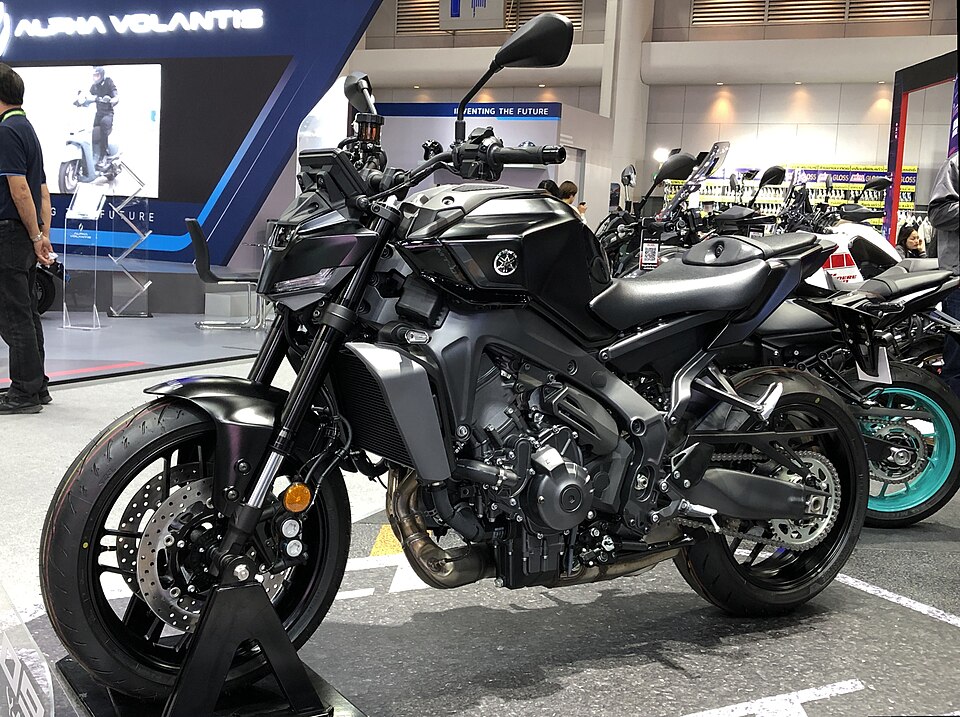
These two are not quite the same size, and that is precisely the point. The Triumph Tiger 900 is a mid-capacity adventurer that punches above its weight; the Ducati Multistrada V4 is a full-fat superbike-engined tourer that happens to wear knobbly-capable rubber. Cross-shopping them is really a question about how much bike — and how much budget — your adventures truly demand, and whether more of everything is always better.
One is light, agile and refreshingly honest. The other is fast, opulent and stuffed with technology that would embarrass a luxury saloon car. Both are superb machines; they simply serve very different appetites and very different bank balances.
Engine and performance
The Tiger 900 uses Triumph’s charismatic 888cc T-plane triple, an engine that produces a burbling, off-beat exhaust note and around 108 hp with 90 Nm. It feels torquey and tractable, ideal for gravel where a smooth, predictable delivery matters more than outright grunt. The Multistrada’s 1,158cc V4 Granturismo is another animal entirely: 170 hp, 125 Nm and a rush of acceleration that makes the Ducati feel like a naked sportbike wearing a rucksack and touring luggage.
On the open road the Multistrada is savagely, almost comically fast for the genre, while the Tiger is merely quick. But the Ducati’s V4 also runs impressively long service intervals and cleverly shuts down its rear cylinders in traffic to keep the rider cool. The Tiger, meanwhile, delivers all the performance most riders will ever use, with a warmth of character the bigger, more clinical bike cannot quite match on a favourite road.
Chassis and off-road
At roughly 201 kg in Rally trim the Tiger is significantly lighter than the circa-240 kg Multistrada, and off-road that difference is decisive. The Tiger’s 21-inch front wheel, long-travel suspension and manageable mass make it genuinely trail-capable in the hands of a keen rider. The Multistrada is more of a road-biased grand tourer; its optional off-road-focused versions with spoked wheels help, but its sheer weight always reminds you exactly what it is when the surface loosens.
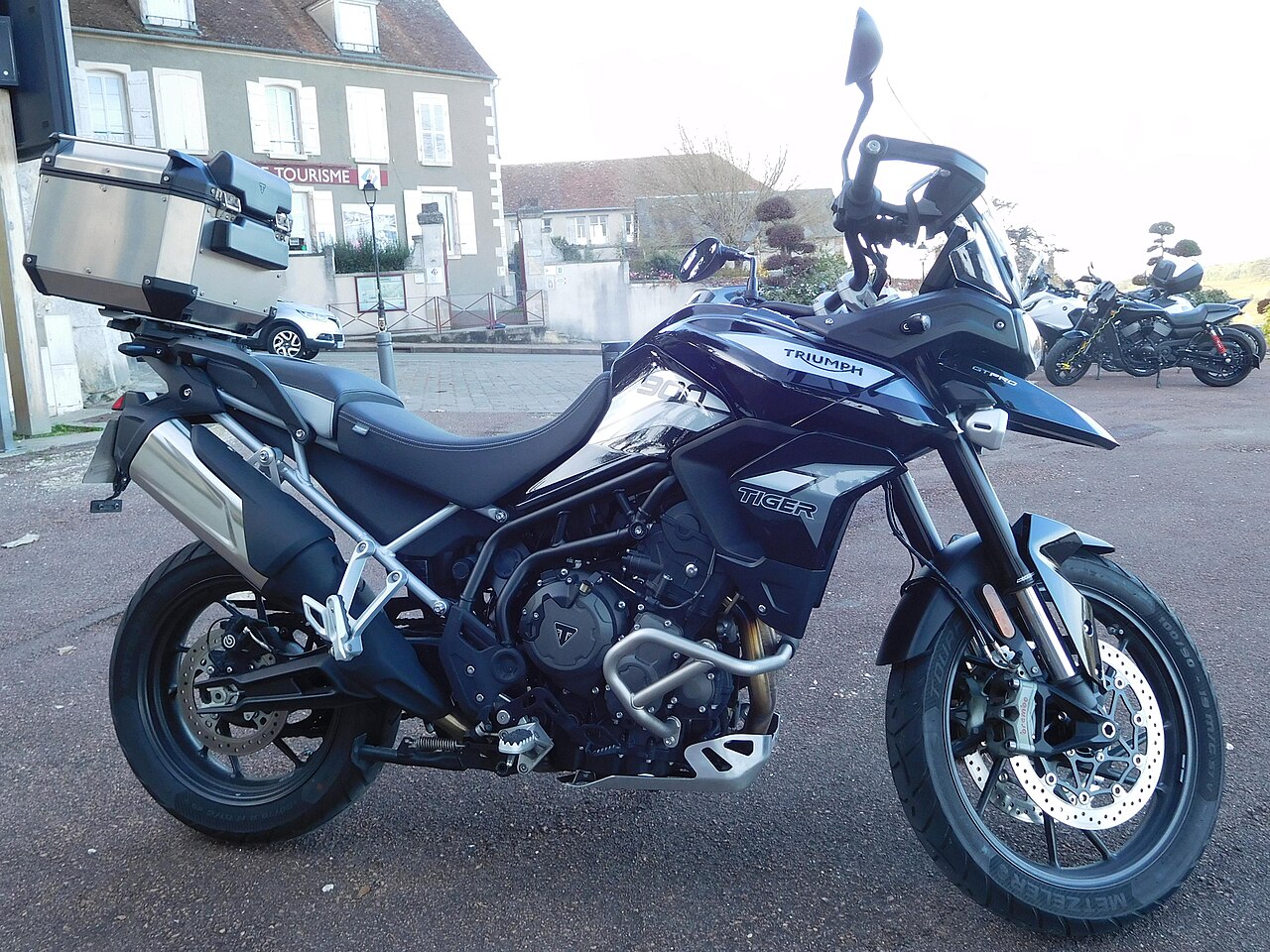
On paper this looks like a mismatch — a modestly powered single-cylinder budget bike against a sophisticated middleweight triple costing more than twice as much. But adventure riding has always been about far more than horsepower, and the Royal Enfield Himalayan 450 has arrived with genuine ability and a price that forces every rider to ask a hard, honest question: how much motorcycle do I actually need?
The Triumph Tiger 900 is the accomplished, do-everything adventurer that has earned its reputation over many years. The Himalayan 450 is the plucky underdog that has grown up dramatically with its new liquid-cooled engine. This comparison is less about which is objectively better and more about where your money and your ambitions truly meet on the map.
Engine and performance
The Himalayan’s new 452cc liquid-cooled Sherpa single produces around 40 hp and 40 Nm — modest figures on paper, but delivered with a friendly, tractable spread that suits gentle trails and unhurried touring perfectly. It will happily cruise at highway speeds, though it runs out of puff for rapid overtakes and heavily loaded climbs. The Tiger 900’s 888cc triple, with roughly 108 hp and 90 Nm, lives in an entirely different dimension: effortlessly fast, richly torquey and blessed with a wonderful off-beat exhaust note.
If your riding involves long motorway stints, heavy luggage or a passenger, the Tiger’s power is genuinely transformative and makes light of any road. If your world is back roads, gravel and the occasional highway blast, the Himalayan has just enough grunt, and its gentler pace encourages a slower, more contemplative and arguably more rewarding kind of adventure altogether.
Chassis and off-road
Both bikes come genuinely equipped for the dirt, which is where the Himalayan surprises most. It rides on a 21-inch front wheel with long-travel Showa suspension and a manageable, low-slung feel that flatters less experienced off-road riders. At around 196 kg it is only slightly heavier than the Tiger, but its gentler power delivery makes it feel far more benign when the going gets loose and technical. The Tiger, especially in Rally trim, offers more suspension quality and outright capability, but demands more skill to exploit safely.