Type “Indian Challenger vs Harley-Davidson Road Glide” into any search bar and you will find breathless headlines promising a knockout blow — a bagger so fatally flawed it should be pulled from the showroom floor. We get the appeal of that framing; we are not above using it ourselves, see above. But after living with both machines back to back, on interstate slabs, tight two-lanes and a few hundred miles of genuine touring monotony, the truth is messier, and frankly more useful to anyone actually spending $25,000-plus of their own money.
Both of these baggers are excellent at the thing they were built to do. Both also carry a real, specific, describable weakness that no amount of chrome or marketing copy papers over. That is the actual story here: not a winner and a loser, but two deeply considered answers to the same question — how do you carry a rider and a passenger across a continent in comfort — arrived at through almost opposite engineering philosophies.
Liquid-cooled fury vs air-cooled thump
Indian’s PowerPlus 108 is the newer, more technically ambitious engine of the two. A liquid-cooled, 1,768cc 60-degree V-twin with dual overhead cams and four valves per cylinder, it makes a claimed 122 hp and somewhere around 173 Nm of torque, and — critically for a bagger that might sit in stop-and-go traffic on a scorching afternoon — it stays composed when the going gets slow and hot. Liquid cooling means consistent clearances and consistent power delivery, with none of the heat-soak that has occasionally plagued big air-cooled twins. It is not a one-off either: Indian’s commitment to liquid cooling runs through the whole range, right down to the small-bore Scout Bobber, which uses its own liquid-cooled V-twin rather than falling back on an air-cooled unit to save money.
Harley’s Milwaukee-Eight, offered in 107, 114 or the range-topping 117 High Output depending on trim, is the opposite bet: air/oil-cooled, pushrod-actuated, and unapologetically old-school in its architecture. The same 114 fitted to the Road Glide Special is the unit we already know from the Fat Boy — dyno-verified in the low-to-mid 90s hp with a meaty 160 Nm-ish of torque arriving low. It trades outright horsepower for a shove-in-the-back torque curve and a mechanical presence — the radiant heat off those cylinders in traffic, the shake at a stoplight — that Harley owners will tell you is the entire point, not a flaw to be engineered away.
Here is the honest trade-off: the PowerPlus is the better engineering solution and the better engine for a rider who wants their bagger to behave like modern transportation. The Milwaukee-Eight is the better engine for a rider who bought a Harley specifically because it does not behave like modern transportation. Neither is wrong. But if you ride in genuinely hot climates or spend real time in stop-and-go traffic, the Challenger’s cooling advantage is not a marketing footnote — it is something you feel through your boots on a July afternoon.
Frame-mounted vs fork-mounted fairings: the real engineering divide
This is the detail that separates these two bikes more than any spec sheet, and it barely gets mentioned outside enthusiast forums. The Road Glide’s signature Sharknose fairing is mounted to the frame, not the fork — it stays fixed relative to the chassis and does not turn when you turn the handlebars. The Challenger, like most fork-mounted fairings on the market, bolts its fairing straight to the front end, so the whole assembly swings with the bars every time you steer.
The physics matter more than it sounds like they should. A frame-mounted fairing keeps its mass — and there is real mass in a full touring fairing, stereo and gauge cluster — out of the steering equation entirely. In a stiff crosswind gust at highway speed, the Road Glide’s front end stays comparatively light and predictable, because you are only steering the wheel and fork, not several kilograms of plastic and glass swinging on the end of it. The Challenger’s fork-mounted setup means you are steering the fairing too, which most riders notice as marginally heavier, more deliberate steering input at speed, and a touch more feedback through the bars once the wind picks up.
It cuts both ways, though. That same fork-mounted mass gives the Challenger’s headlight a more direct, connected feel at low speed and in tight parking-lot maneuvers, since the beam always points exactly where the front wheel points. The Road Glide’s fixed fairing means its headlight stays aimed at the horizon regardless of how far you have turned the bars — great for straight-line stability, slightly less intuitive when threading a U-turn on a gas-station forecourt. We would call the frame-mount design the better solution for the interstate miles this class is actually built for, and the fork-mount design the more intuitive one at parking-lot speeds. That is a genuine trade-off, not a flaw hiding in either bike.
Infotainment and rider tech
Indian’s Ride Command system, offered in 7-inch or 10.4-inch touchscreen form depending on trim, is the more overtly modern interface: sharp resolution, capacitive touch that copes reasonably well with gloves, integrated GPS with weather overlay, and ride-mode selection baked into the same screen. Harley’s Boom! Box GTS answers with a smaller 6.5-inch display on the standard Road Glide and Road Glide Special, though the range-topping Road Glide ST has already moved to Harley’s newer Skyline OS on a considerably larger touchscreen — a clear signal of which direction the whole lineup is heading next.
In day-to-day use the Indian system feels the more polished straight out of the crate; the Harley system feels the more familiar if you have owned one before, with physical volume and menu controls a gloved thumb can find without looking down. Neither will embarrass itself against a car’s infotainment stack, and both support phone pairing and turn-by-turn navigation. This is a category where the gap is closing fast, and it now comes down to trim level almost as much as brand.
Ergonomics for the long haul
Long-haul comfort is where both machines are supposed to earn their keep, and both mostly do. The Challenger’s saddle and reach to the bars put a rider in a slightly more upright, arms-forward posture, and its fairing pushes air up and over the helmet with real effectiveness — genuinely one of the quieter cockpits in the bagger class at highway speed. The Road Glide’s ergonomics are marginally more stretched-out and cruiser-traditional, and the Sharknose fairing’s vents can be trimmed to fine-tune airflow, though stock wind protection around the shoulders is a shade less complete than the Challenger’s.
Weight distribution matters more than either brand likes to admit. The Challenger carries noticeably more of its mass — the cooling plumbing, radiator, and heavier fairing electronics — up front and low, which most testers feel as a more settled front end when leaned over at speed. The Road Glide’s air-cooled simplicity keeps things lighter up front, and the frame-mounted fairing’s inherent stability largely compensates on the highway anyway. Both bikes carry a genuine passenger and a full set of hard bags without complaint, and both will happily do a 500-mile day; you simply arrive a little less wind-battered on the Challenger and a little more nostalgic on the Road Glide.
Every rider eventually reaches the same fork in the road: buy the machine engineered to erase distance, or buy the one engineered to ignore the road altogether. Heavyweight tourers like the Honda Gold Wing and BMW R1250RT are the first answer — rolling first-class cabins built to make a thousand-kilometre motorway day feel almost restful. Adventure-sport machines like the KTM 1290 Super Adventure S and Ducati DesertX are the second — tall, torque-heavy brutes that treat a rutted fire road as just another lane to devour.
I have swapped between both camps enough times to know the choice is rarely about which bike is better. Both categories cost broadly similar money, both will happily swallow a continent, and both will make you feel like the main character at every fuel stop. But they solve the problem of “big motorcycle” in almost opposite ways, and picking the wrong one is one of the more expensive mistakes a rider can make. This is a guide to the two philosophies, not a shootout between four specific models, so you can work out which one actually matches how — and where — you ride.
Two Very Different Answers to the Same Question
The heavyweight tourer’s entire design brief starts and ends with the rider’s comfort. Full fairings, deep adjustable screens and — on the Gold Wing — a seven-speed dual-clutch automatic gearbox with reverse all exist to strip friction out of covering ground. These are bikes built by engineers who assumed, correctly, that most owners spend the overwhelming majority of their mileage on smooth, sealed roads, often two-up, often for days at a time.
Adventure-sport bikes start from a different premise: that the destination might not have a proper road leading to it. Long-travel suspension, spoked wheels sized for genuine off-road rubber, and a chassis built to be stood on rather than sat in take priority, with touring comfort added as a welcome bonus rather than the founding principle. The DesertX’s 250mm of ground clearance and 21-inch front wheel exist for reasons the Gold Wing’s designers never had to think about.
Comfort on the Motorway: The Long, Straight Truth
Motorway comfort is where the heavyweight tourer simply does not lose. The Gold Wing’s 1833cc flat-six and the R1250RT’s 1254cc ShiftCam boxer both deliver huge, unhurried torque with almost no vibration transmitted to the rider, and both carry a fairing and screen engineered specifically to kill buffeting at sustained highway speed. Ride either one for six hours and you arrive refreshed rather than wrung out — that is the entire point of the exercise, and both machines nail it.
The adventure-sport pair can still cover big miles, but the experience is noticeably rawer. The KTM’s 1301cc V-twin and the Ducati’s 937cc Testastretta twin both have real character, and the KTM in particular offers genuinely strong radar-based adaptive cruise, but the taller, more upright stance catches more wind, the seats are firmer, and both engines transmit more of themselves through the bars and pegs. It is not unpleasant — some riders actively prefer feeling connected to the road — but it is a different species of comfort to the tourers’ isolation-tank plushness.
Weight tells the rest of the story at a standstill and in slow traffic. The Gold Wing’s 383kg and the R1250RT’s 279kg both demand respect at parking speed, and neither is a bike you casually muscle around a tight car park. The KTM at 249kg and the DesertX at 223kg are lighter and noticeably easier to paddle, filter and park, even though both still feel substantial once you are aboard and rolling.
Off the Tarmac and Down a Back Road
Take either heavyweight tourer off sealed tarmac and the conversation ends quickly. Cast wheels, road-biased tyres and modest ground clearance — 130mm on the Gold Wing, 145mm on the R1250RT — mean a gravel car park is about as adventurous as either bike is designed to get. These are exceptional machines on the surface they were built for, and honest about the surface they were not.
The KTM and the Ducati exist precisely to answer that gap. Spoked wheels, a 21-inch front hoop on the DesertX, 220mm to 250mm of ground clearance and long-travel WP or KYB suspension mean genuine gravel, hard-packed trail and washboard back road are all within reach, not just in the brochure but in reality. Dedicated off-road ride modes and adjustable traction control — and, on the DesertX, a chassis clearly influenced by rally-raid machinery — back that promise up with real substance.
It is worth being honest, though, that neither the Super Adventure S nor the DesertX is a lightweight enduro bike in disguise. At 249kg and 223kg respectively, both still ask for genuine skill and upper-body strength once the surface turns loose, steep or rutted, and they are no substitute for a proper dual-sport if serious trail riding is the actual goal rather than the occasional gravel detour. On a twisting, well-surfaced back road the picture flips again: the R1250RT’s Telelever front end and genuinely sporty chassis heritage let it carry real pace through sweepers despite its bulk, while the adventure-sport pair’s taller centre of gravity trades a little of that tarmac precision for the ability to shrug off a mid-corner pothole that would have a tourer’s rider gritting their teeth.
Luggage and Pillion Life: Living With It Day to Day
Pillion accommodation is arguably where the gap between these two categories is widest. The Gold Wing remains close to the best two-up motorcycle sold anywhere: a proper backrest, generous legroom and available heated seating front and rear turn a passenger into a genuinely happy passenger rather than a tolerant one. The R1250RT follows the same script with slightly less overall bulk but the same underlying philosophy — the pillion matters just as much as the rider.
Adventure-sport machines treat a passenger as a capability rather than a design pillar. Both the KTM and the Ducati can carry one, and both offer accessory seats and grab rails, but the narrower perch, taller reach to the pegs and reduced wind protection make a long two-up motorway stint noticeably less comfortable than on either tourer. If your riding regularly involves a partner and a proper touring itinerary, this single factor may decide the whole argument on its own.
- Integrated, weatherproof panniers and top box come standard on the heavyweight tourers; adventure-sport luggage is usually a well-designed aftermarket add-on
- A genuine two-up cockpit — backrest, armrests, heated seating options — on the Gold Wing and R1250RT that neither adventure-sport bike attempts to match
- Real off-road capability, spoked wheels and serious ground clearance on the KTM and DesertX that neither tourer can safely access
- A commanding, stand-and-see-over-traffic seating position and genuine filtering agility that only the adventure-sport pair can offer
- Strong adaptive cruise control now available across both categories, closing what used to be a clear touring-only advantage
Which Rider Actually Buys Which
The heavyweight tourer suits the rider whose year is built around long, mapped-out motorway trips, often two-up, who values plush comfort and minimal physical effort over versatility — the Gold Wing’s DCT automatic gearbox in particular removes the last bit of mechanical fuss from the equation. This is the rider who wants the destination to matter more than the journey’s texture, and who has the garage space and budget for a bike that rewards patience rather than adrenaline.
The adventure-sport buyer wants breadth. They may tour, but they also want the option of a gravel detour, a green lane, or simply a more commanding view over traffic on the daily commute. They are usually willing to trade some of the tourer’s plushness and pillion luxury for a bike that can genuinely do more things, even if it does each of them slightly less lavishly than a dedicated specialist would.
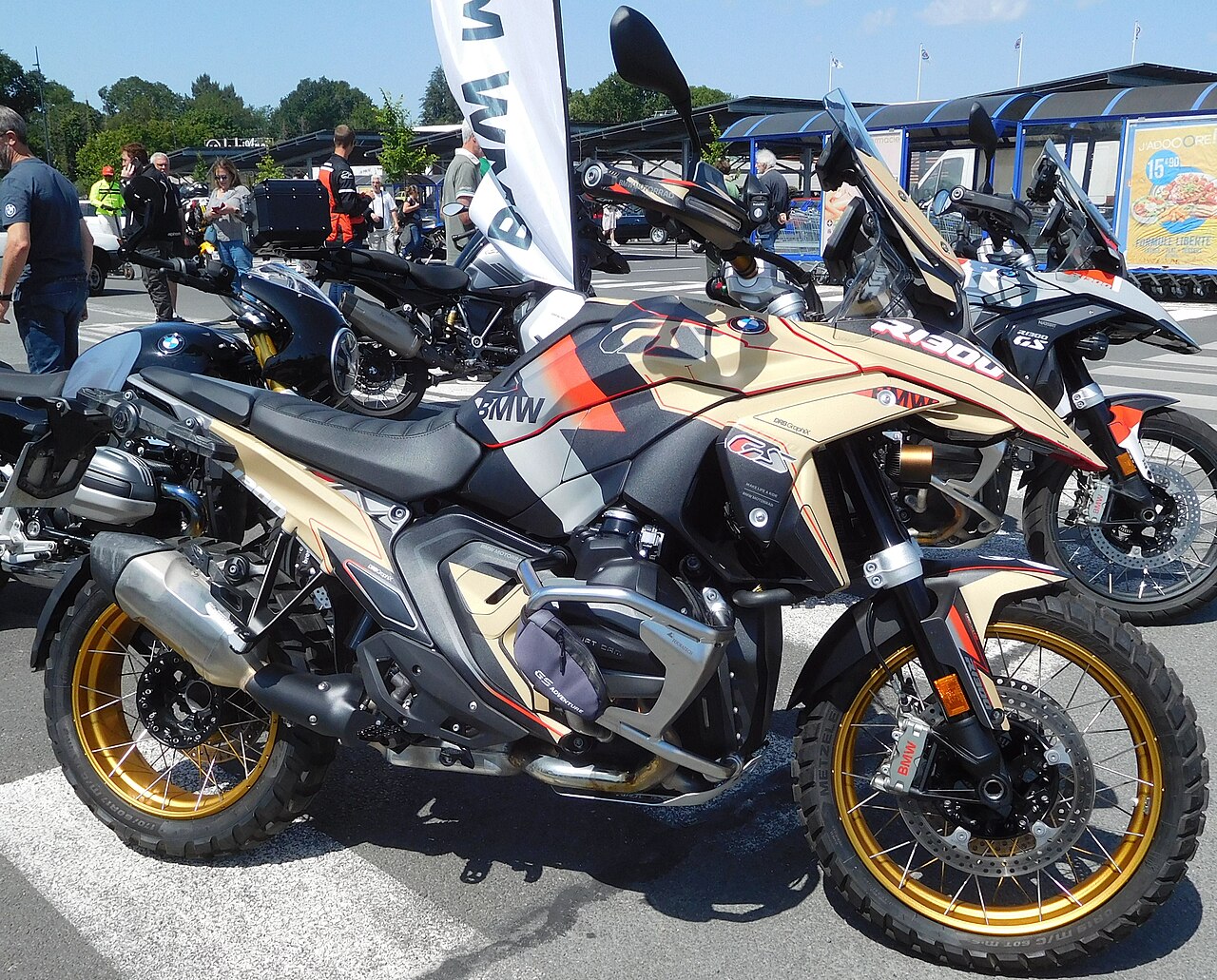
For decades the big boxer GS has been the default answer to a simple question: if you could own only one motorcycle to ride anywhere on earth, what would it be? The R 1300 GS does not merely defend that title — it moves the goalposts. BMW has thrown out the old 1250 architecture, grown the engine, shrunk the waistline and reimagined the electronics, and the sum is genuinely transformative.
Swing a leg over and the first surprise is how compact it feels for such a capable long-hauler. The new frame is narrower, the mass sits lower, and a bike that once demanded respect at walking pace now feels almost eager to be flicked around. This is a GS that has finally learned to hide its bulk.
A bigger boxer with better manners
The air- and liquid-cooled flat-twin now displaces 1300 cc and produces 145 hp with a muscular 149 Nm of torque, and the way it deploys that grunt is the GS masterstroke. There is a wall of drive from just above idle, so overtakes require nothing more than a roll of the wrist, and the characterful boxer thrum still shakes the mirrors at a standstill before smoothing out on the move.
It is not a screamer and does not want to be. Peak power lands at a relaxed 7,750 rpm, and the engine is happiest short-shifting and surfing that fat wave of torque across a mountain range. Fully loaded, two-up, with panniers stuffed, it barely notices the difference — which is precisely the point of a machine built to swallow continents.
An American bagger doesn’t corner like a sportbike, brake like a naked, or care about lean angle the way a track bike does. What it does have to do is carry 700 to 900-plus pounds of motorcycle, plus a passenger, plus saddlebags and probably a tour-pack, down an interstate at 75 mph in a crosswind, on exactly two contact patches. Choose the wrong tyre for that job and you won’t just lose a bit of grip — you’ll get a rear that squares off in a few thousand miles, a front that goes light and vague at highway speed, or a sidewall that simply isn’t rated to carry what you’re asking it to.
Most bagger owners shop tyres the way they shop pipes: by brand loyalty, tread pattern, or how wide they can go before the fender needs cutting. That’s backwards. On a Harley Road Glide, Street Glide or Indian Challenger-style tourer, the tyre spec sheet — profile, load index, speed rating, and how the front and rear are engineered together — matters more than on almost any other class of motorcycle. This guide is about getting that right, not about which brand has the coolest tread pattern on the shelf.
Profile: Why It Matters More on a Bagger Than Anywhere Else
Tyre profile — the cross-sectional shape, essentially how rounded or squared the tread is — decides how a motorcycle transitions from upright to leaned over. On a sportbike this is about quick flickability into a hairpin. On a bagger it’s about something more fundamental: whether hundreds of pounds of loaded steel and two riders tips into a corner smoothly or fights you the whole way in.
Baggers run long wheelbases, typically in the 64 to 67-inch range, with heavily raked front ends and most of the weight sitting low and well back toward the rear axle. A rounder-profile tyre lets that mass roll into a lean progressively; a flatter, more squared profile — often the result of wear rather than original design — makes the same bike want to stand upright mid-corner and then drop in abruptly once it passes the flat spot. That’s exactly the kind of surprise you don’t want with a passenger on the back.
This is also why profile-related wear deserves more attention on a bagger than on almost anything else you’ll ride. Because baggers spend the overwhelming majority of their miles upright on the highway, the rear squares off faster and more predictably than it would on a bike ridden with more variety of lean angle. Once that happens, the bike starts to feel reluctant to turn and then falls into the corner rather than rolling into it — a handling change that shows up well before the tread is legally worn out.
Load Rating: What a Fully Loaded Two-Up Tourer Actually Weighs
Every tyre carries a load index molded into the sidewall — a number, paired with a speed-rating letter, that corresponds to the maximum weight that tyre can safely carry at speed. It’s one of the most important specs on a bagger tyre and the one riders check least. A replacement tyre can look identical to the original fitment, wear a respectable tread pattern, and still carry a lower load index than the tyre it’s replacing.
Do the math honestly before you buy. Start with your bike’s kerb weight, add a passenger, add saddlebags and a tour-pack loaded for a real trip rather than an empty test ride, and you’ll often find a fully dressed two-up tourer is asking its rear tyre to carry close to, or beyond, half a ton once you include the bike itself. Manufacturers spec the front and rear to cover that scenario at the bike’s rated gross weight; the mistake happens when riders swap to a wider or lower-profile tyre for looks and never check whether the load index still covers a fully loaded, two-up trip.
Speed rating matters here too, particularly if you’re chasing a wider custom rear. Going wider than stock sometimes means moving to a tyre line with a lower speed rating than the one it replaced, which is a bad trade for a motorcycle that’s going to spend hours at sustained interstate speed with a full load on board. If in doubt, match or exceed the load index and speed rating molded on your original tyre rather than just eyeballing the size.
Mileage: What All That Weight Does to a Rear Tyre
Weight is the enemy of tyre life, and baggers carry more of it, more consistently loaded, than almost any other motorcycle on the road. A rear tyre hauling a passenger, luggage and a torquey V-twin’s worth of throttle down the interstate simply won’t last as long as the same tyre on a solo commuter bike, and in my experience the rear on a heavily used two-up tourer often needs replacing at something like a third of the mileage the front will manage, sometimes less on serious touring miles through hot climates.
The single biggest lever you have over that number is pressure, checked cold, before the ride, with your own gauge rather than a forecourt airline. Bagger tyre placards typically list a higher rear pressure for two-up and loaded riding than for solo use, and running the solo figure with a passenger and full bags is one of the fastest ways to overheat and prematurely wear a rear tyre. It costs nothing and takes thirty seconds; there’s no excuse for skipping it on a bike this dependent on its rear contact patch.
Everyone selling you an “adventure” motorcycle right now uses the same photograph: red dirt, blue sky, a bike leaned against nothing in particular while the sun does the marketing for them. It is a beautiful lie, and the Australian outback has spent years quietly exposing it. Corrugations that never end, heat that climbs past 40°C by mid-morning, fuel stops separated by distances that make a European touring map look like a joke — this is where “go-anywhere” branding gets tested against something considerably less forgiving than a press launch loop through Spain.
I have ridden most of the current adventure-bike crop across genuinely remote Australian tracks, not the groomed fire trails used for launch photography, and the results split the class cleanly in two. Some of the most hyped, most road-brochure-glamorous machines on sale today are, underneath the rally graphics, road bikes wearing a costume. Others — often cheaper, always simpler — just get on with it. This is my attempt to separate the two, without pretending any of it is a mystery once you have actually broken down four hundred kilometres from the nearest servo.
The Corrugation Problem Nobody Puts in the Brochure
Corrugations are the great leveller. A washboard track vibrates a motorcycle at a frequency that has nothing to do with how expensive it is, and everything to do with how it was engineered. Fasteners work loose that a torque wrench swore would never move. Plastic bodywork panels flex against their mounts thousands of times an hour until the tabs holding them simply give up. Screens crack at the mount. None of this shows up on a spec sheet, and none of it happens on the smooth gravel car park where most adventure bikes get their glossy first photos taken.
This is where the heavier, more heavily bodied machines start to suffer. The KTM 1290 Super Adventure S is a phenomenal piece of engineering on a fast, flowing road, but at 249 kg kerb weight with a tall, top-heavy stance at a standstill, it is not a bike that shrugs off two hundred kilometres of washboard with anything like the composure it shows on tarmac. Its semi-active suspension and road-biased tyres are tuned for continent-crushing at speed, not for absorbing endless small hits at sixty kays an hour with a laden pannier rack shaking everything behind the headstock loose. Compare that to the Yamaha Ténéré 700, which carries far less mass, fewer electronics to rattle, and a chassis tuned from day one around exactly this kind of abuse. It simply does not care.
Fuel Range: The Spec That Actually Decides Whether You Get There
On a road bike, fuel range is a mild inconvenience. In the outback, it is the entire trip-planning exercise. Stretches of two or three hundred kilometres between fuel stops are ordinary once you get past the black-soil plains, and a bike that quietly burns through its tank faster than advertised — because you have been fighting a headwind and holding higher revs through sand — is not a footnote. It is the difference between arriving and pushing a very heavy motorcycle the last forty kilometres yourself.
This is exactly where the badge-first buyers get caught out. The BMW F900GS wears the GS name that built BMW’s entire adventure reputation, and it is a genuinely capable, well-sorted trail bike in isolation. But its own spec sheet gives the game away: a 14.5-litre tank, smaller than almost anything else claiming this kind of ambition. The Ducati DesertX is arguably the more talented off-road chassis of the two, with proper long-travel suspension and the correct wheel sizes, yet even Ducati concedes a short standard fuel range as one of its defining compromises. Genuine outback tools do not make you apologise for the tank.
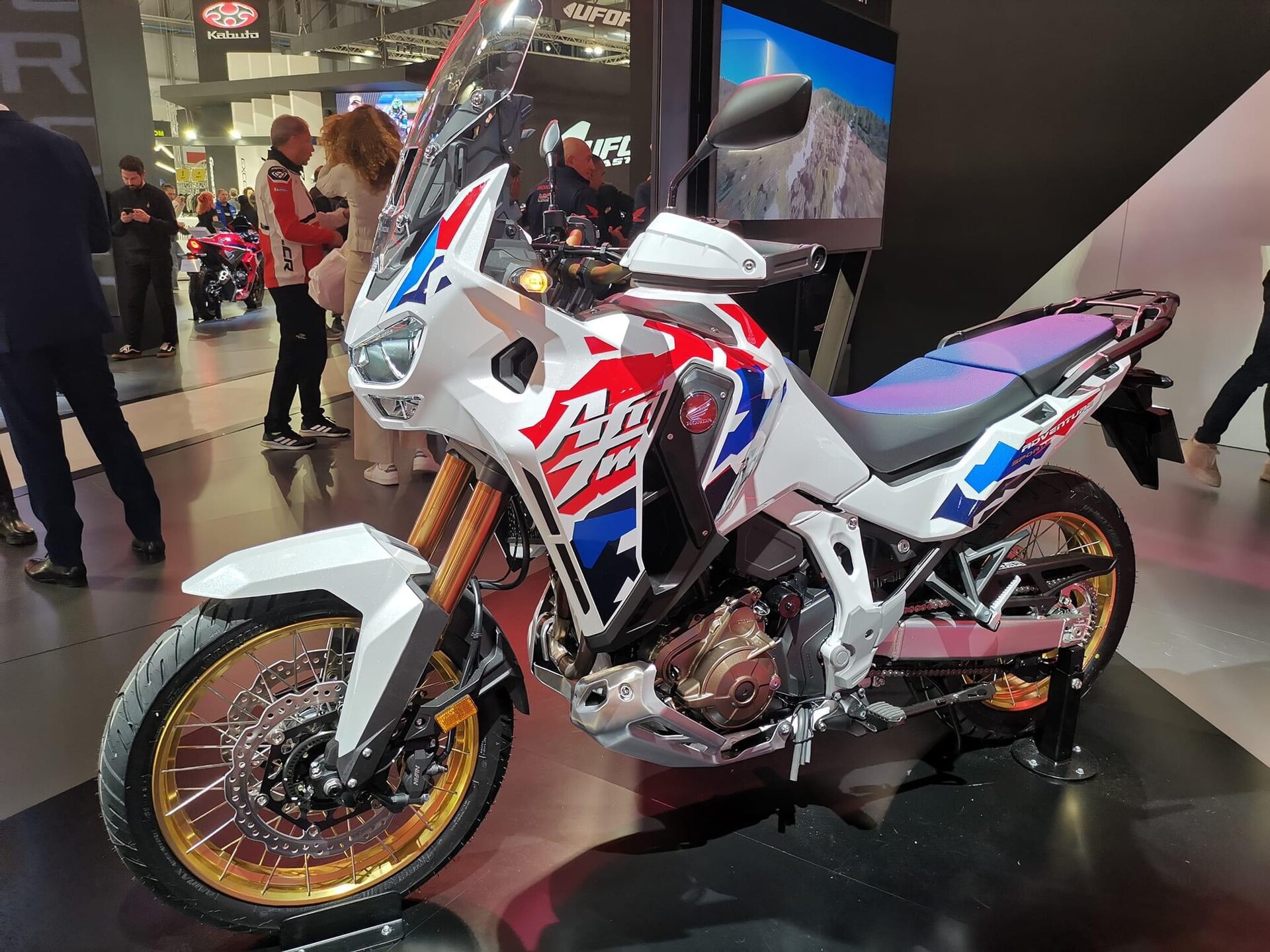
The Africa Twin carries a name soaked in Paris–Dakar history, and unlike many modern adventure bikes it actually lives up to the promise once the tarmac runs out. Where rivals have grown ever more road-biased and ever heavier with luxury kit, Honda has kept its big twin focused on the original mission: crossing continents and conquering dirt with a mechanical dependability you can genuinely stake a trip on.
That is the Africa Twin’s quiet superpower. It may not top the class for outright horsepower or the longest gadget list, but it offers a rare combination of real off-road credibility and legendary Honda reliability. For the rider planning to ride somewhere remote and get home again, that balance matters more than any spec-sheet bragging right.
A parallel-twin built for the long game
The 1084 cc parallel-twin produces a modest-sounding 101 hp, but the figure that matters is the 105 Nm of torque delivered low and early. This is an engine tuned for tractability, chugging cleanly from just above idle so you can pick your way over rocks and ruts without slipping the clutch, then pulling with satisfying muscle when you open it up on a fast gravel road or a motorway on-ramp.
The 270-degree firing order hands it a pleasant V-twin-like thrum and a broad, usable spread of grunt rather than a peaky top-end rush. It will crack a relaxed 200 km/h and sip fuel at around 21 km/l on a steady cruise, and crucially it never feels intimidating — the power is there when you want it and utterly manageable when you do not.
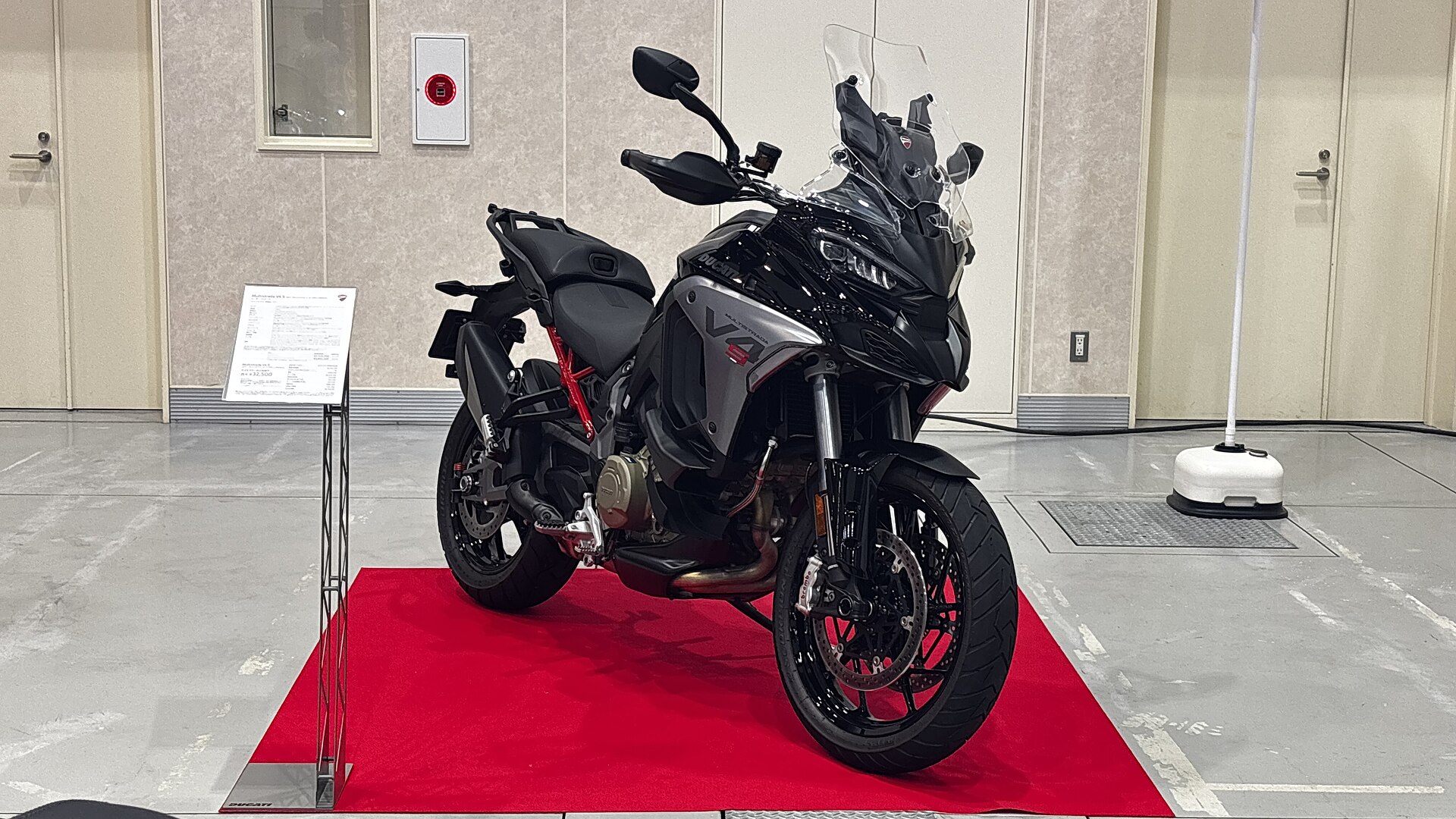
The premise of the Multistrada V4 sounds impossible: take the ferocious performance of a Ducati superbike, wrap it in the comfort and range of a long-distance tourer, and add just enough adventure-bike stance to tackle a gravel road. Somehow, improbably, Ducati has pulled it off. This is a machine that will devastate a mountain pass in the morning and cosset you across a country by nightfall.
It is the ultimate do-everything motorcycle for riders who refuse to compromise on pace, and it represents a genuine leap over the V-twin Multistradas that came before. The switch to a V4 changed the bike’s entire character — smoother, faster, and, crucially, far easier to live with day to day.
The Granturismo V4: pace and patience
The 1158 cc V4 Granturismo is a marvel of dual personality. It produces a thumping 170 hp and 125 Nm, enough to fire the Multistrada to 100 km/h in around 3.2 seconds and on to a 250 km/h top speed, with a spine-tingling V4 wail when you chase the redline. This is genuine superbike performance, delivered from an upright and comfortable seat.
Yet the same engine is a model of civility when you want it to be, pulling smoothly from low revs and cruising with unruffled ease. The masterstroke is its maintenance: Ducati quotes an astonishing 60,000 km valve-check interval, banishing the costly, frequent servicing that once haunted its high-performance machines and making the V4 a genuinely sensible long-distance proposition.
The adventure-touring bike has become the do-everything motorcycle of our age: comfortable enough for a thousand-kilometre motorway day, capable enough to tackle a gravel pass, and practical enough to commute on come Monday. That versatility is exactly why choosing one is so hard. The category now stretches from towering 1300cc flagships to friendly 450cc trail bikes, and the right choice depends far more on the roads you actually ride than on the ones you dream about.
The most important question is not which bike is best, but which bike is best for you. Weight, seat height and power all rise together as you climb the range, and a machine that feels majestic on a fast highway can feel like a burden when you drop it on a remote trail. Let us break the class into its three natural tiers and be honest about what each one asks of its rider.
What Adventure-Touring Really Means
An adventure bike blends long-travel suspension, an upright riding position, a large fuel tank and wind protection into one tall, commanding package. Some are firmly road-biased, wearing cast wheels and touring tyres; others are genuine dirt-capable machines with spoked rims, knobbly-friendly tyres and serious ground clearance. Deciding where on that road-to-dirt spectrum you sit is the single biggest filter you can apply before you shortlist a single model.
Wheels are the quickest clue to a bike’s intent. Cast alloy wheels and road-biased rubber signal a machine happiest on tarmac, while spoked wheels, a larger front rim and knobbly-compatible tyres mark out a serious off-road tool. Ground clearance, suspension travel and the presence of a metal bash plate tell the same story. Decide honestly how much dirt you will really ride, because a road-biased adventure bike is far easier to live with day to day.
The Big-Bore Flagship
The BMW R 1300 GS is the definitive big adventure bike, and it earns its reputation. With around 145 horsepower from its boxer twin, semi-active suspension and radar-assisted rider aids, it crushes distance like nothing else and remains astonishingly agile for its size. But make no mistake: at roughly 237kg fully fuelled it demands respect on loose surfaces and a confident rider to pick it up. Buy big only if most of your miles are tarmac and two-up touring, not tight singletrack.
That capability comes at a price beyond the sticker, though. Big adventure bikes are tall, top-heavy at a standstill and costly to insure and service, and their sophisticated electronics reward a rider who takes time to learn them. If you tour long distances, ride two-up and rarely leave the tarmac, none of that will trouble you and the GS will feel like a magic carpet. Just be honest about whether you will ever use its off-road potential, because most owners never truly do.
The Middleweight Sweet Spot
For a huge number of riders the middleweight is the honest answer. The Triumph Tiger 900 Rally Pro typifies it: a characterful 888cc triple with roughly 108 horsepower, long-travel suspension, spoked wheels and a manageable footprint. It carries luggage and a passenger happily, yet it is light enough that a slip on gravel does not end the day. If you want one bike for commuting, touring and the occasional green lane, this tier deserves the top of your list.
Middleweights also make sound financial sense. They sip fuel, wear tyres and brakes more slowly than the big flagships, and their lower mass means a slip on a loose surface is an inconvenience rather than a full recovery operation. For riders stepping up from their first bike, or anyone who wants genuine versatility without the intimidation, this is the tier that quietly does everything asked of it and asks remarkably little in return.
The Lightweight and Value End
At the accessible end sits the Royal Enfield Himalayan 450, and its charm is real. A single-cylinder engine making around 40 horsepower will never win a motorway drag race, but at roughly 196kg with an approachable seat it is confidence itself off-road, gentle on a learner’s nerves and kind to a tight budget. For new adventurers, shorter riders or anyone whose adventures are more dirt-track than autobahn, less genuinely is more.
There is a purity to the lightweight experience that heavier bikes cannot match. With less mass to manage you learn faster, explore more confidently and worry far less about dropping the bike miles from anywhere. The trade-off is modest motorway pace and a smaller luggage capacity, so a lightweight suits shorter trips, technical terrain and riders who value simplicity. For many, that honest, unintimidating character turns out to be exactly the point of adventure riding.
Ask most chain-maintenance guides how often to lube your chain and they’ll give you a tidy answer: every 500 to 1,000km, wax lube for the road, grease for the wet. That advice was written by someone standing in a garage in a climate that never sees 45°C bitumen, never rides two hundred kilometres of red dust corrugations before breakfast, and has never gone six hundred kilometres between fuel stops, let alone chain cleaner. It’s not wrong, exactly. It’s just not written for us.
Australia doesn’t just make chain maintenance harder — it changes the equation entirely. Heat, fine dust and genuinely brutal distances gang up on your drivetrain in ways a European test rider will rarely experience, and riders who follow imported advice to the letter often find their chain and sprockets cooked well ahead of schedule. This is the guide written for our roads: what actually accelerates wear out here, how to adjust your lube type and intervals for dust rather than just weather, and what chain life you should honestly expect once you factor in the conditions we actually ride in.
Why the Generic Advice Falls Apart Out Here
Start with the heat, because it’s the variable most guides ignore entirely. Ambient temperatures pushing past 40°C across the outback in summer are one thing, but the bitumen itself runs dramatically hotter again, and that heat soaks straight into your chain. Warm lube flows and flings more readily, which is great for penetration when you first apply it and terrible for retention an hour down the road. The light carrier oils in wax-based lubes evaporate faster in that heat too, leaving a thinner protective film sooner than the can’s marketing ever anticipated.
Then there’s the dust, and specifically the kind we have. Fine red bulldust doesn’t just sit on top of a chain the way coarser grit might — it works its way into every gap between the rollers, plates and seals, helped along by the constant high-frequency vibration of a corrugated dirt road. That vibration is the sneaky part: it doesn’t just shake dust loose, it hammers it deeper into the chain with every rotation, effectively turning your own lubricant into a grinding paste if there’s already grit sitting on the surface when you apply it.
Distance is the third factor, and it’s the one that’s hardest to fix with a better product. A generic maintenance interval assumes you’ll have the chance to clean and lube every 500 to 1,000km, but stretches like the Nullarbor, the Gibb River Road or the run through outback Queensland can put several hundred kilometres between towns, let alone somewhere sensible to kneel down with a rag and a brush. By the time many touring riders get a proper opportunity, the interval the manual assumed has already been blown out — sometimes badly.
Rethinking Lube for Dust, Not Just Weather
Most generic advice splits lube choice by weather: wax for dry road use, sticky grease-type lube for the wet. That’s a reasonable starting point in a temperate climate, but it misses the variable that actually matters most on Australian dirt — how tacky the lube is once it’s dry, and how much dust it’s going to grab as a result. A sticky, high-tack chain lube designed to cling through a European winter will happily cling to bulldust as well, and once that mix starts working through the chain under corrugation vibration, you’ve built yourself a lapping compound.
The better approach for anyone regularly riding unsealed, dusty roads is to choose lube by surface, not season. A wax-based lube that cures to a drier, less tacky film sheds dust far better than a wet lube, even though it looks less impressively glossy on the shelf. Save the heavier, tackier lubes for genuinely wet, sealed-road touring where moisture displacement matters more than dust resistance, and default to a wax or light dry-film lube the moment gravel and corrugations enter the picture — regardless of how hot or dry the day feels.
Intervals need the same rethink. On sealed bitumen in the heat, stretching towards the top of the generic 500 to 1,000km window is usually fine. The moment you’re on dusty, corrugated roads, that window should shrink hard — think every fuel stop, or every 200 to 300km, with a proper clean beforehand rather than lube layered over grime. Skipping the clean step is the single biggest mistake we see touring riders make out here, because on corrugations, lubing over dust doesn’t protect the chain — it accelerates exactly the wear you’re trying to prevent.
Out here, a chain doesn't fail from neglect so much as death by a thousand corrugations — every kilometre of dust-caked washboard grinding a little more life out of it than the manual ever accounted for.— Diego Marroquín, Adventure Correspondent
Realistic Chain Life in Australian Conditions
Generic guides love to promise a well-cared-for chain will run past 25,000km, and on clean, temperate, mostly-sealed roads, that’s a fair call. It’s also, frankly, an optimistic number for a lot of Australian riding. Add meaningful stretches of dusty, corrugated dirt into the mix — the exact conditions that draw riders to adventure bikes in the first place — and even a scrupulously maintained chain is working through the three-pronged attack of heat, grit and long intervals between proper attention. Expecting noticeably shorter service life on outback-heavy touring bikes isn’t pessimism; it’s just honest planning.
The flip side is worth saying too: if your riding is mostly sealed-road commuting or touring, even in serious heat, you’re not doomed to short chain life. Heat alone, managed with slightly tighter lube intervals and a lube chosen to resist flinging off in the warmth, is a manageable problem. It’s the combination of heat, dust and corrugations together — not any single factor — that really shortens a chain’s life, which is exactly why the generic advice, built around riders who rarely see all three at once, undersells the risk for anyone doing real outback distance.
Mention electric motorcycles in any group of riders and the same word surfaces within thirty seconds: range. It arrives before power, before price, before handling — a reflex objection so deeply ingrained that most of the people voicing it have never actually run an electric bike anywhere near flat. Range anxiety is real and worth taking seriously, but it is worth asking honestly how much of it is engineering and how much is simply the unfamiliar terror of watching a battery percentage tick down instead of trusting the fuel light we have known since we were teenagers filling a first moped.
To test the fear rather than merely repeat it, spend a genuine week commuting, shopping and blasting backroads on a Zero SR/F, and something interesting happens. The anxiety is at its sharpest on day one, fades noticeably by day three, and by the weekend has been quietly replaced by a new and slightly smug set of habits. The bike did not change over those seven days. The rider did.
What Range Anxiety Actually Is
Range anxiety is not really about distance at all; it is about uncertainty and the cost of getting the sums wrong. On a petrol bike, an empty tank means a five-minute stop at any one of a million forecourts. On an electric one, the imagined worst case is a long, undignified wait at a charger that may or may not exist and may or may not be working when you arrive. The fear is rational, but it is also wildly overweighted, because it fixates on the rare catastrophe rather than the daily reality. Most riders vastly overestimate how far they travel on a normal day, and the yawning gap between the distance we fear running out over and the distance we actually cover is exactly where the anxiety lives, and where it quietly dies once the odometer tells the truth.
The Numbers Behind the Nerves
Start with honest data rather than dread. The SR/F carries a 14.4 kWh battery and returns up to 190 km of city riding — and the average motorcycle commute in most countries is a tiny fraction of that figure. Even a keen weekend rider rarely strings together more than 150 km before wanting a coffee, a stretch of the legs and a sandwich, which is precisely the moment a charger earns its keep. The number that frightens people on paper turns out, most days, to comfortably exceed what they genuinely do in practice, and by a wide margin. The problem is that we do not buy motorcycles for most days; we buy them for the imagined epic tour, and then we let that romantic fantasy veto the eminently sensible daily commute. Manufacturers quote their range figures under favourable conditions, so a sensible buyer discounts the headline number by a fifth and plans around the realistic figure rather than the optimistic brochure one.