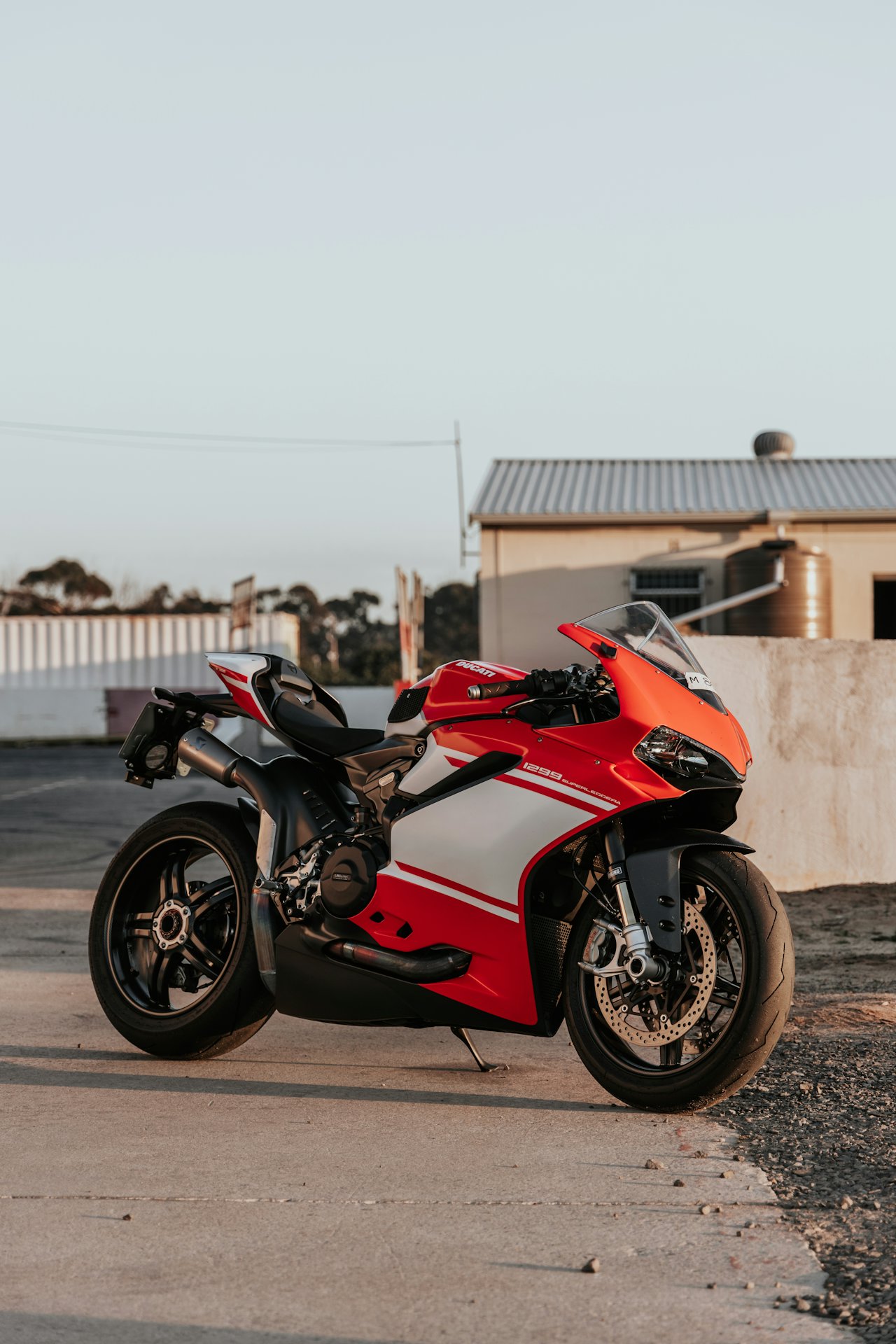
Everything your motorcycle does — accelerating, braking, steering, staying upright — happens through two contact patches no bigger than the palm of your hand. No suspension upgrade, no electronic aid and no amount of horsepower can overrule the grip of your tyres. That makes understanding them the highest-value knowledge a rider can carry, and the good news is that the essentials are far simpler than the marketing suggests.
In this guide we will demystify the three things that actually change how your bike feels and grips: the rubber compound, the profile of the tyre, and the pressure you run. Get these right for your bike and your riding, and an ordinary machine can feel transformed.
Compounds: Grip Versus Longevity
A tyre’s compound is the recipe of its rubber, and it is always a trade-off between outright grip and how long the tyre lasts. Softer compounds grip harder and warm up faster but wear out sooner; harder compounds go the distance but need more heat and care to trust. Manufacturers tune this to the tyre’s purpose, so the trick is simply matching the type to how you ride rather than chasing the stickiest rubber you can find.
- Sport-touring tyres — the sensible default, balancing all-weather grip with high mileage.
- Sport and hypersport tyres — softer, sharper and quick to warm, but shorter-lived.
- Track and slick tyres — maximum grip when hot, unsafe on cold or wet roads.
- Adventure tyres — rated by their road-to-dirt split, from 90/10 to knobbly 20/80.
- Dual-compound designs — a harder centre for mileage with softer, grippier shoulders.
Temperature is the hidden variable in all of this. Every compound has a working range, and grip is compromised until the rubber reaches it, which is why a track tyre feels terrifying on a cold road and a hard touring tyre needs a few kilometres to come good. This is also why the first corners of any ride deserve respect. Match the compound to the temperatures and conditions you genuinely ride in, not the ones in the brochure photographs.
Reading the Sidewall
The sidewall is a data sheet if you know how to read it. A marking such as 180/55 ZR17 tells you the width in millimetres, the aspect ratio as a percentage of that width, the speed rating and the rim diameter in inches. Look too for the four-digit date code inside an oval: the first two digits are the week and the last two the year of manufacture. Even a tyre with plenty of tread is best replaced once it is around five to six years old, because rubber hardens and cracks with age regardless of use.
It is also worth understanding the difference between radial and cross-ply construction, and between tubed and tubeless fitment. Most modern sports and touring bikes run tubeless radials, which run cooler and offer a more stable contact patch at speed, while many spoked wheels traditionally need an inner tube unless designed for tubeless use. Fitting the wrong construction, or mixing a radial with a cross-ply on the same bike, upsets the handling and is best avoided entirely.
Profile and How a Bike Steers
Profile is the cross-sectional shape of the tyre, and it has a direct effect on handling. A more pointed, sportier profile falls into corners quickly and feels eager to turn; a rounder, more touring-oriented profile steers more slowly but feels stable and planted. Fitting a tyre with the wrong profile for your bike, or mismatching front and rear, upsets this balance and can make a bike feel nervous or reluctant. Always fit tyres as a matched pair to the sizes your manufacturer specifies.
Wear changes the profile over time, and not for the better. A rear tyre that has covered many motorway miles develops a flattened central band, which makes the bike feel reluctant to tip in and then fall suddenly past the flat spot — a sensation often mistaken for a mechanical fault. This squaring-off is normal, but it is a clear sign the tyre is past its best for spirited riding even if tread remains. Replace before the handling degrades, not long after.