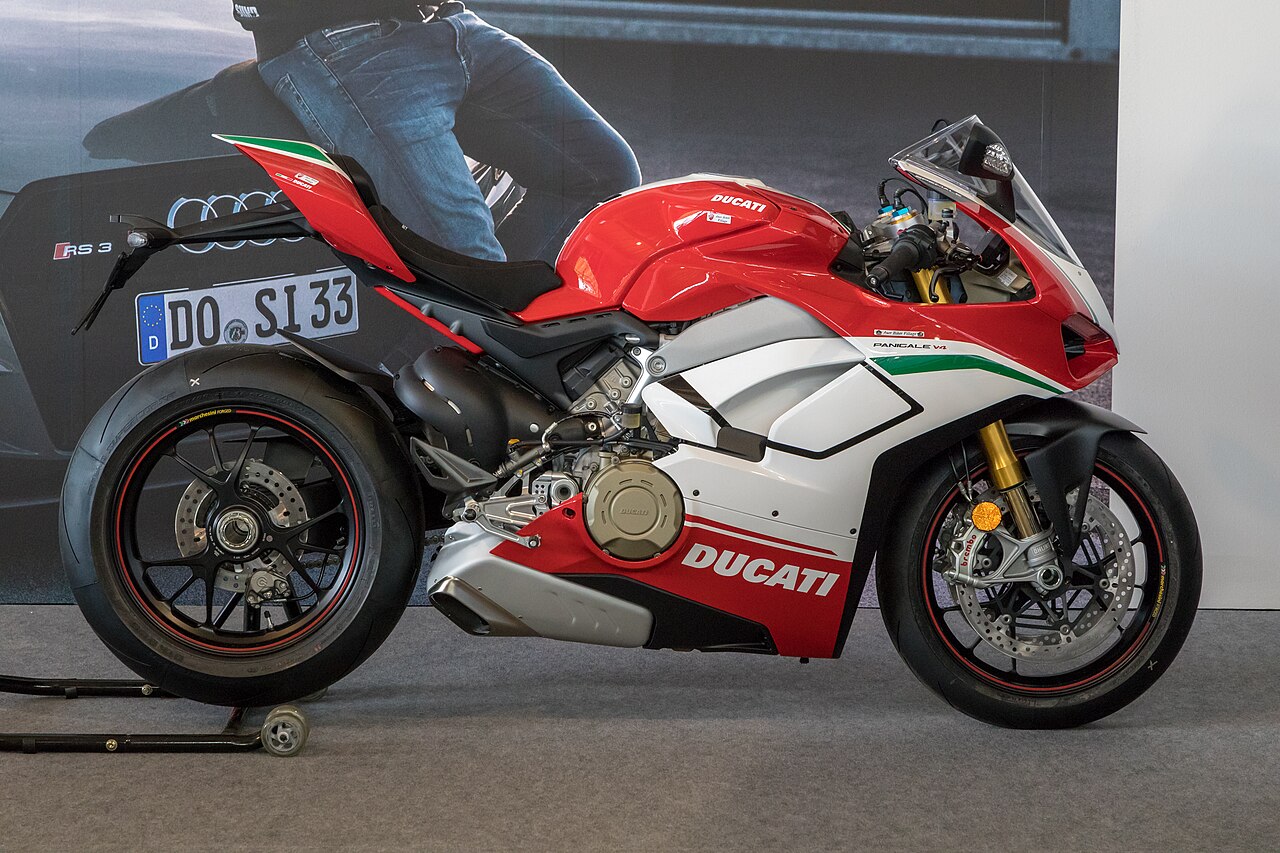
There are fast motorcycles, and then there is the Panigale V4 — a machine that behaves less like a road bike wearing a number plate and more like a Desmosedici GP racer that took a wrong turn out of the pit lane. Thumb the starter and the 1103 cc V4 settles into a lumpy, uneven idle, a deliberate reminder that Ducati borrowed this engine’s counter-rotating crankshaft and firing order straight from the Grand Prix paddock.
For 2025 the Panigale has been honed rather than reinvented, and the result is the most complete superbike Borgo Panigale has ever built. It flatters the quick, forgives the brave, and never once lets you forget that its natural habitat is a circuit with run-off measured in acres rather than metres. Ride it gently and it simmers; open it up and it detonates.
An engine ripped from the Grand Prix grid
The Desmosedici Stradale is the undisputed star. Ninety degrees of liquid-cooled V4 fury spins hard towards 14,000 rpm and serves a claimed 214 hp, arriving with a top-end rush that seems to compress the horizon towards you. Below 8,000 rpm the motor is tractable, almost civil; beyond that the counter-rotating crankshaft and desmodromic valvetrain conspire to hurl you forward with a violence few road vehicles on earth can match.
The headline figures tell only part of the story — 2.9 seconds to 100 km/h and a top speed brushing 300 km/h — because it is the delivery that truly lingers in the memory. The V4 howls where a Japanese inline-four merely screams, a hard-edged bark that turns every underpass into a private concert hall. The up-and-down quickshifter is close to telepathic, and the ride-by-wire throttle stays precise enough to trust at full lean.
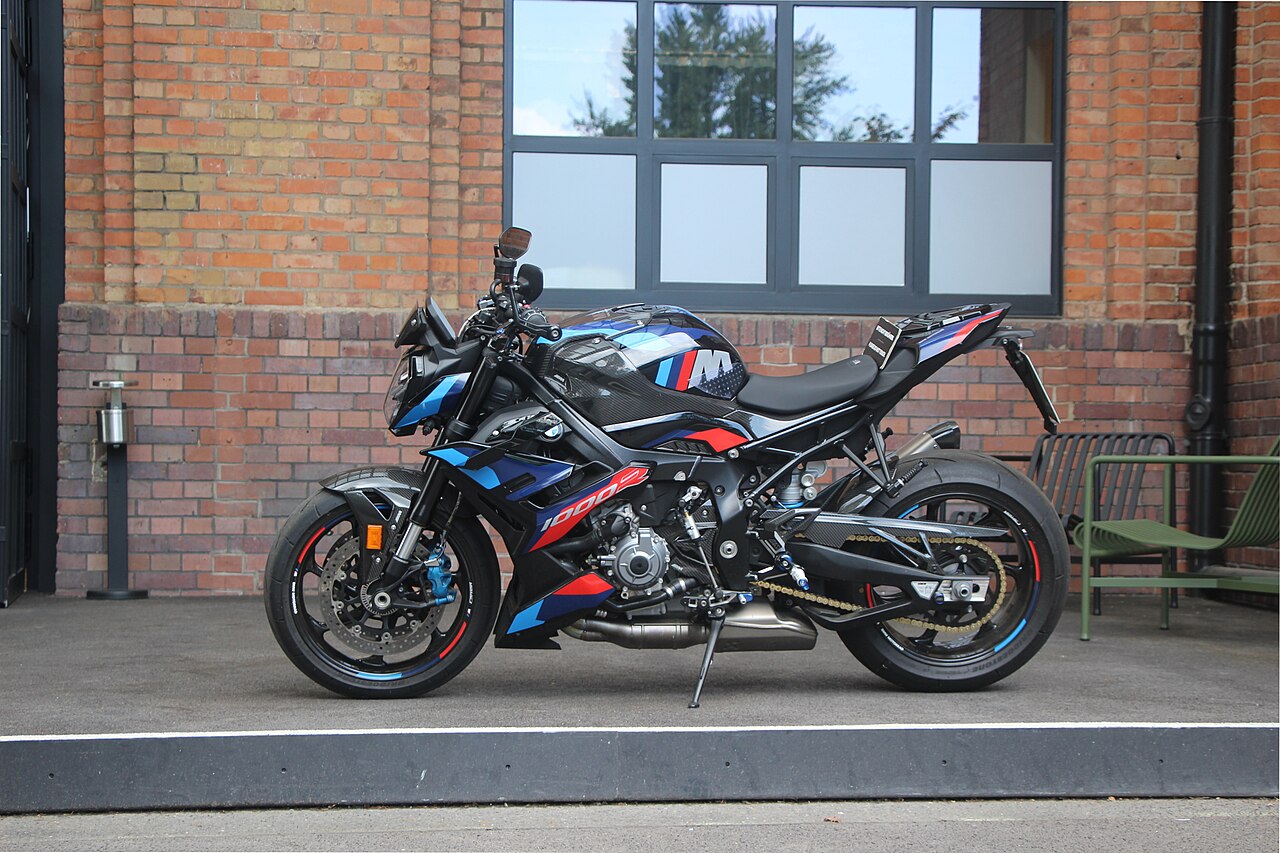
The M badge means something specific in Munich. On four wheels it signals a car engineered to devour a racetrack yet still cruise home in comfort, and the M 1000 RR carries that same philosophy onto two. This is not merely a hotted-up S 1000 RR; it is a homologation special, built so BMW’s factory riders have a weapon worthy of World Superbike, then handed to us with lights and mirrors bolted on.
Where the Ducati seduces with operatic theatre, the BMW conquers with cold, ruthless efficiency. It is the fastest-accelerating, highest-topping superbike in this test, and it feels engineered by people who treat every tenth of a second as a personal insult. On the right stretch of derestricted autobahn, nothing here comes close.
ShiftCam power without the peaks and valleys
The 999 cc inline-four is the headline act. BMW’s ShiftCam variable valve timing hands the M a genuinely broad spread of torque, so the 212 hp peak at 14,500 rpm never feels like a distant reward. There is meaningful drive from 6,000 rpm, a surging midrange, and then a top-end crescendo that pins your visor to the screen and refuses to let go until the limiter chimes.
The numbers are frankly absurd for a road-legal machine: 3.0 seconds to 100 km/h and a genuine 306 km/h maximum. Yet the delivery is so linear, so utterly predictable, that it flatters rather than frightens. The M quickshifter snaps through the six-speed box with mechanical crispness, and the induction howl at full chat is one of motorcycling’s great sensory rewards.
There is no polite way to stage this fight. On one side stands the Ducati Panigale V4, Bologna’s rolling statement of intent — a machine built to translate MotoGP obsession into something you can, in theory, ride to breakfast. On the other sits the BMW M 1000 RR, the German answer to a very Italian question, engineered with the cold precision of a company that treats lap time as a moral duty. Both are homologation heroes, both cost more than a family car, and only one can reign over your fantasy garage.
What makes this comparison so delicious is that the two chase the same summit by opposite paths. Ducati leans on drama, exclusivity and a V4 soundtrack that raises hairs. BMW leans on data, downforce and a relentless will to be faster everywhere. We rode both back to back, on road and on circuit, and came away convinced that the right answer depends less on the bikes than on the person twisting the throttle.
Engine and performance
The Panigale’s 1,103cc Desmosedici Stradale is the emotional heart of this test. Its counter-rotating crankshaft, deep V4 howl and roughly 215 hp arrive with a violence that feels almost alive, the front wheel skimming the tarmac as it charges toward 13,000 rpm. Torque peaks near 124 Nm, and the delivery is broad enough to flatter a road rider yet savage enough to frighten one. This is an engine that performs for you as much as it propels you, filling your helmet with a sound that no inline-four can match.
BMW counters with a 999cc inline-four packed with ShiftCam variable valve tech, spinning to a dizzying 14,500 rpm for a claimed 212 hp. On paper the numbers sit close; in character they live in different countries. The M feels turbine-smooth and metronomic, gathering pace with a clinical shove that simply never relents. Where the Ducati shouts, the BMW gets on with the job, and at the top of the tacho it arguably pulls harder. Both crack 300 km/h with room to spare, and both leave litre-class rivals looking distinctly ordinary.
Chassis and handling
Ducati’s front-frame concept uses the engine as a stressed member, and the latest Panigale finally adopts a double-sided swingarm lifted straight from racing. The result changes direction on a thought — wonderfully intimate and communicative once you trust it. The M 1000 RR, heavier by a whisker at around 192 kg wet, feels more planted and forgiving, its aluminium bridge frame and aggressive winglets pinning the front through fast sweepers with uncanny stability. Both wear elite Brembo-grade braking hardware that hauls speed off with brutal, fade-free authority lap after lap.
While European rivals chase ever-higher horsepower and ever-larger wings, two Japanese icons soldier on with quiet dignity. The Yamaha YZF-R1 and the Suzuki GSX-R1000R are the elder statesmen of the litre class — machines whose fundamental designs predate the current electronics arms race, yet which remain devastatingly capable and, crucially, attainable to riders who could never justify European exotica.
Both make around 200 hp, both have carried riders to world titles, and both offer a riding experience rooted in feel rather than gimmickry. The question is not whether they can still cut it — they emphatically can — but which of these old-guard warriors best rewards a rider today, in a world that increasingly prizes electronic wizardry over mechanical soul.
Engine and character
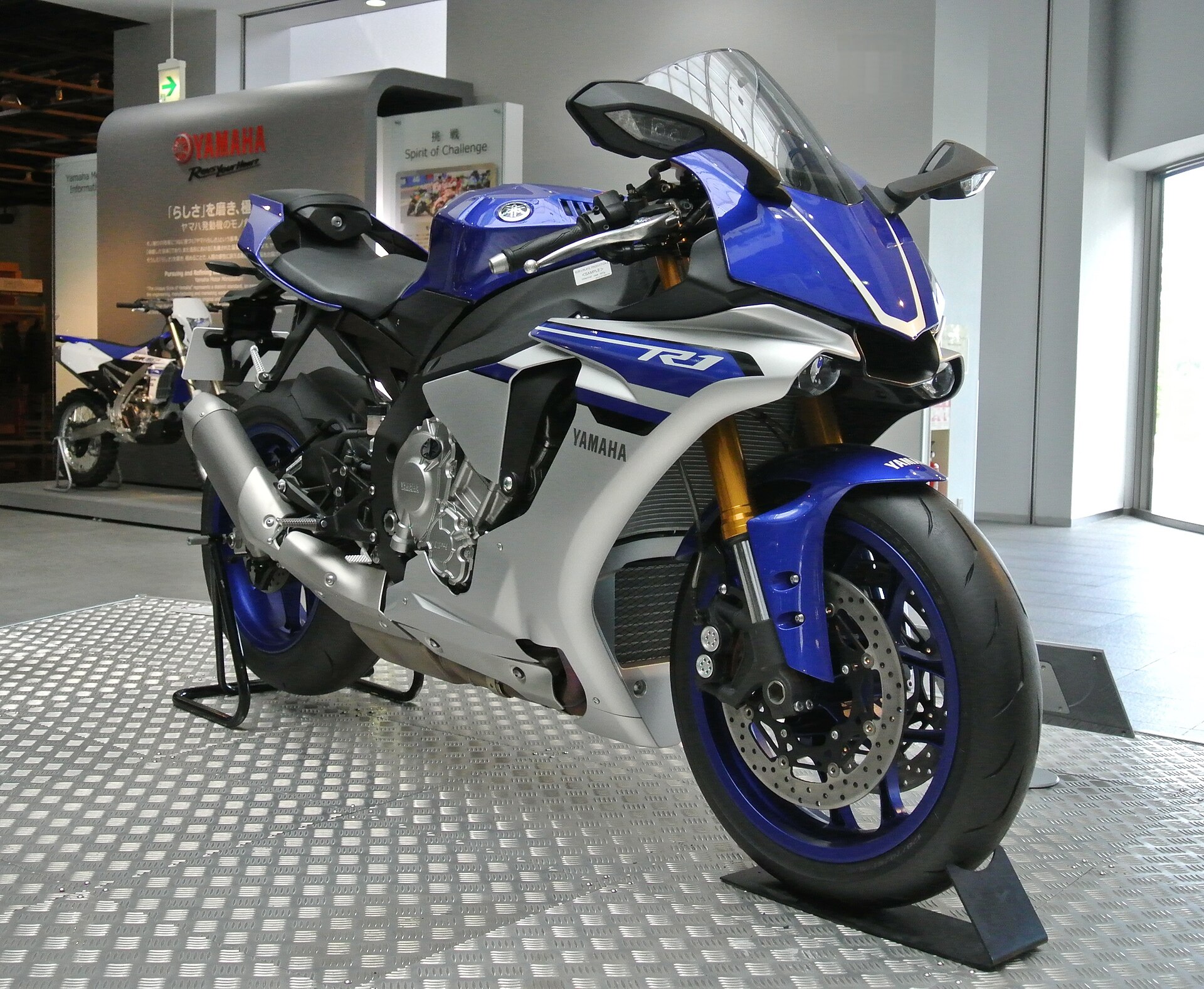
The R1’s crossplane inline-four is its signature. That uneven firing order gives it a burbling, V-twin-like snarl at low revs before it erupts into a banshee wail near the 13,500 rpm redline, producing roughly 200 hp. It feels connected and analogue, the throttle relaying grip information with rare honesty. The Suzuki’s 999.8cc engine takes a different route to a similar peak: 202 hp helped by a clever variable valve system that fattens the mid-range so it pulls hard from surprisingly low down.
On track the R1 feels more exotic and demands commitment near the redline, punishing the timid but rewarding the brave. The GSX-R1000R is the friendlier road engine, its broader torque curve and 118 Nm making it flexible and forgiving on real routes where you rarely see the top of the rev range. One rewards aggression; the other rewards patience. Both are gloriously, licence-threateningly fast.
Chassis and handling
Yamaha’s aluminium Deltabox frame and magnesium subframe make the R1 feel taut and razor-edged, happiest when hurled at an apex by a confident rider with clear intent. The GSX-R1000R answers with Suzuki’s balanced, planted chassis and superb Showa Balance Free forks that deliver remarkable feel over bumps. It is arguably the more forgiving, more communicative package on an imperfect surface, whereas the R1 is the sharper instrument in genuinely expert hands.
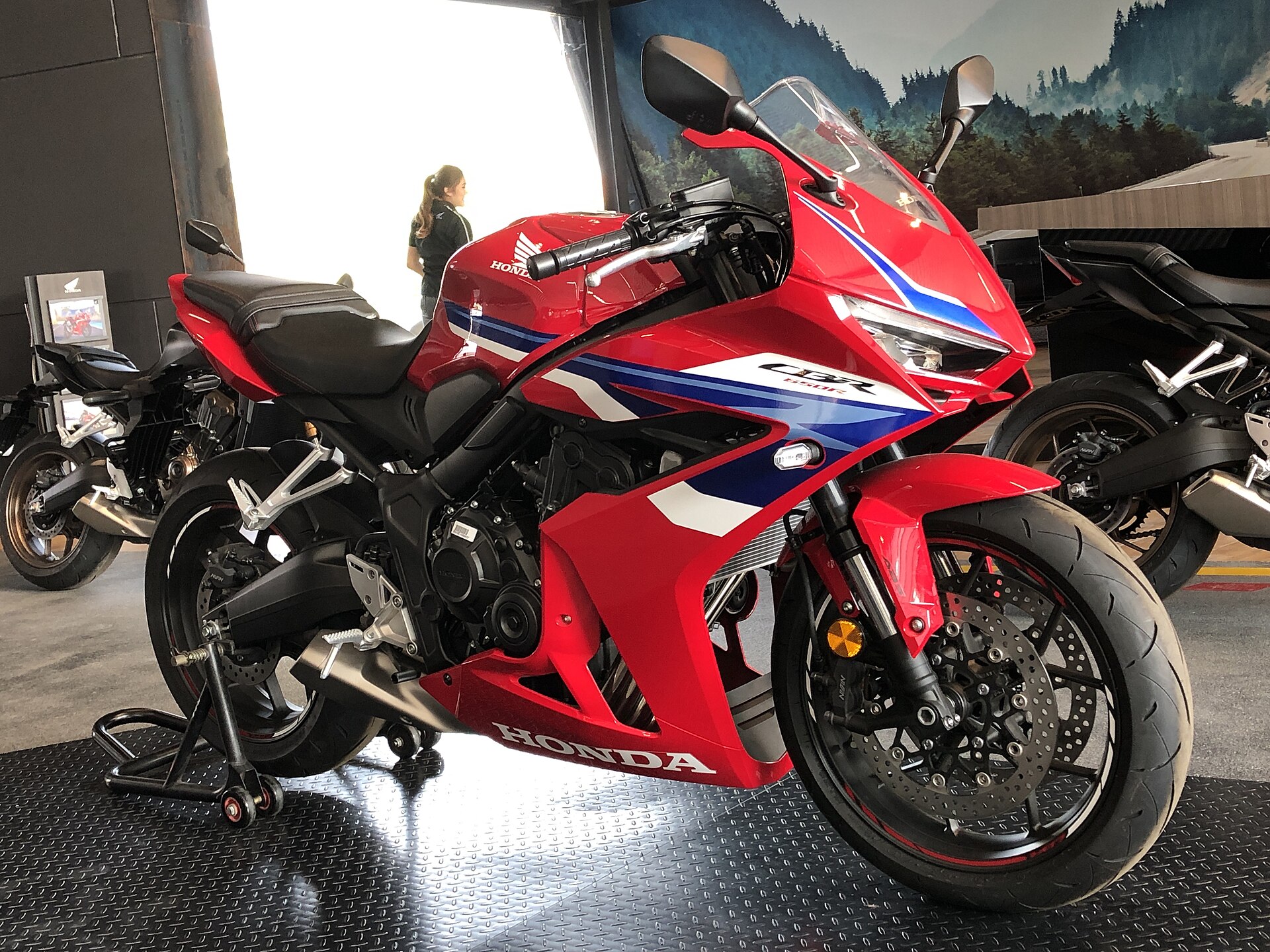
Every new sportbike rider eventually faces the same fork in the road. Do you buy the accessible, sweet-natured supersport that flatters your ability, or the fire-breathing superbike that promises to make you a hero and, occasionally, threatens to make you a statistic? To make the choice concrete rather than abstract, we have chosen two machines that bookend the spectrum: the approachable Honda CBR650R and the ferocious Kawasaki Ninja ZX-10R.
They wear similar full fairings and both look fast standing still on the showroom floor. But they are separated by a chasm of power, intent and consequence. Understanding that gulf clearly is the single most important thing a buyer can do before signing anything, because the wrong choice can cost you money, confidence or worse.
The performance gap
The numbers tell a stark story. The CBR650R’s 649cc inline-four makes a friendly 94 hp — enough to thrill on any road, revvy and characterful, yet never overwhelming for a developing rider. The ZX-10R’s 998cc superbike engine produces around 203 hp, more than double, arriving with a top-end ferocity that can loft the front wheel in the first three gears and reach speeds no public road can legally or safely contain. This is a genuine World Superbike engine with lights and mirrors bolted on.
On a race circuit the ZX-10R is a race-honed missile that will demolish the Honda by whole seconds a lap. On a real road, though, the CBR is often the faster point-to-point tool for a normal rider, because its usable power can be deployed with total confidence where the superbike’s simply cannot. More power is only ever an advantage if you can actually use it, and most of us, most of the time, cannot use anything like 203 hp.
Ergonomics and daily reality
The supersport-style CBR650R offers a relatively relaxed riding position, a softer seat and manageable engine heat — a bike you can genuinely commute on, tour on lightly and enjoy for hours without complaint. The ZX-10R is uncompromising: low clip-on bars, high pegs, a firm seat and an engine that runs hot in traffic. It is glorious for a track day and quietly punishing for a supermarket run. Be brutally honest with yourself about how you will really use the bike day to day.
A modern litre-class superbike is one of the most extraordinary machines you can legally own. With around 200 horsepower, a power-to-weight ratio that shames most supercars and electronics developed on the racetrack, bikes like the Kawasaki Ninja ZX-10R and Suzuki GSX-R1000R deliver performance that was pure fantasy a generation ago. Choosing your first one is thrilling — but it demands honesty, because these bikes have zero tolerance for carelessness.
Let us be clear from the start: a litre superbike should never be a first motorcycle. This guide assumes you already have solid road experience and now want to step up wisely. The aim is to help you pick a machine that flatters your ability, protects you with genuinely useful rider aids, and rewards you as your skill grows rather than punishing you for lacking it.
Respect the Performance
The headline is straightforward. A modern superbike can reach the national speed limit in first gear and accelerate hard enough to loft the front wheel or spin the rear in the blink of an eye. That is not a reason for fear, but it is a reason for respect. The riders who come unstuck are almost always those who treat that power as a toy rather than a tool, twisting the throttle before their skills, their tyres or the road can take it.
Insurance is part of that respect, and it can be sobering. Litre superbikes sit in the very highest premium brackets, especially for younger or newly qualified riders, and theft is a real risk given their desirability. Get firm quotes before you buy, factor in secure storage and a good lock or tracker, and remember that the cheapest bike to purchase is rarely the cheapest to own. Budgeting honestly here prevents an expensive shock a month after the keys land in your hand.
Electronics Are Your Safety Net
The single best reason to buy a current superbike over an older one is the electronics package. A six-axis IMU allows the bike to understand lean angle and manage grip mid-corner, and the aids built on it can save a moment that would once have ended in the scenery. On bikes like the ZX-10R and GSX-R1000R these systems are genuinely sophisticated. Learn to use them, set them conservatively at first, and let them earn their keep while you build feel.
- Cornering ABS — brakes intelligently even while the bike is leaned over.
- Traction control — limits rear wheelspin; start on a higher intervention setting.
- Rider modes — choose a softer power map for road and wet conditions.
- Wheelie and launch control — manage the front end and hard starts.
- Up-and-down quickshifter — clutchless changes that keep you smooth and settled.
- Engine brake control — smooths the effect of the throttle closing into corners.
A word of caution, though: electronics manage grip, they do not create it. Traction control cannot save you from cold tyres, a snapped-shut throttle mid-corner or a target fixation into a hedge. Treat the aids as a safety net for genuine mistakes rather than a substitute for skill, keep them switched on while you learn the bike, and resist the temptation to chase the sharpest, least-assisted mode until your riding truly deserves it.
New Versus Used
A used superbike can look like a bargain, but tread carefully. These bikes are often ridden hard and sometimes tracked, so a full service history, unmarked bodywork and honest ownership matter enormously. A newer example brings the latest electronics, a warranty and known provenance. Whichever way you go, budget for consumables — sport tyres, brake pads and chains all wear quickly on a bike ridden with enthusiasm — and never buy one that has obviously been crashed and rebuilt.
Servicing costs deserve real thought as well. Superbikes run frequent, involved service schedules, and jobs such as valve-clearance checks, fork rebuilds and brakes are not cheap on a high-performance machine. A comprehensive, stamped history is therefore worth paying more for, because it hints at an owner who genuinely cared. If a deal seems too good to be true, assume there is a reason, and walk away from any bike with a suspiciously vague past or mismatched, freshly painted panels.
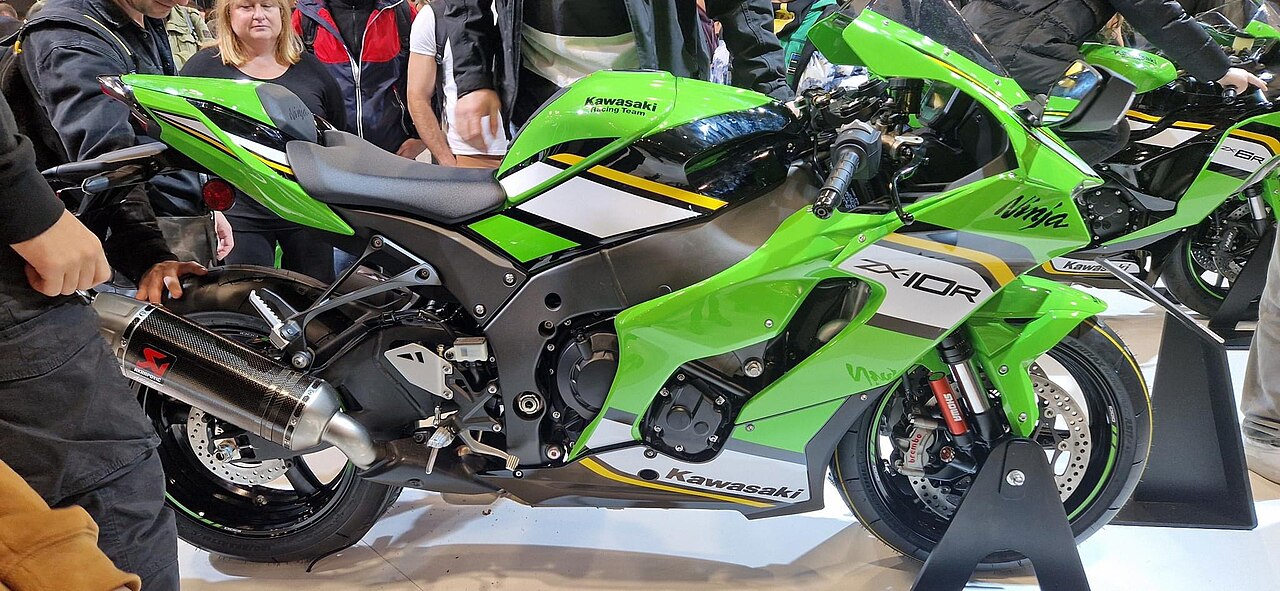
Long before electronics and aerodynamics dominated the conversation, superbike racing offered fans something Grand Prix racing could not: the thrilling sight of the very machines they could buy, or at least dream of buying, battling on the world stage. The Superbike World Championship, launched in 1988, was built on a simple, seductive premise — take production sportsbikes, modify them within tight limits, and let the manufacturers fight it out. From that idea grew one of motorcycling’s most colourful and passionately followed championships, a series defined by fierce rivalries, engine-configuration feuds and a run of champions who rewrote the record books.
Its history is really the history of the road bikes themselves, because every icon on the WorldSBK grid had a showroom twin. To trace the championship is to trace the evolution of the superbike as we know it.
Born in 1988
The championship arrived at the perfect moment. The 1980s had produced a wave of genuinely fast production sportsbikes, and fans hungered to see them raced against one another rather than watching untouchable Grand Prix prototypes. The new series gave manufacturers a global stage to prove their showroom machines, and it rewarded them with something priceless: bragging rights that translated directly into sales. Win on Sunday, sell on Monday was never truer than in early superbike racing, and the paddock quickly filled with factory efforts eager to demonstrate that their litre-bike, or their exotic twin, was the fastest thing a customer could ride home. The template was set, and it endures to this day. It also gave the sport a commercial logic no purely prototype series could match, because every victory doubled as an advertisement a customer could act on the very next weekend.
The Twin Versus Four Wars
The defining drama of the early championship was the feud between big V-twins and the inline-four screamers. Rules that balanced engine size against configuration allowed large-capacity twins to fight smaller-capacity fours, and Ducati seized the opportunity with both hands. The Bologna twins, and above all the legendary 916, became the bikes to beat, their booming character a stark contrast to the wailing Japanese fours. Carl Fogarty, riding those Ducatis with ferocious commitment, became the sport’s first great superstar and a multiple champion, turning the series into essential viewing. The twin-versus-four argument raged for years, and it gave superbike racing a narrative tension that pure single-configuration grids simply could not match. The rivalry had a tribal quality, twin loyalists and four devotees forever arguing the merits of character against outright revs, and it drew in fans who might otherwise never have followed racing at all.
Grand Prix gave us gods on machines we could never touch. Superbike gave us heroes on machines we could almost afford — and that made every win feel personal.— Sam Whitlock, Racing Editor
Japan Strikes Back
The Japanese manufacturers were never going to concede the stage for long. Honda answered with exotic, expensive homologation specials built expressly to win, and the other major marques poured resources into ever-sharper inline-fours. The balance of power swung back and forth across the seasons as rules were tweaked and machinery evolved, producing a genuinely multi-brand championship in which the identity of the dominant bike could change dramatically from one era to the next. This constant churn of competitiveness — the sense that no advantage was ever permanent — kept the racing fresh and the manufacturers honest, and it drove the relentless development that made each generation of road-going superbike sharper than the last. Each swing of the pendulum forced the losing camp back to the drawing board, and the road rider reaped the reward in showrooms full of ever more capable and affordable machines.
The Golden Era and the Records
The modern championship reached extraordinary heights of dominance and drama. Kawasaki, armed with the Ninja ZX-10R, entered a period of near-total supremacy, its rider stringing together a run of consecutive titles that redefined what sustained excellence looked like in the sport and set records many believed would never be approached. That dynasty eventually gave way to fresh challenges as Ducati’s V4 and other manufacturers clawed back competitiveness, and the balance tilted once more. The lesson of superbike history repeated itself yet again: dominance invites a response, the rules nudge the field back together, and the racing renews. It is a self-correcting spectacle, and that is precisely its enduring charm. No dynasty in the championship has ever proved permanent, and the certainty that today’s crushing advantage will be legislated and out-developed away is a large part of what keeps fans coming back season after season.
- 1988: the Superbike World Championship is founded on production-based machinery
- The 916-era Ducatis and Carl Fogarty turn twin-versus-four into box-office drama
- Japanese fours and homologation specials trade the advantage back and forth
- Kawasaki’s ZX-10R era rewrites the record books with a run of consecutive titles
- Ducati’s V4 and a new generation renew the fight in the modern championship
Homologation on Your Street
The most tangible legacy of superbike racing sits in showrooms, not trophy cabinets. The demand for competitive machinery pushed manufacturers to build homologation specials and road bikes bristling with race-bred technology, and those bikes are the direct ancestors of today’s litre-class weapons. A Kawasaki Ninja ZX-10R carries its WorldSBK pedigree openly, its chassis honed by racing success. A Yamaha YZF-R1, with its crossplane engine and MotoGP-derived electronics, embodies the same philosophy of the racetrack informing the road. Every time an enthusiast buys one of these machines, they are buying a piece of the championship’s competitive history, distilled and made street-legal for the daily rider. The engineering flows both ways, too, as lessons learned in the heat of competition feed directly into the next showroom model, keeping the road bikes evolving in lockstep with the racers they spawn.