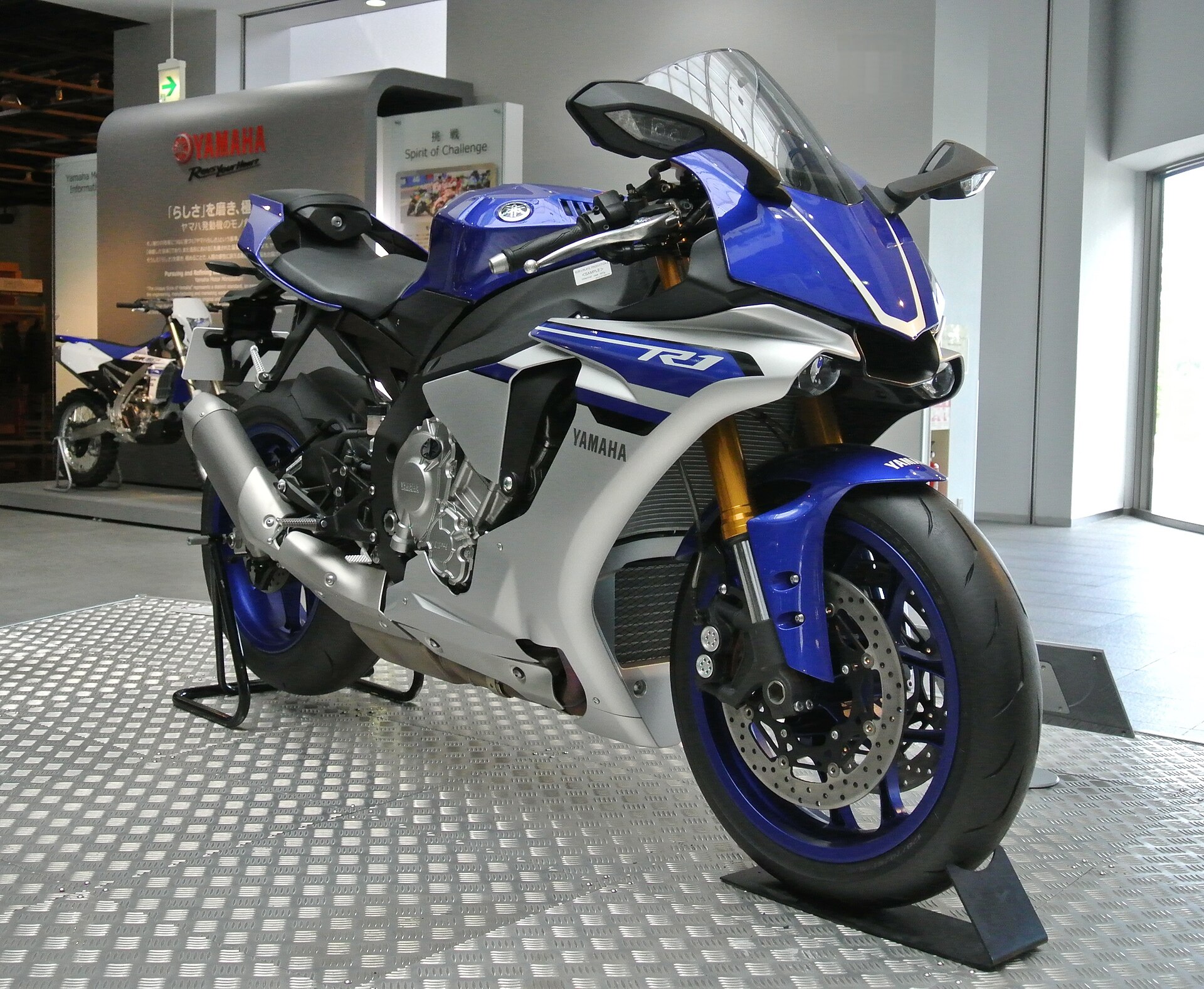
Ask around any car park after a track day and eventually you’ll hear the story: a rider grabs a handful of front brake mid-corner, the ABS pulses, the bike stands up, and suddenly they’re heading for the hedge instead of the apex. The conclusion is always the same — the ABS did this to me. It’s a story that spreads fast, gathers detail with every retelling, and is almost always wrong in the one place that actually matters: the part where ABS gets blamed for a crash it was actively trying to prevent.
So let’s ask the provocative question properly, out loud, and then answer it honestly. Is your motorbike’s ABS trying to kill you? No. It categorically is not. What follows is why — how modern cornering ABS actually works, why the real-world picture points overwhelmingly in its favour, and the small handful of genuine edge cases where it can catch an unprepared rider off guard. Understand those edge cases and you stop fighting the system that is, by any honest measure, one of the best things ever bolted to a motorcycle.
How Cornering ABS Actually Works
Traditional ABS only ever asked one question: is a wheel about to lock? It compared wheel speed against expected road speed and released brake pressure the instant a lockup looked imminent, and it did this on the assumption that the bike was upright. Cornering ABS, now fitted as standard on almost every mid-size and large motorcycle sold new, asks a far smarter question, because it has a great deal more information to work with. A six-axis inertial measurement unit — the IMU — tracks lean angle, roll rate, pitch and yaw many times a second, feeding that data to the ECU alongside wheel speed and brake pressure.
With lean angle in the equation, the system can estimate the tyre grip genuinely on offer at that specific angle, rather than assuming you’re sat bolt upright with the full contact patch available. Lean the bike over and there is simply less rubber and less vertical load resisting a locked wheel, so the system tightens its tolerances and steps in earlier and more gently than it would during upright, walking-pace braking. That is precision, not panic — the electronics are quietly recalculating your traction budget dozens of times a second and only ever spending what is actually there.
Crucially, cornering ABS does not merely stop a wheel locking. Many systems also manage lean-angle-dependent brake distribution between front and rear, and the best of them work hand in hand with lean-sensitive traction control to keep the whole chassis settled under simultaneous braking and turning loads — a job no human nervous system can do at the speed the electronics operate.
The Real-World Record: Fewer Crashes, Not More
Strip away the anecdotes and the wider picture is remarkably consistent: insurers, safety researchers and manufacturers who track long-term claims data all point the same direction. Motorcycles fitted with ABS are involved in meaningfully fewer crashes than otherwise comparable non-ABS machines, and the gap is widest in precisely the scenario riders fear most — an emergency stop that goes wrong. The reason is unglamorous but decisive: most riders, under genuine panic, brake later and harder than they believe they do, and a locked front wheel at that moment ends in a low-side almost every single time. ABS simply removes that one specific failure mode from the equation, quietly and repeatedly.
None of which means ABS makes crashes impossible, and no honest reviewer would claim otherwise. It cannot manufacture grip that genuinely isn’t there — sheet ice, a diesel spill or a wheel already airborne over a mid-corner bump are still beyond anything a computer can fix. What it reliably does is convert the single most common cause of a braking crash — an unintended front-wheel lockup — into a complete non-event, over and over, for riders who would otherwise never have felt it coming.
Where ABS Genuinely Surprises Riders
The myth doesn’t come from nowhere, though, and being straight about where cornering ABS genuinely feels strange is the whole point of this piece. Loose gravel and hard-packed dirt are the biggest offender. ABS calibration is built around a wheel-speed model that assumes a reasonably consistent, high-friction surface; on loose stones that assumption breaks down constantly, because wheel speed naturally fluctuates as small stones roll and shift beneath the tyre. The system can misread that fluctuation as an impending lockup and release brake pressure right when you wanted maximum retardation, extending your stopping distance rather than shortening it. It’s exactly why serious adventure bikes ship with a switchable, reduced-intervention off-road ABS mode — and why leaving it in road mode on a gravel track is asking for trouble.
Mid-corner trail braking is the second genuine edge case, and it tends to catch sportier riders rather than novices. Trail braking deep into a bend — carrying a trace of front brake well past turn-in — is a legitimate, widely taught technique, but it asks the system to make its lockup calculation at the exact moment lean angle, load transfer and available grip are all shifting simultaneously. Push that combination right to the edge of what the tyre can actually give, particularly on cold rubber or a greasy patch, and cornering ABS will intervene to protect the front. That intervention — a firm pulse through the lever while you’re leaned right over — can feel abrupt to a rider who wasn’t expecting it, even though the system is doing precisely what it was designed to do.
A third, smaller surprise crops up when riders swap between bikes: a rear wheel lifting slightly under very hard front braking, or an unfamiliar amount of lever pulsing compared with whatever they rode last. Neither is a fault. It’s simply a different calibration philosophy, and the fix is familiarity with your own machine, not distrust of the technology fitted to it.
Cornering ABS has never once tried to kill me — but on at least two occasions, it has very obviously stopped me killing myself.— Hana Kobayashi, Features Writer
Riding With ABS Instead Of Fighting It
The riders who get the most out of modern ABS are the ones who stop treating it as a rival fighting their inputs and start treating it as a grip calculator working on their behalf. That means braking with real intent rather than hesitation: squeeze the lever progressively and with genuine commitment in a true emergency, because the system is built to be leaned on hard, not feathered nervously. Trust the pulse when it arrives — it is information, not malfunction — and resist the urge to snap the lever shut the instant you feel it, because that instinct defeats the entire point of the system.
It also means respecting the two edge cases above rather than resenting them. Switch to a gravel or off-road ABS mode before the tarmac runs out, not after you’ve already lost the front on loose stones. And if trail braking deep into corners is part of your riding, build that habit gradually on familiar roads or a track day first, and accept that an intervention there is the electronics catching a margin you had already spent — not a machine deciding to work against you.
- Learn where your bike’s ABS modes live and switch to gravel or off-road mode before the surface changes, not after.
- Squeeze the front brake progressively and with real commitment in an emergency — ABS rewards decisive input, not hesitation.
- If you trail brake, build the technique gradually on familiar roads or a track day before pushing it near the limit.
- A firm pulse at the lever mid-corner is the system working, not failing — don’t snatch the lever shut in response.
- Spend five minutes in an empty car park learning exactly how your specific bike’s ABS feels before you ever need it for real.
- Only disable ABS if your bike offers it as a deliberate, understood option — never out of a vague sense that it’s “in the way”.
Verdict
Your motorbike’s ABS is not trying to kill you. On the balance of overwhelming real-world evidence, it is one of the most quietly effective pieces of engineering ever fitted to a motorcycle — a system that has converted countless would-be low-sides into uneventful, forgettable stops, most of which the rider involved never even registered as a near miss.
The edge cases are real, but they are narrow, well understood and entirely manageable: respect loose surfaces, build your trail-braking technique deliberately, and treat every pulse at the lever as useful information rather than betrayal. Learn those few rules and cornering ABS stops feeling like an unpredictable passenger on your motorcycle, and starts feeling like exactly what it is — the best safety net riding has ever built in.
Sooner or later every rider gets caught in the rain, and how you handle it separates the anxious from the assured. Wet roads are not something to fear so much as something to respect: grip is reduced, vision is compromised and hazards multiply, but none of it is beyond a rider who understands what is happening and adjusts accordingly. In many ways wet-weather riding makes you a better rider full stop, because it forces the smoothness that dry roads let you get away with ignoring.
This guide covers the three pillars of riding in the wet — managing traction, protecting your vision and holding your nerve — with practical technique you can apply the very next time the sky opens. Master these and a downpour becomes a minor inconvenience rather than a reason to stay home.
Understand Reduced Traction
Rain lifts oil, rubber and dust from the road surface, and the most treacherous moment is the first ten to fifteen minutes of a shower before that film washes away. Grip can drop dramatically, so recalibrate your expectations: leave more space, carry more corner-entry margin and assume everything is more slippery than it looks. Modern tyres shed water impressively well, but physics still applies, and the smoother your inputs, the more of that reduced grip you keep in reserve.
Standing water brings its own hazard: aquaplaning, where a wedge of water lifts the tyre clear of the road and grip vanishes entirely. Motorcycle tyres, being narrow and rounded, resist it better than car tyres, but deep puddles, flooded gutters and fast rivers of runoff can still catch you out. If it happens, ease off the throttle, keep the bike upright and avoid braking or steering until you are through, because fighting an aquaplaning tyre only makes matters worse.
Be Smooth With Every Input
Smoothness is the whole game in the wet. Brake earlier and more gently, squeezing the lever progressively rather than grabbing it, and use both brakes to spread the load. Roll the throttle open gradually so the rear tyre is never asked for grip it cannot give. Change direction with gentle, deliberate steering inputs and avoid abrupt mid-corner corrections. Think of yourself as riding on a layer of eggshells: every action deliberate, nothing sudden, your weight relaxed through the bars.
Your body plays a part too. Grip the tank lightly with your knees so your arms stay relaxed and free to make small corrections, rather than clamping the bars and transmitting every twitch into the steering. Sit a fraction more upright and central, keep the bike more vertical through bends by counter-steering a touch earlier, and look far ahead to give yourself time to react. A calm, loose upper body is worth more than any tyre technology when the road is wet.
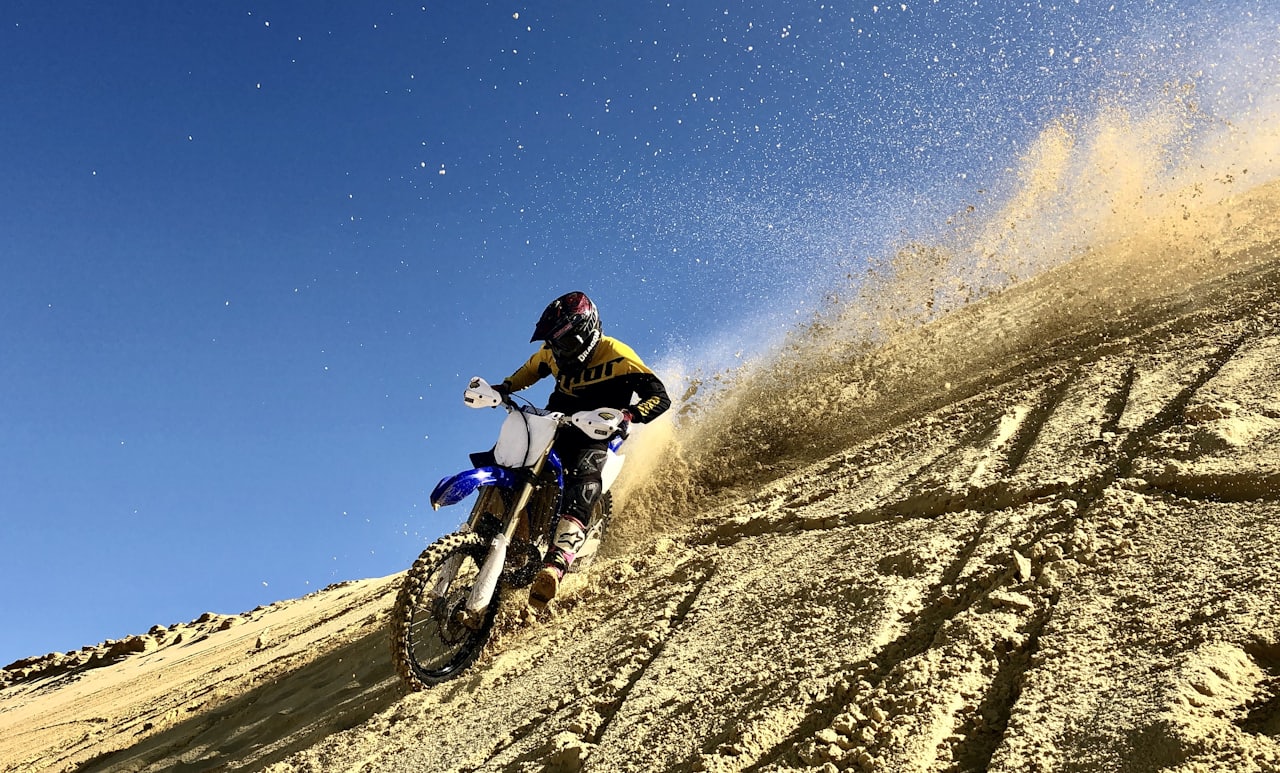
There is no better way to become a smoother, safer and faster rider than a track day. With no oncoming traffic, no junctions, generous run-off and marshals watching every corner, a circuit is the one place you can explore what your motorcycle and your skill can really do in relative safety. Whether you ride a focused sportbike like the Yamaha YZF-R1 or a humble commuter, the experience will transform your road riding — and it is enormous fun.
The prospect can feel daunting the first time, so this guide walks you through preparing your bike, choosing your gear and, most importantly, managing your mindset. Get these right and your nerves will melt away within a couple of sessions, leaving only a grin you will struggle to wipe off for a week.
Prepare Your Bike
Most track days require your bike to pass a basic technical inspection, so prepare it the night before rather than in the paddock at dawn. The idea is simple: nothing should leak, come loose or shine a distracting light. Tape over the lights and mirrors or remove them, check your tyres and fluids, and make sure everything is tight. A well-prepared bike passes scrutineering in minutes and lets you concentrate on riding.
- Tape over or remove lights, mirrors and number plate to prevent flying glass.
- Check tyre condition and set pressures to your tyre supplier’s track recommendation, often a little lower than road.
- Top up and check for leaks — oil, coolant and brake fluid all get inspected.
- Ensure the chain is correctly tensioned and lubricated, and all fasteners are tight.
- Remove loose luggage, tank bags and anything that could fall off at speed.
Arrive with the bike ready and your paperwork in order. You will usually need to sign on, present your riding licence and sometimes proof of insurance or a signed disclaimer, then put your bike through noise testing and scrutineering. Get there early so none of this is rushed, unload calmly, and give yourself time to walk or study the circuit map before the first session. A relaxed, unhurried morning sets the tone for a safe and genuinely enjoyable day.
Gear Up Properly
Track days have stricter gear rules than the road, and rightly so. You will typically need a one-piece leather suit or a two-piece that zips together all the way round, plus a full-face helmet in good condition, leather gauntlet gloves and proper boots. A back protector is essential, and many riders add a chest protector or an airbag vest. If you do not own leathers, most circuits and organisers offer hire kit, so a lack of gear is no reason to stay away.
Do not overlook the smaller details of comfort and safety. Fresh brake pads and good tyres matter more on track than anywhere else, earplugs protect your hearing over a long and very loud day, and a drink and some food kept in your paddock spot keep you sharp between sessions. If you are hiring gear, arrive early to be fitted properly, because ill-fitting leathers are distracting and a poorly secured helmet is genuinely dangerous at track speeds.