Most riders in this country put the bike away in October and dig it back out in March. I don’t blame them — cold hands, salt-caked chains and eight hours of darkness either side of the commute are a hard sell. But five months of storage is also five months of atrophying skills, a flat-spotted battery and a machine you’ll barely recognise come spring. The alternative to hibernation isn’t heroism, it’s specification: get the right kit on the right bike and a genuine UK winter commute stops being a survival exercise and becomes just another ride, done in more layers.
This isn’t a list of vague comfort tips. It’s a practical build sheet — heated grips and gear, the tyre compound that actually matters below 7°C, keeping road salt from eating your drivetrain, why ABS and traction control stop being a nice-to-have and start being the whole point, lighting for a commute done mostly in the dark, and which categories of bike genuinely shrug off a British winter rather than merely enduring it.
Heated Grips and Gear Are Not Optional
Numb fingers aren’t a minor discomfort — they’re a safety problem. Lose fine motor control in your fingertips at motorway speed and your braking and clutch feel both degrade before you’ve noticed anything is wrong. Heated grips are the single highest-value modification you can make to a winter bike, full stop. They draw modest current, most factory electrical systems shrug them off without complaint, and even a basic aftermarket set with a proper thermostatic controller turns a sub-zero commute from an ordeal into a non-event. If your bike doesn’t already have them, this is where the money goes first, ahead of everything else on this list.
Grips are only half the job. A heated jacket liner or vest, wired through a fused lead straight to the battery, keeps your core warm enough that your brain stays on the road rather than fixating on the cold — and a warm rider makes sharper decisions. A Pinlock-style anti-fog visor insert is close to mandatory once your breath starts condensing on the inside of the lid, and a decent neck tube stops draughts finding the one gap your jacket collar leaves. Just be honest about total load: stack heated grips, a heated vest, a heated seat and a set of auxiliary lights onto an older bike’s charging system and you can genuinely outrun what the alternator produces at idle. Get the charging system checked before you add the third or fourth accessory, not after the battery starts sulking.
Tyres: Buy the Compound, Not Just the Size
Rubber has a working temperature window, and most sports-orientated compounds stiffen up hard as the mercury drops. Below roughly 7°C, a compound pliable at 30°C on a summer B-road can feel glassy and vague, exactly when you need the opposite. This is the most underrated winter upgrade: fit a sports-touring or commuter-focused compound with a broader, more consistent temperature range rather than assuming your summer rubber will simply cope. It costs nothing extra over replacing worn tyres with the same compound you removed, and the difference is bigger than most riders expect.
Tread pattern matters as much as compound. A tyre with generous grooving and sipes clears standing water and slush far more effectively than one optimised for dry-line grip — don’t assume a deep, aggressive tread means more security, since off-road-biased knobblies can feel notably squirmy on wet tarmac despite looking tougher. Resist the temptation to drop pressures for more grip in winter, too; an underinflated tyre heats unevenly and handles worse in the cold, not better. Stick to the manufacturer’s spec, and check it more often than in summer, because cold air alone will quietly drop your psi over a few weeks.
Chain, Corrosion and the War Against Road Salt
UK winter roads are treated with grit and salt, and salt is relentless on anything metal. An unprotected chain can develop a visible bloom of surface rust within days of a salted commute, and from there wear accelerates fast. Switch to a wax-based chain lube for the season — it doesn’t sling off at speed the way a wet lube does, and crucially it doesn’t attract the same amount of road grime into the rollers. Halve your usual lubing interval too; if you’d normally lube every few hundred miles in summer, treat winter as needing roughly double the attention.
Chain aside, salt goes after fasteners, brake calipers, exposed alloy and electrical connectors just as happily. A corrosion-inhibiting spray applied to these areas before the season starts is cheap insurance against seized bolts and crusted terminals in spring. Rinse the bike with plain fresh water after any salted-road ride, paying attention to the underside, wheels and calipers, but keep a pressure washer well away from wheel bearings, the headstock and swingarm pivots — you’ll do more harm forcing water past a seal than the salt would have done left alone. Worth noting: if your next bike has shaft or belt final drive, you sidestep most of this entirely, which is a genuine and underrated winter-commuting advantage.
- Fit heated grips if you don’t already have them — the highest-value single upgrade.
- Switch to a sports-touring or commuter tyre compound rather than trusting summer rubber below 7°C.
- Move to a wax-based chain lube and roughly double your normal lubing frequency.
- Apply a corrosion inhibitor to fasteners, calipers and electrical connectors before the salt starts.
- Rinse the underside, wheels and calipers after salted-road riding — avoid jetting bearings and seals directly.
- Check tyre pressures more often; cold air drops psi faster than you’d expect.
ABS and Traction Control Earn Their Keep in the Wet
Picture a wet roundabout in December: a diesel sheen from idling traffic, a mat of fallen leaves gone slick, a drain cover polished smooth by a thousand tyres. Under hard braking into that scenario, a locked front wheel on a painted line or a manhole cover is how good riders end up on the ground through no fault of their own. ABS doesn’t stop this happening less often than you’d think — it stops it happening to you, buying back the margin that a low-grip surface takes away in an instant. In my testing, any bike without at least switchable ABS is a genuinely harder sell for winter commuting, no matter how good it is in July.
Traction control does the same job on the way out of a junction rather than into one, smoothing a clumsy or startled throttle input so the rear doesn’t suddenly spin up on a greasy patch you didn’t see. A dedicated rain or road riding mode, which softens throttle response and lets the electronics intervene earlier, is worth having and worth actually using rather than defaulting to the sportiest setting out of habit. Increasingly, mid-range bikes carry cornering-sensitive, IMU-based systems that add intervention margin exactly when you’re leant over — precisely the moment a low-grip surface bites hardest. None of this is a substitute for good technique, though; it widens the margin for error, it doesn’t remove the need to ride within it.
Traction control never rides for you. It just quietly widens the gap between a bad decision and a bad crash.— Sam Whitlock, Racing Editor
Lighting and Visibility When the Sun Barely Rises
By December, plenty of UK commutes are done entirely in the dark, both ways. Add spray thrown up by other traffic, a driver’s attention already stretched thin by the conditions, and dark winter kit against a dark wet road, and you have a genuine visibility problem that no amount of skilled riding fully solves alone. Auxiliary lighting or a proper LED headlight upgrade pays for itself quickly, and reflective or hi-vis elements on your jacket and helmet make a real difference to how early other road users register you exist. It’s also worth remembering that a film of road grime and salt spray dulls a headlight lens or a visor far faster in winter than you’d notice — a quick wipe before you set off matters more than it sounds like it should.
Cold weather is also unkind to batteries, and a battery already working harder to crank over a cold engine has less spare capacity for heated grips and extra lighting on top. Check battery health and terminal connections before the season properly bites, and fit a smart charger if the bike sits for stretches of days rather than being ridden daily. None of this replaces riding position: sit a little further from the gutter where a following driver has more time to register your lights, cover the brake earlier than you would in summer, and give yourself the stopping distance that assumes the car behind hasn’t quite seen you yet.
Which Bikes Actually Cope With a Genuine UK Winter Commute
Adventure bikes are the standout category for this, and it isn’t close. An upright, commanding riding position, a generous screen, and hand guards fitted as standard all cut wind chill dramatically before you’ve spent a penny on aftermarket kit, while longer suspension travel shrugs off potholes and sunken drain covers hidden under standing water rather than transmitting every one into your wrists. The Yamaha Ténéré 700, Triumph Tiger 900, Honda Africa Twin, Suzuki V-Strom 800DE and Royal Enfield Himalayan 450 all fit this brief comfortably. Push further up the range into full tourers like the BMW R 1250 RT or Honda Gold Wing and you get heated grips and seats as standard plus shaft drive that removes chain maintenance from the equation entirely — the trade-off is size and weight that can feel like a lot of bike for a tight urban commute.
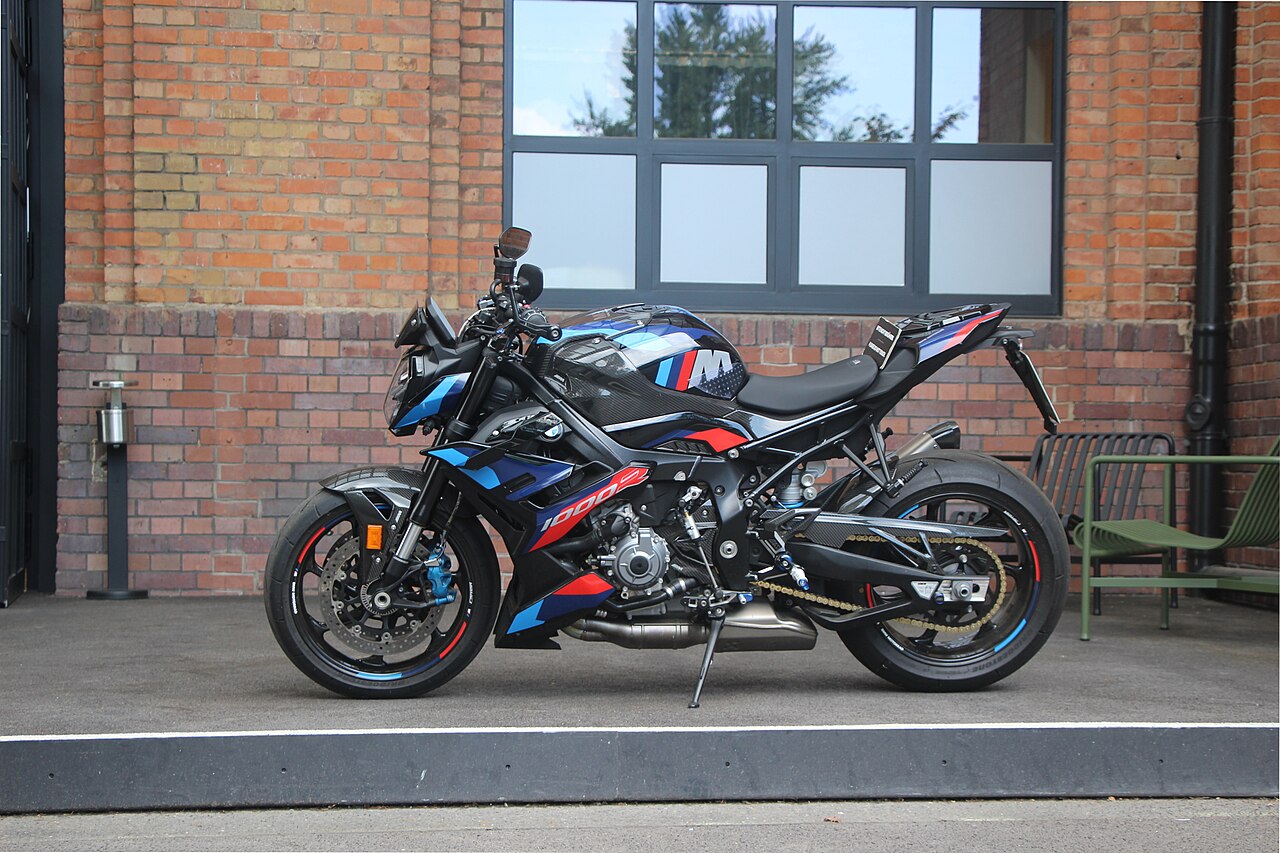
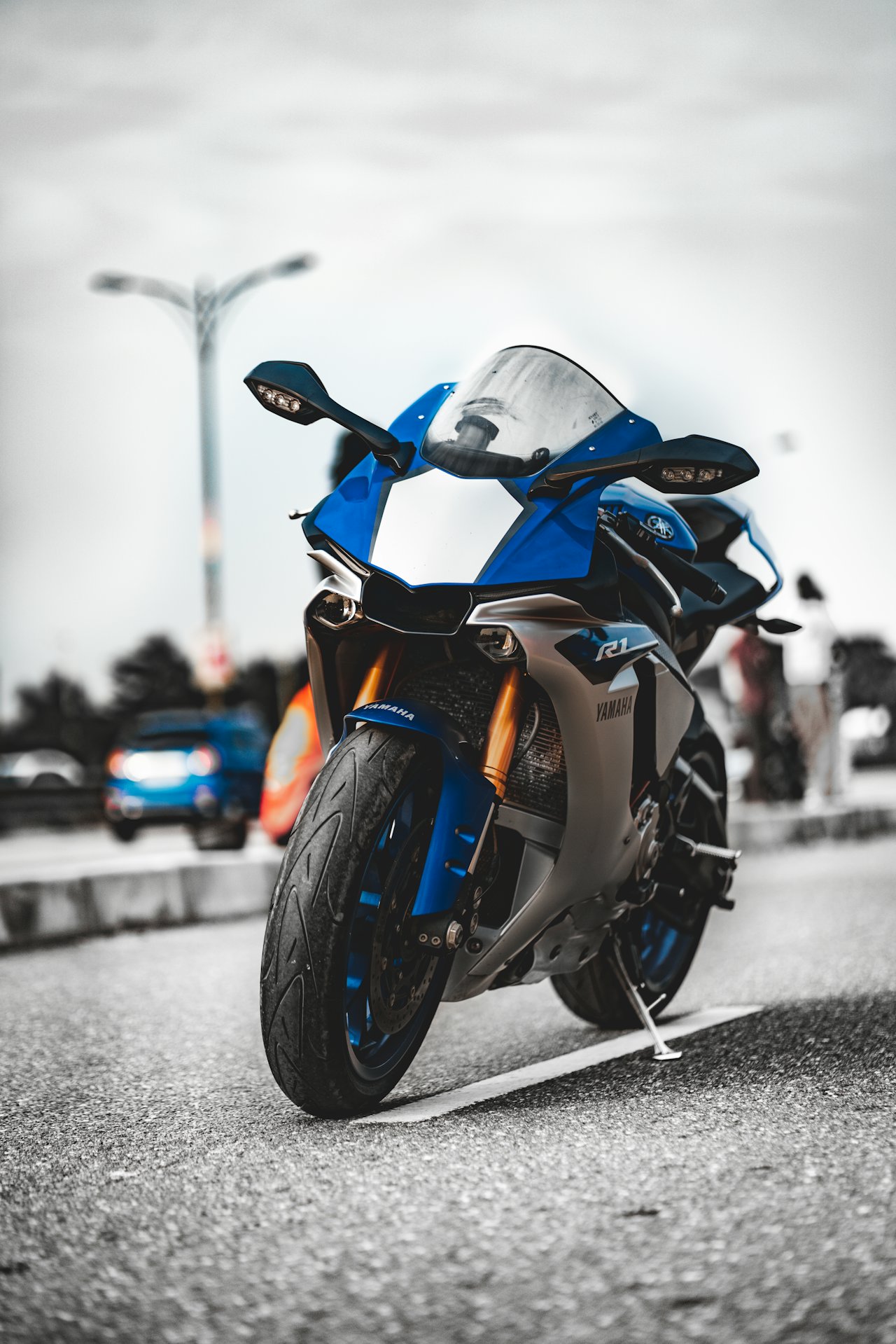
Nakeds and scooters both deserve more winter credit than they get. A light, upright naked like the Yamaha MT-07 or Kawasaki Z650 is genuinely easy to live with once you’ve fitted heated grips and a small screen, and its low weight helps at the low-speed, greasy-roundabout moments that catch heavier bikes out. Scooters go further still: proper legshields and a floorboard shelter your legs and feet from spray more effectively than any textile trouser, and no clutch lever to work through stop-start traffic removes a genuine source of fatigue on a cold, wet commute — the Honda PCX 160, Yamaha TMAX 560 and Vespa GTS 300 are all quietly excellent winter commuters that rarely get mentioned in this conversation. What fights you hardest is a committed sportsbike: aggressive clip-ons, zero wind protection and a riding position built for a warm racetrack rather than a cold ring road. It’s a brilliant machine for July and a genuinely miserable one for January, and no amount of heated grips fixes the fundamental mismatch.
Building the perfect UK winter bike is mostly not about buying a new one. Heated grips, the right tyre compound, disciplined chain and corrosion care, decent lights and electronics you actually trust will transform almost anything you already own — that’s where the money should go first, before a single thought about a different bike. But the machine underneath does matter, and an upright, well-protected commuter will always make the darkest, wettest months easier than a bike built for a summer that, right now, feels a very long way off. Get the basics right and winter stops being a season you endure on two wheels — it becomes just another one you ride through.
Tread depth is not a grip guarantee. It is a legal minimum, chosen by regulators who have never had to trail-brake into a roundabout in the dark with a lorry’s spray hanging in the air ahead of them. Ride enough wet miles and you learn that the gap between “legal” and “safe” can be measured in bike lengths, not millimetres — and by the time you find that out, it is already too late to matter.
Every wet-weather near-miss story I have heard from other riders circles back to the same quiet assumption: they checked their tread with a coin, saw it clear the wear bars, and considered the job done. Treating a tread-depth check as a pass/fail safety certificate is, I think, the single most dangerous piece of received wisdom in motorcycling. It is technically true and practically false, and that gap is exactly where people get hurt.
The Tread Depth Trap
Most markets set a legal minimum around 1.6mm across the central portion of the tyre. Fall below it and you’re riding illegally. Stay above it and you’re, on paper, compliant. But wet grip doesn’t fall off a cliff exactly at the legal line — it degrades continuously from the day the tyre leaves the mould, and the last couple of millimetres of tread are doing wildly more work in the rain than the first few. A tyre at 2mm is not “nearly as good” as one at 5mm in the wet. It’s a different tyre.
The grooves in a tyre aren’t decoration — they’re a pumping system, channelling water out from under the contact patch fast enough that rubber actually touches road instead of riding on a film of water. Halve that channel depth and you’ve roughly halved its evacuation capacity, while the water on the road hasn’t gone anywhere. At speed, on a worn rear through standing water, the margin between gripping and aquaplaning can vanish in the time it takes to register the throttle is open.
Why This Myth Refuses to Die
Part of the reason tread depth dominates is that it’s the only wet-grip number anyone actually tests you on. A roadworthiness check measures tread across a groove with a gauge — it says nothing about compound hardness, and it never will, because there’s no cheap, universal roadside test for that. Legal minimums exist to catch the worst offenders, not to certify good wet-weather performance. Riders quietly translate “passed the check” into “safe tyre,” and any guidance on ageing tends to live in small print nobody reads before a tyre goes on the bike.
Rubber Doesn't Age Like Wine
Here’s the part almost nobody checks: a tyre doesn’t need to be worn to be dangerous. Rubber compound hardens with age regardless of mileage, through UV exposure, ozone, heat-cycling and plain oxidation. A bike sitting in a garage all winter is still ageing its tyres. The soft, tacky compound that keys into wet tarmac’s microscopic texture when new slowly turns glassier and less pliable — and a hardened tyre with plenty of tread left can grip dramatically worse in the wet than a half-worn tyre that’s still supple.
Storage conditions matter more than most riders assume. A tyre kept in a sunlit garage, strapped outdoors under a cover, or fitted to a bike parked near an exhaust or radiator will harden faster than one kept cool and shaded. Two tyres from the same batch and the same mileage can end up in noticeably different states purely because of where the bikes lived — which is exactly why mileage alone is as unreliable a proxy as tread depth.
Every tyre carries a date code moulded into the sidewall, usually four digits: week, then year of manufacture. Find it. Read it. The general guidance most experienced riders and racers work to is that a tyre five to six years old deserves serious scrutiny regardless of remaining tread, and one approaching a decade should be treated as suspect no matter how good it looks.
Pressure: The Cheapest Safety Upgrade You're Ignoring
If compound age is the invisible killer, pressure is the one riders actively sabotage themselves on. Run a tyre soft and the contact patch balloons and distorts, tread blocks squirm under load, and the edges of the patch lift first — right when you need every millimetre of rubber biting into wet road. Run it hard past spec and the patch shrinks to a narrower strip, cutting the very contact area you’re relying on to push water aside. Neither mistake announces itself until you’re already leant over in a bend that has gone wrong.
Pressure also drifts with temperature and time, not just punctures. A tyre spot-on in summer heat can sit several psi low once mornings turn cold, and slow seepage through the rubber itself bleeds pressure over weeks with no leak at all. Check cold, before the bike has moved, against the figure on your bike’s own placard — not the maximum moulded into the tyre’s sidewall, which is a structural limit, not a recommendation. Treat pressure as something needing rechecking on a schedule, not something you set once and trust forever.
- Read the date code. Four digits on the sidewall, week then year — treat five-plus years as a serious question, not a formality.
- Look, don’t just measure. A dull, slightly glassy sheen or fine cracking at the base of the tread grooves signals hardening that tread depth alone won’t show.
- Press a thumbnail into the tread rubber. Fresher compound gives slightly; hardened compound feels closer to a hockey puck.
- Check pressure cold, against your bike’s placard, at least monthly — and always before a long wet-weather ride.
- If you have the comparison, brake hard from low speed in a safe, empty, wet car park on the tyre in question versus a fresh one. The difference is not subtle.
- When tread depth and tyre age disagree — plenty of rubber left, but the tyre is old — trust the age.
A tyre with four millimetres of tread and five hardened years underneath it isn't a safe tyre. It's a slick wearing a costume.— — Sam Fairweather, Latestnewbike.com
Ask around any car park after a track day and eventually you’ll hear the story: a rider grabs a handful of front brake mid-corner, the ABS pulses, the bike stands up, and suddenly they’re heading for the hedge instead of the apex. The conclusion is always the same — the ABS did this to me. It’s a story that spreads fast, gathers detail with every retelling, and is almost always wrong in the one place that actually matters: the part where ABS gets blamed for a crash it was actively trying to prevent.
So let’s ask the provocative question properly, out loud, and then answer it honestly. Is your motorbike’s ABS trying to kill you? No. It categorically is not. What follows is why — how modern cornering ABS actually works, why the real-world picture points overwhelmingly in its favour, and the small handful of genuine edge cases where it can catch an unprepared rider off guard. Understand those edge cases and you stop fighting the system that is, by any honest measure, one of the best things ever bolted to a motorcycle.
How Cornering ABS Actually Works
Traditional ABS only ever asked one question: is a wheel about to lock? It compared wheel speed against expected road speed and released brake pressure the instant a lockup looked imminent, and it did this on the assumption that the bike was upright. Cornering ABS, now fitted as standard on almost every mid-size and large motorcycle sold new, asks a far smarter question, because it has a great deal more information to work with. A six-axis inertial measurement unit — the IMU — tracks lean angle, roll rate, pitch and yaw many times a second, feeding that data to the ECU alongside wheel speed and brake pressure.
With lean angle in the equation, the system can estimate the tyre grip genuinely on offer at that specific angle, rather than assuming you’re sat bolt upright with the full contact patch available. Lean the bike over and there is simply less rubber and less vertical load resisting a locked wheel, so the system tightens its tolerances and steps in earlier and more gently than it would during upright, walking-pace braking. That is precision, not panic — the electronics are quietly recalculating your traction budget dozens of times a second and only ever spending what is actually there.
Crucially, cornering ABS does not merely stop a wheel locking. Many systems also manage lean-angle-dependent brake distribution between front and rear, and the best of them work hand in hand with lean-sensitive traction control to keep the whole chassis settled under simultaneous braking and turning loads — a job no human nervous system can do at the speed the electronics operate.
The Real-World Record: Fewer Crashes, Not More
Strip away the anecdotes and the wider picture is remarkably consistent: insurers, safety researchers and manufacturers who track long-term claims data all point the same direction. Motorcycles fitted with ABS are involved in meaningfully fewer crashes than otherwise comparable non-ABS machines, and the gap is widest in precisely the scenario riders fear most — an emergency stop that goes wrong. The reason is unglamorous but decisive: most riders, under genuine panic, brake later and harder than they believe they do, and a locked front wheel at that moment ends in a low-side almost every single time. ABS simply removes that one specific failure mode from the equation, quietly and repeatedly.
None of which means ABS makes crashes impossible, and no honest reviewer would claim otherwise. It cannot manufacture grip that genuinely isn’t there — sheet ice, a diesel spill or a wheel already airborne over a mid-corner bump are still beyond anything a computer can fix. What it reliably does is convert the single most common cause of a braking crash — an unintended front-wheel lockup — into a complete non-event, over and over, for riders who would otherwise never have felt it coming.
Where ABS Genuinely Surprises Riders
The myth doesn’t come from nowhere, though, and being straight about where cornering ABS genuinely feels strange is the whole point of this piece. Loose gravel and hard-packed dirt are the biggest offender. ABS calibration is built around a wheel-speed model that assumes a reasonably consistent, high-friction surface; on loose stones that assumption breaks down constantly, because wheel speed naturally fluctuates as small stones roll and shift beneath the tyre. The system can misread that fluctuation as an impending lockup and release brake pressure right when you wanted maximum retardation, extending your stopping distance rather than shortening it. It’s exactly why serious adventure bikes ship with a switchable, reduced-intervention off-road ABS mode — and why leaving it in road mode on a gravel track is asking for trouble.
Mid-corner trail braking is the second genuine edge case, and it tends to catch sportier riders rather than novices. Trail braking deep into a bend — carrying a trace of front brake well past turn-in — is a legitimate, widely taught technique, but it asks the system to make its lockup calculation at the exact moment lean angle, load transfer and available grip are all shifting simultaneously. Push that combination right to the edge of what the tyre can actually give, particularly on cold rubber or a greasy patch, and cornering ABS will intervene to protect the front. That intervention — a firm pulse through the lever while you’re leaned right over — can feel abrupt to a rider who wasn’t expecting it, even though the system is doing precisely what it was designed to do.
A third, smaller surprise crops up when riders swap between bikes: a rear wheel lifting slightly under very hard front braking, or an unfamiliar amount of lever pulsing compared with whatever they rode last. Neither is a fault. It’s simply a different calibration philosophy, and the fix is familiarity with your own machine, not distrust of the technology fitted to it.
Cornering ABS has never once tried to kill me — but on at least two occasions, it has very obviously stopped me killing myself.— Hana Kobayashi, Features Writer
Riding With ABS Instead Of Fighting It
The riders who get the most out of modern ABS are the ones who stop treating it as a rival fighting their inputs and start treating it as a grip calculator working on their behalf. That means braking with real intent rather than hesitation: squeeze the lever progressively and with genuine commitment in a true emergency, because the system is built to be leaned on hard, not feathered nervously. Trust the pulse when it arrives — it is information, not malfunction — and resist the urge to snap the lever shut the instant you feel it, because that instinct defeats the entire point of the system.
It also means respecting the two edge cases above rather than resenting them. Switch to a gravel or off-road ABS mode before the tarmac runs out, not after you’ve already lost the front on loose stones. And if trail braking deep into corners is part of your riding, build that habit gradually on familiar roads or a track day first, and accept that an intervention there is the electronics catching a margin you had already spent — not a machine deciding to work against you.
- Learn where your bike’s ABS modes live and switch to gravel or off-road mode before the surface changes, not after.
- Squeeze the front brake progressively and with real commitment in an emergency — ABS rewards decisive input, not hesitation.
- If you trail brake, build the technique gradually on familiar roads or a track day before pushing it near the limit.
- A firm pulse at the lever mid-corner is the system working, not failing — don’t snatch the lever shut in response.
- Spend five minutes in an empty car park learning exactly how your specific bike’s ABS feels before you ever need it for real.
- Only disable ABS if your bike offers it as a deliberate, understood option — never out of a vague sense that it’s “in the way”.
Verdict
Your motorbike’s ABS is not trying to kill you. On the balance of overwhelming real-world evidence, it is one of the most quietly effective pieces of engineering ever fitted to a motorcycle — a system that has converted countless would-be low-sides into uneventful, forgettable stops, most of which the rider involved never even registered as a near miss.
The edge cases are real, but they are narrow, well understood and entirely manageable: respect loose surfaces, build your trail-braking technique deliberately, and treat every pulse at the lever as useful information rather than betrayal. Learn those few rules and cornering ABS stops feeling like an unpredictable passenger on your motorcycle, and starts feeling like exactly what it is — the best safety net riding has ever built in.
There is an old saying among riders: dress for the slide, not the ride. On a motorcycle you have none of the crumple zones, airbags or steel cage that protect a car driver, so the gear on your body is quite literally your bodywork. The encouraging truth is that modern protective kit is lighter, cooler and more comfortable than ever, and a full outfit costs a small fraction of the bike it protects you on.
The philosophy worth adopting is ATGATT — All The Gear, All The Time. Crashes rarely announce themselves, and the short trip to the shops is exactly when people get caught out in a t-shirt. Let us work from head to toe, explaining what each item does, how it should fit and which certification marks actually mean something.
The Helmet Comes First
Nothing you own matters more. A helmet should sit snugly with no pressure points, grip your cheeks firmly and not budge when you shake your head with the strap done up. Look for a current safety standard — ECE 22.06 across Europe and much of the world, DOT in the United States, or the tougher voluntary Snell rating. Full-face designs offer the most protection because they guard the chin and jaw, the most commonly struck area in a crash. Replace any helmet after a significant impact, even if it looks fine.
Fit is everything with a helmet, and it should be neither loose nor painful. A new lid feels firm and loosens slightly as the cheek padding beds in, so choose the snuggest size you can comfortably wear for an hour. Try several brands and shapes, because heads differ and a helmet that suits a friend may not suit you at all. And never buy a used helmet, because you cannot see the internal damage a previous impact may have quietly caused.
Jackets and the Armour Inside
A good jacket does two jobs: it resists abrasion so the road does not reach your skin, and it holds impact armour over your shoulders, elbows and spine. Leather offers superb abrasion resistance; modern textiles add weatherproofing and ventilation. In Europe garments are rated to EN 17092, from AAA for the most protective down to A for lighter urban wear. Whatever the shell, make sure the armour is CE-marked and, ideally, upgraded to Level 2 at the shoulders and elbows, with a proper back protector fitted rather than a token foam pad.
Fit matters here too, because armour that slides out of place in a crash protects nothing. The jacket should be snug enough to hold its protectors over the joints even as you tuck into your riding position, so try it on leaning forward rather than standing straight. Look for adjusters at the waist, arms and cuffs, and consider a jacket with both a thermal liner and vents so a single garment covers more of the year. A connecting zip to your trousers seals out draughts and keeps everything aligned.
Sooner or later every rider gets caught in the rain, and how you handle it separates the anxious from the assured. Wet roads are not something to fear so much as something to respect: grip is reduced, vision is compromised and hazards multiply, but none of it is beyond a rider who understands what is happening and adjusts accordingly. In many ways wet-weather riding makes you a better rider full stop, because it forces the smoothness that dry roads let you get away with ignoring.
This guide covers the three pillars of riding in the wet — managing traction, protecting your vision and holding your nerve — with practical technique you can apply the very next time the sky opens. Master these and a downpour becomes a minor inconvenience rather than a reason to stay home.
Understand Reduced Traction
Rain lifts oil, rubber and dust from the road surface, and the most treacherous moment is the first ten to fifteen minutes of a shower before that film washes away. Grip can drop dramatically, so recalibrate your expectations: leave more space, carry more corner-entry margin and assume everything is more slippery than it looks. Modern tyres shed water impressively well, but physics still applies, and the smoother your inputs, the more of that reduced grip you keep in reserve.
Standing water brings its own hazard: aquaplaning, where a wedge of water lifts the tyre clear of the road and grip vanishes entirely. Motorcycle tyres, being narrow and rounded, resist it better than car tyres, but deep puddles, flooded gutters and fast rivers of runoff can still catch you out. If it happens, ease off the throttle, keep the bike upright and avoid braking or steering until you are through, because fighting an aquaplaning tyre only makes matters worse.
Be Smooth With Every Input
Smoothness is the whole game in the wet. Brake earlier and more gently, squeezing the lever progressively rather than grabbing it, and use both brakes to spread the load. Roll the throttle open gradually so the rear tyre is never asked for grip it cannot give. Change direction with gentle, deliberate steering inputs and avoid abrupt mid-corner corrections. Think of yourself as riding on a layer of eggshells: every action deliberate, nothing sudden, your weight relaxed through the bars.
Your body plays a part too. Grip the tank lightly with your knees so your arms stay relaxed and free to make small corrections, rather than clamping the bars and transmitting every twitch into the steering. Sit a fraction more upright and central, keep the bike more vertical through bends by counter-steering a touch earlier, and look far ahead to give yourself time to react. A calm, loose upper body is worth more than any tyre technology when the road is wet.
Three years ago, adaptive cruise control on a motorcycle was an exotic curiosity, restricted to a handful of premium tourers and treated with deep suspicion by traditionalists. Today it is spreading through the market at a pace that has surprised even the engineers who built it. Front and rear radar modules, once the preserve of six-figure machines, now appear on bikes you might reasonably commute on. The technology has crossed the line from novelty to expectation, and understanding why tells you a great deal about where riding is headed over the next decade.
The short version is that the hardware got cheap and the software got good. Automotive radar development, funded by billions of dollars of car-industry investment, produced sensors small and affordable enough to bolt onto a headstock. Motorcycle engineers adapted them, refined the algorithms for a leaning vehicle, and the result is a system that now costs manufacturers a fraction of what it did at launch. Once a component becomes that cheap, its spread across a range is only a matter of time.
What the Radar Actually Does
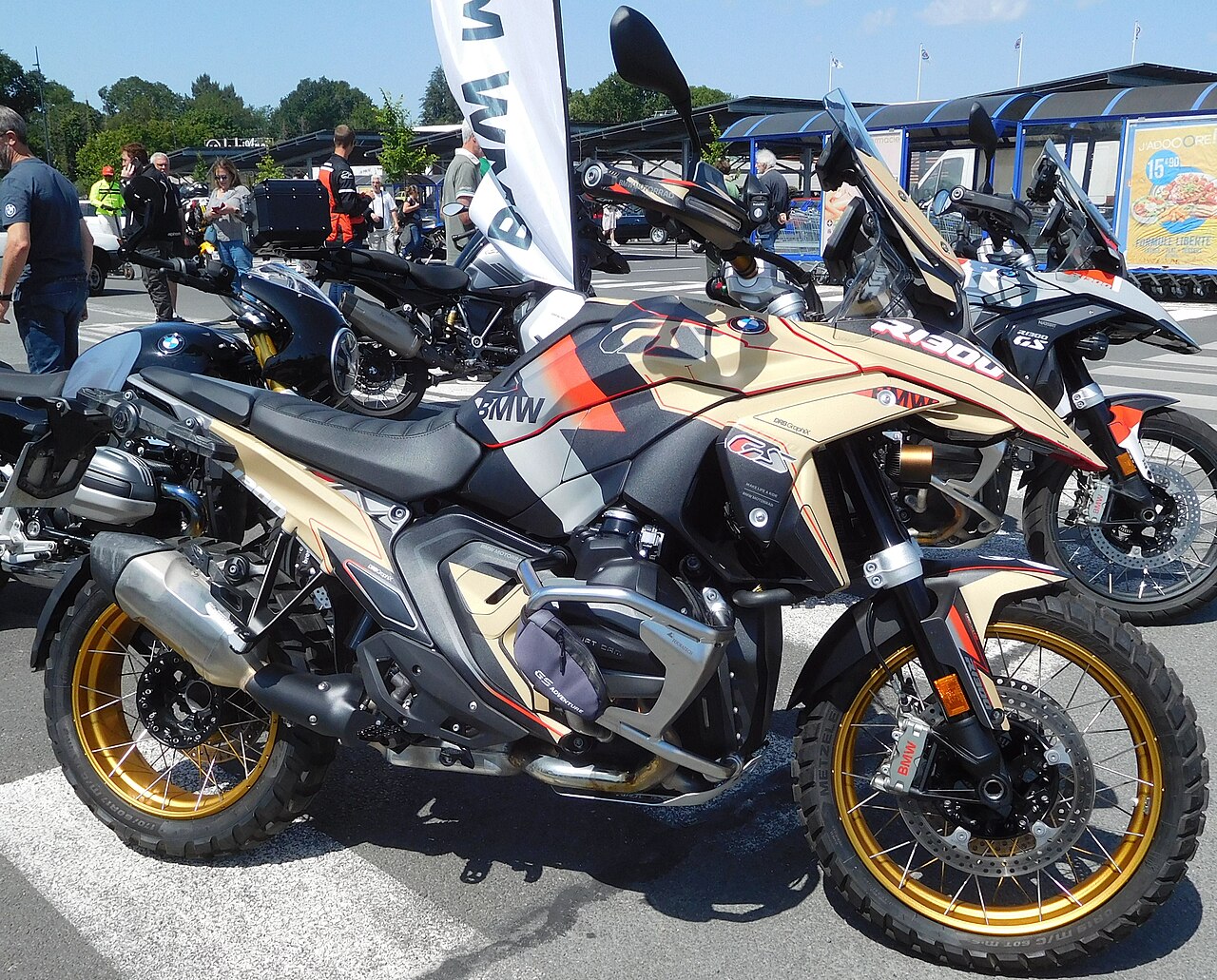
At its simplest, forward radar lets the bike hold a set distance from the vehicle ahead, easing off and accelerating automatically as traffic ebbs and flows. On a long motorway slog this transforms the experience, removing the constant throttle micro-adjustments that quietly exhaust a rider over hundreds of miles. But the same sensor enables far more: forward collision warning, blind-spot monitoring from a rear unit, and lane-change alerts that flash when something lurks in your mirrors. On the BMW R1300GS the system is polished enough to feel invisible until you need it, which is exactly the point of a well-designed rider aid.
Why It Spread So Fast
Cost was the trigger, but demographics pulled it through. The average buyer of a large-capacity bike is older and more affluent than a decade ago, has likely experienced adaptive cruise in a car, and expects the same convenience on two wheels. Manufacturers noticed. Fitting radar also lets a brand charge a premium and, crucially, differentiate a flagship in a crowded market. When KTM added it to the 1390 Super Duke R, a bike whose entire identity is aggression, it was a clear signal that radar is no longer just a touring accessory but a mark of a serious modern motorcycle, as expected on a flagship as a colour dashboard or a quickshifter.
The motorcycle industry loves to talk about power. Peak horsepower, top speed and lap times fill the brochures, because they are easy to measure and easy to sell. Yet the most consequential engineering of the past decade has happened almost silently, in software you never see and sensors you never think about. This is the quiet revolution in rider safety, and it is saving lives at a rate that finally shows up clearly in the accident statistics that regulators and insurers pore over every year.
None of it is glamorous. There is no marketing romance in a lean-angle sensor or a brake-pressure algorithm, and no showroom customer ever fell in love with an inertial measurement unit. But the cumulative effect of these systems is that riders now survive mistakes that would have put them in hospital, or worse, a generation ago. Here is what is actually doing the work, and why it matters more than any dyno chart on the wall.
Cornering ABS Changed Everything
The single biggest advance is the six-axis inertial measurement unit, a coin-sized cluster of gyroscopes and accelerometers that knows the bike’s precise attitude hundreds of times a second. It made cornering ABS possible — braking hard mid-corner without the front tucking and throwing you to the ground. On a machine as ferocious as the BMW M1000RR, the same IMU governs traction, wheelie and slide control, orchestrating a symphony of interventions no human could manage. But the version that saves ordinary riders is the humble cornering ABS now filtering down to modest commuters. It intervenes in the exact scenario that kills so many: a panic grab of the brakes while leant over into an unexpected hazard on a road you thought you knew.
Traction Control for the Rest of Us
Traction control was once a superbike toy, dismissed as a crutch for the ham-fisted. That snobbery has aged badly. Modern systems are so refined that most riders never feel them working, yet they catch the wet manhole cover, the diesel spill and the greasy roundabout that would otherwise spit a bike sideways. Lean-sensitive versions modulate power according to how far the bike is banked over, delivering full drive upright and gentle restraint at the edge of grip. It is the difference between a heart-stopping moment and a story you never even bother to tell, and it works quietly in the background on bikes costing a fraction of a superbike.