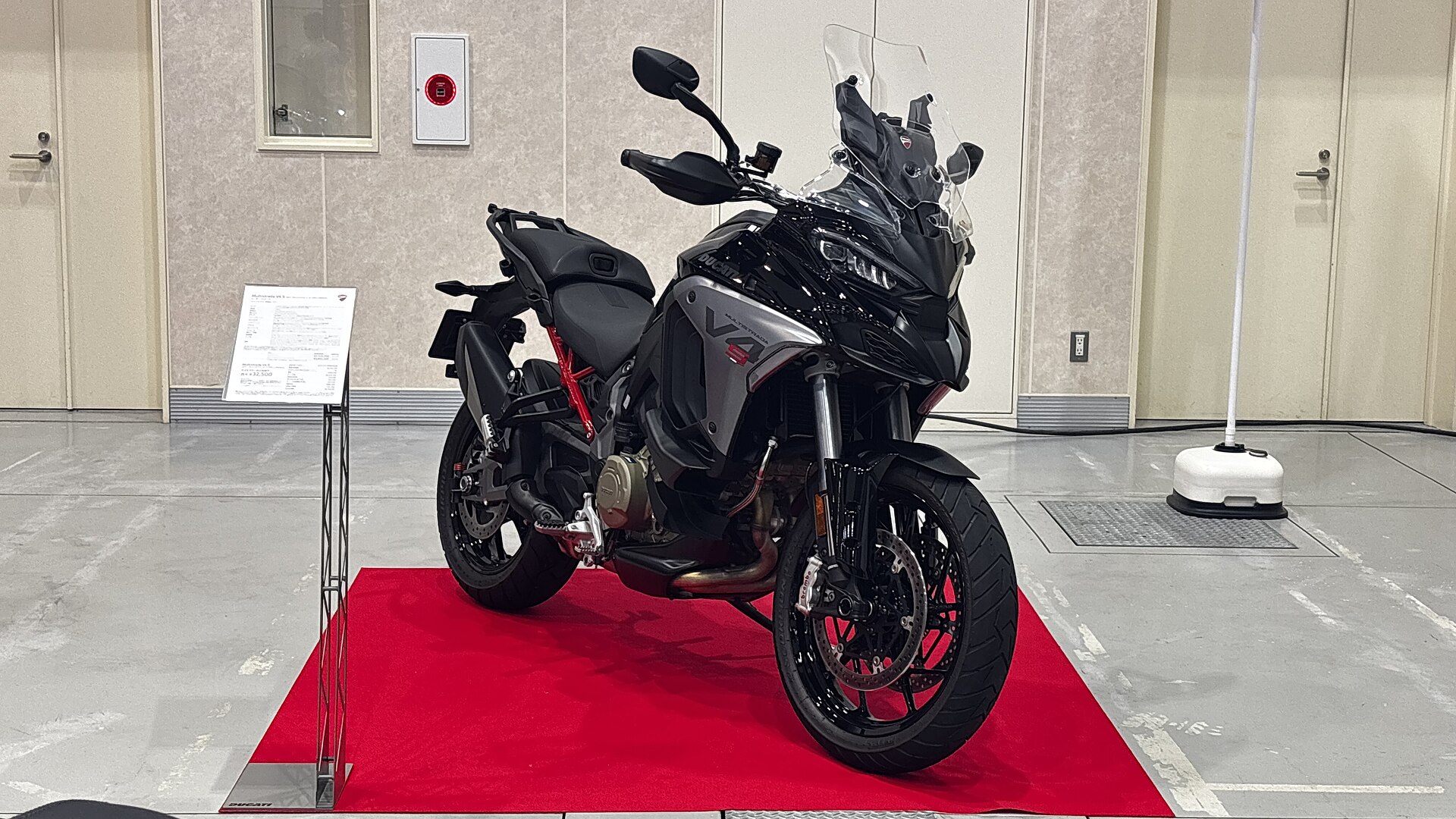
There are fast motorcycles, and then there is the Panigale V4 — a machine that behaves less like a road bike wearing a number plate and more like a Desmosedici GP racer that took a wrong turn out of the pit lane. Thumb the starter and the 1103 cc V4 settles into a lumpy, uneven idle, a deliberate reminder that Ducati borrowed this engine’s counter-rotating crankshaft and firing order straight from the Grand Prix paddock.
For 2025 the Panigale has been honed rather than reinvented, and the result is the most complete superbike Borgo Panigale has ever built. It flatters the quick, forgives the brave, and never once lets you forget that its natural habitat is a circuit with run-off measured in acres rather than metres. Ride it gently and it simmers; open it up and it detonates.
An engine ripped from the Grand Prix grid
The Desmosedici Stradale is the undisputed star. Ninety degrees of liquid-cooled V4 fury spins hard towards 14,000 rpm and serves a claimed 214 hp, arriving with a top-end rush that seems to compress the horizon towards you. Below 8,000 rpm the motor is tractable, almost civil; beyond that the counter-rotating crankshaft and desmodromic valvetrain conspire to hurl you forward with a violence few road vehicles on earth can match.
The headline figures tell only part of the story — 2.9 seconds to 100 km/h and a top speed brushing 300 km/h — because it is the delivery that truly lingers in the memory. The V4 howls where a Japanese inline-four merely screams, a hard-edged bark that turns every underpass into a private concert hall. The up-and-down quickshifter is close to telepathic, and the ride-by-wire throttle stays precise enough to trust at full lean.
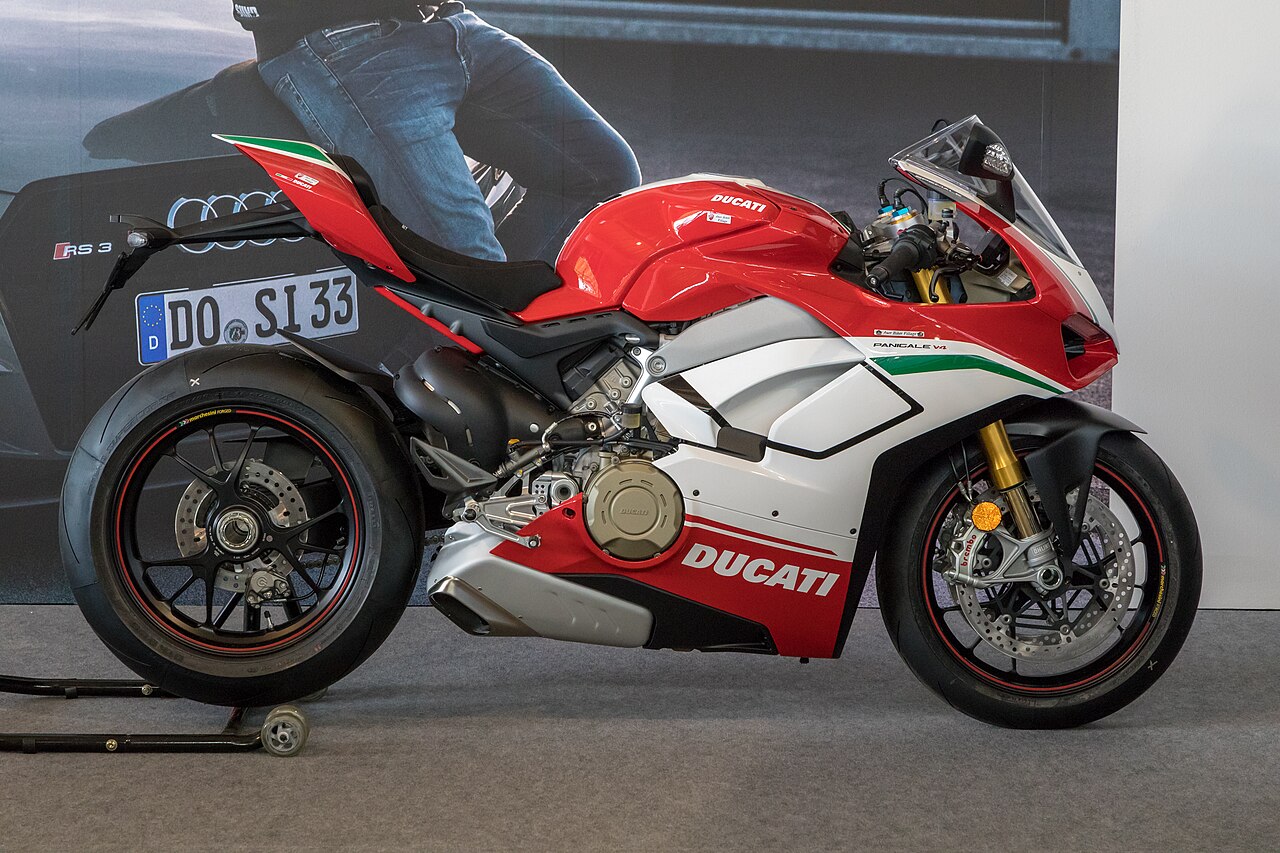
The M badge means something specific in Munich. On four wheels it signals a car engineered to devour a racetrack yet still cruise home in comfort, and the M 1000 RR carries that same philosophy onto two. This is not merely a hotted-up S 1000 RR; it is a homologation special, built so BMW’s factory riders have a weapon worthy of World Superbike, then handed to us with lights and mirrors bolted on.
Where the Ducati seduces with operatic theatre, the BMW conquers with cold, ruthless efficiency. It is the fastest-accelerating, highest-topping superbike in this test, and it feels engineered by people who treat every tenth of a second as a personal insult. On the right stretch of derestricted autobahn, nothing here comes close.
ShiftCam power without the peaks and valleys
The 999 cc inline-four is the headline act. BMW’s ShiftCam variable valve timing hands the M a genuinely broad spread of torque, so the 212 hp peak at 14,500 rpm never feels like a distant reward. There is meaningful drive from 6,000 rpm, a surging midrange, and then a top-end crescendo that pins your visor to the screen and refuses to let go until the limiter chimes.
The numbers are frankly absurd for a road-legal machine: 3.0 seconds to 100 km/h and a genuine 306 km/h maximum. Yet the delivery is so linear, so utterly predictable, that it flatters rather than frightens. The M quickshifter snaps through the six-speed box with mechanical crispness, and the induction howl at full chat is one of motorcycling’s great sensory rewards.
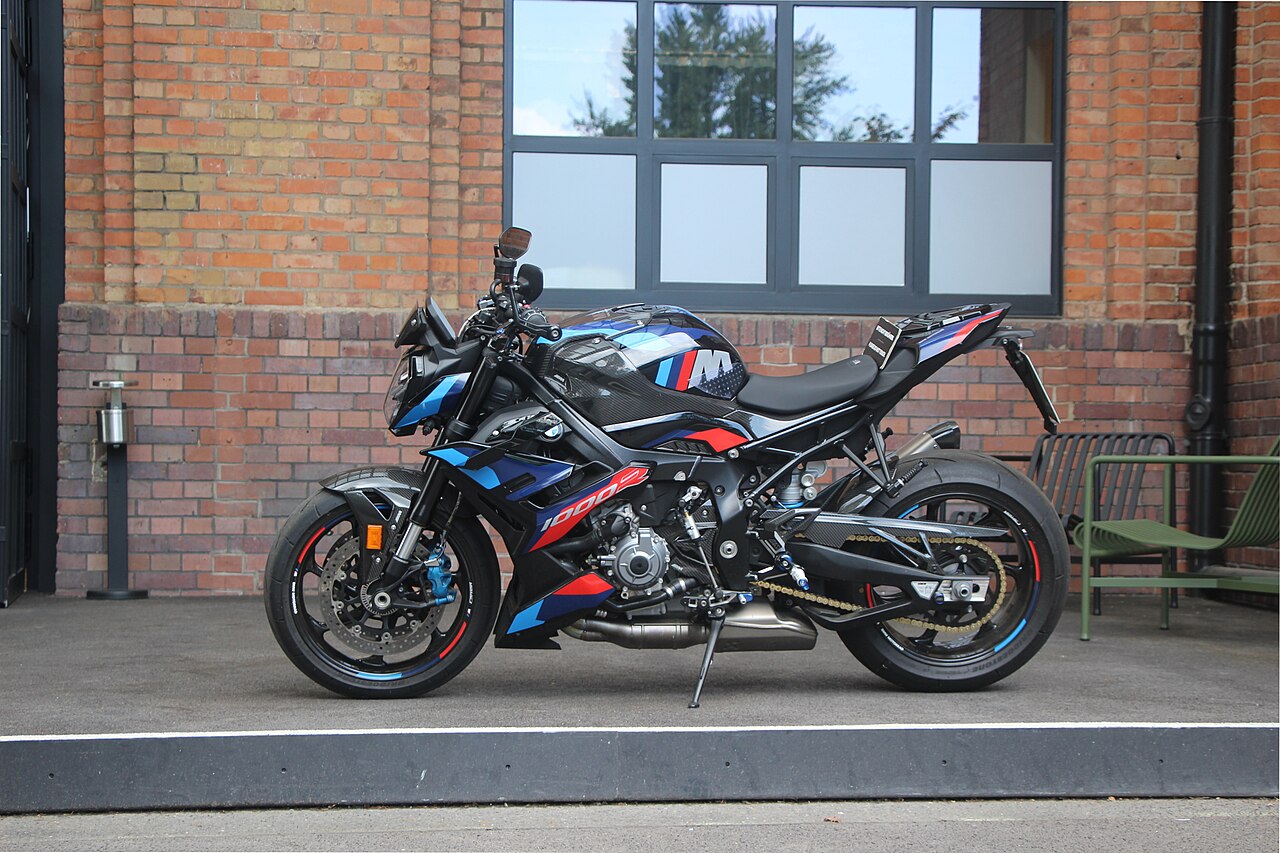
For decades the big boxer GS has been the default answer to a simple question: if you could own only one motorcycle to ride anywhere on earth, what would it be? The R 1300 GS does not merely defend that title — it moves the goalposts. BMW has thrown out the old 1250 architecture, grown the engine, shrunk the waistline and reimagined the electronics, and the sum is genuinely transformative.
Swing a leg over and the first surprise is how compact it feels for such a capable long-hauler. The new frame is narrower, the mass sits lower, and a bike that once demanded respect at walking pace now feels almost eager to be flicked around. This is a GS that has finally learned to hide its bulk.
A bigger boxer with better manners
The air- and liquid-cooled flat-twin now displaces 1300 cc and produces 145 hp with a muscular 149 Nm of torque, and the way it deploys that grunt is the GS masterstroke. There is a wall of drive from just above idle, so overtakes require nothing more than a roll of the wrist, and the characterful boxer thrum still shakes the mirrors at a standstill before smoothing out on the move.
It is not a screamer and does not want to be. Peak power lands at a relaxed 7,750 rpm, and the engine is happiest short-shifting and surfing that fat wave of torque across a mountain range. Fully loaded, two-up, with panniers stuffed, it barely notices the difference — which is precisely the point of a machine built to swallow continents.
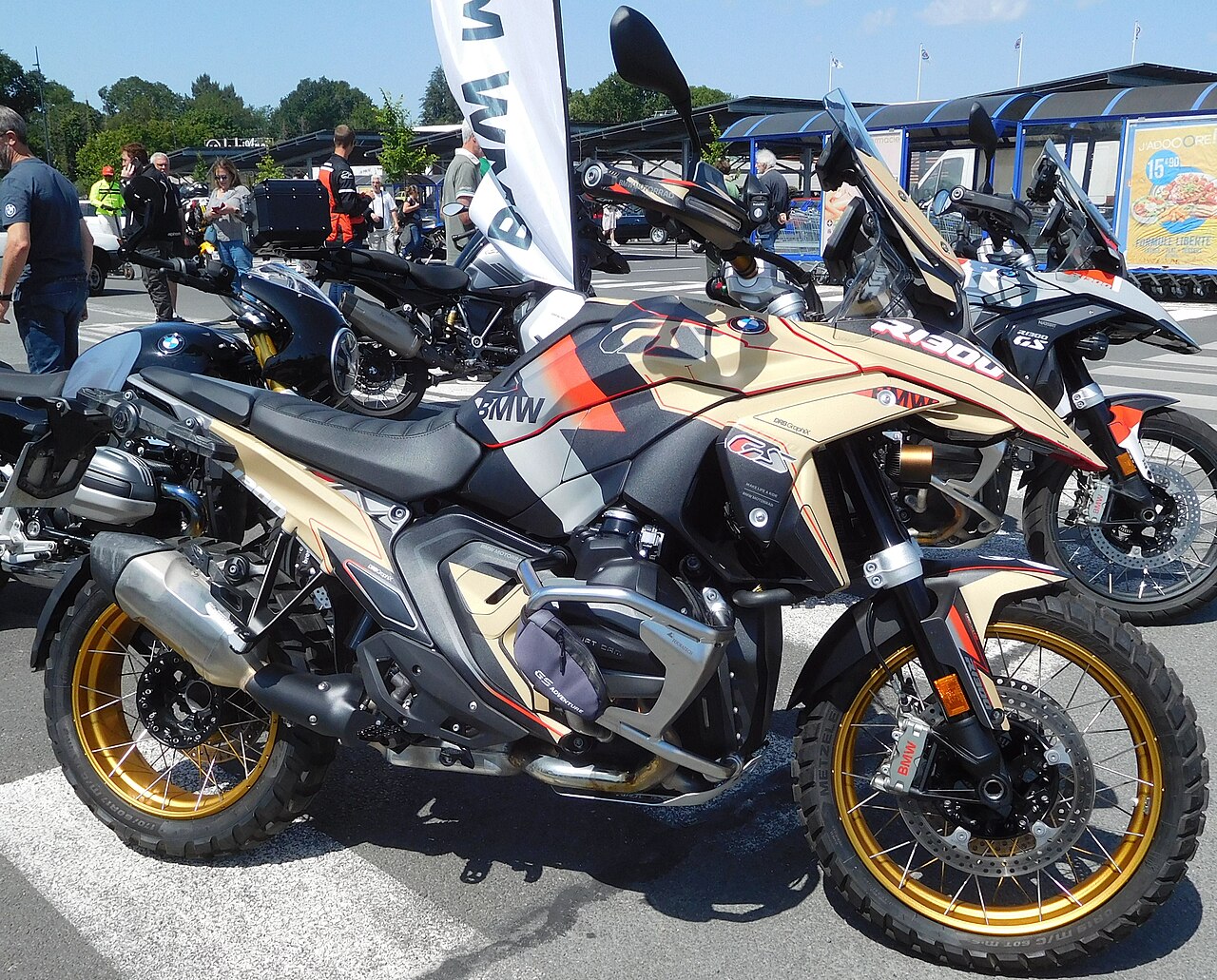
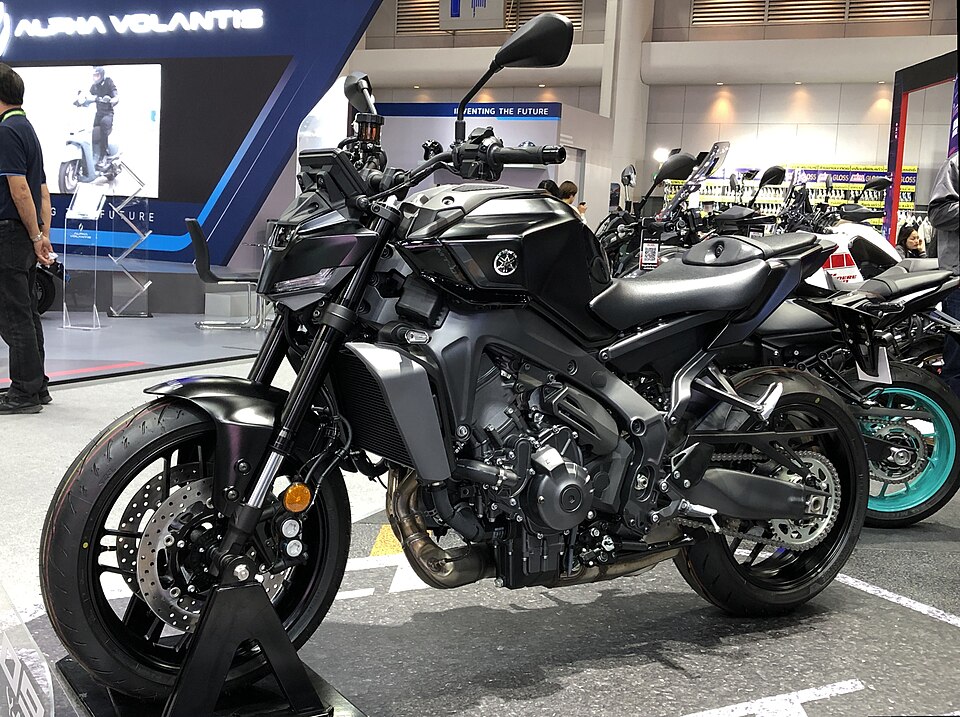
Some motorcycles want to be admired. The MT-09 just wants to misbehave. Yamaha’s middleweight naked has spent years perfecting the art of the cheeky, wheelie-happy hooligan, and the latest version refines that recipe without sanding off its edges. It is the bike that reminds you why you got your licence in the first place — an antidote to sensible, delivered with a grin.
What makes it so beguiling is that all this mischief comes wrapped in a genuinely usable everyday machine. Light, torquey and keenly priced, the MT-09 slots into a commute as happily as it terrorises a mountain road, and that breadth is exactly why it has become one of the best-selling nakeds on the planet.
The CP3 triple: master of midrange
At the core sits the 890 cc CP3 inline-triple, and it is one of the great engines at any price. With 117 hp and a thick 93 Nm of torque arriving low in the rev range, it fires the MT out of corners with a surge that feels punchier than the numbers suggest. The crossplane crank hands it a hard-edged, slightly unhinged growl that no parallel-twin can imitate.
Roll the throttle open in the meat of the midrange and the front wheel skims skyward in the first two gears — the MT-09 is a natural-born wheelie machine, and the electronics let you decide how much of that you want. It is not the fastest thing here on paper, yet the way it deploys its performance makes it feel gloriously, addictively rapid on any real road.
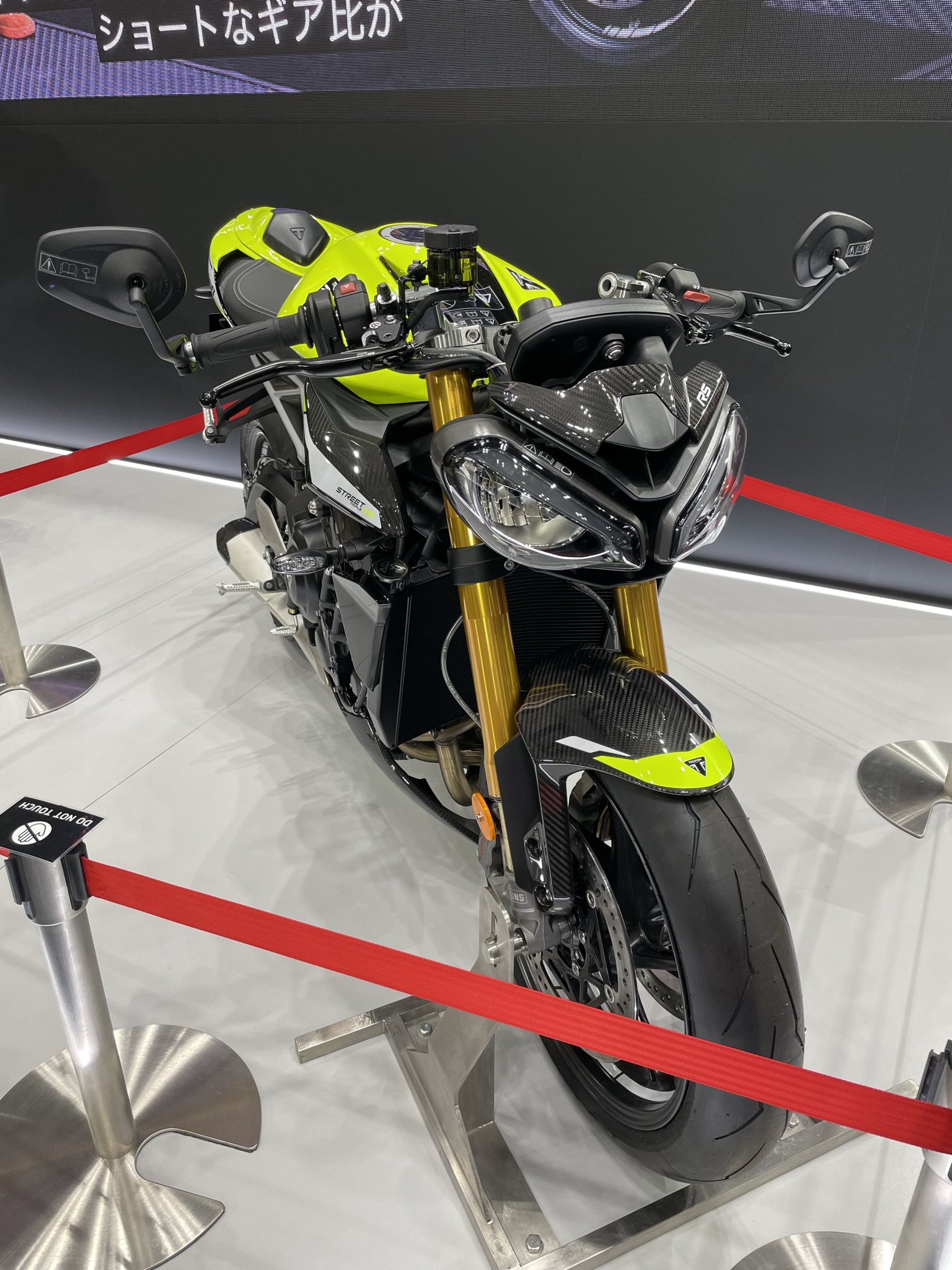
Ask a paddock full of journalists to name the finest middleweight naked and the same answer surfaces again and again: the Street Triple 765 RS. Triumph’s flagship roadster has become the yardstick, the bike everything else is politely compared to and quietly beaten by. It is fast without being frightening, sophisticated without being cold, and it does the whole job with a mechanical charm that borders on addictive.
Part of that magic is the badge’s Moto2 connection — Triumph supplies the engines for the world championship’s middleweight class, and the road-going triple wears that heritage lightly but unmistakably. This is a naked bike engineered by people who race, and every control speaks of that obsession with feel.
The 765 triple: the perfect middle way
The 765 cc inline-triple is the star turn, and it is arguably the sweetest engine configuration ever fitted to a road bike. Making 128 hp at 12,000 rpm, it hands you the low-down flexibility of a twin, the top-end urgency of a four, and a sound all its own — a hard, metallic wail that builds to a howl as the tacho sweeps round. There is simply no bad place in the rev range.
It pulls cleanly from 3,000 rpm, gathers pace with an eager, elastic surge through the midrange, and then charges to a redline that begs to be chased. The up-and-down quickshifter is beautifully judged, and the fuelling is spot on — the RS never feels highly strung, yet it will happily post a 3.3-second sprint to 100 km/h and a genuine 250 km/h if you let it stretch its legs.
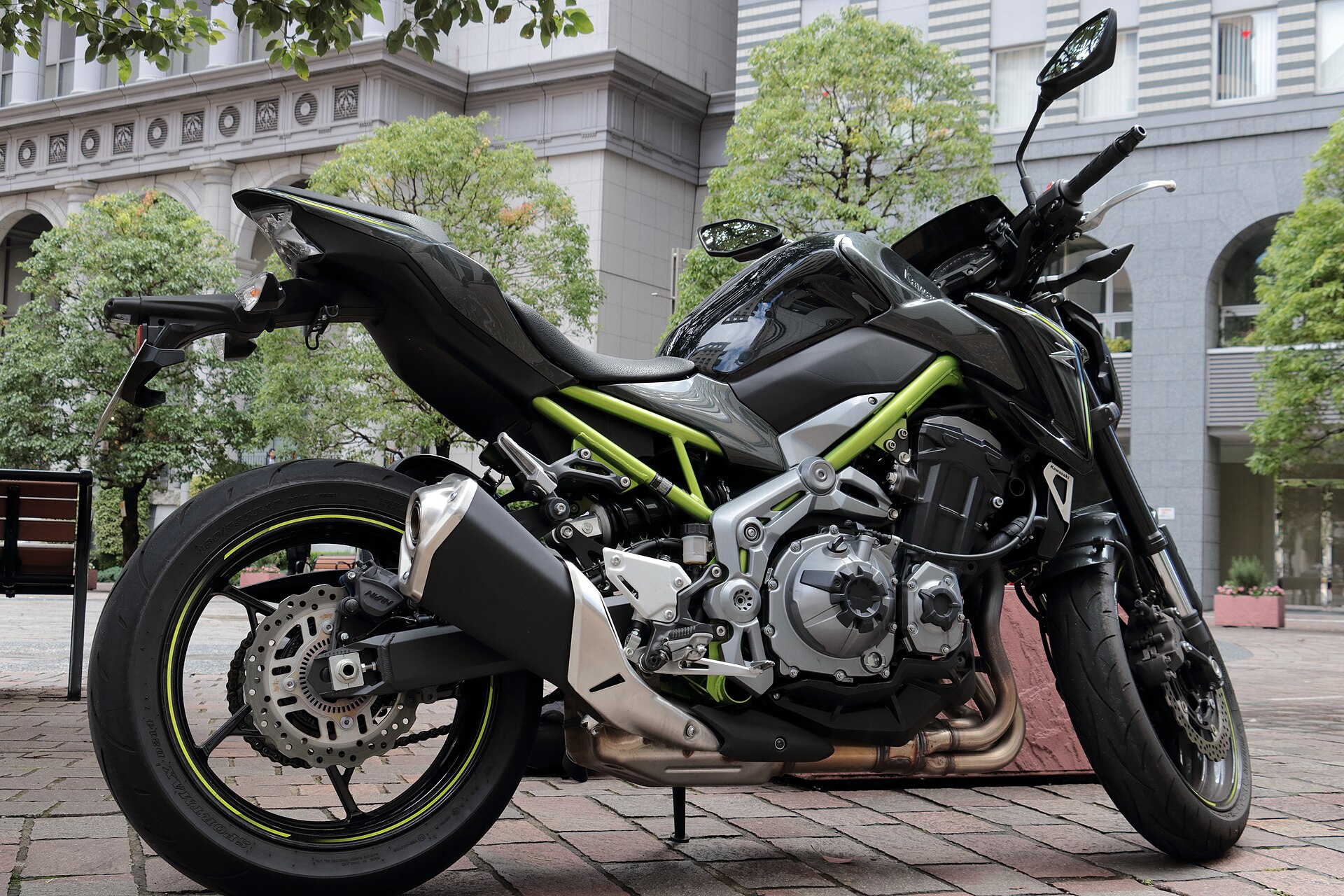
In an era when middleweight nakeds increasingly lean on twins and triples to hit a price, Kawasaki has quietly kept faith with the inline-four — and the Z900 is all the better for it. Here is a machine that delivers the creamy, revvy character of a four-cylinder engine, dresses it in menacing Sugomi bodywork, and asks a price that undercuts almost everything with comparable performance.
The result is one of motorcycling’s great value propositions. The Z900 does not chase headlines with radar cruise or carbon wheels; it simply nails the fundamentals of a fast, smooth, good-looking street bike, then leaves change in your pocket. For a huge swathe of riders, that is exactly the right set of priorities.
The joy of an inline-four
The 948 cc four is the heart of the appeal. Producing 125 hp and 99 Nm, it serves up the smooth, linear delivery that only a four can, spinning freely and cleanly to a soundtrack that hardens into a proper metallic snarl near the top of the rev range. There is enough midrange to make it flexible in town and enough top-end fizz to reward a hard ride.
It is not the torque monster that a big twin is, so you work the gearbox a little more to keep it on the boil, but that is part of the charm — the Z900 encourages you to ride it, to chase revs and hunt gears. A 3.5-second sprint to 100 km/h and a 240 km/h top end confirm there is nothing sluggish about this bargain.
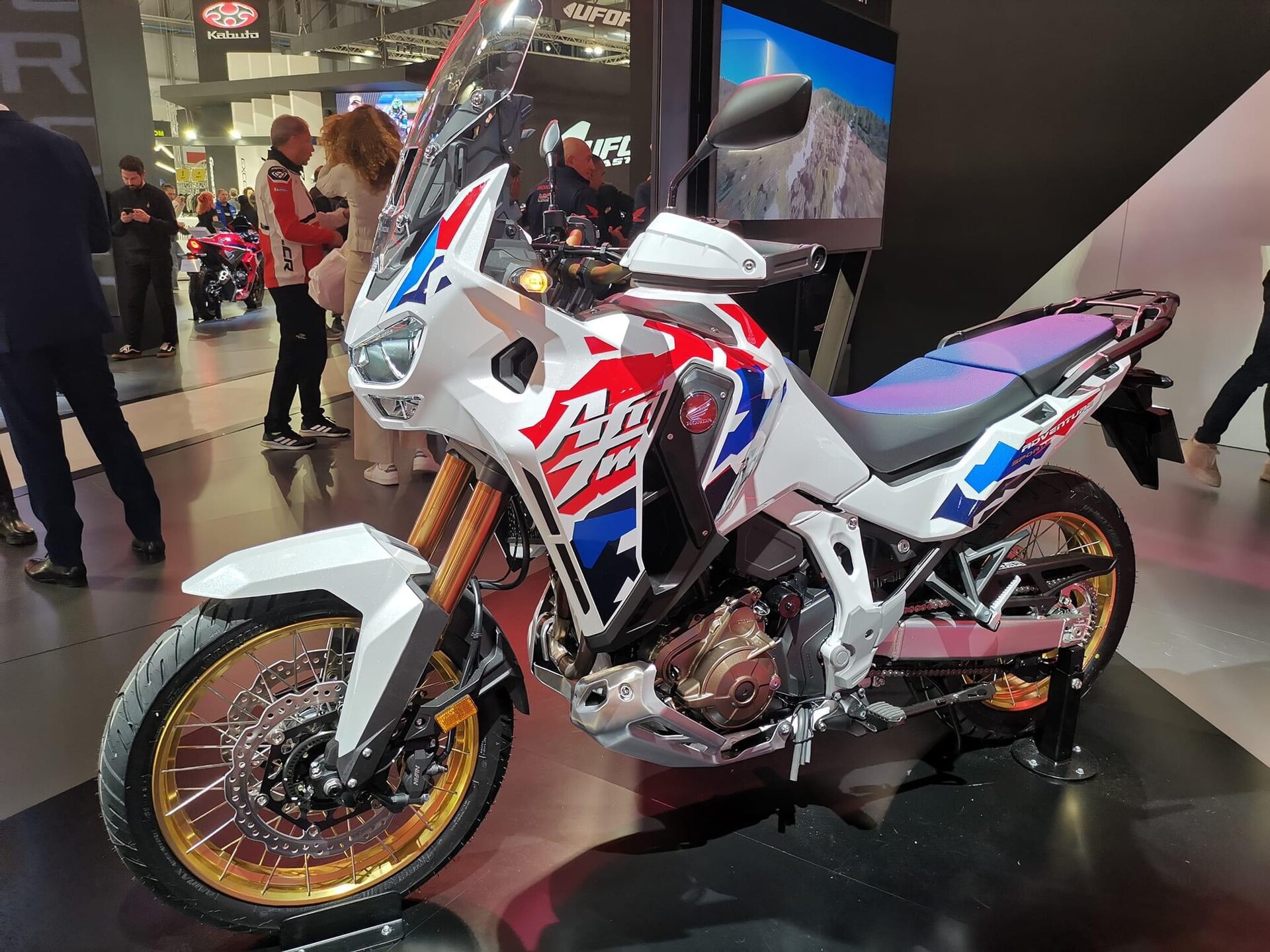
The Africa Twin carries a name soaked in Paris–Dakar history, and unlike many modern adventure bikes it actually lives up to the promise once the tarmac runs out. Where rivals have grown ever more road-biased and ever heavier with luxury kit, Honda has kept its big twin focused on the original mission: crossing continents and conquering dirt with a mechanical dependability you can genuinely stake a trip on.
That is the Africa Twin’s quiet superpower. It may not top the class for outright horsepower or the longest gadget list, but it offers a rare combination of real off-road credibility and legendary Honda reliability. For the rider planning to ride somewhere remote and get home again, that balance matters more than any spec-sheet bragging right.
A parallel-twin built for the long game
The 1084 cc parallel-twin produces a modest-sounding 101 hp, but the figure that matters is the 105 Nm of torque delivered low and early. This is an engine tuned for tractability, chugging cleanly from just above idle so you can pick your way over rocks and ruts without slipping the clutch, then pulling with satisfying muscle when you open it up on a fast gravel road or a motorway on-ramp.
The 270-degree firing order hands it a pleasant V-twin-like thrum and a broad, usable spread of grunt rather than a peaky top-end rush. It will crack a relaxed 200 km/h and sip fuel at around 21 km/l on a steady cruise, and crucially it never feels intimidating — the power is there when you want it and utterly manageable when you do not.
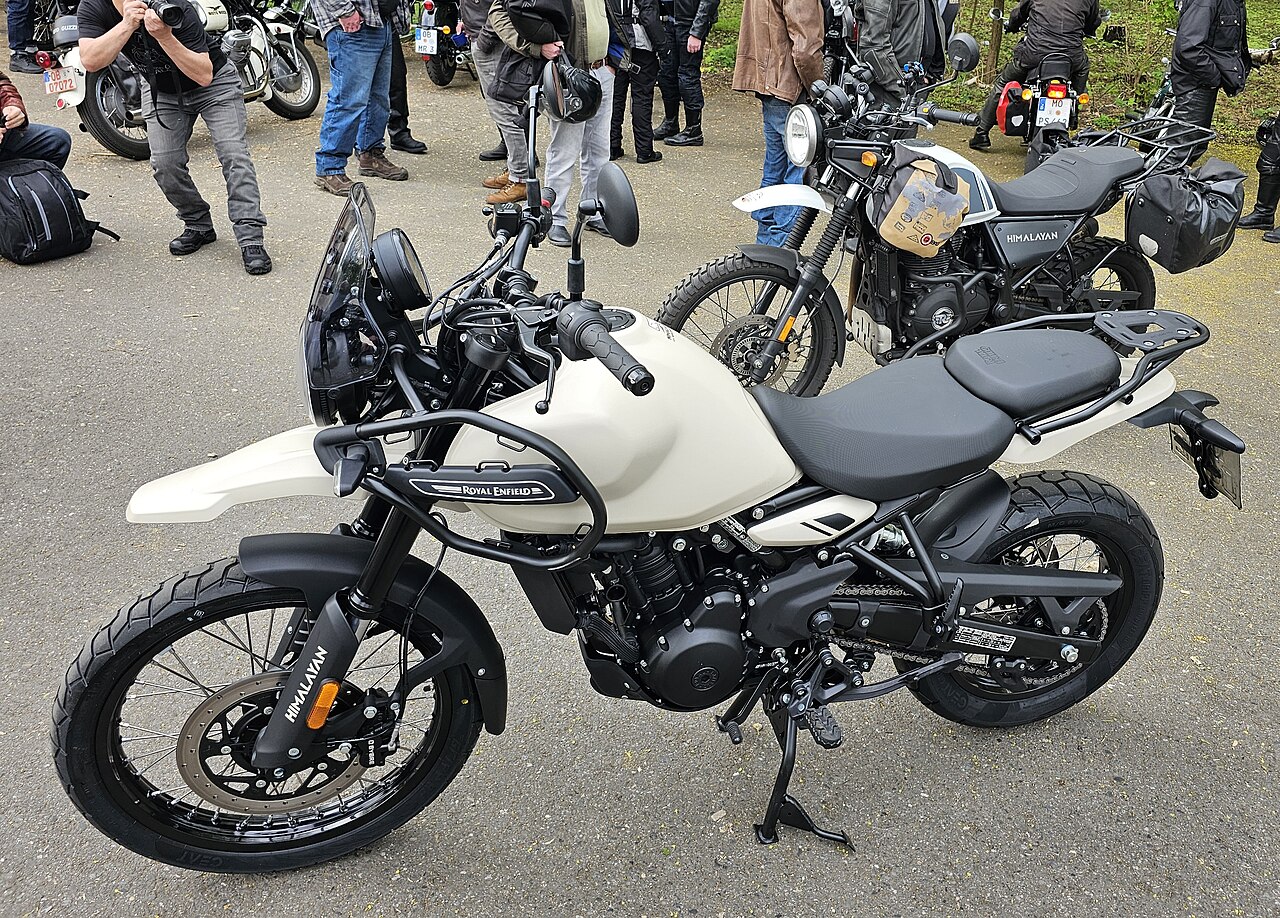
Adventure motorcycling has quietly become an expensive habit, with flagship machines now costing as much as a small car and weighing nearly as much too. The Himalayan 450 is Royal Enfield’s cheerful rebuttal. Here is a genuinely capable adventure bike, built to tackle the world’s roughest roads, that costs less than the accessory catalogue of some of its rivals — and it is all the more likeable for it.
This is not the crude, underpowered Himalayan of old, either. The 450 is a comprehensive reinvention, built around an all-new engine and chassis, and it transforms the bike from a charming budget curio into a serious, modern proposition. For new adventurers and hard-up dreamers alike, it changes the conversation entirely.
The Sherpa engine: modest but eager
The new liquid-cooled 452 cc single, named Sherpa, is the making of this bike. Producing a genuine 40 hp and 40 Nm, it is willing, flexible and far more refined than the old air-cooled lump it replaces. It pulls cleanly from low revs — ideal for picking a line up a rocky climb — and revs out with real enthusiasm when you want to make progress on a flowing back road.
This is not a fast motorcycle in outright terms, cracking 100 km/h in a leisurely 6.9 seconds and topping out around 150 km/h. There is some vibration high in the rev range, and sustained motorway cruising is not its forte. But for the winding, unhurried, exploratory riding this bike was built for, the Sherpa has exactly the right character and just enough power.
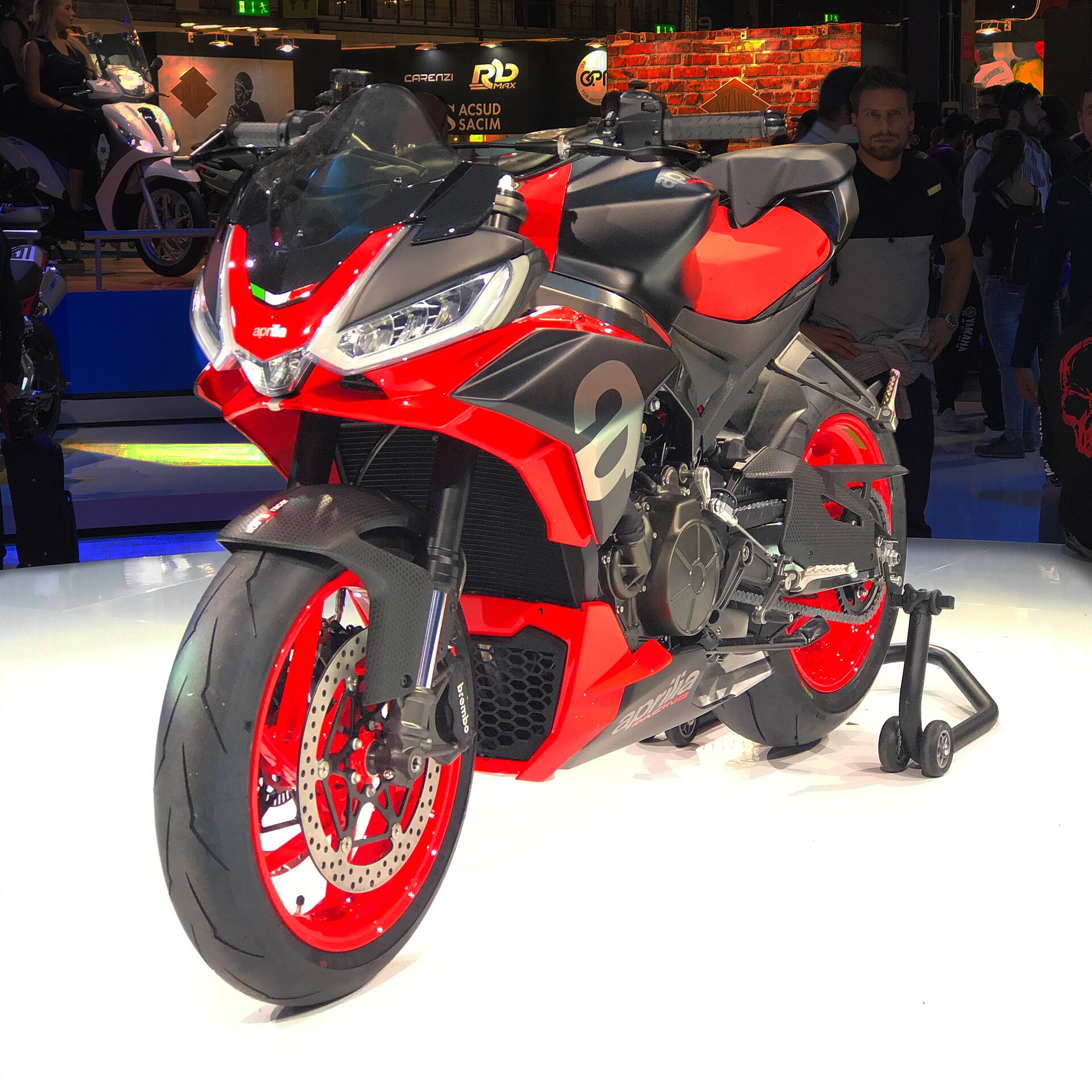
It is easy to be seduced by big numbers, but the Tuono 660 makes a compelling case that the most thrilling motorcycles are often the lightest. Aprilia took its RS 660 sportbike, raised the bars, sharpened the attitude and created a naked that trades brute force for a scalpel-like precision. On a real road, ridden hard, it delivers a purity of experience that far more powerful machines struggle to match.
This is a bike built by a company with racing in its blood, and it shows in every input. The Tuono 660 does not overwhelm you with power; it invites you to carry corner speed, to be smooth, to enjoy the process. Get it right and it flows down a ribbon of tarmac like almost nothing else at the price.
A twin with genuine character
The 659 cc parallel-twin, effectively the front bank of Aprilia’s V4 superbike engine, produces 95 hp at 10,500 rpm and a useful 67 Nm of torque. That may sound modest against triples and fours, but in a bike this light it is more than enough to thrill, and the 270-degree crank hands it a throaty, characterful bark that belies its middleweight displacement.
The delivery is the clever part. There is enough low-down drive to make it easy in town, a strong, elastic midrange that suits real-world roads perfectly, and a top-end that rewards a committed rider chasing the redline. It will dispatch 100 km/h in around 3.6 seconds and stretch to 220 km/h, but it is the everyday accessibility of that performance that makes it so addictive.
The premise of the Multistrada V4 sounds impossible: take the ferocious performance of a Ducati superbike, wrap it in the comfort and range of a long-distance tourer, and add just enough adventure-bike stance to tackle a gravel road. Somehow, improbably, Ducati has pulled it off. This is a machine that will devastate a mountain pass in the morning and cosset you across a country by nightfall.
It is the ultimate do-everything motorcycle for riders who refuse to compromise on pace, and it represents a genuine leap over the V-twin Multistradas that came before. The switch to a V4 changed the bike’s entire character — smoother, faster, and, crucially, far easier to live with day to day.
The Granturismo V4: pace and patience
The 1158 cc V4 Granturismo is a marvel of dual personality. It produces a thumping 170 hp and 125 Nm, enough to fire the Multistrada to 100 km/h in around 3.2 seconds and on to a 250 km/h top speed, with a spine-tingling V4 wail when you chase the redline. This is genuine superbike performance, delivered from an upright and comfortable seat.
Yet the same engine is a model of civility when you want it to be, pulling smoothly from low revs and cruising with unruffled ease. The masterstroke is its maintenance: Ducati quotes an astonishing 60,000 km valve-check interval, banishing the costly, frequent servicing that once haunted its high-performance machines and making the V4 a genuinely sensible long-distance proposition.