Every new rider eventually asks the same question at the dealership: do I want an engine that talks back, or one that simply gets on with the job? The Triumph Speed 400 and Honda CB500 Hornet answer that question in almost opposite ways, and both are among the best learner-friendly, A2-licence-eligible naked bikes money can currently buy. One is a thumping single with genuine character; the other a smooth-spinning twin with a noticeably higher ceiling. Choosing between them is really choosing what kind of rider you want to become.
I have spent weeks swapping between the two — commuting on one, hammering a favourite set of B-roads on the other, then doing it all again in reverse — and the gap between them is far more interesting than a spec sheet suggests. This is not a case of one bike being simply better. It is a case of two very different answers to the same brief, and the right one depends entirely on which side of the single-versus-twin argument you fall on.
Two philosophies for the same licence
Both bikes are built to slot neatly under A2 licence power limits in markets that use them, and both are aimed squarely at riders who want something more grown-up than a 125 but are not yet ready — financially or otherwise — for a litre-class weapon. The Triumph uses a single 398 cc TR-series cylinder, producing a modest 40 hp. The Honda counters with a 471 cc parallel-twin making roughly 47.5 hp, which not coincidentally sits right at the ceiling most A2 riders are permitted to ride.
That difference in approach shows up everywhere on both machines, not just under the tank. Triumph has leaned into simplicity and feel; Honda has leaned into refinement and a wider useful rev range. Neither is chasing outright drama, but they get there — or deliberately avoid it — by completely different routes.
Engine character: a thumping single versus a smooth twin
Thumb the Speed 400’s starter and you get a proper single-cylinder bark, a light off-beat thrum through the pegs that makes the bike feel more alive at a standstill than its modest output suggests. There is real, usable shove low down — 37.5 Nm arrives by 6,500 rpm — and the whole package pulls with an eager, slightly rough-edged charm that many riders will find genuinely endearing rather than crude. It is an engine that wants you to notice it working.
The Hornet’s twin, by contrast, is the more sophisticated instrument. It spins up with none of the single’s vibration, delivers a fatter 43 Nm of torque, and simply keeps pulling further up the rev range than the Triumph can manage. Where the Speed 400 signs off and starts to feel breathless, the Honda is only just getting into its stride. On a fast sweeping road that translates into a genuinely quicker bike — not dramatically so, but enough that you notice it every time you overtake.
Neither engine is wrong. The single rewards you with feel and character at everyday speeds; the twin rewards you with headroom and a smoother, more relaxed motorway cruise. If you already know you will eventually want more performance, the Hornet’s extra ceiling is the one that ages better. If you want a bike that feels interesting the moment you thumb the starter, the Speed 400 wins that argument outright.
Weight, seat height and low-speed confidence
This is where the Triumph claws back real advantage. At a claimed 170 kg kerb weight against the Hornet’s 189 kg, the Speed 400 is a genuinely different physical proposition at walking pace — wheeling it out of a tight parking space, catching it on an unexpected camber, or simply muscling it around at a fuel stop all feel noticeably easier. For a nervous new rider still building confidence, that gap matters far more than it looks on paper.
Seat height tells a similarly close story: 790 mm on the Triumph versus 785 mm on the Honda, both comfortably low enough for shorter riders to get both feet flat. Riding position diverges more than the numbers suggest, though. The Speed 400’s bars and pegs put you in a compact, slightly forward-leaning stance that suits shorter riders and tight urban streets but can feel cramped for anyone over six feet on a long ride, while the Hornet’s roomier reach and extra chassis heft translate into a more settled, less nervous feel once you are up to motorway speed rather than picking through traffic.
Price and running costs
The Speed 400 undercuts the Hornet meaningfully at the till, starting from $4,995 against a Honda that starts closer to $7,000 depending on market. That gap buys a lot of insurance, gear and fuel for a new rider on a tight budget, and it is arguably the single biggest reason the Triumph has become such a strong seller among first-time big-bike buyers.
Running costs favour the Speed 400 too, at least on paper. A single cylinder means fewer moving parts to service, and Triumph’s pricing strategy has clearly been built around undercutting rivals at every stage of ownership, not just at the point of sale. Insurance follows a similar pattern for the youngest riders shopping this class: the Speed 400’s lower purchase price and mechanical simplicity tend to attract friendlier premiums, which matters enormously when you are also budgeting for gear, a course and your first set of tyres. The Hornet is not punishingly expensive to run or insure — Honda’s reliability reputation and dealer network remain formidable — but its twin-cylinder hardware and higher new price nudge it into a slightly costlier bracket throughout ownership.
Who actually grows into which bike
The Speed 400 suits the rider who values feel over outright pace — someone commuting daily, learning the ropes on a manageable, characterful machine, and who is happy to sell up and move on once their licence restrictions lift and their skills outgrow it. It is a brilliant first proper motorcycle precisely because it never pretends to be anything more than that, and it does the job with real style and a genuinely premium-feeling chassis for the money.
The Hornet suits the rider who wants one bike to cover both the learner years and a good chunk of what follows. Its higher power ceiling, smoother cruising manners and slightly more grown-up feel mean it will not feel outgrown the moment restrictions lift in the way a smaller single eventually can. If you are the sort of rider planning to keep your first big bike for several years rather than trade up immediately, that extra headroom is worth the additional outlay.
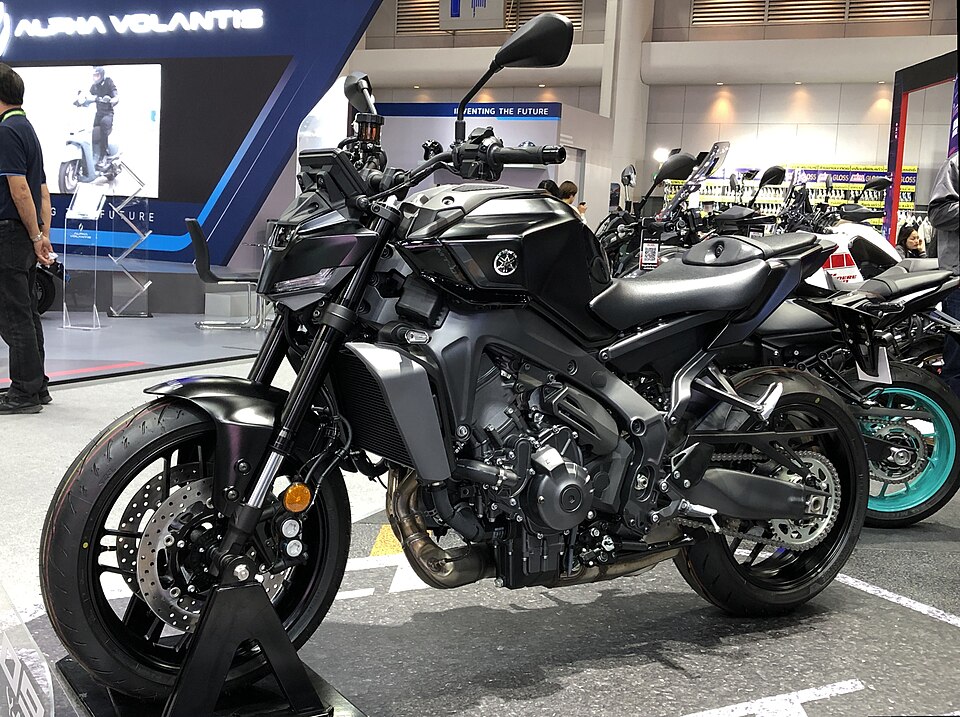
Some motorcycles want to be admired. The MT-09 just wants to misbehave. Yamaha’s middleweight naked has spent years perfecting the art of the cheeky, wheelie-happy hooligan, and the latest version refines that recipe without sanding off its edges. It is the bike that reminds you why you got your licence in the first place — an antidote to sensible, delivered with a grin.
What makes it so beguiling is that all this mischief comes wrapped in a genuinely usable everyday machine. Light, torquey and keenly priced, the MT-09 slots into a commute as happily as it terrorises a mountain road, and that breadth is exactly why it has become one of the best-selling nakeds on the planet.
The CP3 triple: master of midrange
At the core sits the 890 cc CP3 inline-triple, and it is one of the great engines at any price. With 117 hp and a thick 93 Nm of torque arriving low in the rev range, it fires the MT out of corners with a surge that feels punchier than the numbers suggest. The crossplane crank hands it a hard-edged, slightly unhinged growl that no parallel-twin can imitate.
Roll the throttle open in the meat of the midrange and the front wheel skims skyward in the first two gears — the MT-09 is a natural-born wheelie machine, and the electronics let you decide how much of that you want. It is not the fastest thing here on paper, yet the way it deploys its performance makes it feel gloriously, addictively rapid on any real road.
Modern-classic bikes are a wonderful lie. They dress up thoroughly contemporary engineering — fuel injection, ride-by-wire throttles, ABS, traction control — in bodywork borrowed from an era when none of that existed. Nobody tells this lie better than the Kawasaki Z900RS and the Triumph Speed Twin 1200, two bikes that spend all day pretending to be forty years old while quietly being some of the most competent naked machines currently on sale.
I put real miles on both, back to back, on the same loop of fast dual-carriageway and tight, cambered B-roads. What emerged was not a knockout, but two entirely different arguments for what a retro roadster should feel like under your hands. One is a smooth, howling inline-four wrapped around a Z1 silhouette. The other is a gorgeously finished parallel-twin that trades outright pace for a tactile richness the Kawasaki simply cannot fake.
Engine character: the four versus the twin
The Z900RS runs Kawasaki’s 948cc inline-four, retuned from the standard Z900’s version for a fatter midrange, and it is a genuinely lovely engine. Power lands around 109 hp at 8,500 rpm, with 98.5 Nm arriving at 6,500 rpm, and the delivery is silky from idle to redline. There is a building, mechanical howl as the tacho sweeps past 7,000 rpm that no twin can replicate — this is the sound the whole bike is built around, and it does not disappoint.
Triumph’s Speed Twin 1200 counters with its 270-degree, 1,200cc parallel-twin, good for roughly 103 hp at 7,750 rpm and a meatier 112 Nm arriving much lower down, around 4,250 rpm. On paper it trails the Kawasaki at the top of the rev range. On the road it rarely matters, because the Triumph is already shoving you toward the next corner while the Z900RS is still building revs. This is a torque-first engine, and it feels like one from the first twist of the wrist.
Neither engine is objectively “better” — they are simply chasing different feelings. The Kawasaki rewards a rider who likes to work through the gears and chase a note; the Triumph rewards one who wants to feel a punch in the chest at 3,000 rpm and not think about the gearbox again until the next roundabout. If you have ever argued about whether a V8 or a straight-six sounds better, you already know which side of this you land on.
Handling and how each one carries speed
Weight tells an important part of this story. The Z900RS is a genuinely heavy retro bike at around 215 kg kerb, and you feel every one of those kilograms at low speed and in tight, technical turns — it wants a firm hand to change direction quickly. The Speed Twin 1200 is only marginally lighter on the spec sheet at roughly 216 kg, yet it feels noticeably more agile in the real world, largely down to how that mass is carried low and central around the twin’s compact crankcase.
Through faster, sweeping corners the Kawasaki settles into a reassuring, planted stance and its non-adjustable-at-the-front-but-still-composed suspension soaks up mid-corner bumps without drama. The Triumph’s fully adjustable Marzocchi fork and Öhlins-style rear shock (on higher trims) give it a noticeably more premium ride quality — more feel at the bars, better control over broken surfaces, and a chassis that flatters a rider trying to carry speed rather than merely permitting it.
Neither bike is a sportbike wearing a disguise, and neither pretends to be. But if you spend your weekends hunting apexes on a favourite road, the Speed Twin’s superior damping and sharper front-end feedback will have you grinning earlier and more often. The Z900RS is happy to follow along at a slightly more relaxed pace, and honestly, most owners of either bike will never find the limit of what’s on offer here.
Build quality and finish
This is where the gap between these two widens most dramatically, and it is the single biggest reason the Triumph costs what it costs. Run your hand over the Speed Twin’s tank, its brushed engine covers, the machined fins on the cylinder head, the twin analogue clocks — everything feels like it was finished by someone who cared. Paint depth, switchgear weighting, the satisfying click of the indicator stalk: this is a bike built to be looked at as much as ridden, and it rewards close inspection in a way few naked bikes at any price manage.
The Z900RS is not shoddy — far from it — and its teardrop tank and round headlight nail the Z1 silhouette with real conviction. But get up close and the Kawasaki’s switchgear, some of its plastics and its slightly generic instrument cluster reveal a bike built to a tighter cost target. It looks the part from ten feet away, which is exactly where most onlookers will admire it, but the Triumph looks the part from ten inches away too, and that difference is exactly what premium pricing is supposed to buy.
Price and everyday value
Here the Kawasaki claws back real ground. The Z900RS starts at roughly $12,649, undercutting the Speed Twin 1200 by a meaningful margin — Triumph’s twin typically lands closer to the $13,500 mark once you factor in the higher-specification variants most buyers actually want. For that saving you get a faster-revving, more powerful engine on paper and a badge with its own considerable heritage cachet in most markets.
Running costs favour the Kawasaki too, at least on paper: four-cylinder engines are famously long-lived, parts availability is broad, and service intervals are undemanding. The Triumph’s premium components — that adjustable suspension in particular — cost a little more to maintain over a long ownership, though nothing about the Speed Twin is remotely exotic or fragile. Think of the price gap less as “cheap versus expensive” and more as “good versus better,” because that is really what you are paying for.
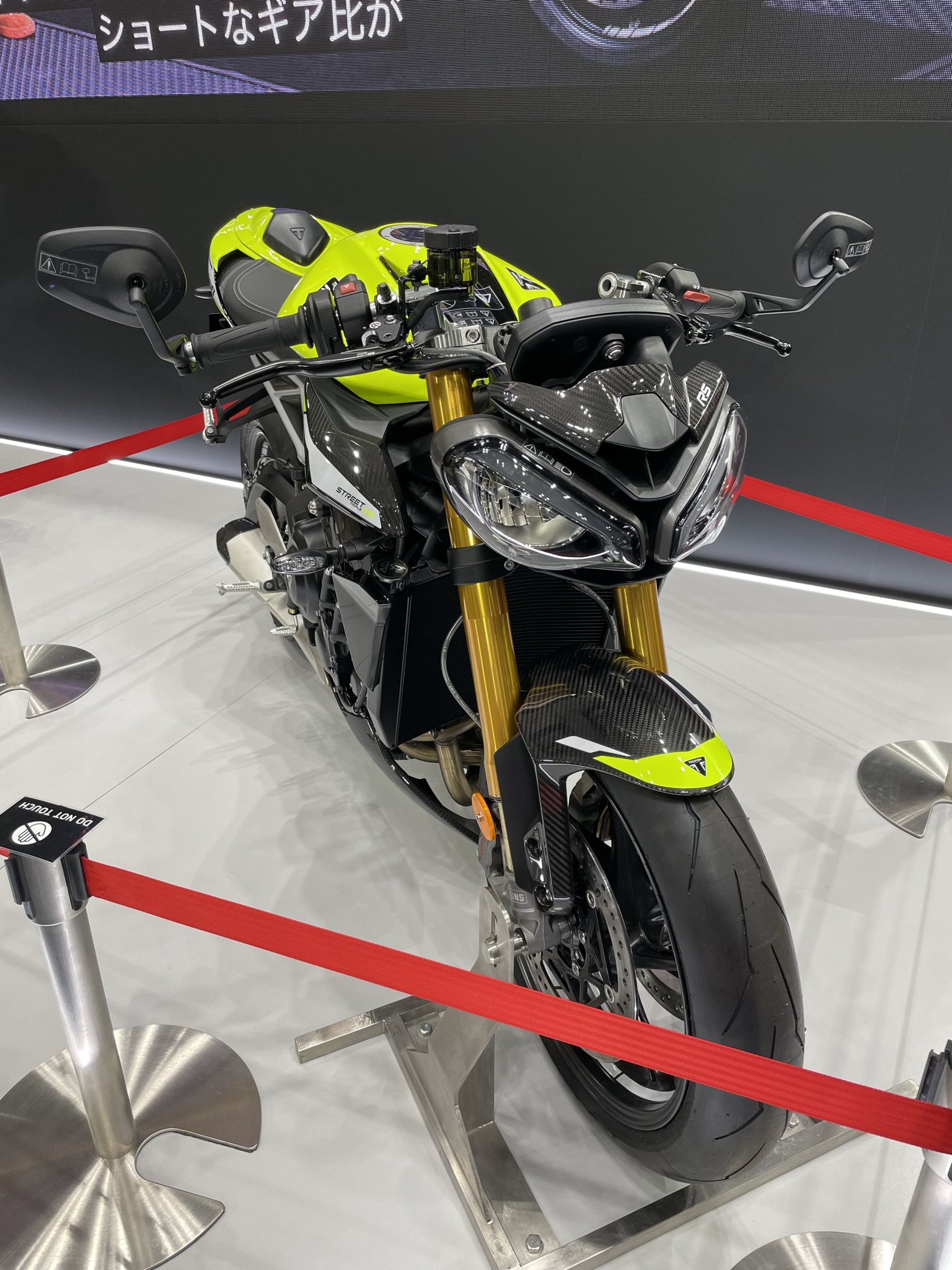
Ask a paddock full of journalists to name the finest middleweight naked and the same answer surfaces again and again: the Street Triple 765 RS. Triumph’s flagship roadster has become the yardstick, the bike everything else is politely compared to and quietly beaten by. It is fast without being frightening, sophisticated without being cold, and it does the whole job with a mechanical charm that borders on addictive.
Part of that magic is the badge’s Moto2 connection — Triumph supplies the engines for the world championship’s middleweight class, and the road-going triple wears that heritage lightly but unmistakably. This is a naked bike engineered by people who race, and every control speaks of that obsession with feel.
The 765 triple: the perfect middle way
The 765 cc inline-triple is the star turn, and it is arguably the sweetest engine configuration ever fitted to a road bike. Making 128 hp at 12,000 rpm, it hands you the low-down flexibility of a twin, the top-end urgency of a four, and a sound all its own — a hard, metallic wail that builds to a howl as the tacho sweeps round. There is simply no bad place in the rev range.
It pulls cleanly from 3,000 rpm, gathers pace with an eager, elastic surge through the midrange, and then charges to a redline that begs to be chased. The up-and-down quickshifter is beautifully judged, and the fuelling is spot on — the RS never feels highly strung, yet it will happily post a 3.3-second sprint to 100 km/h and a genuine 250 km/h if you let it stretch its legs.
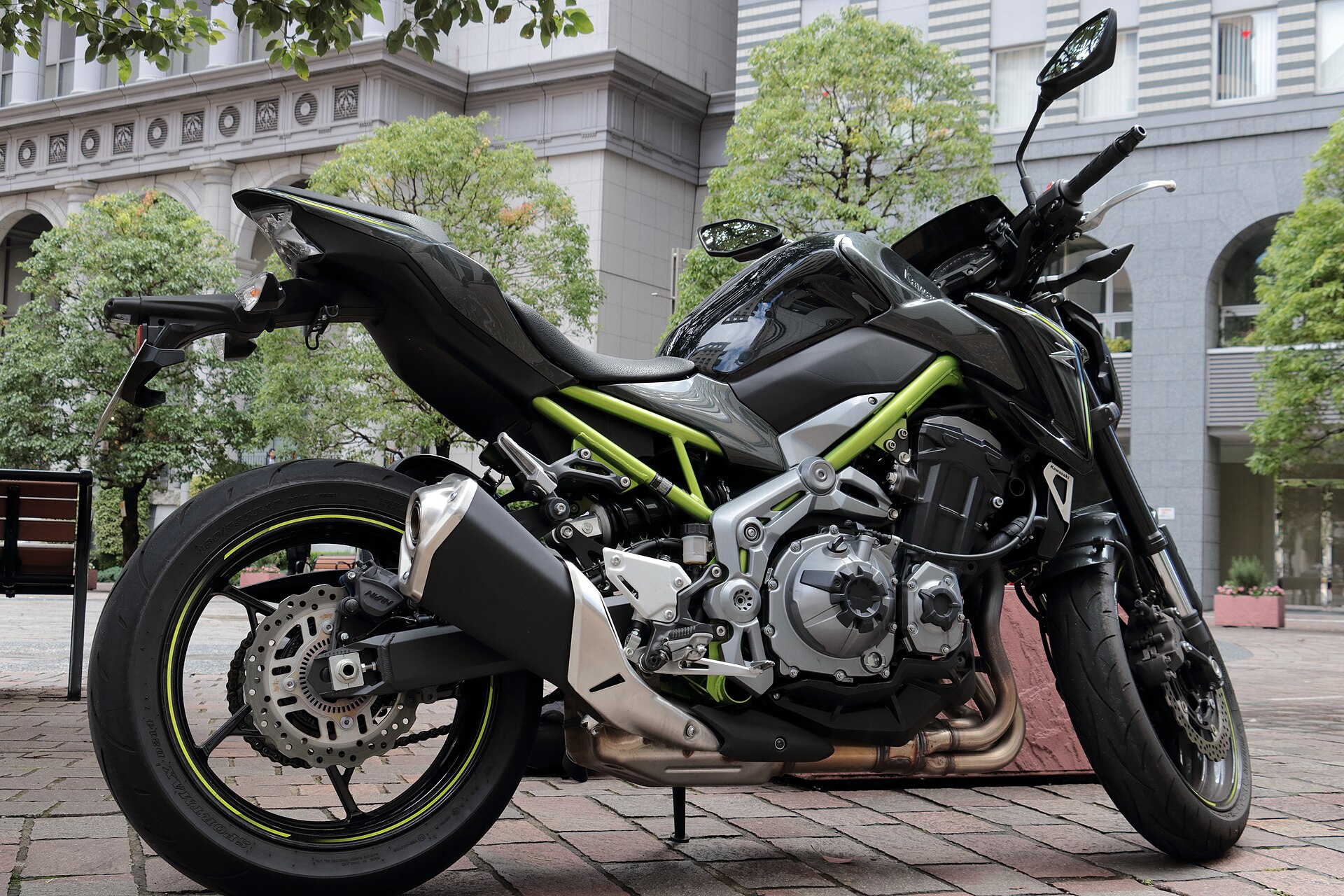
In an era when middleweight nakeds increasingly lean on twins and triples to hit a price, Kawasaki has quietly kept faith with the inline-four — and the Z900 is all the better for it. Here is a machine that delivers the creamy, revvy character of a four-cylinder engine, dresses it in menacing Sugomi bodywork, and asks a price that undercuts almost everything with comparable performance.
The result is one of motorcycling’s great value propositions. The Z900 does not chase headlines with radar cruise or carbon wheels; it simply nails the fundamentals of a fast, smooth, good-looking street bike, then leaves change in your pocket. For a huge swathe of riders, that is exactly the right set of priorities.
The joy of an inline-four
The 948 cc four is the heart of the appeal. Producing 125 hp and 99 Nm, it serves up the smooth, linear delivery that only a four can, spinning freely and cleanly to a soundtrack that hardens into a proper metallic snarl near the top of the rev range. There is enough midrange to make it flexible in town and enough top-end fizz to reward a hard ride.
It is not the torque monster that a big twin is, so you work the gearbox a little more to keep it on the boil, but that is part of the charm — the Z900 encourages you to ride it, to chase revs and hunt gears. A 3.5-second sprint to 100 km/h and a 240 km/h top end confirm there is nothing sluggish about this bargain.
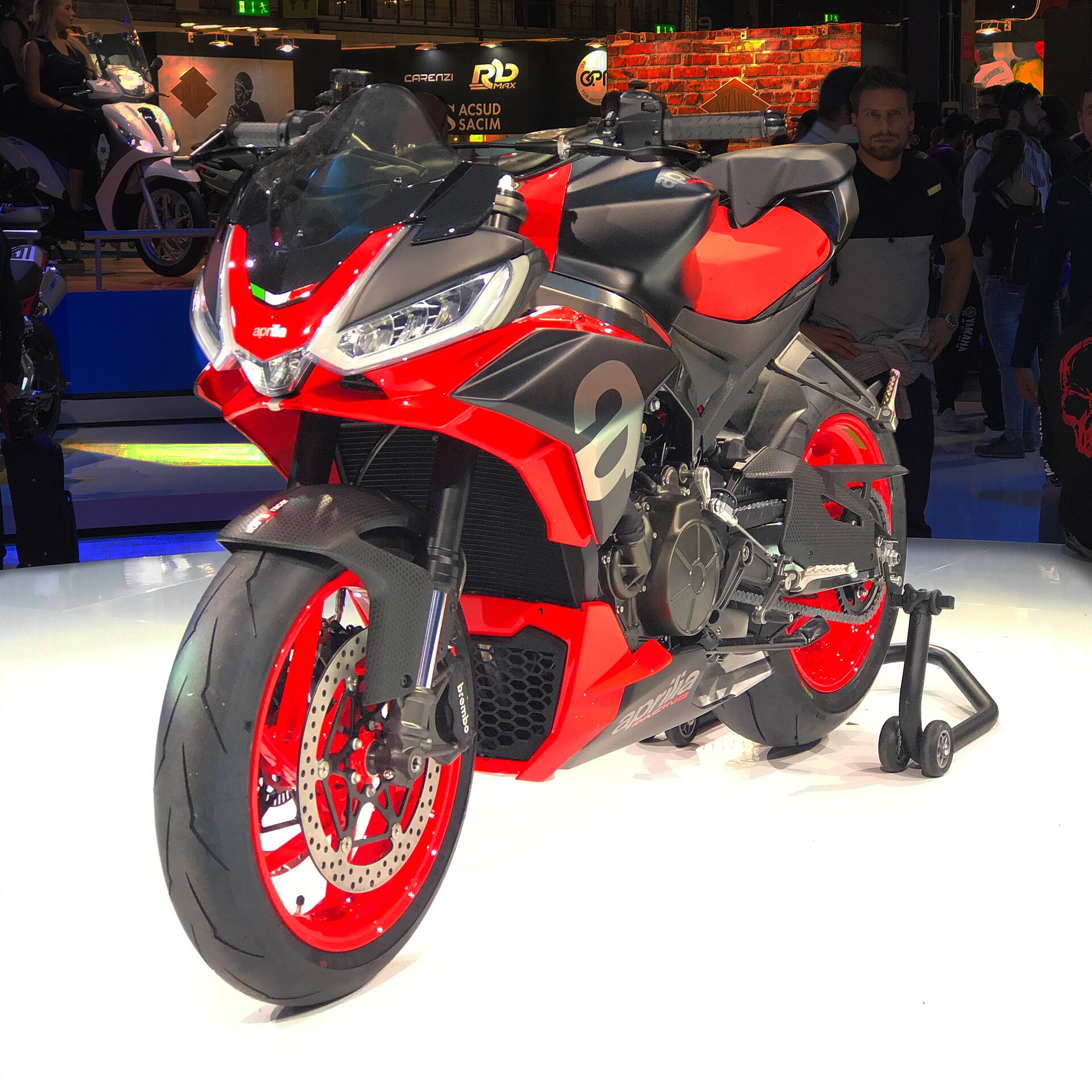
It is easy to be seduced by big numbers, but the Tuono 660 makes a compelling case that the most thrilling motorcycles are often the lightest. Aprilia took its RS 660 sportbike, raised the bars, sharpened the attitude and created a naked that trades brute force for a scalpel-like precision. On a real road, ridden hard, it delivers a purity of experience that far more powerful machines struggle to match.
This is a bike built by a company with racing in its blood, and it shows in every input. The Tuono 660 does not overwhelm you with power; it invites you to carry corner speed, to be smooth, to enjoy the process. Get it right and it flows down a ribbon of tarmac like almost nothing else at the price.
A twin with genuine character
The 659 cc parallel-twin, effectively the front bank of Aprilia’s V4 superbike engine, produces 95 hp at 10,500 rpm and a useful 67 Nm of torque. That may sound modest against triples and fours, but in a bike this light it is more than enough to thrill, and the 270-degree crank hands it a throaty, characterful bark that belies its middleweight displacement.
The delivery is the clever part. There is enough low-down drive to make it easy in town, a strong, elastic midrange that suits real-world roads perfectly, and a top-end that rewards a committed rider chasing the redline. It will dispatch 100 km/h in around 3.6 seconds and stretch to 220 km/h, but it is the everyday accessibility of that performance that makes it so addictive.
Two hundred and eight horsepower. No fairing. A handlebar instead of clip-ons, and a riding position that puts your chin roughly where a superbike rider’s chest would be. On paper, the Ducati Streetfighter V4 reads like a dare: take the beating heart of the Panigale, strip away the aerodynamics and the excuse for a full tuck, and hand the whole savage package to a rider sitting bolt upright with nothing to hide behind. I have now lived with one long enough to answer the only question that actually matters, which is not whether it’s fast, because obviously it is, but whether 208 hp in a naked bike is something a normal road rider should actually want to own.
The short answer is complicated, and anyone who tells you it’s simple either hasn’t paid for a desmo service or hasn’t sat in traffic in July with a 90-degree V4 idling between their knees. Every publication on earth has already told you what this bike can do on an empty mountain road at nine in the morning, and that story is true. This is the other story: what it’s actually like to own the thing, day after day, on the roads the rest of us actually ride.
Two Hundred Horsepower You Will Almost Never Use
Let’s deal with the headline figure first, because it’s the reason most buyers walk into the showroom. 208 hp at 12,750 rpm sounds like a number built for bragging rights, and mostly, it is. On the road, any road, in any country with a speed limit and other people on it, you will use perhaps the bottom third of that rev range for well over ninety percent of your riding. The other two-thirds exists for track days, for the one clear straight you find twice a year, and for the story you tell at the pub.
What you actually feel, hour after hour, is the mid-range shove: the way the Desmosedici Stradale hauls from 4,000 rpm with a violence that makes a 100-hp naked feel unfinished by comparison. That part of the case for this bike is real, and I won’t argue against it. Third-gear roll-ons out of roundabouts are genuinely intoxicating, and no lesser naked I’ve ridden replicates the sensation of this V4 loading up under your right wrist at half throttle. But the peak number on the spec sheet is bragging-rights power, not usable power, and pretending otherwise is how riders end up buying far more bike than their actual riding calls for. Ask yourself honestly how many times a year you’ll see an indicated 150 mph on a public road with your licence intact — if the answer is never, you are paying, in purchase price, in insurance, in every service invoice, for a top end you are buying purely to know it exists.
Living With a Desmodromic Heart
The Desmosedici Stradale is a mechanical masterpiece and also, by any sane measure, overkill for a bike that mostly does the school run. Ducati’s desmodromic valve system doesn’t use springs to close the valves; it uses a second set of cams to physically shut them, which is part of why this engine can spin so hard and so cleanly toward its redline. It’s also why it demands attention a Japanese inline-four simply doesn’t.
The valve-clearance check, the big and genuinely expensive one, where the tank comes off and a technician gets intimate with the cylinder heads, now falls at a 24,000 km (roughly 15,000-mile) interval on this generation of engine. That’s a real improvement on older desmo Ducatis, and the brand deserves credit for stretching it. But “improved” is relative. That single service, even on a generous interval, will cost meaningfully more than a whole year of running something like a Z900 or an MT-09, and you’ll still be doing oil and filter work on a shorter cycle in between. Budget for it the way you’d budget for a set of tyres you didn’t ask for.
None of this makes the Streetfighter unreliable. Desmo engines are famously robust between services, not fragile. It makes it a bike that asks you to think like the owner of something exotic, even though it looks, sounds and rides like a street bike you could commute on. The same mechanical sophistication that makes this engine so thrilling above 8,000 rpm is the sophistication billing you every time it goes in for work.
Traffic Is Where This Bike Punishes You
Nobody buys a 208-hp naked to sit in traffic, and yet that is exactly where most owners will spend an uncomfortable share of their riding life. The Panigale at least has a fairing to route hot air away from your legs; the Streetfighter has almost nothing between the rear cylinder bank and your inner thigh, and a V4 running rich at idle to keep emissions in check throws real heat. On a cool commute it’s a non-issue. Stuck at a red light in summer, with the radiator fan cycling and the exhaust baking your calf, it becomes exactly the kind of discomfort that makes you question the whole purchase.
The riding position compounds it. Ducati has softened the reach to the bars compared with the Panigale, and it genuinely is more upright, but this is still a committed sportbike wearing a naked’s clothes: a decent stretch to the tank, a firm seat tuned for track feedback rather than forty-minute commutes, and suspension that transmits every expansion joint and pothole with an honesty your spine did not request. Around town, on a lane-splitting commute, the Streetfighter is a chore in a way the Panigale never pretends not to be, and a lesser naked never becomes in the first place.
The Insurance Conversation Nobody Warns You About
Insurers don’t care that you’ll ride sensibly. They see a three-figure horsepower number attached to an exposed riding position, with none of the fairing that even marginally protects a superbike rider’s legs in a low-speed drop, and they price the policy accordingly. Add a naked’s higher theft appeal, since there’s no bodywork to make it instantly identifiable once the plates come off, and the premium on a Streetfighter V4 routinely lands well above what an equivalent-value adventure bike or a mid-weight naked would cost to cover, sometimes by a genuinely startling margin depending on your age, postcode and claims history.
This is the ownership cost almost nobody mentions in the glossy first-ride pieces, because a journalist testing a press bike for a week never sees a renewal quote land on the doormat. Anyone actually signing the finance agreement should get a real number before they get emotionally attached to the colour options. Here is what actually changes, in practical terms, once you sign on the dotted line:
- Fuel range shrinks fast once you start using the top of the rev range; this is not a bike built for long stints between stops.
- Tyres wear quickly under that much torque, so budget for a fresh rear sooner than you’d like.
- Desmo servicing means planning ahead for a specialist technician, not just whichever mechanic is nearest.
- Heat soak in slow-moving traffic is a genuine, recurring discomfort, not an occasional inconvenience.
- Insurance premiums reflect the power figure and the naked bodywork, not just the price tag on the invoice.
The Streetfighter V4 doesn't want a commute. It wants a racetrack, a full tank and a very understanding insurer — everything else is just where it lives when it isn't allowed to be itself.— Marcus Vale, Chief Road Tester
Streetfighter vs. Panigale vs. a Sensible Naked
So where does that leave a buyer cross-shopping this against its own siblings? Against the Panigale V4, the case for the Streetfighter is straightforward. You get almost the same soul, 208 hp against the Panigale’s 214 hp, the same desmodromic heart, with a riding position that won’t wreck your wrists on the way to work. If you want the V4 experience but refuse to fold yourself into a race crouch every single day, the Streetfighter is the obviously correct choice, and the money saved over the Panigale’s asking price barely matters next to how much more you’ll actually ride the thing.
Against a lesser naked, a Triumph Street Triple 765 RS, a Yamaha MT-09, even KTM’s own 1390 Super Duke R, the calculation gets far less comfortable. These bikes deliver eighty or ninety percent of the real-world thrill on a normal road, cost meaningfully less to buy, insure and service, and don’t punish you for simply existing in traffic. The gap between a Street Triple’s mid-range and the Streetfighter’s top-end fireworks is something you’ll feel for maybe four seconds on your favourite stretch of B-road, and pay for every single day in between.
If you ride mostly on the road, at speeds a well-tuned 100-to-120 hp naked handles with total confidence, and you’re honest about how rarely you’ll explore the top third of this engine’s rev range, a lesser naked will make you happier per pound spent. The Streetfighter V4 earns its keep only for the rider who genuinely wants, and will genuinely use, the full V4 experience at a track day or on an empty pass somewhere, and who has already made peace with what that costs on every ordinary day in between.
The middleweight naked class is where most riders actually live, and no two bikes define its extremes better than these. The Yamaha MT-09 is the people’s champion — loud, torquey, keenly priced and gloriously unhinged. The Triumph Street Triple 765 RS is the connoisseur’s choice — sharper, more expensive and dripping with the kind of hardware you normally find on machines costing far more. Both use a three-cylinder engine, both weigh a shade under 200 kg, and both will humble far pricier metal on a good road.
Yet they feel like they were designed by people who would never agree on lunch, let alone motorcycles. One is a hooligan in a leather jacket; the other is a scalpel in a tailored suit. That is exactly why this fight is so instructive — it forces you to decide what kind of rider you really are before a single kilometre is covered.
Engine character
Yamaha’s 890cc CP3 triple is a masterclass in low-end thump. With 117 hp and a fat 93 Nm arriving early, it surges out of corners like a much bigger bike, all guttural bark and effortless roll-on. It feels naughty at every throttle opening, positively daring you to loft the front. Triumph’s 765cc unit, derived directly from the Moto2 spec engine, chases a different high: 128 hp at a lofty 12,000 rpm, a screaming top end and a crispness that rewards riders who love to rev right to the redline.
In the real world the Yamaha feels faster in the mid-range and lazier to ride, happy to lug from any gear on a lazy Sunday. The Triumph asks you to work the gearbox and wring it out, then repays you with a sweeter, more musical delivery and a top-end shriek that borders on addictive. The MT-09 is the more relaxing daily engine; the Street Triple is the more thrilling one when the road opens up.
Chassis and handling
Here the price gap shows itself. The Street Triple RS arrives with fully adjustable Showa forks, an Öhlins STX40 rear shock, Brembo Stylema calipers and sticky Pirelli rubber — a genuine track-ready specification straight from the crate. It steers with delicious precision and holds a line as if bolted to a rail. The MT-09 uses more modest KYB suspension that, while much improved on recent models, can feel busy and under-damped when you truly attack a bumpy back road at pace.
If the middleweight naked is the smart buyer’s sports bike, then the Kawasaki Z900 and Yamaha MT-09 are its two most popular graduates. Both hover around a hundred-and-twenty horsepower, both cost about the same as a modest hatchback, and both promise huge fun without the wrist-ache and insurance nightmares of a full superbike. Yet they go about it in wonderfully different ways, and choosing between them reveals a lot about the rider.
The Z900 is the smooth operator; the MT-09 is the wild child. It comes down to whether you prefer the silky sweep of an inline-four or the torque-drunk shove of a triple — a decision as much about temperament as performance.
Engine and delivery
Kawasaki’s 948cc inline-four is a paragon of refinement. Producing 125 hp and 98.6 Nm, it delivers its power in a long, linear, buttery surge that never feels intimidating and sings a classic four-cylinder note as the revs climb. It is the more sophisticated engine, happy to trickle through traffic or scream toward its redline with equal grace. The MT-09’s 890cc CP3 triple is the extrovert: 117 hp but a punchier, earlier hit of torque that lifts the front wheel and demands you hold on tight.
In the numbers game the Kawasaki has more peak power, but the Yamaha feels faster and more mischievous below 7,000 rpm, which is exactly where most road riding actually happens. The Z900 is the better engine for smoothness and gentle touring; the MT-09 is the better engine for grins, wheelies and general hooliganism. Both, refreshingly, are easy to live with day to day.
Chassis and weight
Weight is the MT-09’s ace. At around 193 kg it is noticeably lighter than the roughly 212 kg Z900, and you feel that 19-kilo gap in every direction change and every tight car park. The Yamaha flicks from side to side with playful ease, while the Kawasaki feels more substantial and planted — reassuring at speed but harder work through a series of tight switchbacks. Both use adjustable suspension that has improved markedly with each generation.
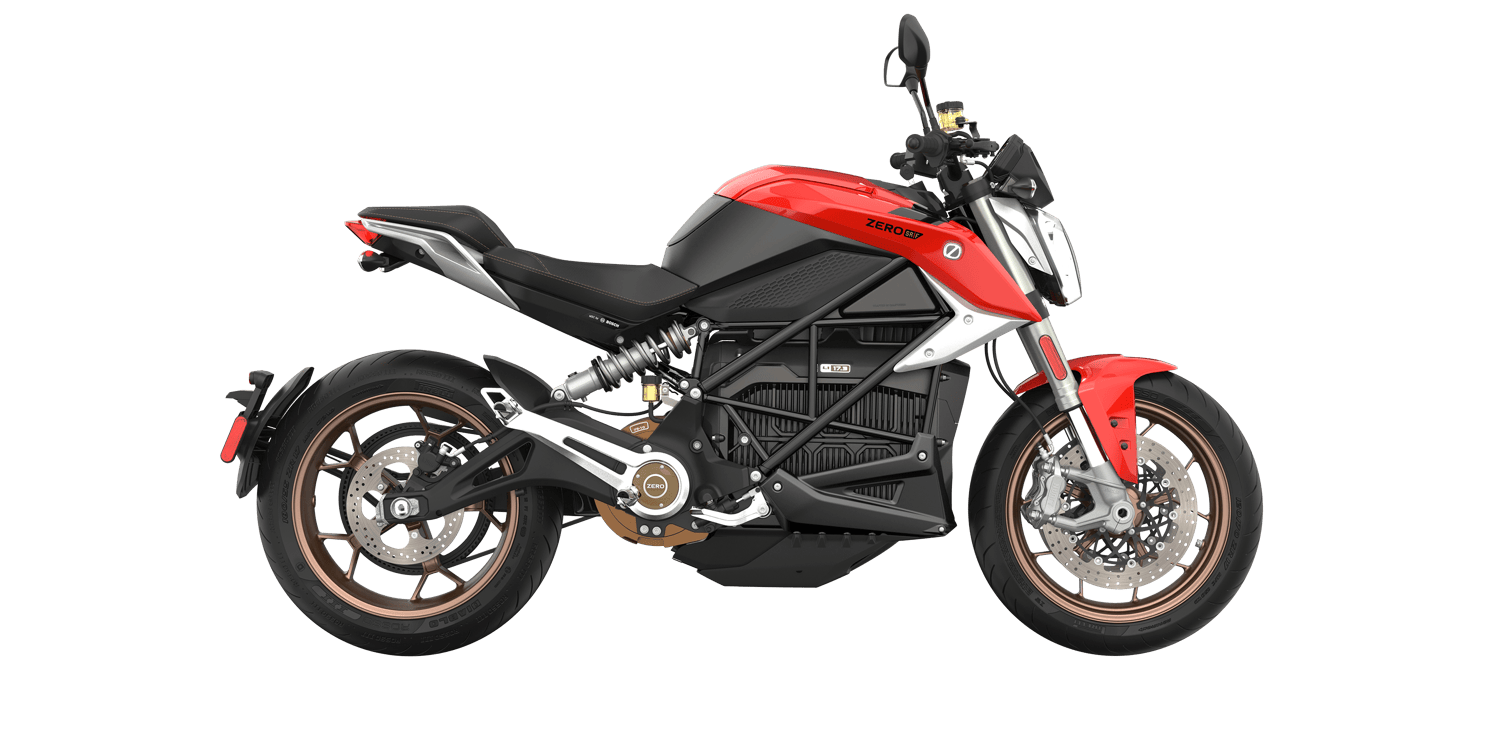
This is not a fair fight, and that is exactly why it fascinates. On one side, the Zero SR/F — a fully electric naked bike that answers the throttle with instant, silent, savage torque. On the other, the Aprilia Tuono 660 — a jewel of a petrol twin that revs, snarls and demands you play with its gearbox. They cost roughly similar money in some markets, yet they represent entirely different visions of what a motorcycle should be in the years ahead.
For riders weighing the leap to electric, this is the comparison that matters most: does the future’s clean convenience outweigh the present’s raw charisma? We rode both hard, on the same roads, to separate the hype from the reality.
Powertrain and performance
The Zero SR/F’s motor delivers around 110 hp but a staggering 190 Nm of torque — and crucially, all of it is available from a standstill. There is no clutch, no gears, no waiting for revs to build; twist the throttle and the SR/F simply hurls itself forward with a smoothness no combustion engine can replicate. The Aprilia’s 659cc twin makes a comparable 95 hp and a modest 67 Nm, but you must work for every bit of it, chasing the tacho and banging through the slick gearbox.
The Zero feels quicker in a straight sprint away from the lights; the Aprilia feels more alive at every other moment of the ride. One rewards the wrist alone; the other rewards the whole body, the ears and the imagination. Which thrill you prefer says a great deal about the kind of rider you are, and there is genuinely no wrong answer here.
Range, refuelling and weight
Here the petrol bike strikes back hard. The Aprilia will comfortably travel 300 km or more on a tank and refuel in three minutes anywhere on earth, no planning required. The Zero, depending on riding style and battery options, manages a real-world highway range closer to 160 km before needing a charge that takes far longer than any fuel stop. The SR/F is also heavier, at around 208 kg against the featherweight Tuono’s 183 kg, and you feel that extra mass keenly at low speed and in tight corners.