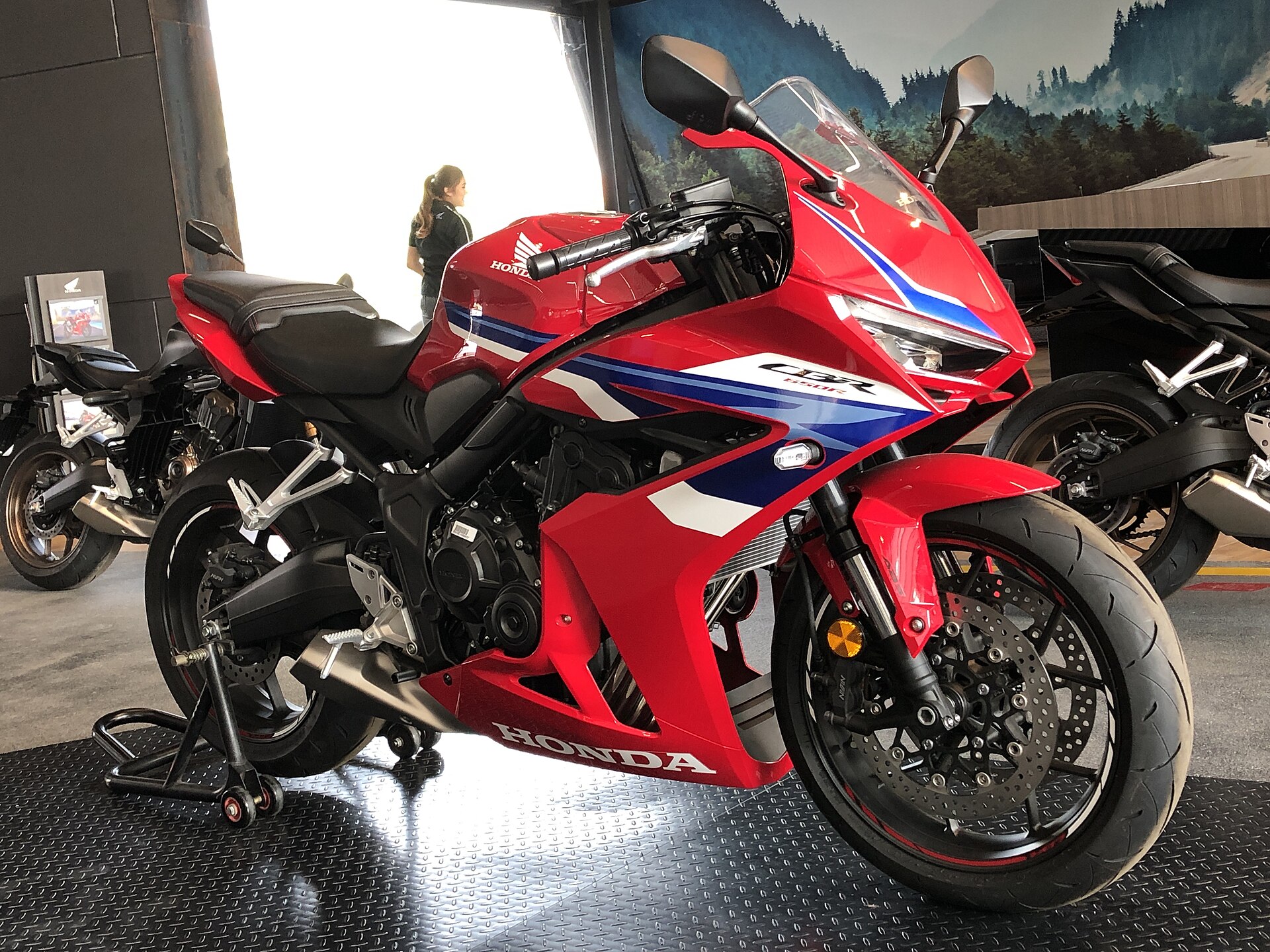
Every new rider eventually asks the same question at the dealership: do I want an engine that talks back, or one that simply gets on with the job? The Triumph Speed 400 and Honda CB500 Hornet answer that question in almost opposite ways, and both are among the best learner-friendly, A2-licence-eligible naked bikes money can currently buy. One is a thumping single with genuine character; the other a smooth-spinning twin with a noticeably higher ceiling. Choosing between them is really choosing what kind of rider you want to become.
I have spent weeks swapping between the two — commuting on one, hammering a favourite set of B-roads on the other, then doing it all again in reverse — and the gap between them is far more interesting than a spec sheet suggests. This is not a case of one bike being simply better. It is a case of two very different answers to the same brief, and the right one depends entirely on which side of the single-versus-twin argument you fall on.
Two philosophies for the same licence
Both bikes are built to slot neatly under A2 licence power limits in markets that use them, and both are aimed squarely at riders who want something more grown-up than a 125 but are not yet ready — financially or otherwise — for a litre-class weapon. The Triumph uses a single 398 cc TR-series cylinder, producing a modest 40 hp. The Honda counters with a 471 cc parallel-twin making roughly 47.5 hp, which not coincidentally sits right at the ceiling most A2 riders are permitted to ride.
That difference in approach shows up everywhere on both machines, not just under the tank. Triumph has leaned into simplicity and feel; Honda has leaned into refinement and a wider useful rev range. Neither is chasing outright drama, but they get there — or deliberately avoid it — by completely different routes.
Engine character: a thumping single versus a smooth twin
Thumb the Speed 400’s starter and you get a proper single-cylinder bark, a light off-beat thrum through the pegs that makes the bike feel more alive at a standstill than its modest output suggests. There is real, usable shove low down — 37.5 Nm arrives by 6,500 rpm — and the whole package pulls with an eager, slightly rough-edged charm that many riders will find genuinely endearing rather than crude. It is an engine that wants you to notice it working.
The Hornet’s twin, by contrast, is the more sophisticated instrument. It spins up with none of the single’s vibration, delivers a fatter 43 Nm of torque, and simply keeps pulling further up the rev range than the Triumph can manage. Where the Speed 400 signs off and starts to feel breathless, the Honda is only just getting into its stride. On a fast sweeping road that translates into a genuinely quicker bike — not dramatically so, but enough that you notice it every time you overtake.
Neither engine is wrong. The single rewards you with feel and character at everyday speeds; the twin rewards you with headroom and a smoother, more relaxed motorway cruise. If you already know you will eventually want more performance, the Hornet’s extra ceiling is the one that ages better. If you want a bike that feels interesting the moment you thumb the starter, the Speed 400 wins that argument outright.
Weight, seat height and low-speed confidence
This is where the Triumph claws back real advantage. At a claimed 170 kg kerb weight against the Hornet’s 189 kg, the Speed 400 is a genuinely different physical proposition at walking pace — wheeling it out of a tight parking space, catching it on an unexpected camber, or simply muscling it around at a fuel stop all feel noticeably easier. For a nervous new rider still building confidence, that gap matters far more than it looks on paper.
Seat height tells a similarly close story: 790 mm on the Triumph versus 785 mm on the Honda, both comfortably low enough for shorter riders to get both feet flat. Riding position diverges more than the numbers suggest, though. The Speed 400’s bars and pegs put you in a compact, slightly forward-leaning stance that suits shorter riders and tight urban streets but can feel cramped for anyone over six feet on a long ride, while the Hornet’s roomier reach and extra chassis heft translate into a more settled, less nervous feel once you are up to motorway speed rather than picking through traffic.
Price and running costs
The Speed 400 undercuts the Hornet meaningfully at the till, starting from $4,995 against a Honda that starts closer to $7,000 depending on market. That gap buys a lot of insurance, gear and fuel for a new rider on a tight budget, and it is arguably the single biggest reason the Triumph has become such a strong seller among first-time big-bike buyers.
Running costs favour the Speed 400 too, at least on paper. A single cylinder means fewer moving parts to service, and Triumph’s pricing strategy has clearly been built around undercutting rivals at every stage of ownership, not just at the point of sale. Insurance follows a similar pattern for the youngest riders shopping this class: the Speed 400’s lower purchase price and mechanical simplicity tend to attract friendlier premiums, which matters enormously when you are also budgeting for gear, a course and your first set of tyres. The Hornet is not punishingly expensive to run or insure — Honda’s reliability reputation and dealer network remain formidable — but its twin-cylinder hardware and higher new price nudge it into a slightly costlier bracket throughout ownership.
Who actually grows into which bike
The Speed 400 suits the rider who values feel over outright pace — someone commuting daily, learning the ropes on a manageable, characterful machine, and who is happy to sell up and move on once their licence restrictions lift and their skills outgrow it. It is a brilliant first proper motorcycle precisely because it never pretends to be anything more than that, and it does the job with real style and a genuinely premium-feeling chassis for the money.
The Hornet suits the rider who wants one bike to cover both the learner years and a good chunk of what follows. Its higher power ceiling, smoother cruising manners and slightly more grown-up feel mean it will not feel outgrown the moment restrictions lift in the way a smaller single eventually can. If you are the sort of rider planning to keep your first big bike for several years rather than trade up immediately, that extra headroom is worth the additional outlay.
Fewer than three thousand dollars separate these two on the price list, and yet the gulf between what they represent could not be wider. The Harley-Davidson Nightster is the brand’s answer to a genuinely modern problem: how do you sell the Sportster mystique to a rider who has never touched a carburettor and never will? The Honda Rebel 1100 asks a blunter question in reply: why pay a premium for a badge when 1,084cc of smooth, torquey parallel-twin and a slick automatic gearbox will get you to the same diner just as fast, for noticeably less money?
I have spent real weeks with both, swapping keys back and forth until the differences stopped being spec-sheet abstractions and became things I felt in my wrists, my wallet and, frankly, my ego. This is not a case of one bike simply beating the other. It is a fork in the road for two entirely different kinds of cruiser buyer, and the sooner you admit which one you are, the happier you will be with whichever key ends up in your pocket.
Two very different hearts
Harley’s 975cc Revolution Max V-twin is the single biggest reason the Nightster exists at all. Liquid-cooled, four valves per cylinder, and happy to spin to a redline that would have scandalised anyone raised on air-cooled Evolution engines, it makes a claimed 90 hp at 7,500 rpm and 95 Nm at 5,000 rpm. It still barks like a Harley through the stock pipes and still shudders satisfyingly at idle, but it revs and responds like a modern sportbike engine wearing a leather jacket. That duality is the entire point of this bike, and Harley has nailed it.
Honda’s approach is almost the opposite. The Rebel 1100’s 1,084cc parallel-twin, related to the unit doing duty in the Africa Twin, produces a slightly lower 87 hp but a chunkier 98 Nm of torque delivered lower in the rev range, and it hands that torque over with the kind of unruffled, lazy confidence that makes a cruiser easy to love in traffic. Order it with Honda’s DCT automatic gearbox — no clutch lever, no gear pedal, just throttle and a pair of paddle shifters if you fancy playing along — and the Rebel becomes something genuinely novel in this class: a big-twin cruiser you can ride all day in pure automatic mode without your left hand doing a single thing.
On paper the two engines are close enough to call a draw. In the saddle they could not feel more different. The Nightster wants to be revved, rewards an aggressive right wrist, and genuinely surprises riders who assume every Harley is a slow-turning thumper. The Rebel does not care how hard you twist the throttle; it simply shoves you forward from barely above idle and stays smooth doing it. One engine asks you to work for the thrill; the other hands it to you before you have finished pulling out of the driveway.
Stance, weight and handling
This is billed as a sporty cruiser against a value cruiser, and the chassis numbers back that framing up. The Nightster carries the more aggressive geometry of the two: a blacked-out, minimalist stance, sportier proportions than any Sportster before it, and genuinely sharper steering, helped along by that stiff Revolution Max engine acting as a stressed member of the frame. At a claimed 221 kg kerb weight it is no featherweight, but it disguises its mass well once rolling and changes direction with real enthusiasm for a cruiser.
The Rebel 1100 is heavier still at around 223 kg, and it wears that weight low and forward in classic cruiser fashion. It steers with less urgency than the Nightster and never pretends to be anything other than a relaxed, feet-forward machine, but its low centre of gravity makes it feel more manageable than the number suggests at a standstill or paddling through a car park. Neither bike will embarrass a proper naked through a set of switchbacks, but if you forced me to file one under ‘sporty’ and the other under ‘sensible’, the Nightster earns the sportier tag on merit, not just on marketing copy.
Ground clearance is the Nightster’s one honest weakness. Push it hard into a corner and the footpegs will let you know about it well before the tyres run out of grip, a familiar Harley cruiser trait the Revolution Max engine has not fully cured. The Rebel is no scratcher’s tool either, but its more conventional cruiser geometry means you rarely find yourself surprised by what touches down first.
Ergonomics and everyday comfort
Seat height is close: 705 mm on the Nightster against 700 mm on the Rebel, both low enough to plant both feet flat and reassure a nervous new rider. Reach to the bars differs more than those numbers suggest, though. The Nightster’s drag-style bar and mid-mounted pegs put you in a slightly more committed, sportier crouch, while the Rebel’s flatter bar and neutral peg position feel more universally comfortable, particularly for taller riders who find the Harley’s cockpit a touch cramped after an hour in the saddle.
Fuel range favours the Honda: the Nightster’s small, underslung tank holds 11.7 litres against the Rebel’s 13.6 litres, giving the bigger-tanked Honda a real edge on a long day’s ride before you need to hunt for a station. Wind protection is minimal on both, as you would expect from bikes with essentially no fairing, and neither is a natural motorway cruiser once you push much beyond an hour at a stretch.
Technology, price and the DCT question
Price is where this comparison sharpens into a real decision. The Nightster starts at $11,999, the Rebel 1100 at $9,599 — a genuine $2,400 gap that buys a lot of fuel, gear or simply peace of mind for anyone stretching a first-bike budget. Both come with ride-by-wire throttles, multiple riding modes and switchable ABS as standard, so neither feels stripped-out at its price point.
The Rebel’s ace, though, is that DCT gearbox — an option Harley does not offer on the Nightster at any price. It is not just a novelty for nervous beginners; experienced riders who try it in stop-start traffic tend to come away quietly converted, and the ability to flick back to manual paddle control for a spirited ride means you are not actually giving anything up by ticking the box. For a huge swathe of buyers, it is the single most compelling reason to choose the Rebel over the Harley.
What the Rebel cannot buy, at any price, is the badge. The Harley name still carries a cachet that no amount of clever Honda engineering has managed to replicate, and for plenty of riders that intangible pull — the dealer events, the community rides, the sheer certainty that everyone at the petrol station knows exactly what they are looking at — is worth the extra $2,400 on its own.
The Africa Twin carries a name soaked in Paris–Dakar history, and unlike many modern adventure bikes it actually lives up to the promise once the tarmac runs out. Where rivals have grown ever more road-biased and ever heavier with luxury kit, Honda has kept its big twin focused on the original mission: crossing continents and conquering dirt with a mechanical dependability you can genuinely stake a trip on.
That is the Africa Twin’s quiet superpower. It may not top the class for outright horsepower or the longest gadget list, but it offers a rare combination of real off-road credibility and legendary Honda reliability. For the rider planning to ride somewhere remote and get home again, that balance matters more than any spec-sheet bragging right.
A parallel-twin built for the long game
The 1084 cc parallel-twin produces a modest-sounding 101 hp, but the figure that matters is the 105 Nm of torque delivered low and early. This is an engine tuned for tractability, chugging cleanly from just above idle so you can pick your way over rocks and ruts without slipping the clutch, then pulling with satisfying muscle when you open it up on a fast gravel road or a motorway on-ramp.
The 270-degree firing order hands it a pleasant V-twin-like thrum and a broad, usable spread of grunt rather than a peaky top-end rush. It will crack a relaxed 200 km/h and sip fuel at around 21 km/l on a steady cruise, and crucially it never feels intimidating — the power is there when you want it and utterly manageable when you do not.
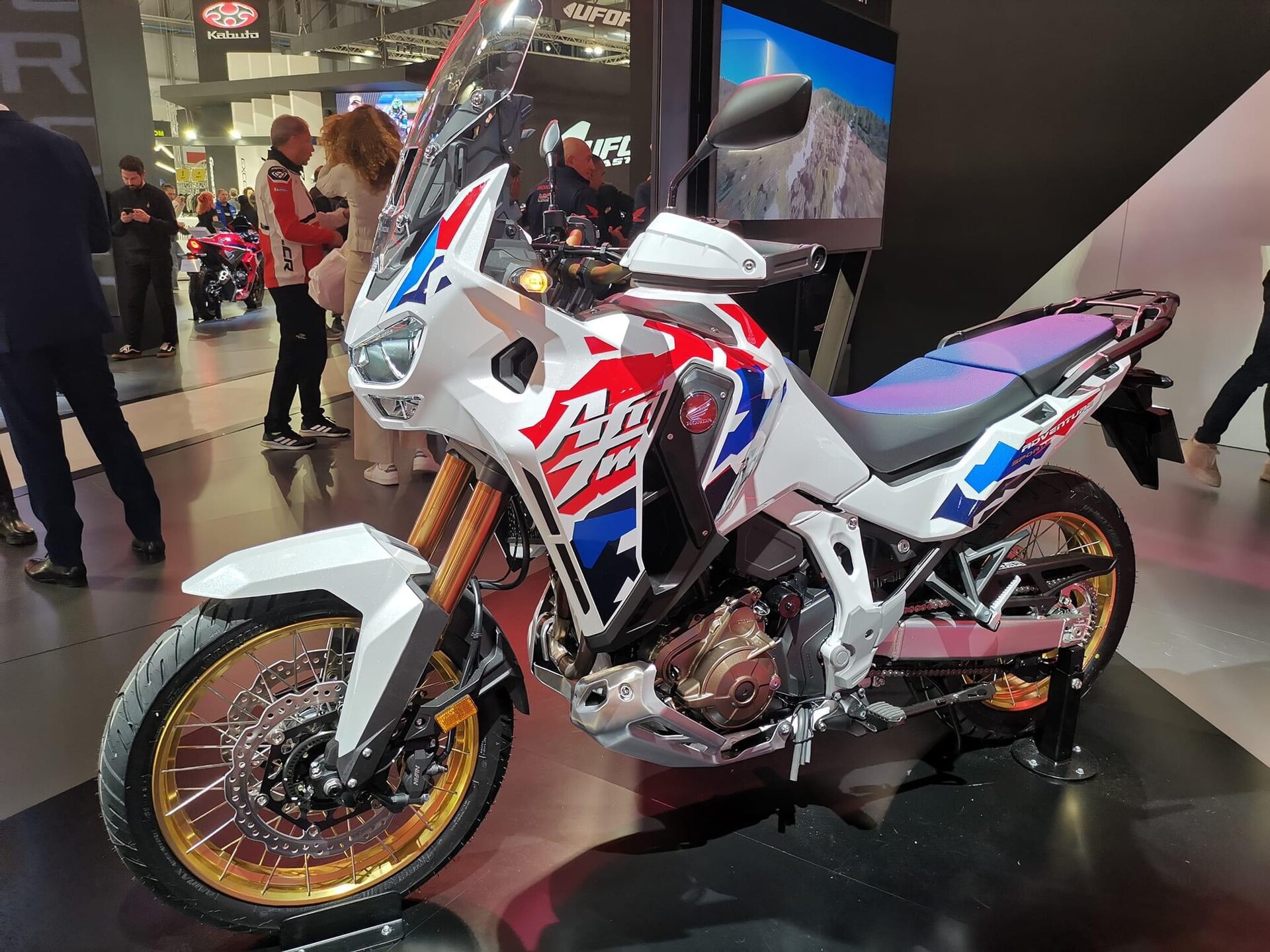
For decades the big adventure bike has been the Swiss Army knife of motorcycling — comfortable enough for continents, capable enough for gravel, fast enough to embarrass sports tourers. Two machines dominate the conversation. The BMW R 1300 GS is the reigning class benchmark, a technological tour de force that every rival is measured against. The Honda Africa Twin is the honest adventurer’s hero, less flashy but blessed with genuine dirt credibility and a price that makes the BMW blush.
This is not merely a spec-sheet duel. It is a clash of philosophies: German maximalism against Japanese pragmatism, gadgetry against grit. We took both across tarmac, gravel and rutted trail, loaded and unloaded, to find precisely where each one earns its keep and where its priorities lie.
Engine and performance
BMW’s all-new 1,300cc boxer twin is a monster in the friendliest way. With 145 hp and a colossal 149 Nm of torque, it hauls the GS forward with a locomotive shove that makes overtakes trivial and passengers grin. It is smoother and more urgent than any GS before it, with an addictive wave of low-down grunt. Honda’s 1,084cc parallel twin plays a quieter tune — 101 hp and 105 Nm — but its low, tractable delivery and 21-inch front wheel make it feel more natural when the surface turns loose and slippery.
On the road the BMW is simply quicker everywhere, and its optional Automated Shift Assistant lets you ride clutchless if you wish, blurring the line between manual and automatic. The Africa Twin, particularly with Honda’s superb DCT dual-clutch automatic, is the more relaxed companion, trading outright pace for a friendly, unflappable manner that suits long, dusty days far from a workshop. Neither engine will ever leave you wanting on a public road.
Chassis and off-road ability
The GS uses BMW’s evolved Telelever front end, which now offers adaptive ride-height control that lowers the seat at a stop and rises for clearance on the move — witchcraft that shrinks a heavy bike around you and makes a big machine feel manageable at the lights. It handles like something 50 kg lighter than it is. Yet the Africa Twin, with its longer travel, spoked wheels and genuine 21-inch front, remains the more confident tool once the tarmac ends and the ruts begin.
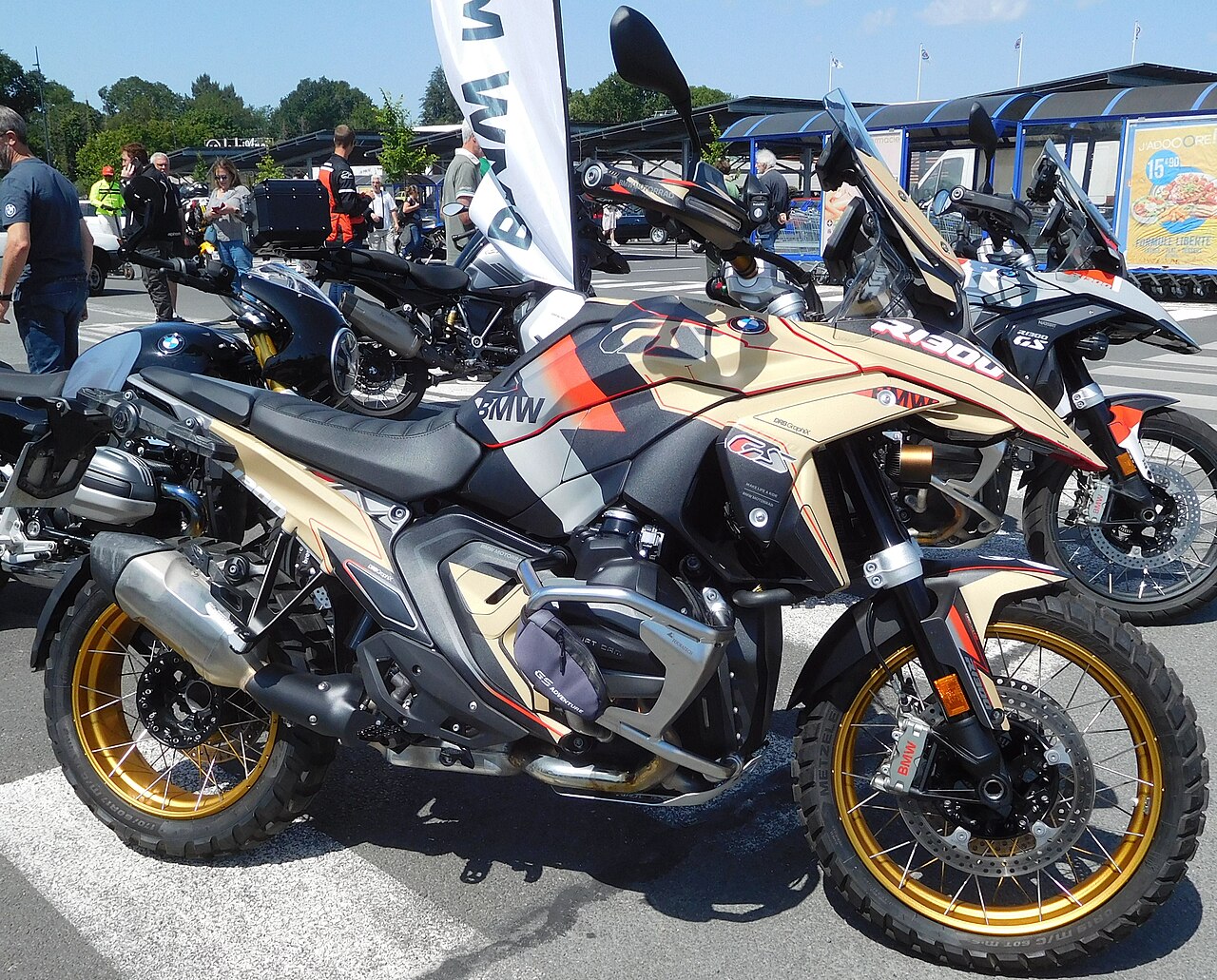
Not everyone wants two hundred horsepower and a licence-shredding top speed. For a huge swathe of riders, the sweet spot is a bike with around ninety-something horses — quick enough to thrill, gentle enough to enjoy, and friendly enough to ride every single day without drama. Two very different machines chase that fertile middle ground: the Honda CBR650R and the Aprilia Tuono 660.
The Honda represents the traditional, dependable path — a jewel-like inline-four in a comfortable sporty package with a badge you can trust for a decade. The Aprilia takes the modern route — a light, torquey parallel twin drenched in the kind of electronics normally reserved for full-blown superbikes. Which philosophy wins depends entirely on what you want from your riding.
Engine and performance
The CBR650R’s 649cc inline-four is a throwback in the best possible sense. Making 94 hp and 63 Nm, it is smooth, revvy and rewards a rider who loves to chase the redline, singing a delicious four-cylinder wail on the way to its power peak. The Tuono 660’s 659cc parallel twin makes a similar 95 hp but a healthier 67 Nm, and delivers it with a punchier, torquier mid-range that feels quicker in real-world riding. The twin is faster point to point; the four is more soulful at full stretch.
The Tuono is also dramatically lighter, at around 183 kg against the Honda’s 208 kg. That 25-kilo gulf transforms the character completely: the Aprilia feels like a proper sports bike, eager and flickable and always ready to attack, while the CBR feels more like a relaxed sports tourer that happens to look racy in the showroom.
Chassis and handling
The Aprilia is the sharper instrument by a clear margin. Its light weight, aggressive geometry and quality suspension make it a joy on a twisty road, far closer in spirit to the firm’s RS 660 sportbike than its upright bars might suggest. The Honda is competent and stable, with a planted, forgiving feel that inspires confidence, but it never begs to be hurled at an apex the way the Tuono does. For outright cornering fun and involvement, the Aprilia wins comfortably.