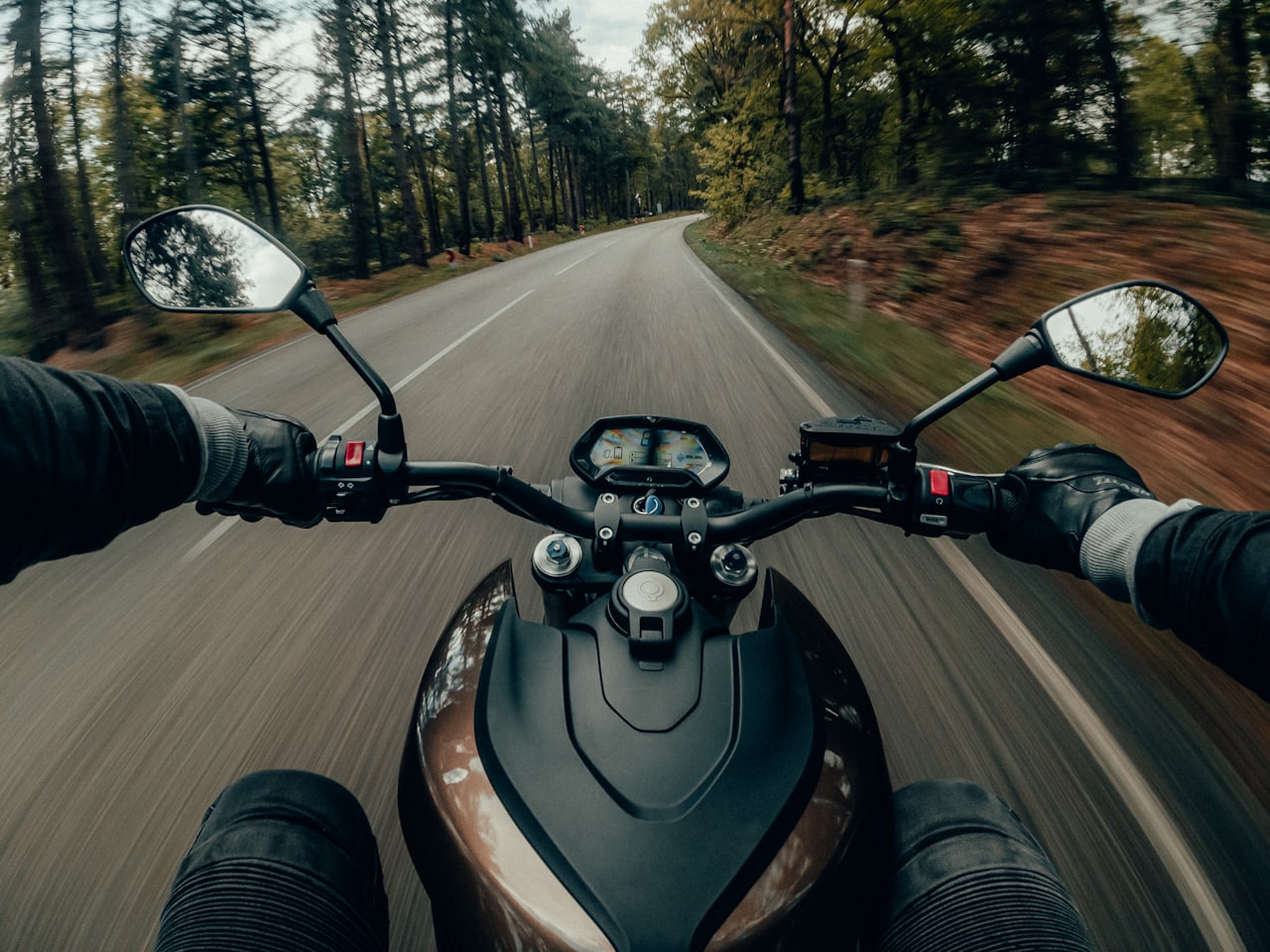
For the better part of two decades, the electric motorcycle was treated as a science-fair exhibit — earnest, faintly awkward, and forever promising to be brilliant next year. The bikes were heavy, the range was laughable, the price tags read like a cruel joke, and the whole category smelled of compromise. Enthusiasts nodded politely at the trade-show stands, admired the clever packaging, then rode home on something that burned petrol and made a proper noise. For years that was the honest state of play. It is not any more. Somewhere in the last few model cycles the electric motorcycle stopped being a proof of concept and quietly, decisively grew up into a machine you would choose on merit alone.
Nothing captures that shift better than a bike like the Zero SR/F. This is not a curiosity you tolerate for the sake of your conscience; it is a genuinely quick, genuinely usable motorcycle that happens to be silent. Throw a leg over one after a lifetime of combustion machines and the first surprise is how utterly normal it feels — the riding position, the switchgear, the reassuring heft in your palms — right up until the moment you crack the throttle and the road behind you simply vanishes into the distance.
From Novelty to Serious Machine
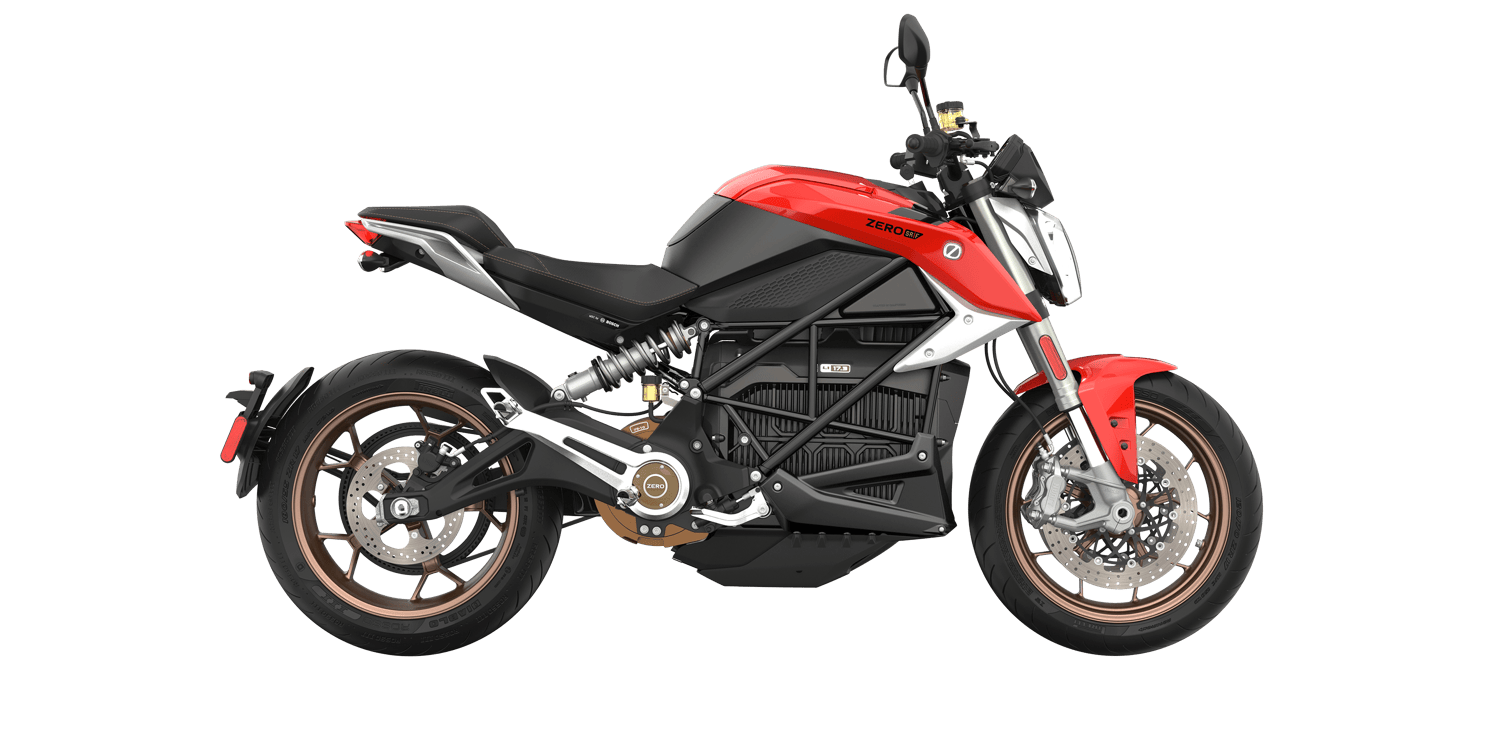
The early electrics asked riders to make sacrifices and then feel virtuous about them. Today’s flagships ask for almost nothing. Build quality now matches the Japanese and European mainstream, and the component sheets read like a proper superbike: Showa suspension front and rear, J.Juan brakes biting big rotors, sticky Pirelli Diablo Rosso rubber wrapped around a steel-trellis frame. The software is where the real leap has happened. The SR/F runs a full ride-by-wire system with configurable power, torque and regeneration maps you tune from a phone app, so a single bike can behave like a docile commuter on Monday morning and a snarling backroad weapon on Sunday afternoon. That kind of split personality, delivered without a single mechanical change, simply does not exist in the combustion world, where character is welded in at the factory and stays there.
Instant Torque Rewrites the Rules
The defining trait of an electric motorcycle is torque, and above all how it arrives. A combustion engine has to spin up, find its powerband, and be held there with clutch and gearbox. An electric motor delivers its peak twist from a dead standstill — the SR/F serves up a claimed 190 Nm the instant the rotor turns. There is no clutch to feed, no gear to select, no waiting for revs to build. Crack the throttle at any road speed, in any situation, and the bike simply lunges, hauling itself toward 100 km/h in around three seconds with no theatre and no sound but a faint electric whine and the roar of rushing air. The sensation sits somewhere between a litre-class superbike and a fairground ride, and it is deeply, gloriously addictive from the very first junction.
The first time an electric motorcycle launches beneath you in near-total silence, your brain simply refuses to accept that both things can be true at once — this much acceleration, and this little noise.— Priya Anand, Technology Editor
The Range Conversation, Honestly
Range remains the headline anxiety, and it deserves a straight answer rather than a sales pitch. A modern SR/F will return roughly 190 km of city riding from its 14.4 kWh pack — comfortably a week of commuting, errands and evening blasts for most riders. Push hard on the motorway, though, and that number tumbles fast, because sustained high speed and aerodynamic drag punish an electric drivetrain far more brutally than stop-start town work ever does. This is the exact inverse of a petrol bike, which sips fuel at a steady cruise and drinks it thirstily in traffic. Regenerative braking recovers energy every time you roll off or brake, so the busier and slower the road, the better the electric bike looks. Grasp that single flip in logic and most of the anxiety quietly evaporates.
- Daily city and suburban commuting, where regenerative braking claws back energy at every junction
- Short, intense weekend rides on twisting roads within a comfortable round trip of home
- Courier and delivery work, where silence, low running costs and instant response are real assets
- Riders with a garage socket who are happy to treat the bike like a smartphone and plug in overnight
Almost Nothing to Maintain
Here the electric case becomes genuinely hard to argue against. There is no oil to change, no valve clearances to shim, no clutch plates to burn out, no air filter to service, and on the SR/F a clean toothed belt replaces the greasy chain. A drivetrain that once needed hundreds of moving parts now uses a handful. Routine servicing amounts to little more than tyres, brake pads, brake fluid, and the occasional over-the-air software update delivered while the bike sleeps in the garage. For riders sick of dealer invoices, winter fettling and the endless ritual of chain lube, that alone is a powerful reason to switch camps. The motor itself, with a single moving part at its heart, should comfortably outlast the chassis wrapped around it.
Predicting the future of any technology is a fool’s errand, but the electric motorcycle is an unusually readable case. Almost everything that will define the next decade is already visible in prototype form, in a battery lab, or buried in a regulatory timetable somewhere. We are not waiting on some undiscovered breakthrough to make electric bikes brilliant; we are waiting on cost, chemistry and charging to grind steadily forward along curves engineers can already sketch with confidence. The interesting question is not whether the electric motorcycle wins, but how quickly, in which markets first, and what it feels like to ride when it finally does.
So rather than promising jet-packs, this is a sober look at the forces actually pulling the category forward — and the stubborn ones holding it back — over the ten years to come.
Batteries Are the Whole Story
Everything else is a footnote to the cell. The battery dictates the price, the weight, the range, the charging speed and even the handling of an electric motorcycle, so progress in chemistry is progress in every direction at once. The next decade will be defined by energy density creeping upward and, crucially, cost per kilowatt-hour falling as manufacturing scales globally. Solid-state cells, promising more energy in less space with less fire risk, hover on the horizon but remain stubbornly expensive and hard to mass-produce. The likelier near-term story is incremental: better lithium-ion packs, smarter thermal management, and clever software squeezing more usable range from the same box. Each small gain compounds, because a lighter, cheaper battery makes the whole bike lighter, cheaper and more appealing in a virtuous circle that petrol simply cannot match. Analysts expect the cost of cells to keep sliding as gigafactories multiply worldwide, and the day an electric motorcycle undercuts its petrol equivalent on both sticker price and running cost is the day the whole argument is effectively over.
Charging Standards Grow Up
Today’s electric motorcycle owner faces a mild mess of plugs, apps and payment cards inherited largely from the car world. That will not last. The next decade should bring genuine consolidation around a small number of standards, faster charging tailored to two-wheeler battery sizes, and payment that finally just works with a tap. As public infrastructure thickens and roaming agreements mature, the ritual of hunting for a compatible, functioning charger — the single biggest source of range anxiety — should fade into the same background hum that petrol forecourts occupy today. The bikes are largely ready; the network around them is the slow part, and it is finally catching up. Governments legislating for charging provision, and the sheer momentum of the electric-car rollout, mean the network expands whether or not two-wheeler makers push for it, and bikes ride along on that far larger wave of investment.
Swappable Batteries and the City
In dense Asian megacities, the future may not involve plugging in at all. Battery-swap networks, where a depleted pack is exchanged for a charged one in under a minute at a roadside kiosk, are already scaling rapidly for scooters and light commuters, led by ambitious operators across Taiwan, India and Southeast Asia. The model neatly sidesteps both charging time and the crushing upfront cost of the battery, which the rider effectively rents rather than owns. Standardised swappable packs, backed by consortiums of major manufacturers, could become the default for urban two-wheelers long before they trouble the heavyweight touring market, splitting the electric world into two very different futures. India in particular, with its vast appetite for affordable two-wheelers, could prove the decisive market, and whatever standard wins there may set the template for much of the developing world.
The winning electric motorcycle of 2035 will not be the one with the biggest battery. It will be the one you never have to think about charging at all.— Priya Anand, Technology Editor
Legacy Brands Wake Up
For years the electric charge was led by specialists and start-ups while the great combustion houses hedged their bets and protected their cash cows. That reticence is ending. Every major manufacturer now has electric concepts, patents and platforms in development, and their arrival in force will transform the market almost overnight, bringing dealer networks, servicing muscle, financing and hard-won brand trust that no start-up can conjure. When a household name puts its badge on a genuinely desirable electric flagship and stands behind it with a proper warranty, the psychological barrier for millions of cautious buyers drops in a single stroke. Their supply chains and economies of scale will also drag prices down faster than any start-up could manage alone, accelerating the whole category toward the mainstream.
- Falling battery cost per kilowatt-hour, dragging sticker prices toward petrol parity
- Consolidated, faster charging standards designed around two wheels rather than four
- Battery-swap networks dominating dense urban commuter and scooter markets
- Legacy manufacturers arriving with dealer networks, financing and brand trust
- Software and connectivity turning the bike into an updatable, personalised platform
The Sound and Feel Problem
There is one obstacle no battery chemist can solve, and it is emotional rather than technical. Motorcycling is soaked in sound, vibration and mechanical drama — the bark of a V-twin, the wail of an inline-four, the theatre of a clutch and gearbox worked in anger. Silence unsettles the enthusiast in a way it never troubles the commuter. The next decade will see manufacturers experiment with engineered acoustics, simulated shifts and haptic feedback to give electric bikes a signature character, and purists will howl that it is fake. Yet a whole generation is growing up without the petrol romance, and for them the quiet, instant surge will simply be what a fast motorcycle feels like, no apology required. Character, it turns out, is as much a habit as a sound, and habits are inherited from whatever machines a rider happens to grow up with.