Three years ago, buying a used electric motorcycle meant buying a science experiment with no service history and a seller who could not answer a single sensible question about the battery underneath you. That market barely exists anymore. Enough Zero SR/Fs, LiveWire Del Mars and Energica flagships have now cycled through their first owners that a genuine used electric segment has formed, complete with real depreciation curves, real diagnostic data and, for the buyer willing to do a little homework, some genuinely brilliant bargains.
That homework, though, looks nothing like inspecting a used petrol bike. Forget compression tests and chain stretch — the real due diligence on an electric machine happens inside an app, a service menu and a charging port. Get it right and a used electric motorcycle can be the cheapest, lowest-drama bike you will ever own. Get it wrong and you have bought an extremely expensive paperweight with two wheels and no engine to blame.
The Used Market Has Finally Grown Up
For years the electric secondhand market was too thin to draw any real conclusions from. There simply were not enough three- and four-year-old Zeros or LiveWires changing hands to establish a pattern, so every used listing was priced on gut feeling rather than evidence. That has changed. The first serious wave of premium electric motorcycles — the Zero SR/F, the Zero DSR/X, the Energica Experia and the LiveWire S2 Del Mar among them — is now old enough that a meaningful population of used examples exists, with real mileage, real charging histories and real owners who can tell you exactly what living with one is actually like.
That maturity matters because it lets you compare like-for-like in a way that was impossible even two years ago. You can now cross-reference a seller’s claims against typical figures for the model, spot the outlier that has been thrashed on public DC fast chargers, and walk away from the one priced as though the battery will last forever. The used electric market in 2026 rewards buyers who actually understand the technology, and punishes those who assume it behaves like a secondhand naked bike with a plug instead of a tank.
Battery Health Is the Only Number That Matters
Everything else on a used electric motorcycle is a rounding error next to battery health. Mileage and age are only rough proxies for what actually matters, which is how many charge cycles the pack has seen and how it has been treated. Ask the seller, and ideally the dealer, for a battery state-of-health readout from the bike’s own diagnostic app; every one of these manufacturers offers some version of this, and a seller who cannot produce it, or gets defensive when you ask, has just told you everything you need to know. Also ask how the bike was charged and stored: a battery that lived on a slow home charger overnight ages very differently to one that was routinely blasted on public DC fast chargers or left baking in direct sun at full charge for days at a time.
Neither charging habit necessarily wrecks a pack, but a bike with a heavy fast-charging history deserves a more thorough independent check before you commit, and it is entirely reasonable to make that check a condition of the sale. Finally, chase down the warranty paperwork. Most manufacturers back their packs with a multi-year battery warranty against excessive degradation, and on some models that cover is transferable to a second owner if it is registered correctly. A used bike with years of battery warranty still running is a fundamentally different proposition to an identical one just outside it, and the difference should be reflected squarely in the asking price.
Software, Updates and Charging Hardware
An electric motorcycle is a rolling computer with wheels attached, and its firmware matters almost as much as its odometer. Manufacturers routinely push over-the-air updates that recalibrate power delivery, sharpen regenerative braking, improve range estimation and, occasionally, fix a genuine safety issue, so a bike that has quietly missed several update cycles is riding on an older, less refined version of itself than the same model rolling out of a showroom today. Just as important is the account behind the bike: Zero, LiveWire and Energica all tie their apps, remote diagnostics and, in some cases, theft-recovery features to an owner profile, and transferring that profile to a new rider is not always automatic. Confirm with the seller and the dealer network that the account, connectivity and any active subscription can genuinely be moved into your name before you hand over a single dollar.
The charge port sees more abuse than almost any other part of the bike, and it is worth a proper inspection before you buy. Check the pins for corrosion, bent contacts or scorch marks, all of which hint at a cheap or damaged cable being forced into place at some point in the bike’s life, and confirm the manufacturer’s own charging cable is included in the sale. On models fitted with DC fast-charging hardware, such as the Energica Experia, ask specifically how often it was used and where — leaning on public rapid chargers as a daily habit rather than an occasional top-up is one of the fastest ways to accelerate the exact battery degradation the previous paragraph was trying to help you rule out. Before you sign anything, run through this short checklist in full.
- Get a battery state-of-health readout from the bike’s own app or a dealer diagnostic tool, not just a verbal assurance
- Confirm the owner account, app connectivity and any active subscription can be transferred into your name
- Ask for the full software update history and get any outstanding firmware pushed before the deal is final
- Inspect the charge port and onboard charger for damage, and make sure the OEM cable is included
- Check how much life remains on the battery warranty, and get the transfer terms confirmed in writing
How Depreciation Really Compares to Petrol
Here is the part that should make used-buying enthusiasts sit up: electric motorcycles are currently depreciating harder, and faster, than comparable petrol machines. Buyer nervousness about battery life, a still-thin resale market and rapid year-on-year improvements in range and software all combine to push used values down more aggressively than on an equivalent naked or sportsbike, where the drivetrain is a known quantity and the used market is decades deep. A three-year-old petrol naked with sensible mileage typically retains a healthy chunk of its original price; a three-year-old flagship electric of similar vintage can often be found for meaningfully less than that, model for model.
For a first owner that steep curve stings. For a used buyer it is close to the entire point. You are effectively being paid, in the form of a lower purchase price, to take on a small and largely theoretical amount of battery-life risk that real-world pack data so far suggests is smaller than the market currently assumes. Provided the state-of-health check comes back clean and the warranty still has meaningful life left, that gap between new and used pricing is the single best argument for buying electric secondhand rather than new.
This is not a fair fight, and that is exactly why it fascinates. On one side, the Zero SR/F — a fully electric naked bike that answers the throttle with instant, silent, savage torque. On the other, the Aprilia Tuono 660 — a jewel of a petrol twin that revs, snarls and demands you play with its gearbox. They cost roughly similar money in some markets, yet they represent entirely different visions of what a motorcycle should be in the years ahead.
For riders weighing the leap to electric, this is the comparison that matters most: does the future’s clean convenience outweigh the present’s raw charisma? We rode both hard, on the same roads, to separate the hype from the reality.
Powertrain and performance
The Zero SR/F’s motor delivers around 110 hp but a staggering 190 Nm of torque — and crucially, all of it is available from a standstill. There is no clutch, no gears, no waiting for revs to build; twist the throttle and the SR/F simply hurls itself forward with a smoothness no combustion engine can replicate. The Aprilia’s 659cc twin makes a comparable 95 hp and a modest 67 Nm, but you must work for every bit of it, chasing the tacho and banging through the slick gearbox.
The Zero feels quicker in a straight sprint away from the lights; the Aprilia feels more alive at every other moment of the ride. One rewards the wrist alone; the other rewards the whole body, the ears and the imagination. Which thrill you prefer says a great deal about the kind of rider you are, and there is genuinely no wrong answer here.
Range, refuelling and weight
Here the petrol bike strikes back hard. The Aprilia will comfortably travel 300 km or more on a tank and refuel in three minutes anywhere on earth, no planning required. The Zero, depending on riding style and battery options, manages a real-world highway range closer to 160 km before needing a charge that takes far longer than any fuel stop. The SR/F is also heavier, at around 208 kg against the featherweight Tuono’s 183 kg, and you feel that extra mass keenly at low speed and in tight corners.
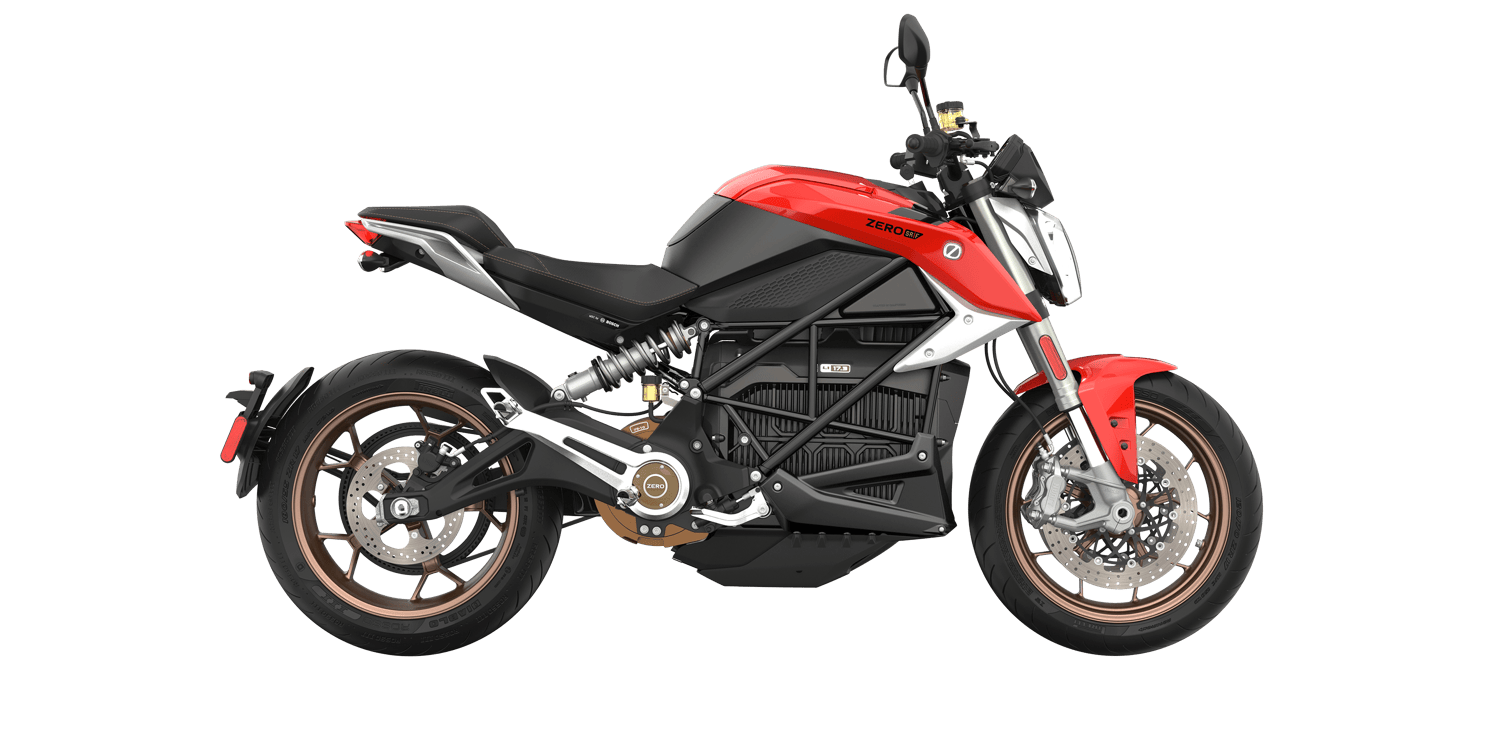
Ask ten riders what actually qualifies a motorcycle for ULEZ and you will get ten different answers, most of them wrong. I have heard otherwise sensible owners insist their five-year-old commuter must be exempt because it is basically new, and I have heard others swear their beloved classic will get clobbered every time it crosses the North Circular. Both are guessing, and guessing costs money in London, Birmingham, Bristol, Glasgow and a growing list of British cities that have decided your bike’s emissions are now everyone’s business.
The rules are not actually complicated once you strip away the confusion, and that is precisely what this guide sets out to do. We are going to cover the emissions standard that actually matters, how to check your specific bike in under a minute, what riders of older machines need to budget for, and why an electric motorcycle sidesteps the entire conversation. No scaremongering, no vague hand-waving — just the practical answer you need before your next ride into town.
The One Number That Decides Everything
Every ULEZ-style scheme in the UK judges a motorcycle against a single yardstick: the Euro emissions standard it was built to meet. For petrol cars the bar is Euro 4; for diesels it is the far stricter Euro 6. Motorcycles and mopeds get their own, more lenient threshold — Euro 3 — which reflects how much cleaner a small-displacement engine already runs compared with a car or van. Meet Euro 3 or better and you ride through London’s Ultra Low Emission Zone, Birmingham’s Clean Air Zone, or any of the other regional schemes without paying a penny in daily charges.
Euro 3 became mandatory for newly type-approved motorcycles from 2006, with full enforcement across new registrations from 2007. That date is the rough dividing line riders reach for, and it is a genuinely useful rule of thumb: if your bike first went on the road from 2007 onward, there is a strong chance it already complies. But a strong chance is not the same as certainty — some models continued using older, carried-over engines past that cutoff, and grey imports or reconditioned machines can carry an entirely different compliance date to what the registration year suggests.
How to Actually Check Your Bike
Guessing by age is a starting point, not a strategy. The only way to know for certain is to check your specific machine, and the good news is that it takes about as long as reading this paragraph. Transport for London runs a free online checker that takes your number plate and returns a straight yes or no for ULEZ compliance, and the other UK clean air zones run near-identical tools tied to the same national vehicle database. Type in your registration, and the system pulls the Euro standard recorded against your bike rather than asking you to work it out yourself.
It is worth doing this even if you are confident, because I have seen the checker surprise plenty of riders. Small-capacity commuters and scooters sold well into the late 2000s occasionally carried over Euro 2 engines to save cost, meaning a bike that feels thoroughly modern can still fail the test. Equally, some genuinely older models scraped in early thanks to a manufacturer getting ahead of the deadline. Do not trust your instinct or your logbook’s registration date alone — trust the checker, and keep a note of the result somewhere you can find it.
- London ULEZ — the original and largest scheme, covering the whole of Greater London.
- Birmingham Clean Air Zone — charges non-compliant motorcycles entering the city centre.
- Bristol Clean Air Zone — smaller in area but built on the same Euro 3 motorcycle threshold.
- Glasgow Low Emission Zone — Scotland’s scheme, with its own dedicated vehicle checker.
- Always confirm the current charge and boundary on the official gov.uk or council page, since both can change.
For the better part of two decades, the electric motorcycle was treated as a science-fair exhibit — earnest, faintly awkward, and forever promising to be brilliant next year. The bikes were heavy, the range was laughable, the price tags read like a cruel joke, and the whole category smelled of compromise. Enthusiasts nodded politely at the trade-show stands, admired the clever packaging, then rode home on something that burned petrol and made a proper noise. For years that was the honest state of play. It is not any more. Somewhere in the last few model cycles the electric motorcycle stopped being a proof of concept and quietly, decisively grew up into a machine you would choose on merit alone.
Nothing captures that shift better than a bike like the Zero SR/F. This is not a curiosity you tolerate for the sake of your conscience; it is a genuinely quick, genuinely usable motorcycle that happens to be silent. Throw a leg over one after a lifetime of combustion machines and the first surprise is how utterly normal it feels — the riding position, the switchgear, the reassuring heft in your palms — right up until the moment you crack the throttle and the road behind you simply vanishes into the distance.
From Novelty to Serious Machine
The early electrics asked riders to make sacrifices and then feel virtuous about them. Today’s flagships ask for almost nothing. Build quality now matches the Japanese and European mainstream, and the component sheets read like a proper superbike: Showa suspension front and rear, J.Juan brakes biting big rotors, sticky Pirelli Diablo Rosso rubber wrapped around a steel-trellis frame. The software is where the real leap has happened. The SR/F runs a full ride-by-wire system with configurable power, torque and regeneration maps you tune from a phone app, so a single bike can behave like a docile commuter on Monday morning and a snarling backroad weapon on Sunday afternoon. That kind of split personality, delivered without a single mechanical change, simply does not exist in the combustion world, where character is welded in at the factory and stays there.
Instant Torque Rewrites the Rules
The defining trait of an electric motorcycle is torque, and above all how it arrives. A combustion engine has to spin up, find its powerband, and be held there with clutch and gearbox. An electric motor delivers its peak twist from a dead standstill — the SR/F serves up a claimed 190 Nm the instant the rotor turns. There is no clutch to feed, no gear to select, no waiting for revs to build. Crack the throttle at any road speed, in any situation, and the bike simply lunges, hauling itself toward 100 km/h in around three seconds with no theatre and no sound but a faint electric whine and the roar of rushing air. The sensation sits somewhere between a litre-class superbike and a fairground ride, and it is deeply, gloriously addictive from the very first junction.
The first time an electric motorcycle launches beneath you in near-total silence, your brain simply refuses to accept that both things can be true at once — this much acceleration, and this little noise.— Priya Anand, Technology Editor
The Range Conversation, Honestly
Range remains the headline anxiety, and it deserves a straight answer rather than a sales pitch. A modern SR/F will return roughly 190 km of city riding from its 14.4 kWh pack — comfortably a week of commuting, errands and evening blasts for most riders. Push hard on the motorway, though, and that number tumbles fast, because sustained high speed and aerodynamic drag punish an electric drivetrain far more brutally than stop-start town work ever does. This is the exact inverse of a petrol bike, which sips fuel at a steady cruise and drinks it thirstily in traffic. Regenerative braking recovers energy every time you roll off or brake, so the busier and slower the road, the better the electric bike looks. Grasp that single flip in logic and most of the anxiety quietly evaporates.
- Daily city and suburban commuting, where regenerative braking claws back energy at every junction
- Short, intense weekend rides on twisting roads within a comfortable round trip of home
- Courier and delivery work, where silence, low running costs and instant response are real assets
- Riders with a garage socket who are happy to treat the bike like a smartphone and plug in overnight
Almost Nothing to Maintain
Here the electric case becomes genuinely hard to argue against. There is no oil to change, no valve clearances to shim, no clutch plates to burn out, no air filter to service, and on the SR/F a clean toothed belt replaces the greasy chain. A drivetrain that once needed hundreds of moving parts now uses a handful. Routine servicing amounts to little more than tyres, brake pads, brake fluid, and the occasional over-the-air software update delivered while the bike sleeps in the garage. For riders sick of dealer invoices, winter fettling and the endless ritual of chain lube, that alone is a powerful reason to switch camps. The motor itself, with a single moving part at its heart, should comfortably outlast the chassis wrapped around it.
Ask whether an electric motorcycle is cheaper than a petrol one and you will get a religious war rather than an answer. The truth is duller and far more useful: it is a spreadsheet. Total cost of ownership is the sum of what you pay to buy the thing, what you feed it, what you pay to keep it running, and what you lose again when you sell it on. Only when all four of those columns are filled in does the real picture emerge — and it rarely matches either the salesman’s confident pitch or the pub sceptic’s equally confident certainty about batteries and bills.
To keep the comparison honest, put a machine like the Zero SR/F on one side and a comparably quick petrol naked or sportsbike on the other, then follow them both across five years and a realistic annual mileage. The answers shift sharply depending on how, where and how far you actually ride, which is precisely why blanket claims from either camp deserve a healthy dose of suspicion before you sign anything.
The Sticker Is Only the Deposit
Electric motorcycles lose the opening round decisively. The SR/F lands at around twenty thousand dollars, and comparable petrol bikes with similar straight-line pace can be had for meaningfully less, because a large lithium-ion battery is simply expensive to design, build and cool. This is the single biggest obstacle to electric adoption, and no amount of running-cost savings erases it overnight. The gap narrows sharply where governments offer purchase grants, tax breaks, or exemptions from congestion and low-emission-zone charges, and in a handful of cities those incentives are generous enough to flip the maths on their own. Everywhere else, the electric buyer starts the race several thousand dollars behind the grid and has to claw that deficit back over the years that follow, one cheap kilometre at a time. It is worth remembering, too, that the battery is by far the most costly single component, and its price is falling year on year, so the very gap that looks daunting today is quietly narrowing with every fresh generation of cells.
Fuel Versus Electrons
This is where the electric bike begins its comeback in earnest. Electricity, bought at a domestic overnight tariff, is dramatically cheaper per kilometre than petrol almost everywhere on earth. A full charge of the SR/F’s 14.4 kWh battery costs little more than a takeaway coffee at many home rates and returns up to 190 km of city riding. The equivalent distance on a thirsty petrol naked can cost three to five times as much in fuel, and every price rise at the pump widens the chasm further. The important caveat is public rapid charging, which is priced far higher than home electricity and can quietly erode much of that advantage on a long trip — so where you plug in ends up mattering almost as much as what you choose to ride. Riders without off-street parking, forced to rely entirely on public charging, lose much of the fuel saving and should factor that reality in honestly before switching.
Mention electric motorcycles in any group of riders and the same word surfaces within thirty seconds: range. It arrives before power, before price, before handling — a reflex objection so deeply ingrained that most of the people voicing it have never actually run an electric bike anywhere near flat. Range anxiety is real and worth taking seriously, but it is worth asking honestly how much of it is engineering and how much is simply the unfamiliar terror of watching a battery percentage tick down instead of trusting the fuel light we have known since we were teenagers filling a first moped.
To test the fear rather than merely repeat it, spend a genuine week commuting, shopping and blasting backroads on a Zero SR/F, and something interesting happens. The anxiety is at its sharpest on day one, fades noticeably by day three, and by the weekend has been quietly replaced by a new and slightly smug set of habits. The bike did not change over those seven days. The rider did.
What Range Anxiety Actually Is
Range anxiety is not really about distance at all; it is about uncertainty and the cost of getting the sums wrong. On a petrol bike, an empty tank means a five-minute stop at any one of a million forecourts. On an electric one, the imagined worst case is a long, undignified wait at a charger that may or may not exist and may or may not be working when you arrive. The fear is rational, but it is also wildly overweighted, because it fixates on the rare catastrophe rather than the daily reality. Most riders vastly overestimate how far they travel on a normal day, and the yawning gap between the distance we fear running out over and the distance we actually cover is exactly where the anxiety lives, and where it quietly dies once the odometer tells the truth.
The Numbers Behind the Nerves
Start with honest data rather than dread. The SR/F carries a 14.4 kWh battery and returns up to 190 km of city riding — and the average motorcycle commute in most countries is a tiny fraction of that figure. Even a keen weekend rider rarely strings together more than 150 km before wanting a coffee, a stretch of the legs and a sandwich, which is precisely the moment a charger earns its keep. The number that frightens people on paper turns out, most days, to comfortably exceed what they genuinely do in practice, and by a wide margin. The problem is that we do not buy motorcycles for most days; we buy them for the imagined epic tour, and then we let that romantic fantasy veto the eminently sensible daily commute. Manufacturers quote their range figures under favourable conditions, so a sensible buyer discounts the headline number by a fifth and plans around the realistic figure rather than the optimistic brochure one.
Predicting the future of any technology is a fool’s errand, but the electric motorcycle is an unusually readable case. Almost everything that will define the next decade is already visible in prototype form, in a battery lab, or buried in a regulatory timetable somewhere. We are not waiting on some undiscovered breakthrough to make electric bikes brilliant; we are waiting on cost, chemistry and charging to grind steadily forward along curves engineers can already sketch with confidence. The interesting question is not whether the electric motorcycle wins, but how quickly, in which markets first, and what it feels like to ride when it finally does.
So rather than promising jet-packs, this is a sober look at the forces actually pulling the category forward — and the stubborn ones holding it back — over the ten years to come.
Batteries Are the Whole Story
Everything else is a footnote to the cell. The battery dictates the price, the weight, the range, the charging speed and even the handling of an electric motorcycle, so progress in chemistry is progress in every direction at once. The next decade will be defined by energy density creeping upward and, crucially, cost per kilowatt-hour falling as manufacturing scales globally. Solid-state cells, promising more energy in less space with less fire risk, hover on the horizon but remain stubbornly expensive and hard to mass-produce. The likelier near-term story is incremental: better lithium-ion packs, smarter thermal management, and clever software squeezing more usable range from the same box. Each small gain compounds, because a lighter, cheaper battery makes the whole bike lighter, cheaper and more appealing in a virtuous circle that petrol simply cannot match. Analysts expect the cost of cells to keep sliding as gigafactories multiply worldwide, and the day an electric motorcycle undercuts its petrol equivalent on both sticker price and running cost is the day the whole argument is effectively over.
Charging Standards Grow Up
Today’s electric motorcycle owner faces a mild mess of plugs, apps and payment cards inherited largely from the car world. That will not last. The next decade should bring genuine consolidation around a small number of standards, faster charging tailored to two-wheeler battery sizes, and payment that finally just works with a tap. As public infrastructure thickens and roaming agreements mature, the ritual of hunting for a compatible, functioning charger — the single biggest source of range anxiety — should fade into the same background hum that petrol forecourts occupy today. The bikes are largely ready; the network around them is the slow part, and it is finally catching up. Governments legislating for charging provision, and the sheer momentum of the electric-car rollout, mean the network expands whether or not two-wheeler makers push for it, and bikes ride along on that far larger wave of investment.
Swappable Batteries and the City
In dense Asian megacities, the future may not involve plugging in at all. Battery-swap networks, where a depleted pack is exchanged for a charged one in under a minute at a roadside kiosk, are already scaling rapidly for scooters and light commuters, led by ambitious operators across Taiwan, India and Southeast Asia. The model neatly sidesteps both charging time and the crushing upfront cost of the battery, which the rider effectively rents rather than owns. Standardised swappable packs, backed by consortiums of major manufacturers, could become the default for urban two-wheelers long before they trouble the heavyweight touring market, splitting the electric world into two very different futures. India in particular, with its vast appetite for affordable two-wheelers, could prove the decisive market, and whatever standard wins there may set the template for much of the developing world.
The winning electric motorcycle of 2035 will not be the one with the biggest battery. It will be the one you never have to think about charging at all.— Priya Anand, Technology Editor
Legacy Brands Wake Up
For years the electric charge was led by specialists and start-ups while the great combustion houses hedged their bets and protected their cash cows. That reticence is ending. Every major manufacturer now has electric concepts, patents and platforms in development, and their arrival in force will transform the market almost overnight, bringing dealer networks, servicing muscle, financing and hard-won brand trust that no start-up can conjure. When a household name puts its badge on a genuinely desirable electric flagship and stands behind it with a proper warranty, the psychological barrier for millions of cautious buyers drops in a single stroke. Their supply chains and economies of scale will also drag prices down faster than any start-up could manage alone, accelerating the whole category toward the mainstream.
- Falling battery cost per kilowatt-hour, dragging sticker prices toward petrol parity
- Consolidated, faster charging standards designed around two wheels rather than four
- Battery-swap networks dominating dense urban commuter and scooter markets
- Legacy manufacturers arriving with dealer networks, financing and brand trust
- Software and connectivity turning the bike into an updatable, personalised platform
The Sound and Feel Problem
There is one obstacle no battery chemist can solve, and it is emotional rather than technical. Motorcycling is soaked in sound, vibration and mechanical drama — the bark of a V-twin, the wail of an inline-four, the theatre of a clutch and gearbox worked in anger. Silence unsettles the enthusiast in a way it never troubles the commuter. The next decade will see manufacturers experiment with engineered acoustics, simulated shifts and haptic feedback to give electric bikes a signature character, and purists will howl that it is fake. Yet a whole generation is growing up without the petrol romance, and for them the quiet, instant surge will simply be what a fast motorcycle feels like, no apology required. Character, it turns out, is as much a habit as a sound, and habits are inherited from whatever machines a rider happens to grow up with.
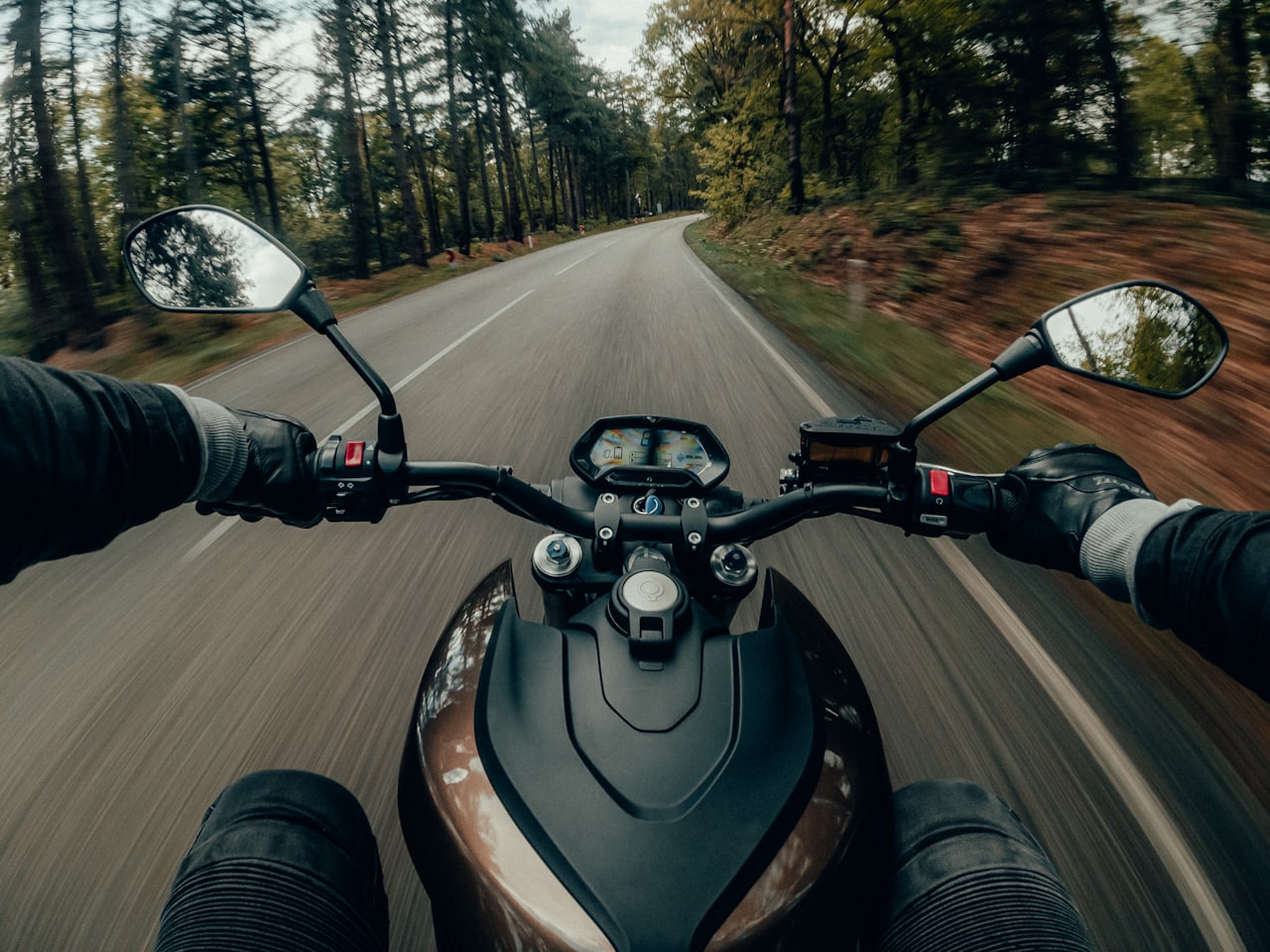
The battery gets all the headlines, but charging is where an electric motorcycle actually lives or dies as a daily companion. A brilliant bike tethered to a sparse, confusing, unreliable network is a frustrating ornament; a modest one that plugs in effortlessly wherever its owner stops is a joy. Understanding how charging really works — the levels, the speeds, the competing standards and the quiet advantages that bikes hold over cars — is the difference between an owner who beams about their SR/F and one who quietly lists it for sale after a difficult winter of cold plugs and dead apps.
The good news is that motorcycles start this contest with a hand the car world would love to hold. The bad news is that most public infrastructure was never designed with two wheels in mind at all.
The Home Socket Advantage
The single most important fact about charging a motorcycle is that most owners rarely use public infrastructure at all. A bike like the Zero SR/F, with its 14.4 kWh pack, can be replenished overnight from an ordinary domestic socket in a garage or beside a driveway, and wake up full every morning for the price of a few coins. This is charging’s version of the smartphone: you plug in when you stop, sleep, and simply forget about it. For the huge majority of riders whose daily distance sits well inside the bike’s range, the public network is an occasional convenience rather than a lifeline, and the whole anxious conversation about chargers becomes largely academic. Judging an electric bike by the state of the public network is a little like judging a phone by the payphones left on the high street; it misses entirely where the charging actually happens.
Levels, Speeds and What They Mean
Charging speed comes in broad tiers, and the jargon is simpler than it looks. Basic domestic charging trickles energy in slowly overnight, perfect for a bike that sleeps between rides. Faster alternating-current charging, from a home wallbox or a public post, meaningfully shortens the wait to a few hours. Direct-current rapid charging, where the bike supports it, can slash a top-up to a coffee break — but here the two-wheeler hits a wall, because a motorcycle battery is far smaller than a car’s and its onboard electronics often cannot accept the eye-watering rates that make rapid chargers so dramatic. For bikes, the sweet spot is usually good home and destination charging rather than the headline-grabbing motorway rapid units. Pushing rapid-charge rates too hard also heats and stresses a small battery, so manufacturers deliberately cap them to protect the pack’s long-term health, trading a little speed for years of extra service.