The A2 licence used to mean compromise. Buy something small, sensible and a little bit sad, then count down the days until your restriction lifted and you could finally have a proper motorcycle. The Kawasaki Ninja 500 and Aprilia RS 457 are the loudest proof yet that those days are over. Both are full-fairing, parallel-twin sportsbikes built from the ground up for restricted licences, and both are genuinely good motorcycles rather than watered-down ones.
We spent real time on both, back to back, on the same roads and at the same pace, and the gap between them turned out to be far more interesting than a simple spec-sheet swap. One is the safe, sensible evolution of a bike that has taught a generation of riders how to use a clutch. The other is a proper Italian sportsbike shrunk down to size, engineered in-house rather than bought off a shelf. Neither is the wrong answer. But they are answers to slightly different questions.
Engine character
Kawasaki’s 451cc parallel-twin is the bigger-bore evolution of the engine that powered the outgoing Ninja 400, and it shows in the best way. Power arrives smoothly and predictably from low revs, with none of the nervous snatchiness that can catch out a genuine beginner, and the extra displacement over its predecessor fills in exactly the mid-range hole that used to force constant gear-changing. It is not an exciting engine in isolation, but it is an honest one, and honesty matters enormously to someone still learning where the friction point on a clutch lever actually is.
Aprilia took a different, riskier route. Rather than adapting an existing unit, it engineered the 457cc twin in-house, with an uneven crank-pin offset that gives the engine a slightly lumpier, more characterful pulse than you would expect from something this small. Peak output lands right at the 35kW A2 ceiling by design, which means Aprilia never needed a restrictor kit to keep it legal, a detail Kawasaki’s more powerful twin cannot claim in every market. On the road the RS 457 feels the eager one of the two, keener to be revved, with a top end that genuinely rewards you for reaching for it.
Chassis and handling
This is where the badge on the tank starts to matter. The Ninja 500 wraps its twin in a conventional steel frame tuned for stability and predictability above all else, and it works. The bike is forgiving over broken tarmac, unbothered by a nervous rider stabbing at the bars, and happy to be ridden slowly without complaint. It steers accurately enough for a Sunday blast but never asks you to commit hard to a line, which is exactly the point for a bike aimed at someone still building confidence.
The Aprilia bolts its engine into a proper trellis frame, the same basic philosophy that underpins its RSV4 and Tuono flagships, and the difference is obvious the first time you tip it into a corner. It turns in faster, holds a line with more precision, and feels genuinely eager rather than merely capable. That sharpness comes with a small cost in outright forgiveness. The RS 457 rewards a rider who commits to the line they picked, rather than one who is still figuring out where the line should go. It is the more thrilling chassis, and also the more demanding one.
There has never been a better time to hold an A2 licence. Not long ago, the restricted category was a purgatory of underpowered commuters and plasticky learner specials, machines you tolerated until the day you could finally buy something you actually wanted. That era is over. Manufacturers have realised that A2 riders are the customers of tomorrow, and they are now building genuinely desirable bikes designed to thrive within the 35kW limit rather than merely survive it, complete with real suspension, proper brakes and styling that turns heads at the coffee stop.
For anyone unfamiliar, the A2 licence caps power at 35kW, or roughly 47 horsepower, with a power-to-weight ceiling that stops riders simply restricting a superbike and calling it a day. The clever part of the modern market is how many bikes are engineered from the outset to hit that figure while still feeling complete, exciting and grown-up. Here is where a new rider should be looking, and why the choice has never been richer or more genuinely tempting.
The Sporty All-Rounder
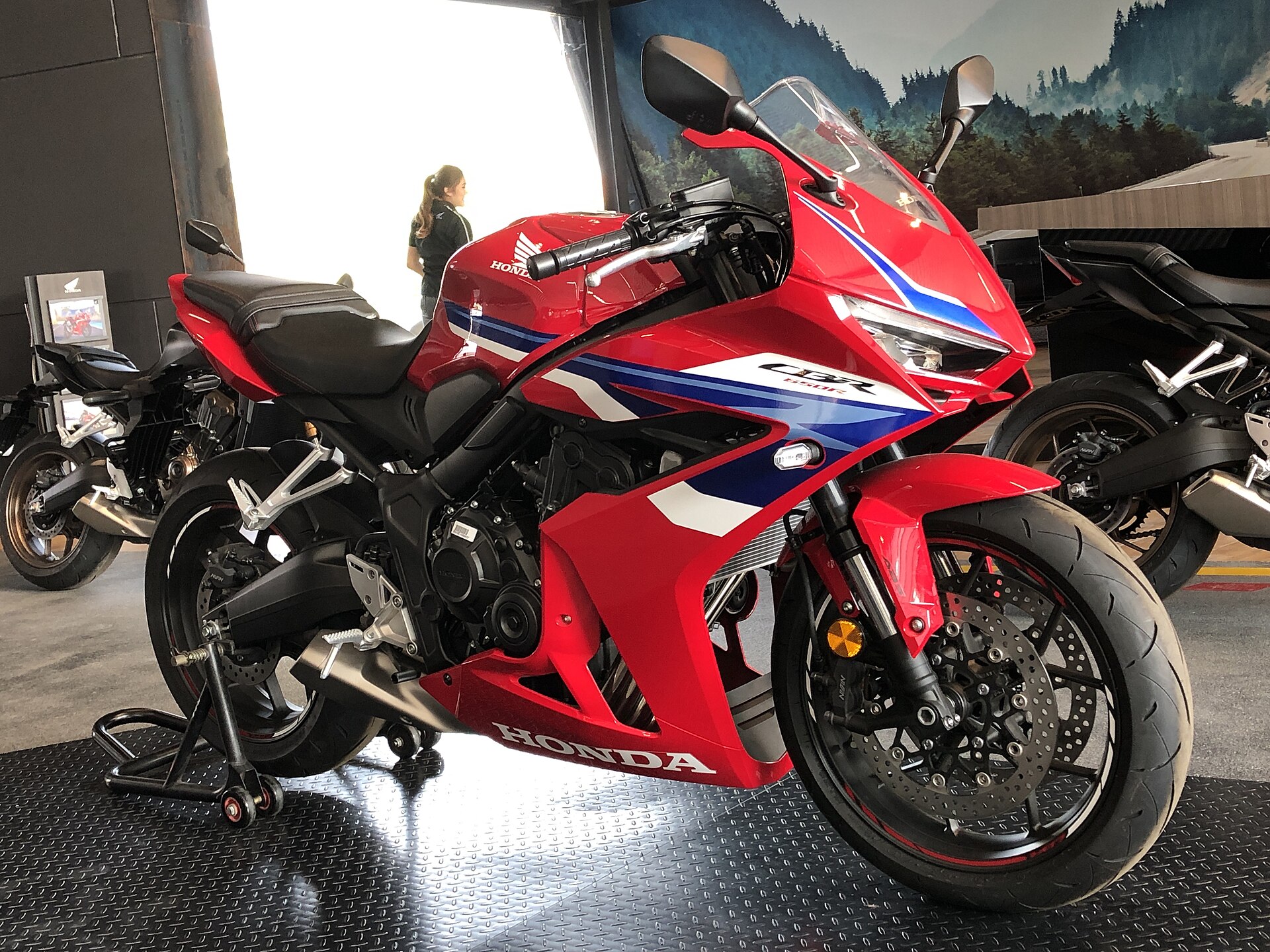
The Honda CBR650R is the poster child for how far A2 machinery has come. In restricted form it delivers a smooth, revvy inline-four soundtrack that no twin can match, wrapped in bodywork that looks every bit the proper sportbike rather than a compromised trainer. The optional E-Clutch removes stalling anxiety at junctions without turning the bike into an automatic, a genuine boon for a nervous newcomer negotiating city traffic for the first time. Crucially, when you upgrade to a full licence you simply have the restriction removed and unlock the bike’s full potential, so your first serious purchase does not become obsolete the moment your test is behind you.
The Adventure Everyman
If tarmac feels too narrow a horizon, the Royal Enfield Himalayan 450 is the most charming way into adventure riding on an A2 licence. Its 452cc single produces modest but perfectly judged power, an upright stance that builds confidence, and a price that leaves money for the gear and the trips that matter more than any spec sheet. It will never win a drag race, but it will happily carry you across a continent, and it teaches throttle control and momentum in a way that makes you a better rider for whatever comes next. There is a rare honesty to a bike that asks you to work with it rather than simply overwhelming every obstacle with power.