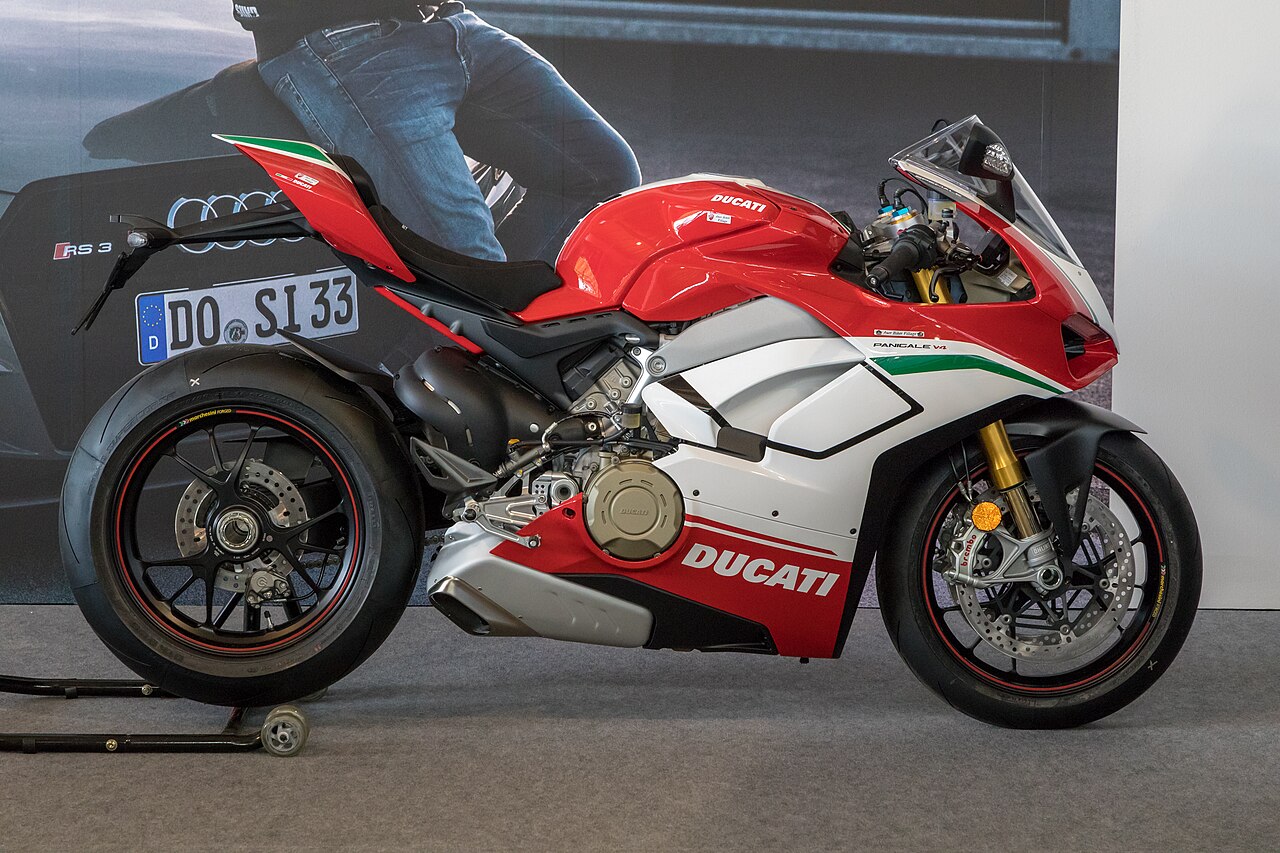
There are fast motorcycles, and then there is the Panigale V4 — a machine that behaves less like a road bike wearing a number plate and more like a Desmosedici GP racer that took a wrong turn out of the pit lane. Thumb the starter and the 1103 cc V4 settles into a lumpy, uneven idle, a deliberate reminder that Ducati borrowed this engine’s counter-rotating crankshaft and firing order straight from the Grand Prix paddock.
For 2025 the Panigale has been honed rather than reinvented, and the result is the most complete superbike Borgo Panigale has ever built. It flatters the quick, forgives the brave, and never once lets you forget that its natural habitat is a circuit with run-off measured in acres rather than metres. Ride it gently and it simmers; open it up and it detonates.
An engine ripped from the Grand Prix grid
The Desmosedici Stradale is the undisputed star. Ninety degrees of liquid-cooled V4 fury spins hard towards 14,000 rpm and serves a claimed 214 hp, arriving with a top-end rush that seems to compress the horizon towards you. Below 8,000 rpm the motor is tractable, almost civil; beyond that the counter-rotating crankshaft and desmodromic valvetrain conspire to hurl you forward with a violence few road vehicles on earth can match.
The headline figures tell only part of the story — 2.9 seconds to 100 km/h and a top speed brushing 300 km/h — because it is the delivery that truly lingers in the memory. The V4 howls where a Japanese inline-four merely screams, a hard-edged bark that turns every underpass into a private concert hall. The up-and-down quickshifter is close to telepathic, and the ride-by-wire throttle stays precise enough to trust at full lean.
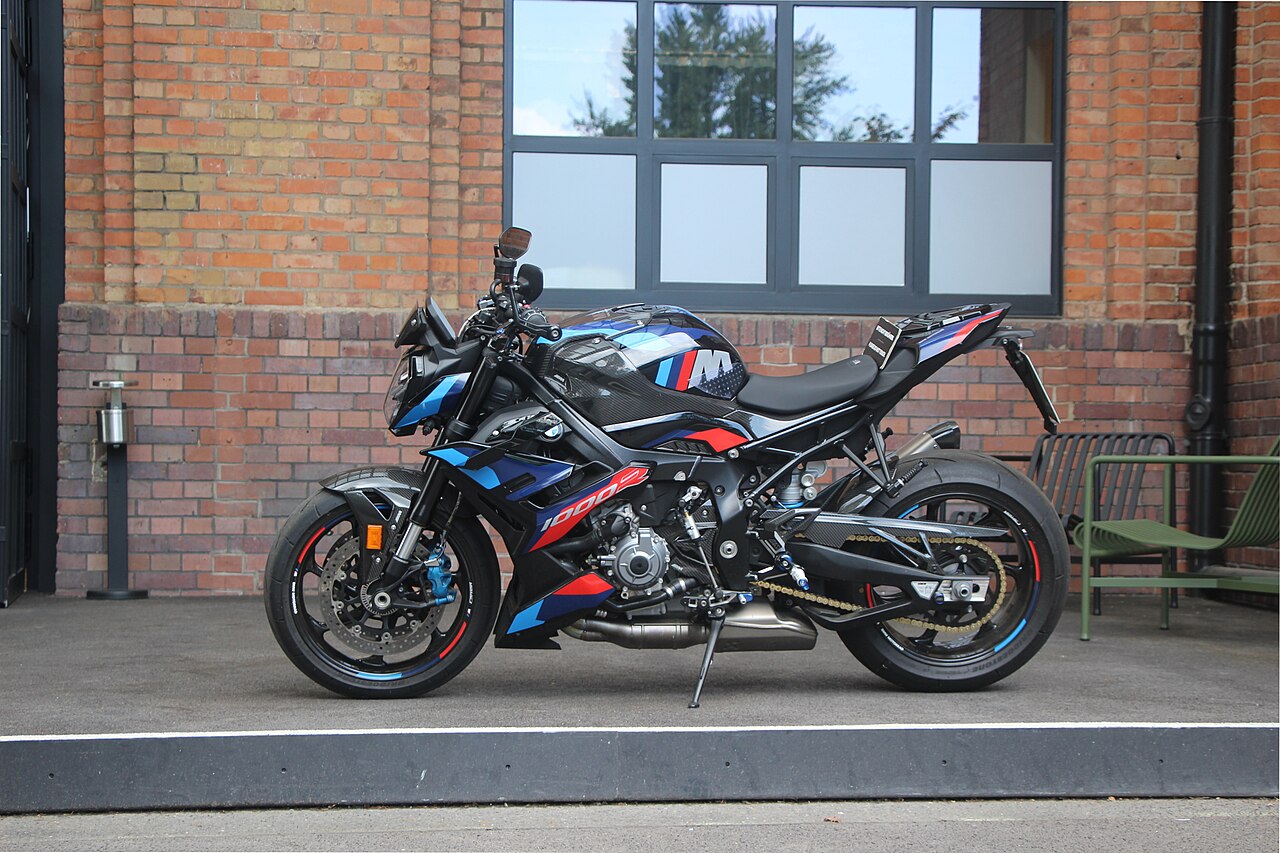
The M badge means something specific in Munich. On four wheels it signals a car engineered to devour a racetrack yet still cruise home in comfort, and the M 1000 RR carries that same philosophy onto two. This is not merely a hotted-up S 1000 RR; it is a homologation special, built so BMW’s factory riders have a weapon worthy of World Superbike, then handed to us with lights and mirrors bolted on.
Where the Ducati seduces with operatic theatre, the BMW conquers with cold, ruthless efficiency. It is the fastest-accelerating, highest-topping superbike in this test, and it feels engineered by people who treat every tenth of a second as a personal insult. On the right stretch of derestricted autobahn, nothing here comes close.
ShiftCam power without the peaks and valleys
The 999 cc inline-four is the headline act. BMW’s ShiftCam variable valve timing hands the M a genuinely broad spread of torque, so the 212 hp peak at 14,500 rpm never feels like a distant reward. There is meaningful drive from 6,000 rpm, a surging midrange, and then a top-end crescendo that pins your visor to the screen and refuses to let go until the limiter chimes.
The numbers are frankly absurd for a road-legal machine: 3.0 seconds to 100 km/h and a genuine 306 km/h maximum. Yet the delivery is so linear, so utterly predictable, that it flatters rather than frightens. The M quickshifter snaps through the six-speed box with mechanical crispness, and the induction howl at full chat is one of motorcycling’s great sensory rewards.
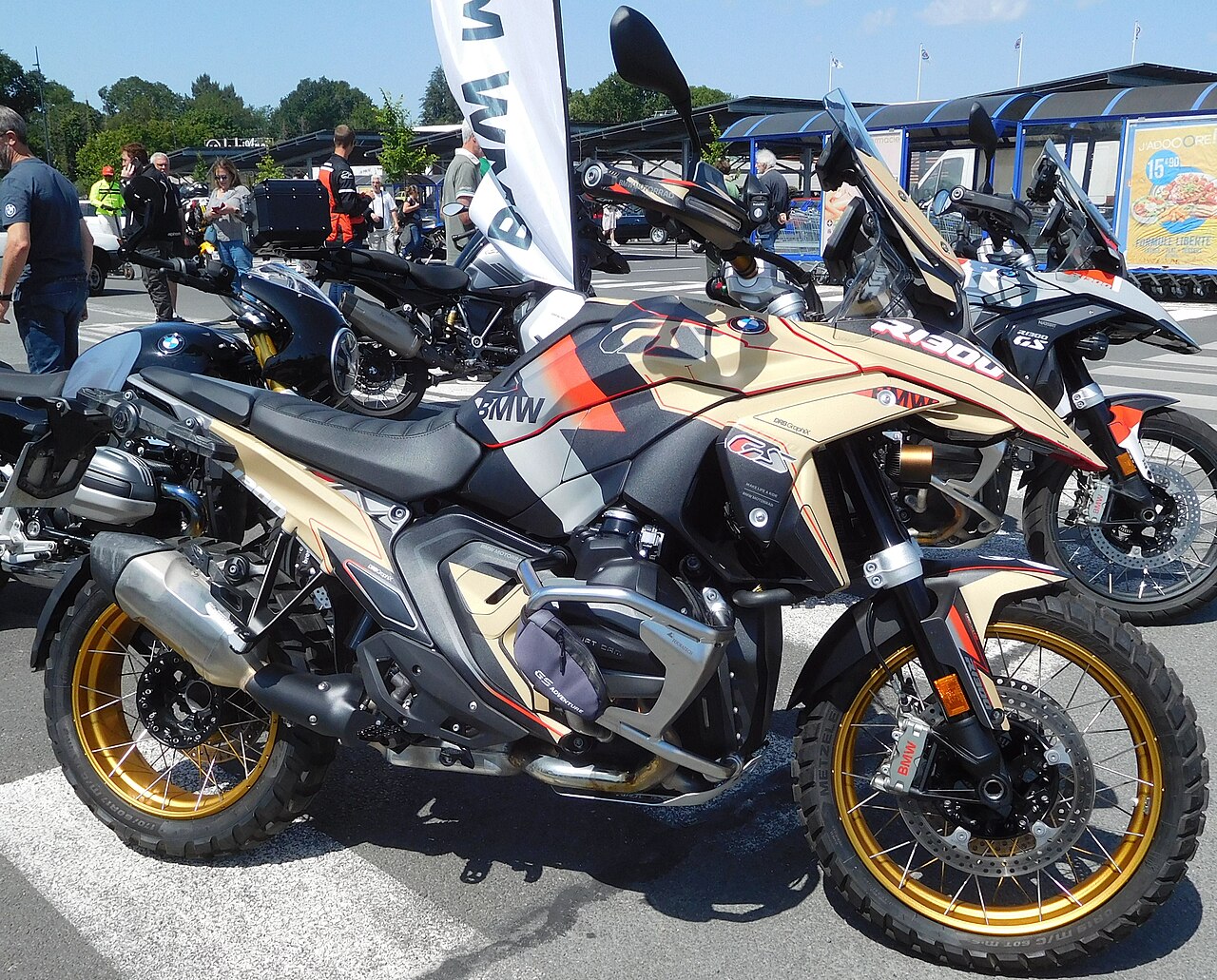
For decades the big boxer GS has been the default answer to a simple question: if you could own only one motorcycle to ride anywhere on earth, what would it be? The R 1300 GS does not merely defend that title — it moves the goalposts. BMW has thrown out the old 1250 architecture, grown the engine, shrunk the waistline and reimagined the electronics, and the sum is genuinely transformative.
Swing a leg over and the first surprise is how compact it feels for such a capable long-hauler. The new frame is narrower, the mass sits lower, and a bike that once demanded respect at walking pace now feels almost eager to be flicked around. This is a GS that has finally learned to hide its bulk.
A bigger boxer with better manners
The air- and liquid-cooled flat-twin now displaces 1300 cc and produces 145 hp with a muscular 149 Nm of torque, and the way it deploys that grunt is the GS masterstroke. There is a wall of drive from just above idle, so overtakes require nothing more than a roll of the wrist, and the characterful boxer thrum still shakes the mirrors at a standstill before smoothing out on the move.
It is not a screamer and does not want to be. Peak power lands at a relaxed 7,750 rpm, and the engine is happiest short-shifting and surfing that fat wave of torque across a mountain range. Fully loaded, two-up, with panniers stuffed, it barely notices the difference — which is precisely the point of a machine built to swallow continents.
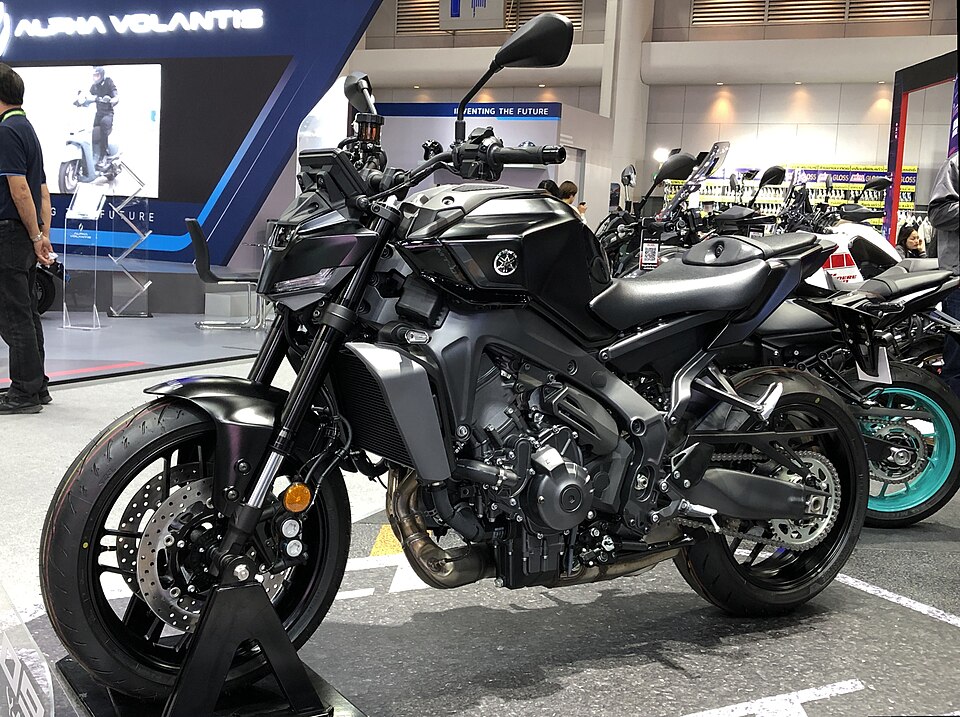
Some motorcycles want to be admired. The MT-09 just wants to misbehave. Yamaha’s middleweight naked has spent years perfecting the art of the cheeky, wheelie-happy hooligan, and the latest version refines that recipe without sanding off its edges. It is the bike that reminds you why you got your licence in the first place — an antidote to sensible, delivered with a grin.
What makes it so beguiling is that all this mischief comes wrapped in a genuinely usable everyday machine. Light, torquey and keenly priced, the MT-09 slots into a commute as happily as it terrorises a mountain road, and that breadth is exactly why it has become one of the best-selling nakeds on the planet.
The CP3 triple: master of midrange
At the core sits the 890 cc CP3 inline-triple, and it is one of the great engines at any price. With 117 hp and a thick 93 Nm of torque arriving low in the rev range, it fires the MT out of corners with a surge that feels punchier than the numbers suggest. The crossplane crank hands it a hard-edged, slightly unhinged growl that no parallel-twin can imitate.
Roll the throttle open in the meat of the midrange and the front wheel skims skyward in the first two gears — the MT-09 is a natural-born wheelie machine, and the electronics let you decide how much of that you want. It is not the fastest thing here on paper, yet the way it deploys its performance makes it feel gloriously, addictively rapid on any real road.
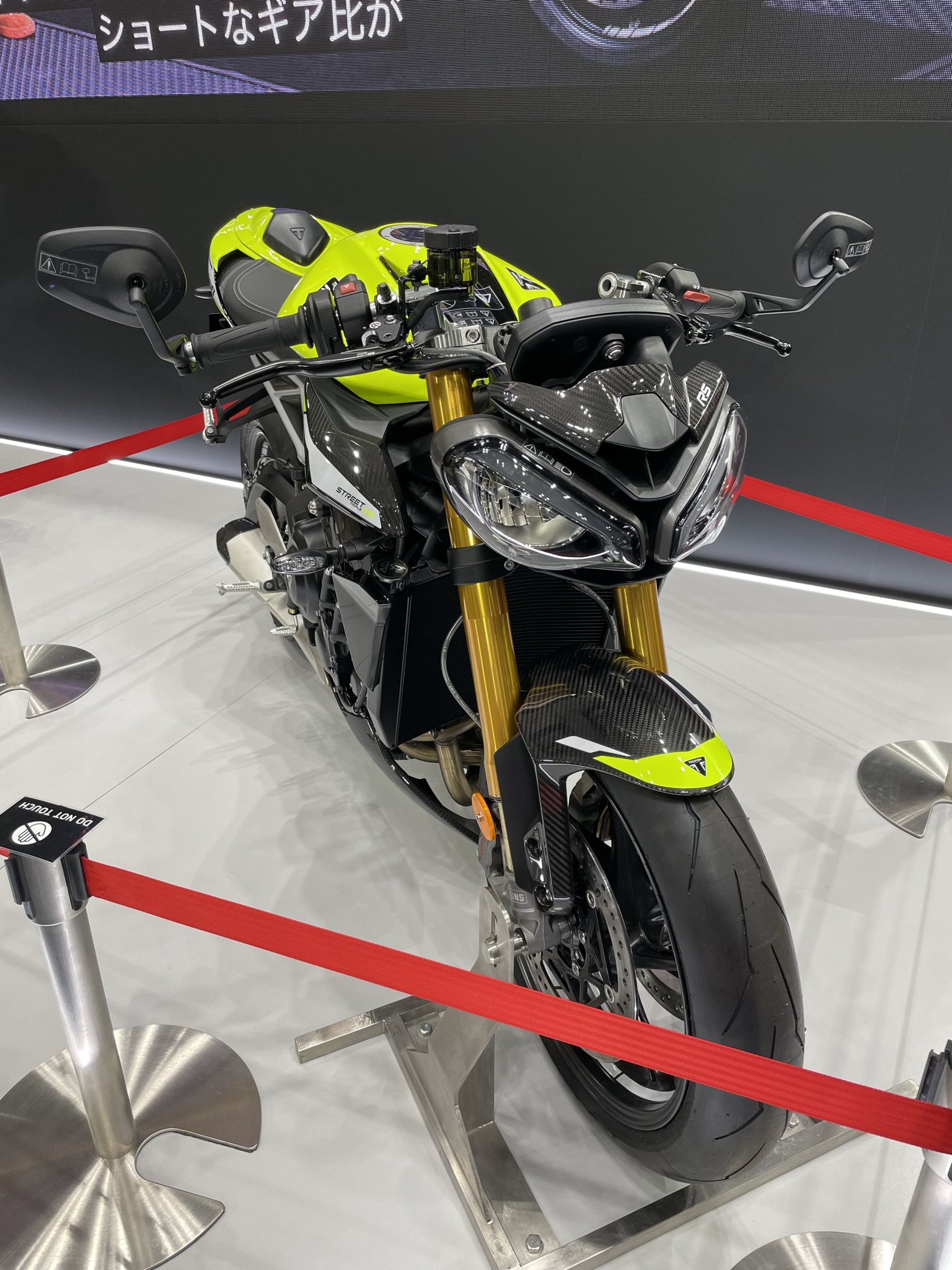
Ask a paddock full of journalists to name the finest middleweight naked and the same answer surfaces again and again: the Street Triple 765 RS. Triumph’s flagship roadster has become the yardstick, the bike everything else is politely compared to and quietly beaten by. It is fast without being frightening, sophisticated without being cold, and it does the whole job with a mechanical charm that borders on addictive.
Part of that magic is the badge’s Moto2 connection — Triumph supplies the engines for the world championship’s middleweight class, and the road-going triple wears that heritage lightly but unmistakably. This is a naked bike engineered by people who race, and every control speaks of that obsession with feel.
The 765 triple: the perfect middle way
The 765 cc inline-triple is the star turn, and it is arguably the sweetest engine configuration ever fitted to a road bike. Making 128 hp at 12,000 rpm, it hands you the low-down flexibility of a twin, the top-end urgency of a four, and a sound all its own — a hard, metallic wail that builds to a howl as the tacho sweeps round. There is simply no bad place in the rev range.
It pulls cleanly from 3,000 rpm, gathers pace with an eager, elastic surge through the midrange, and then charges to a redline that begs to be chased. The up-and-down quickshifter is beautifully judged, and the fuelling is spot on — the RS never feels highly strung, yet it will happily post a 3.3-second sprint to 100 km/h and a genuine 250 km/h if you let it stretch its legs.
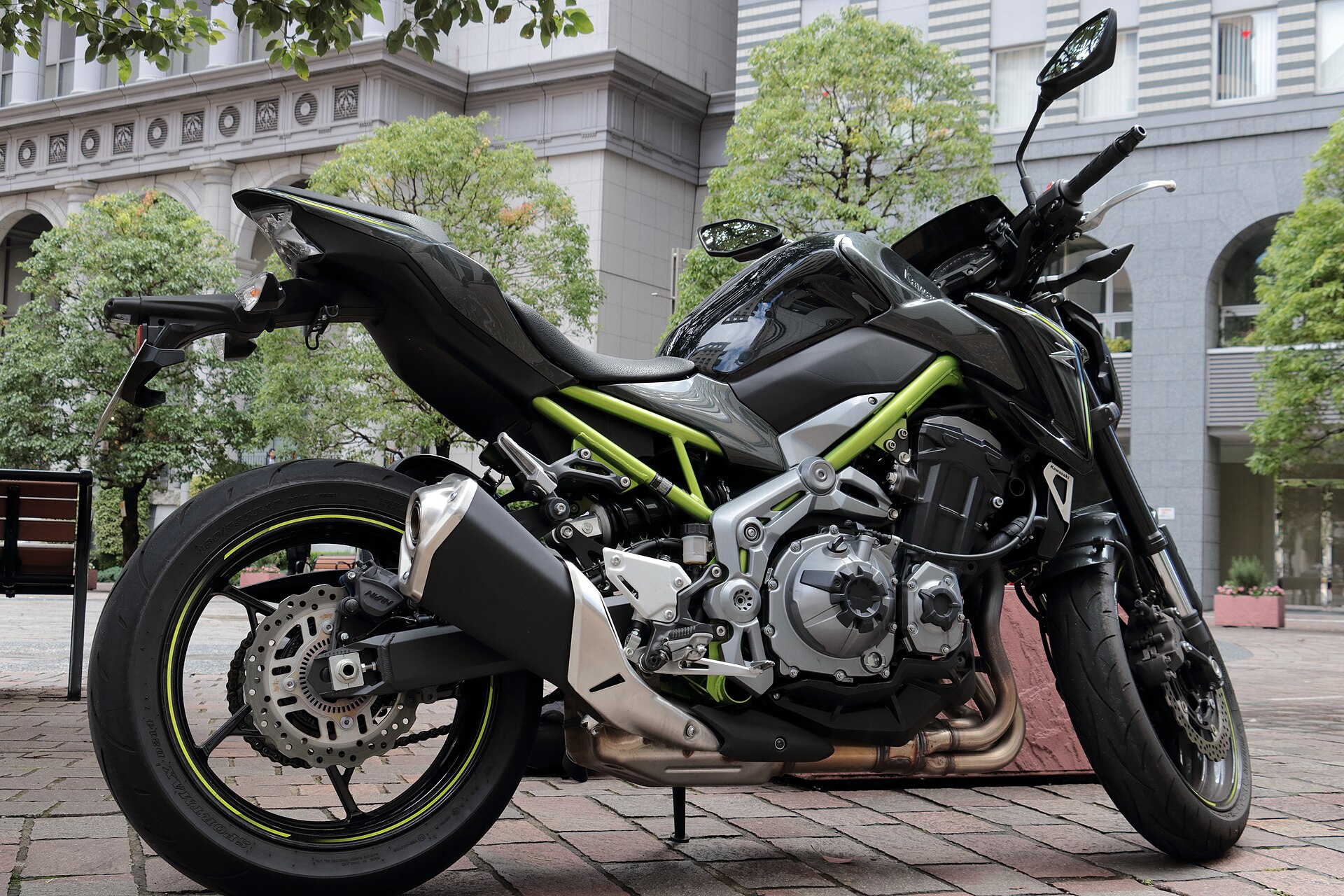
In an era when middleweight nakeds increasingly lean on twins and triples to hit a price, Kawasaki has quietly kept faith with the inline-four — and the Z900 is all the better for it. Here is a machine that delivers the creamy, revvy character of a four-cylinder engine, dresses it in menacing Sugomi bodywork, and asks a price that undercuts almost everything with comparable performance.
The result is one of motorcycling’s great value propositions. The Z900 does not chase headlines with radar cruise or carbon wheels; it simply nails the fundamentals of a fast, smooth, good-looking street bike, then leaves change in your pocket. For a huge swathe of riders, that is exactly the right set of priorities.
The joy of an inline-four
The 948 cc four is the heart of the appeal. Producing 125 hp and 99 Nm, it serves up the smooth, linear delivery that only a four can, spinning freely and cleanly to a soundtrack that hardens into a proper metallic snarl near the top of the rev range. There is enough midrange to make it flexible in town and enough top-end fizz to reward a hard ride.
It is not the torque monster that a big twin is, so you work the gearbox a little more to keep it on the boil, but that is part of the charm — the Z900 encourages you to ride it, to chase revs and hunt gears. A 3.5-second sprint to 100 km/h and a 240 km/h top end confirm there is nothing sluggish about this bargain.
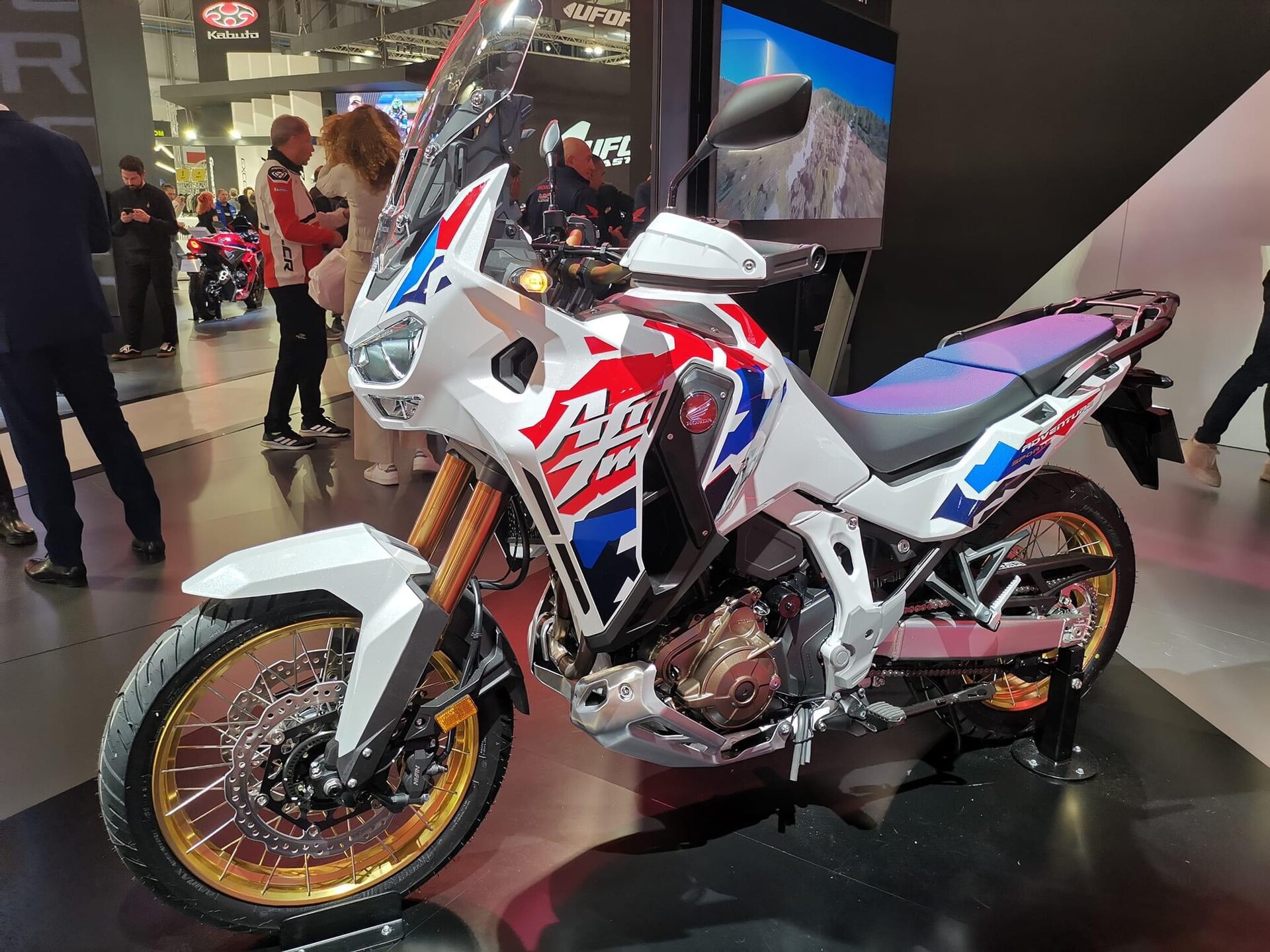
The Africa Twin carries a name soaked in Paris–Dakar history, and unlike many modern adventure bikes it actually lives up to the promise once the tarmac runs out. Where rivals have grown ever more road-biased and ever heavier with luxury kit, Honda has kept its big twin focused on the original mission: crossing continents and conquering dirt with a mechanical dependability you can genuinely stake a trip on.
That is the Africa Twin’s quiet superpower. It may not top the class for outright horsepower or the longest gadget list, but it offers a rare combination of real off-road credibility and legendary Honda reliability. For the rider planning to ride somewhere remote and get home again, that balance matters more than any spec-sheet bragging right.
A parallel-twin built for the long game
The 1084 cc parallel-twin produces a modest-sounding 101 hp, but the figure that matters is the 105 Nm of torque delivered low and early. This is an engine tuned for tractability, chugging cleanly from just above idle so you can pick your way over rocks and ruts without slipping the clutch, then pulling with satisfying muscle when you open it up on a fast gravel road or a motorway on-ramp.
The 270-degree firing order hands it a pleasant V-twin-like thrum and a broad, usable spread of grunt rather than a peaky top-end rush. It will crack a relaxed 200 km/h and sip fuel at around 21 km/l on a steady cruise, and crucially it never feels intimidating — the power is there when you want it and utterly manageable when you do not.
Look, if you’re tired of getting dropped on steep local climbs, the 2026 Pivot LES SL Drop Bar completely makes a mockery of traditional ascending. Listen. We all know gravel rigs ride like absolute garbage the second you hit blown-out, rocky singletrack. Your hands go numb. Lower back starts screaming. It sucks. But this specific chassis? It deletes that fatigue entirely. How? Pivot grabbed the aerodynamic tuck of a gravel bike and mashed it together with the suspension platform of a World Cup cross-country rig. When you drop into a rock garden on this thing, the trail just disappears. You’ll be nuking your local backcountry routes.
Massive Component Specifications Breakdown
I spend my winters chasing traction on the absolute nastiest, root-infested singletracks the Pacific Northwest can offer. When you are pedaling under your own power through that kind of slop, you need a machine that climbs with pure, unfiltered analog efficiency. The Pivot Switchblade is that exact machine.
It points uphill beautifully thanks to a brutally steep 76-degree seat tube angle. You get right over the bottom bracket to generate massive torque.
But when gravity takes over, the completely refined geometry changes the game. The extended reach lets you drop your heels and completely demolish high-speed descents with insane confidence. It climbs like an XC whippet and descends like a downhill brawler.
The Standout Tech: DW-Link Precision
I spend hours in the garage geeking out over linkage kinematics and rear-wheel axle paths. Pivot absolutely nailed the mechanical engineering on this updated frame. By extending the lower links, they radically improved how the DW-Link interacts with the trail.
Here’s the kicker: The longer linkage creates a beautifully progressive suspension curve. When you plow into a massive, jagged root web at race pace, the rear end eagerly absorbs the initial impact to keep your tires glued to the dirt.
But as you push deeper into that 142mm of rear travel, the support ramps up flawlessly. You never experience a harsh, ankle-rattling bottom-out. The bike naturally counters weight transfer under heavy pedaling, meaning you can sprint out of tight corners without losing an ounce of power to suspension bob.
If you want to see exactly how that progressive DW-Link handles real-world dirt, this breakdown is mandatory viewing. They perfectly explain why the longer lower links completely change the dynamic of how this bike tracks the ground.
The Anatomy: Switchblade Specs
Let’s strip this rig down to the bare carbon. I love studying geometry charts because the numbers never lie. The hardware selection here is pure all-mountain perfection, engineered for absolute durability in the deep woods.
- Front Suspension — 160mm Fox 36 Fork — The immensely stiff chassis tracks perfectly through off-camber rock gardens without deflecting.
- Rear Suspension — 142mm DW-Link (Longer Link) — Progressive ramp-up eats massive square-edge hits while maintaining pure pedaling efficiency.
- Hub Spacing — SuperBoost Plus 157mm — Creates a radically stiff rear wheel for laser-precise cornering in deep, rutted berms.
- Geometry Angles — 65.2° HTA / 76.0° STA (Low Setting) — Slack enough for steep chutes, but steep enough to comfortably conquer vertical, loose climbs.
- Frame Tech — Universal Derailleur Hanger (UDH) — Allows you to directly bolt on the absolute latest SRAM T-Type wireless transmissions.
The Financial Breakdown
Dropping $6,399 USD on a mountain bike is a serious investment. But the Pivot Switchblade justifies every single dollar with pure mechanical precision and unparalleled frame manufacturing.
The entry-level Ride GX build gets you the exact same carbon frame engineering and DW-Link kinematics as the flagship models. You get premium suspension performance without paying the top-tier component tax.
If you want absolute perfection, the Team XX AXS Transmission build tops out around $11,500 USD. You are paying for wireless electronic shifting that works flawlessly under load, and top-tier Fox Factory suspension that reacts instantly to the trail. It is the absolute pinnacle of analog dirt technology.
The Cyclist’s Guide: Dialing Your Switchblade
You need to maintain this machine to keep it running flawlessly. I spend hours in my garage making sure every pivot is torqued to spec. Here is exactly how you optimize your Switchblade for the dirt.
- Tune DW-Link Sag — The progressive curve requires an exact 30% sag measurement. — Ensures the rear wheel stays perfectly glued to off-camber roots while pedaling.
- Utilize the Flip-Chip — The upper linkage adjusts to accommodate a 27.5-inch rear wheel. — Dropping in a smaller rear tire creates insane cornering agility in tight, steep switchbacks.
- Grease the UDH — The Universal Derailleur Hanger needs clean threads for T-Type setups. — Keeps your SRAM Transmission shifting crisply and entirely silent.
- Pack the Tool Dock — The frame features dedicated mounts completely hidden under the top tube. — Allows you to ditch the heavy hydration pack and ride with a perfectly centered center of gravity.
Busting Trail Bike Myths
Internet forums constantly claim that mid-travel bikes bottom out harshly on heavy drops. They are entirely wrong. The Switchblade absolutely shatters that tired internet myth.
Pivot engineered the longer lower link to create an incredibly progressive end-stroke. You can huck this bike into flat landings and the 142mm of DW-Link travel ramps up so smoothly it feels completely bottomless. It proves definitively that suspension quality is vastly more important than a massive travel number.
Expert Consensus & Final Verdict
I trust the dirt above all else, but the industry experts completely agree with my findings. The test crew over at Vital MTB pushed this exact geometry to the limit on aggressive trails. They confidently stated, “The Switchblade climbs with an efficiency that makes you question if you even need a short-travel cross-country bike. It points uphill incredibly well and absolutely rips the descent.”
I agree entirely. This machine is a total paradigm shift for the modern trail rider. You get supreme analog pedaling efficiency, radical frame stiffness, and flawless descending geometry. The Pivot Switchblade is an absolute triumph of all-mountain engineering.
The Switchblade FAQ
How much travel does the Pivot Switchblade have?
This rig hits the perfect all-mountain sweet spot. You get 160mm of front travel via a highly capable Fox 36 fork, paired with 142mm of rear travel controlled by the refined DW-Link.
Is the Pivot Switchblade a trail or enduro bike?
It is the ultimate all-mountain trail bike. It bridges the gap perfectly, offering the brisk climbing efficiency of a short-travel bike with the aggressive descending capabilities of an enduro sled.
Can you run the Pivot Switchblade as a mullet (MX)?
Absolutely. Thanks to the highly intelligent upper-linkage flip-chip, you can seamlessly toss a 27.5-inch wheel on the rear without negatively impacting the bottom bracket height.
What is the head tube angle on the Pivot Switchblade?
In the low geometry setting, it features a highly capable 65.2° head tube angle. This provides immense stability on steep rock chutes while retaining sharp steering input at slower speeds.
Does the Pivot Switchblade use DW-Link?
Yes. It utilizes an updated version of Pivot’s highly acclaimed DW-Link suspension. The longer lower links create a more progressive curve that eagerly absorbs massive square-edge hits.
What is the rear hub spacing on the Pivot Switchblade?
Pivot continues to utilize their signature 157mm SuperBoost Plus rear hub spacing. This creates a radically stiff rear wheel that refuses to flex under heavy cornering loads.
Is the Pivot Switchblade UDH compatible?
Yes. The carbon rear triangle is completely compatible with the Universal Derailleur Hanger. This means you can directly mount the latest SRAM T-Type wireless transmissions for flawless shifting.
How much does a Pivot Switchblade cost?
The incredibly capable Ride GX builds start at $6,399 USD. The absolute top-tier Team XX AXS Transmission builds, featuring the finest carbon components, max out around $11,500 USD.
Does the Pivot Switchblade have internal cable routing?
Yes. Pivot uses the Pivot Cable Port System which features full internal tubes. This makes maintenance incredibly easy and keeps the bike running completely silent over rough terrain.
What terrain is the Pivot Switchblade best suited for?
This bike is an incredibly versatile all-mountain conqueror. It absolutely devours steep, technical singletrack climbs and provides endless stability for charging down jagged, high-speed descents.
Drop into a steep, rain-soaked chute in Bellingham, and you instantly find out if your frame is made of glass or granite. The smell of pulverized pine needles hits your lungs just as the front tire violently smashes into a wet root matrix. But here is the crazy part. I didn’t even tap my brakes, because the Pivot Firebird tracks through high-speed absolute chaos like a heat-seeking missile. This bike does not just survive the violent, loamy descents of the Pacific Northwest; it outright weaponizes them.
Granular Trail Specs: The Hardware That Matters
I refuse to gloss over the build sheet. When you are dropping top-tier cash, you need to know exactly what hardware is keeping your tires glued to the dirt. Here is the absolute breakdown of the bleeding-edge components bolting the Firebird together.