Type “Indian Challenger vs Harley-Davidson Road Glide” into any search bar and you will find breathless headlines promising a knockout blow — a bagger so fatally flawed it should be pulled from the showroom floor. We get the appeal of that framing; we are not above using it ourselves, see above. But after living with both machines back to back, on interstate slabs, tight two-lanes and a few hundred miles of genuine touring monotony, the truth is messier, and frankly more useful to anyone actually spending $25,000-plus of their own money.
Both of these baggers are excellent at the thing they were built to do. Both also carry a real, specific, describable weakness that no amount of chrome or marketing copy papers over. That is the actual story here: not a winner and a loser, but two deeply considered answers to the same question — how do you carry a rider and a passenger across a continent in comfort — arrived at through almost opposite engineering philosophies.
Liquid-cooled fury vs air-cooled thump
Indian’s PowerPlus 108 is the newer, more technically ambitious engine of the two. A liquid-cooled, 1,768cc 60-degree V-twin with dual overhead cams and four valves per cylinder, it makes a claimed 122 hp and somewhere around 173 Nm of torque, and — critically for a bagger that might sit in stop-and-go traffic on a scorching afternoon — it stays composed when the going gets slow and hot. Liquid cooling means consistent clearances and consistent power delivery, with none of the heat-soak that has occasionally plagued big air-cooled twins. It is not a one-off either: Indian’s commitment to liquid cooling runs through the whole range, right down to the small-bore Scout Bobber, which uses its own liquid-cooled V-twin rather than falling back on an air-cooled unit to save money.
Harley’s Milwaukee-Eight, offered in 107, 114 or the range-topping 117 High Output depending on trim, is the opposite bet: air/oil-cooled, pushrod-actuated, and unapologetically old-school in its architecture. The same 114 fitted to the Road Glide Special is the unit we already know from the Fat Boy — dyno-verified in the low-to-mid 90s hp with a meaty 160 Nm-ish of torque arriving low. It trades outright horsepower for a shove-in-the-back torque curve and a mechanical presence — the radiant heat off those cylinders in traffic, the shake at a stoplight — that Harley owners will tell you is the entire point, not a flaw to be engineered away.
Here is the honest trade-off: the PowerPlus is the better engineering solution and the better engine for a rider who wants their bagger to behave like modern transportation. The Milwaukee-Eight is the better engine for a rider who bought a Harley specifically because it does not behave like modern transportation. Neither is wrong. But if you ride in genuinely hot climates or spend real time in stop-and-go traffic, the Challenger’s cooling advantage is not a marketing footnote — it is something you feel through your boots on a July afternoon.
Frame-mounted vs fork-mounted fairings: the real engineering divide
This is the detail that separates these two bikes more than any spec sheet, and it barely gets mentioned outside enthusiast forums. The Road Glide’s signature Sharknose fairing is mounted to the frame, not the fork — it stays fixed relative to the chassis and does not turn when you turn the handlebars. The Challenger, like most fork-mounted fairings on the market, bolts its fairing straight to the front end, so the whole assembly swings with the bars every time you steer.
The physics matter more than it sounds like they should. A frame-mounted fairing keeps its mass — and there is real mass in a full touring fairing, stereo and gauge cluster — out of the steering equation entirely. In a stiff crosswind gust at highway speed, the Road Glide’s front end stays comparatively light and predictable, because you are only steering the wheel and fork, not several kilograms of plastic and glass swinging on the end of it. The Challenger’s fork-mounted setup means you are steering the fairing too, which most riders notice as marginally heavier, more deliberate steering input at speed, and a touch more feedback through the bars once the wind picks up.
It cuts both ways, though. That same fork-mounted mass gives the Challenger’s headlight a more direct, connected feel at low speed and in tight parking-lot maneuvers, since the beam always points exactly where the front wheel points. The Road Glide’s fixed fairing means its headlight stays aimed at the horizon regardless of how far you have turned the bars — great for straight-line stability, slightly less intuitive when threading a U-turn on a gas-station forecourt. We would call the frame-mount design the better solution for the interstate miles this class is actually built for, and the fork-mount design the more intuitive one at parking-lot speeds. That is a genuine trade-off, not a flaw hiding in either bike.
Infotainment and rider tech
Indian’s Ride Command system, offered in 7-inch or 10.4-inch touchscreen form depending on trim, is the more overtly modern interface: sharp resolution, capacitive touch that copes reasonably well with gloves, integrated GPS with weather overlay, and ride-mode selection baked into the same screen. Harley’s Boom! Box GTS answers with a smaller 6.5-inch display on the standard Road Glide and Road Glide Special, though the range-topping Road Glide ST has already moved to Harley’s newer Skyline OS on a considerably larger touchscreen — a clear signal of which direction the whole lineup is heading next.
In day-to-day use the Indian system feels the more polished straight out of the crate; the Harley system feels the more familiar if you have owned one before, with physical volume and menu controls a gloved thumb can find without looking down. Neither will embarrass itself against a car’s infotainment stack, and both support phone pairing and turn-by-turn navigation. This is a category where the gap is closing fast, and it now comes down to trim level almost as much as brand.
Ergonomics for the long haul
Long-haul comfort is where both machines are supposed to earn their keep, and both mostly do. The Challenger’s saddle and reach to the bars put a rider in a slightly more upright, arms-forward posture, and its fairing pushes air up and over the helmet with real effectiveness — genuinely one of the quieter cockpits in the bagger class at highway speed. The Road Glide’s ergonomics are marginally more stretched-out and cruiser-traditional, and the Sharknose fairing’s vents can be trimmed to fine-tune airflow, though stock wind protection around the shoulders is a shade less complete than the Challenger’s.
Weight distribution matters more than either brand likes to admit. The Challenger carries noticeably more of its mass — the cooling plumbing, radiator, and heavier fairing electronics — up front and low, which most testers feel as a more settled front end when leaned over at speed. The Road Glide’s air-cooled simplicity keeps things lighter up front, and the frame-mounted fairing’s inherent stability largely compensates on the highway anyway. Both bikes carry a genuine passenger and a full set of hard bags without complaint, and both will happily do a 500-mile day; you simply arrive a little less wind-battered on the Challenger and a little more nostalgic on the Road Glide.
Every new rider eventually asks the same question at the dealership: do I want an engine that talks back, or one that simply gets on with the job? The Triumph Speed 400 and Honda CB500 Hornet answer that question in almost opposite ways, and both are among the best learner-friendly, A2-licence-eligible naked bikes money can currently buy. One is a thumping single with genuine character; the other a smooth-spinning twin with a noticeably higher ceiling. Choosing between them is really choosing what kind of rider you want to become.
I have spent weeks swapping between the two — commuting on one, hammering a favourite set of B-roads on the other, then doing it all again in reverse — and the gap between them is far more interesting than a spec sheet suggests. This is not a case of one bike being simply better. It is a case of two very different answers to the same brief, and the right one depends entirely on which side of the single-versus-twin argument you fall on.
Two philosophies for the same licence
Both bikes are built to slot neatly under A2 licence power limits in markets that use them, and both are aimed squarely at riders who want something more grown-up than a 125 but are not yet ready — financially or otherwise — for a litre-class weapon. The Triumph uses a single 398 cc TR-series cylinder, producing a modest 40 hp. The Honda counters with a 471 cc parallel-twin making roughly 47.5 hp, which not coincidentally sits right at the ceiling most A2 riders are permitted to ride.
That difference in approach shows up everywhere on both machines, not just under the tank. Triumph has leaned into simplicity and feel; Honda has leaned into refinement and a wider useful rev range. Neither is chasing outright drama, but they get there — or deliberately avoid it — by completely different routes.
Engine character: a thumping single versus a smooth twin
Thumb the Speed 400’s starter and you get a proper single-cylinder bark, a light off-beat thrum through the pegs that makes the bike feel more alive at a standstill than its modest output suggests. There is real, usable shove low down — 37.5 Nm arrives by 6,500 rpm — and the whole package pulls with an eager, slightly rough-edged charm that many riders will find genuinely endearing rather than crude. It is an engine that wants you to notice it working.
The Hornet’s twin, by contrast, is the more sophisticated instrument. It spins up with none of the single’s vibration, delivers a fatter 43 Nm of torque, and simply keeps pulling further up the rev range than the Triumph can manage. Where the Speed 400 signs off and starts to feel breathless, the Honda is only just getting into its stride. On a fast sweeping road that translates into a genuinely quicker bike — not dramatically so, but enough that you notice it every time you overtake.
Neither engine is wrong. The single rewards you with feel and character at everyday speeds; the twin rewards you with headroom and a smoother, more relaxed motorway cruise. If you already know you will eventually want more performance, the Hornet’s extra ceiling is the one that ages better. If you want a bike that feels interesting the moment you thumb the starter, the Speed 400 wins that argument outright.
Weight, seat height and low-speed confidence
This is where the Triumph claws back real advantage. At a claimed 170 kg kerb weight against the Hornet’s 189 kg, the Speed 400 is a genuinely different physical proposition at walking pace — wheeling it out of a tight parking space, catching it on an unexpected camber, or simply muscling it around at a fuel stop all feel noticeably easier. For a nervous new rider still building confidence, that gap matters far more than it looks on paper.
Seat height tells a similarly close story: 790 mm on the Triumph versus 785 mm on the Honda, both comfortably low enough for shorter riders to get both feet flat. Riding position diverges more than the numbers suggest, though. The Speed 400’s bars and pegs put you in a compact, slightly forward-leaning stance that suits shorter riders and tight urban streets but can feel cramped for anyone over six feet on a long ride, while the Hornet’s roomier reach and extra chassis heft translate into a more settled, less nervous feel once you are up to motorway speed rather than picking through traffic.
Price and running costs
The Speed 400 undercuts the Hornet meaningfully at the till, starting from $4,995 against a Honda that starts closer to $7,000 depending on market. That gap buys a lot of insurance, gear and fuel for a new rider on a tight budget, and it is arguably the single biggest reason the Triumph has become such a strong seller among first-time big-bike buyers.
Running costs favour the Speed 400 too, at least on paper. A single cylinder means fewer moving parts to service, and Triumph’s pricing strategy has clearly been built around undercutting rivals at every stage of ownership, not just at the point of sale. Insurance follows a similar pattern for the youngest riders shopping this class: the Speed 400’s lower purchase price and mechanical simplicity tend to attract friendlier premiums, which matters enormously when you are also budgeting for gear, a course and your first set of tyres. The Hornet is not punishingly expensive to run or insure — Honda’s reliability reputation and dealer network remain formidable — but its twin-cylinder hardware and higher new price nudge it into a slightly costlier bracket throughout ownership.
Who actually grows into which bike
The Speed 400 suits the rider who values feel over outright pace — someone commuting daily, learning the ropes on a manageable, characterful machine, and who is happy to sell up and move on once their licence restrictions lift and their skills outgrow it. It is a brilliant first proper motorcycle precisely because it never pretends to be anything more than that, and it does the job with real style and a genuinely premium-feeling chassis for the money.
The Hornet suits the rider who wants one bike to cover both the learner years and a good chunk of what follows. Its higher power ceiling, smoother cruising manners and slightly more grown-up feel mean it will not feel outgrown the moment restrictions lift in the way a smaller single eventually can. If you are the sort of rider planning to keep your first big bike for several years rather than trade up immediately, that extra headroom is worth the additional outlay.
Fewer than three thousand dollars separate these two on the price list, and yet the gulf between what they represent could not be wider. The Harley-Davidson Nightster is the brand’s answer to a genuinely modern problem: how do you sell the Sportster mystique to a rider who has never touched a carburettor and never will? The Honda Rebel 1100 asks a blunter question in reply: why pay a premium for a badge when 1,084cc of smooth, torquey parallel-twin and a slick automatic gearbox will get you to the same diner just as fast, for noticeably less money?
I have spent real weeks with both, swapping keys back and forth until the differences stopped being spec-sheet abstractions and became things I felt in my wrists, my wallet and, frankly, my ego. This is not a case of one bike simply beating the other. It is a fork in the road for two entirely different kinds of cruiser buyer, and the sooner you admit which one you are, the happier you will be with whichever key ends up in your pocket.
Two very different hearts
Harley’s 975cc Revolution Max V-twin is the single biggest reason the Nightster exists at all. Liquid-cooled, four valves per cylinder, and happy to spin to a redline that would have scandalised anyone raised on air-cooled Evolution engines, it makes a claimed 90 hp at 7,500 rpm and 95 Nm at 5,000 rpm. It still barks like a Harley through the stock pipes and still shudders satisfyingly at idle, but it revs and responds like a modern sportbike engine wearing a leather jacket. That duality is the entire point of this bike, and Harley has nailed it.
Honda’s approach is almost the opposite. The Rebel 1100’s 1,084cc parallel-twin, related to the unit doing duty in the Africa Twin, produces a slightly lower 87 hp but a chunkier 98 Nm of torque delivered lower in the rev range, and it hands that torque over with the kind of unruffled, lazy confidence that makes a cruiser easy to love in traffic. Order it with Honda’s DCT automatic gearbox — no clutch lever, no gear pedal, just throttle and a pair of paddle shifters if you fancy playing along — and the Rebel becomes something genuinely novel in this class: a big-twin cruiser you can ride all day in pure automatic mode without your left hand doing a single thing.
On paper the two engines are close enough to call a draw. In the saddle they could not feel more different. The Nightster wants to be revved, rewards an aggressive right wrist, and genuinely surprises riders who assume every Harley is a slow-turning thumper. The Rebel does not care how hard you twist the throttle; it simply shoves you forward from barely above idle and stays smooth doing it. One engine asks you to work for the thrill; the other hands it to you before you have finished pulling out of the driveway.
Stance, weight and handling
This is billed as a sporty cruiser against a value cruiser, and the chassis numbers back that framing up. The Nightster carries the more aggressive geometry of the two: a blacked-out, minimalist stance, sportier proportions than any Sportster before it, and genuinely sharper steering, helped along by that stiff Revolution Max engine acting as a stressed member of the frame. At a claimed 221 kg kerb weight it is no featherweight, but it disguises its mass well once rolling and changes direction with real enthusiasm for a cruiser.
The Rebel 1100 is heavier still at around 223 kg, and it wears that weight low and forward in classic cruiser fashion. It steers with less urgency than the Nightster and never pretends to be anything other than a relaxed, feet-forward machine, but its low centre of gravity makes it feel more manageable than the number suggests at a standstill or paddling through a car park. Neither bike will embarrass a proper naked through a set of switchbacks, but if you forced me to file one under ‘sporty’ and the other under ‘sensible’, the Nightster earns the sportier tag on merit, not just on marketing copy.
Ground clearance is the Nightster’s one honest weakness. Push it hard into a corner and the footpegs will let you know about it well before the tyres run out of grip, a familiar Harley cruiser trait the Revolution Max engine has not fully cured. The Rebel is no scratcher’s tool either, but its more conventional cruiser geometry means you rarely find yourself surprised by what touches down first.
Ergonomics and everyday comfort
Seat height is close: 705 mm on the Nightster against 700 mm on the Rebel, both low enough to plant both feet flat and reassure a nervous new rider. Reach to the bars differs more than those numbers suggest, though. The Nightster’s drag-style bar and mid-mounted pegs put you in a slightly more committed, sportier crouch, while the Rebel’s flatter bar and neutral peg position feel more universally comfortable, particularly for taller riders who find the Harley’s cockpit a touch cramped after an hour in the saddle.
Fuel range favours the Honda: the Nightster’s small, underslung tank holds 11.7 litres against the Rebel’s 13.6 litres, giving the bigger-tanked Honda a real edge on a long day’s ride before you need to hunt for a station. Wind protection is minimal on both, as you would expect from bikes with essentially no fairing, and neither is a natural motorway cruiser once you push much beyond an hour at a stretch.
Technology, price and the DCT question
Price is where this comparison sharpens into a real decision. The Nightster starts at $11,999, the Rebel 1100 at $9,599 — a genuine $2,400 gap that buys a lot of fuel, gear or simply peace of mind for anyone stretching a first-bike budget. Both come with ride-by-wire throttles, multiple riding modes and switchable ABS as standard, so neither feels stripped-out at its price point.
The Rebel’s ace, though, is that DCT gearbox — an option Harley does not offer on the Nightster at any price. It is not just a novelty for nervous beginners; experienced riders who try it in stop-start traffic tend to come away quietly converted, and the ability to flick back to manual paddle control for a spirited ride means you are not actually giving anything up by ticking the box. For a huge swathe of buyers, it is the single most compelling reason to choose the Rebel over the Harley.
What the Rebel cannot buy, at any price, is the badge. The Harley name still carries a cachet that no amount of clever Honda engineering has managed to replicate, and for plenty of riders that intangible pull — the dealer events, the community rides, the sheer certainty that everyone at the petrol station knows exactly what they are looking at — is worth the extra $2,400 on its own.
Middleweight naked bikes are where motorcycling’s real money gets spent. Not on liter-class bragging rights, not on adventure-bike fantasies about Patagonia — on the bike people actually commute on, thrash on a Sunday, and can afford without remortgaging anything. Suzuki’s GSX-8S and Honda’s CB750 Hornet are currently the two sharpest answers to that brief, and having spent serious time on both, I can report the class has quietly gotten very, very good.
Both machines are built around a 270-degree parallel-twin under 800cc. Both throw a color TFT dash, ride-by-wire throttle, and a genuine electronics suite at a reasonable price. On a spec sheet they look like siblings. Ride them back to back for a week, though, and you realize Suzuki and Honda solved the same brief in almost opposite ways — and that difference in philosophy, more than any single number, is what should decide which one gets your deposit.
Two Twins, One Displacement Class, Opposite Personalities
Suzuki’s 776cc twin — shared with the GSX-8R and the V-Strom 800DE — is the more technically interesting engine on paper. Instead of relying purely on crank throw and counterweights to tame the inherent shake of a big-bore twin, Suzuki added a cross-balancer shaft, a secondary shaft spinning to cancel out vibration the 270-degree crank doesn’t. The result is genuinely uncanny: 82 horsepower at 8,500 rpm delivered with almost none of the buzz you’d expect from a twin this size. It pulls cleanly from low in the rev range, never feels harsh, and honestly could pass for a smaller inline-four if you didn’t know better.
Honda went the other direction. The CB750 Hornet’s 755cc engine uses a Unicam head — a single overhead camshaft borrowed straight from Honda’s CRF motocross line, running the intake valves directly and the exhaust valves through short rocker arms. It’s a packaging trick as much as a performance one, letting Honda build a shorter, lighter cylinder head. But the byproduct is character: this engine wants to be revved, makes a genuinely eager 90 horsepower at 9,500 rpm, and telegraphs a bit of vibration through the bars and pegs at speed that the Suzuki simply doesn’t have.
Neither bike is dramatically more torquey than the other — both land in the mid-70s Nm range — but where that torque shows up matters. The Suzuki’s is smeared across a wide, friendly midrange; the Honda’s arrives with more urgency higher up and rewards you for holding a gear. On paper the Hornet simply wins the engine fight — more power, more character, a genuinely thrilling top end. Suzuki’s twin is the better long-distance companion; Honda’s is the better weekend toy. Which one you want says more about you than about either bike.
Chassis and Suspension: Where the Two Companies Clearly Spent Differently
Suzuki kept the GSX-8S affordable in an obvious place: suspension. The 41mm KYB fork is entirely non-adjustable, and the shock offers preload only. Around town and on smooth roads this is a non-issue — the bike feels light, neutral, and easy. Push it on a rough, fast road and the limitations show quickly: some dive under hard braking, a bit of wallow mid-corner if the surface gets choppy. The brakes don’t help matters — axial-mount Nissin calipers that work fine for commuting but feel a little soft and remote when you actually need to shed speed in a hurry.
Honda didn’t cut the same corner. The Hornet uses Showa’s Separate Function Fork Big Piston (SFF-BP) design, splitting spring and damping duties between the two legs, and it’s a genuinely well-sorted unit for this class — controlled, communicative, and far less prone to getting flustered on a bad road. Pair that with radial-mount Nissin calipers biting twin 296mm discs and the Hornet simply stops and turns with more confidence than the Suzuki does, full stop.
Weight amplifies all of this. Honda’s claimed wet weight sits around 190 kg; Suzuki’s is closer to 205 kg. Fifteen-odd kilos doesn’t sound like much until you’re flicking the Hornet through a set of esses and it changes direction with none of the effort the GSX-8S demands. This is the single biggest reason the Hornet feels like the sportier motorcycle even before you factor in the engine.
Electronics: Nobody's Cutting Corners Anymore, But the Details Differ
Both bikes get a color TFT dash, throttle-by-wire, multiple ride modes, and lean-sensitive traction control — features that would have been sportbike-only a decade ago and now show up on nine-thousand-dollar nakeds without complaint. Suzuki’s Drive Mode Selector and Honda’s own ride-mode system both do the same basic job: soften or sharpen throttle response depending on mood and weather.
Modern-classic bikes are a wonderful lie. They dress up thoroughly contemporary engineering — fuel injection, ride-by-wire throttles, ABS, traction control — in bodywork borrowed from an era when none of that existed. Nobody tells this lie better than the Kawasaki Z900RS and the Triumph Speed Twin 1200, two bikes that spend all day pretending to be forty years old while quietly being some of the most competent naked machines currently on sale.
I put real miles on both, back to back, on the same loop of fast dual-carriageway and tight, cambered B-roads. What emerged was not a knockout, but two entirely different arguments for what a retro roadster should feel like under your hands. One is a smooth, howling inline-four wrapped around a Z1 silhouette. The other is a gorgeously finished parallel-twin that trades outright pace for a tactile richness the Kawasaki simply cannot fake.
Engine character: the four versus the twin
The Z900RS runs Kawasaki’s 948cc inline-four, retuned from the standard Z900’s version for a fatter midrange, and it is a genuinely lovely engine. Power lands around 109 hp at 8,500 rpm, with 98.5 Nm arriving at 6,500 rpm, and the delivery is silky from idle to redline. There is a building, mechanical howl as the tacho sweeps past 7,000 rpm that no twin can replicate — this is the sound the whole bike is built around, and it does not disappoint.
Triumph’s Speed Twin 1200 counters with its 270-degree, 1,200cc parallel-twin, good for roughly 103 hp at 7,750 rpm and a meatier 112 Nm arriving much lower down, around 4,250 rpm. On paper it trails the Kawasaki at the top of the rev range. On the road it rarely matters, because the Triumph is already shoving you toward the next corner while the Z900RS is still building revs. This is a torque-first engine, and it feels like one from the first twist of the wrist.
Neither engine is objectively “better” — they are simply chasing different feelings. The Kawasaki rewards a rider who likes to work through the gears and chase a note; the Triumph rewards one who wants to feel a punch in the chest at 3,000 rpm and not think about the gearbox again until the next roundabout. If you have ever argued about whether a V8 or a straight-six sounds better, you already know which side of this you land on.
Handling and how each one carries speed
Weight tells an important part of this story. The Z900RS is a genuinely heavy retro bike at around 215 kg kerb, and you feel every one of those kilograms at low speed and in tight, technical turns — it wants a firm hand to change direction quickly. The Speed Twin 1200 is only marginally lighter on the spec sheet at roughly 216 kg, yet it feels noticeably more agile in the real world, largely down to how that mass is carried low and central around the twin’s compact crankcase.
Through faster, sweeping corners the Kawasaki settles into a reassuring, planted stance and its non-adjustable-at-the-front-but-still-composed suspension soaks up mid-corner bumps without drama. The Triumph’s fully adjustable Marzocchi fork and Öhlins-style rear shock (on higher trims) give it a noticeably more premium ride quality — more feel at the bars, better control over broken surfaces, and a chassis that flatters a rider trying to carry speed rather than merely permitting it.
Neither bike is a sportbike wearing a disguise, and neither pretends to be. But if you spend your weekends hunting apexes on a favourite road, the Speed Twin’s superior damping and sharper front-end feedback will have you grinning earlier and more often. The Z900RS is happy to follow along at a slightly more relaxed pace, and honestly, most owners of either bike will never find the limit of what’s on offer here.
Build quality and finish
This is where the gap between these two widens most dramatically, and it is the single biggest reason the Triumph costs what it costs. Run your hand over the Speed Twin’s tank, its brushed engine covers, the machined fins on the cylinder head, the twin analogue clocks — everything feels like it was finished by someone who cared. Paint depth, switchgear weighting, the satisfying click of the indicator stalk: this is a bike built to be looked at as much as ridden, and it rewards close inspection in a way few naked bikes at any price manage.
The Z900RS is not shoddy — far from it — and its teardrop tank and round headlight nail the Z1 silhouette with real conviction. But get up close and the Kawasaki’s switchgear, some of its plastics and its slightly generic instrument cluster reveal a bike built to a tighter cost target. It looks the part from ten feet away, which is exactly where most onlookers will admire it, but the Triumph looks the part from ten inches away too, and that difference is exactly what premium pricing is supposed to buy.
Price and everyday value
Here the Kawasaki claws back real ground. The Z900RS starts at roughly $12,649, undercutting the Speed Twin 1200 by a meaningful margin — Triumph’s twin typically lands closer to the $13,500 mark once you factor in the higher-specification variants most buyers actually want. For that saving you get a faster-revving, more powerful engine on paper and a badge with its own considerable heritage cachet in most markets.
Running costs favour the Kawasaki too, at least on paper: four-cylinder engines are famously long-lived, parts availability is broad, and service intervals are undemanding. The Triumph’s premium components — that adjustable suspension in particular — cost a little more to maintain over a long ownership, though nothing about the Speed Twin is remotely exotic or fragile. Think of the price gap less as “cheap versus expensive” and more as “good versus better,” because that is really what you are paying for.
The A2 licence used to mean compromise. Buy something small, sensible and a little bit sad, then count down the days until your restriction lifted and you could finally have a proper motorcycle. The Kawasaki Ninja 500 and Aprilia RS 457 are the loudest proof yet that those days are over. Both are full-fairing, parallel-twin sportsbikes built from the ground up for restricted licences, and both are genuinely good motorcycles rather than watered-down ones.
We spent real time on both, back to back, on the same roads and at the same pace, and the gap between them turned out to be far more interesting than a simple spec-sheet swap. One is the safe, sensible evolution of a bike that has taught a generation of riders how to use a clutch. The other is a proper Italian sportsbike shrunk down to size, engineered in-house rather than bought off a shelf. Neither is the wrong answer. But they are answers to slightly different questions.
Engine character
Kawasaki’s 451cc parallel-twin is the bigger-bore evolution of the engine that powered the outgoing Ninja 400, and it shows in the best way. Power arrives smoothly and predictably from low revs, with none of the nervous snatchiness that can catch out a genuine beginner, and the extra displacement over its predecessor fills in exactly the mid-range hole that used to force constant gear-changing. It is not an exciting engine in isolation, but it is an honest one, and honesty matters enormously to someone still learning where the friction point on a clutch lever actually is.
Aprilia took a different, riskier route. Rather than adapting an existing unit, it engineered the 457cc twin in-house, with an uneven crank-pin offset that gives the engine a slightly lumpier, more characterful pulse than you would expect from something this small. Peak output lands right at the 35kW A2 ceiling by design, which means Aprilia never needed a restrictor kit to keep it legal, a detail Kawasaki’s more powerful twin cannot claim in every market. On the road the RS 457 feels the eager one of the two, keener to be revved, with a top end that genuinely rewards you for reaching for it.
Chassis and handling
This is where the badge on the tank starts to matter. The Ninja 500 wraps its twin in a conventional steel frame tuned for stability and predictability above all else, and it works. The bike is forgiving over broken tarmac, unbothered by a nervous rider stabbing at the bars, and happy to be ridden slowly without complaint. It steers accurately enough for a Sunday blast but never asks you to commit hard to a line, which is exactly the point for a bike aimed at someone still building confidence.
The Aprilia bolts its engine into a proper trellis frame, the same basic philosophy that underpins its RSV4 and Tuono flagships, and the difference is obvious the first time you tip it into a corner. It turns in faster, holds a line with more precision, and feels genuinely eager rather than merely capable. That sharpness comes with a small cost in outright forgiveness. The RS 457 rewards a rider who commits to the line they picked, rather than one who is still figuring out where the line should go. It is the more thrilling chassis, and also the more demanding one.
Every generation gets one adventure-bike argument that actually matters, and right now it’s this one. Forget the six-figure boxer-twin flagships with their radar cruise control and semi-active suspension — the real battleground for genuine, everyday adventure riding is happening at the affordable end of the class, and it comes down to two bikes: the Royal Enfield Himalayan 450 and the KTM 390 Adventure. Both are small-capacity, single-cylinder machines built to be thrashed on gravel, ridden to work on Monday, and loaded up for a three-week trip in October. Only one of them is right for you.
I’ve spent real miles on both — pavement, fire roads, and the kind of rutted, rock-strewn trail that makes you question your line choice and your life choices simultaneously. What struck me is how differently these two machines interpret the same brief. The Himalayan 450 is built by a company that has spent decades sending riders across actual Himalayan passes and racing works bikes through rally-raid gravel. The 390 Adventure is built by a company that has spent decades winning Dakar outright with bigger bikes, then applying its sharpest road-going engineering to a small ADV that would rather carve a canyon than crawl a riverbed. Same category, wildly different soul.
Two singles, two very different personalities
Royal Enfield’s Sherpa 450 is a 452cc, liquid-cooled single that makes a claimed 40 hp at 8,000 rpm and roughly 40 Nm of torque lower in the rev range. On paper it sounds unremarkable next to the KTM. In practice it’s a deliberately relaxed, long-legged engine tuned for tractability over drama — the kind of motor that lets you feed in throttle over loose rock without the rear end stepping out unexpectedly. It doesn’t rev with any enthusiasm past seven grand, and it doesn’t need to.
KTM’s LC4c — the 399cc single that also powers the 390 Duke — is a punchier, more highly strung unit, claiming around 45 hp at 8,500 rpm with slightly less outright torque than the Sherpa but delivered with far more urgency. It likes to be worked. Roll it on hard out of a corner and it responds with a keenness the Himalayan simply doesn’t have, and that single extra gear’s worth of eagerness defines almost everything else about how these two bikes feel on the road. The KTM feels like a sportbike engine wearing hiking boots; the Royal Enfield feels like a diesel generator that happens to be genuinely likeable.
Off the beaten path: who's the real adventurer
This is where the Himalayan 450 earns its name. Long-travel Showa suspension, a proper 21-inch front wheel, and a chassis tuned first for the dirt and second for the tarmac make it feel unflappable once the road turns to washboard or worse. Royal Enfield’s rally programme — which genuinely campaigns Himalayan-based machines in rough-country events — isn’t just a marketing footnote; it shows up in how forgiving this bike is when you get a line wrong. The low-end torque delivery does the hard work for you on loose surfaces, and the whole package feels like it was engineered by people who actually expect you to drop it.
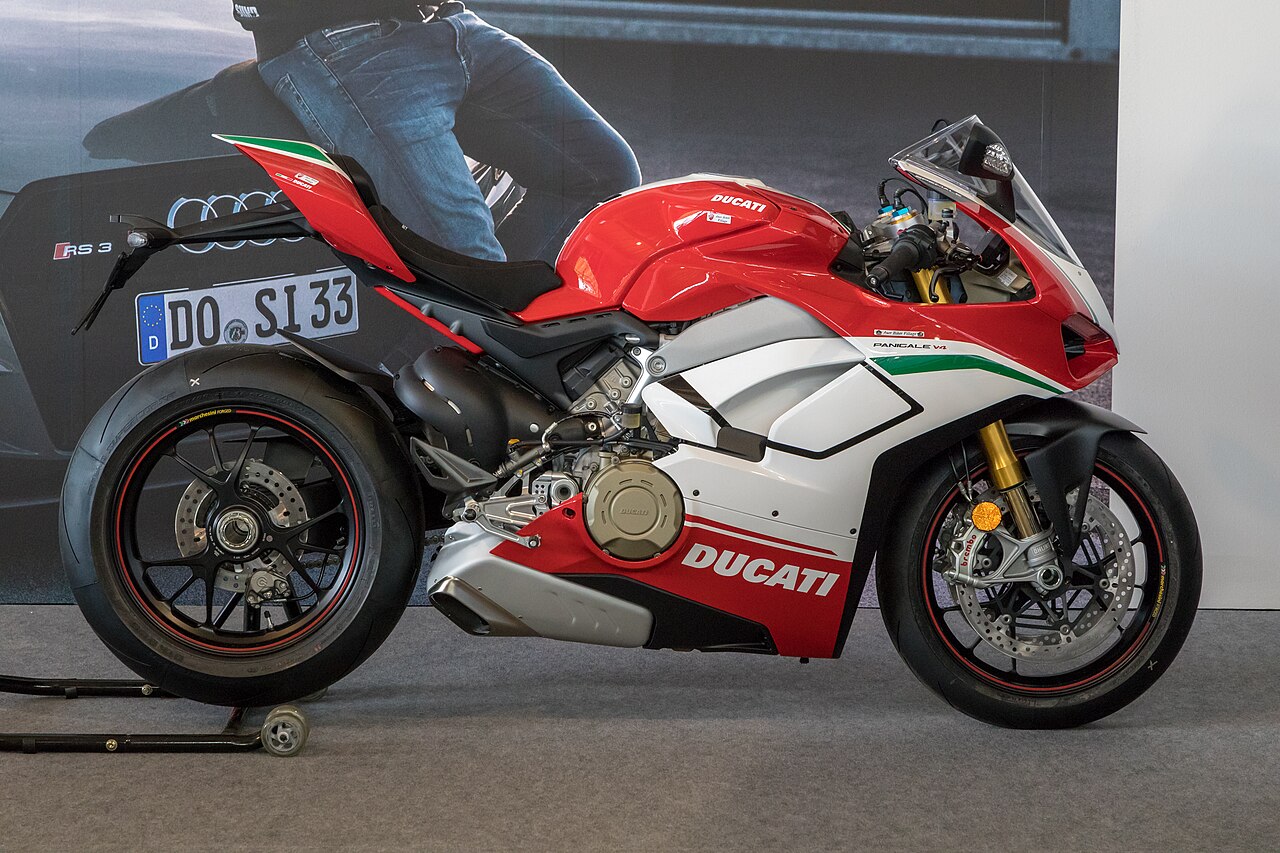
There is no polite way to stage this fight. On one side stands the Ducati Panigale V4, Bologna’s rolling statement of intent — a machine built to translate MotoGP obsession into something you can, in theory, ride to breakfast. On the other sits the BMW M 1000 RR, the German answer to a very Italian question, engineered with the cold precision of a company that treats lap time as a moral duty. Both are homologation heroes, both cost more than a family car, and only one can reign over your fantasy garage.
What makes this comparison so delicious is that the two chase the same summit by opposite paths. Ducati leans on drama, exclusivity and a V4 soundtrack that raises hairs. BMW leans on data, downforce and a relentless will to be faster everywhere. We rode both back to back, on road and on circuit, and came away convinced that the right answer depends less on the bikes than on the person twisting the throttle.
Engine and performance
The Panigale’s 1,103cc Desmosedici Stradale is the emotional heart of this test. Its counter-rotating crankshaft, deep V4 howl and roughly 215 hp arrive with a violence that feels almost alive, the front wheel skimming the tarmac as it charges toward 13,000 rpm. Torque peaks near 124 Nm, and the delivery is broad enough to flatter a road rider yet savage enough to frighten one. This is an engine that performs for you as much as it propels you, filling your helmet with a sound that no inline-four can match.
BMW counters with a 999cc inline-four packed with ShiftCam variable valve tech, spinning to a dizzying 14,500 rpm for a claimed 212 hp. On paper the numbers sit close; in character they live in different countries. The M feels turbine-smooth and metronomic, gathering pace with a clinical shove that simply never relents. Where the Ducati shouts, the BMW gets on with the job, and at the top of the tacho it arguably pulls harder. Both crack 300 km/h with room to spare, and both leave litre-class rivals looking distinctly ordinary.
Chassis and handling
Ducati’s front-frame concept uses the engine as a stressed member, and the latest Panigale finally adopts a double-sided swingarm lifted straight from racing. The result changes direction on a thought — wonderfully intimate and communicative once you trust it. The M 1000 RR, heavier by a whisker at around 192 kg wet, feels more planted and forgiving, its aluminium bridge frame and aggressive winglets pinning the front through fast sweepers with uncanny stability. Both wear elite Brembo-grade braking hardware that hauls speed off with brutal, fade-free authority lap after lap.
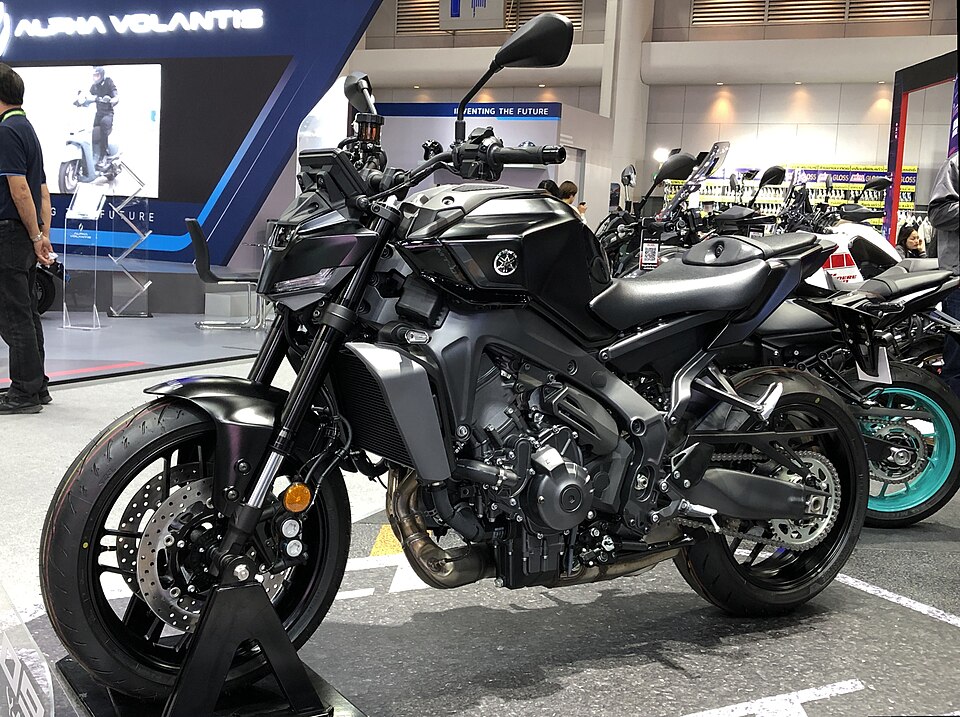
The middleweight naked class is where most riders actually live, and no two bikes define its extremes better than these. The Yamaha MT-09 is the people’s champion — loud, torquey, keenly priced and gloriously unhinged. The Triumph Street Triple 765 RS is the connoisseur’s choice — sharper, more expensive and dripping with the kind of hardware you normally find on machines costing far more. Both use a three-cylinder engine, both weigh a shade under 200 kg, and both will humble far pricier metal on a good road.
Yet they feel like they were designed by people who would never agree on lunch, let alone motorcycles. One is a hooligan in a leather jacket; the other is a scalpel in a tailored suit. That is exactly why this fight is so instructive — it forces you to decide what kind of rider you really are before a single kilometre is covered.
Engine character
Yamaha’s 890cc CP3 triple is a masterclass in low-end thump. With 117 hp and a fat 93 Nm arriving early, it surges out of corners like a much bigger bike, all guttural bark and effortless roll-on. It feels naughty at every throttle opening, positively daring you to loft the front. Triumph’s 765cc unit, derived directly from the Moto2 spec engine, chases a different high: 128 hp at a lofty 12,000 rpm, a screaming top end and a crispness that rewards riders who love to rev right to the redline.
In the real world the Yamaha feels faster in the mid-range and lazier to ride, happy to lug from any gear on a lazy Sunday. The Triumph asks you to work the gearbox and wring it out, then repays you with a sweeter, more musical delivery and a top-end shriek that borders on addictive. The MT-09 is the more relaxing daily engine; the Street Triple is the more thrilling one when the road opens up.
Chassis and handling
Here the price gap shows itself. The Street Triple RS arrives with fully adjustable Showa forks, an Öhlins STX40 rear shock, Brembo Stylema calipers and sticky Pirelli rubber — a genuine track-ready specification straight from the crate. It steers with delicious precision and holds a line as if bolted to a rail. The MT-09 uses more modest KYB suspension that, while much improved on recent models, can feel busy and under-damped when you truly attack a bumpy back road at pace.
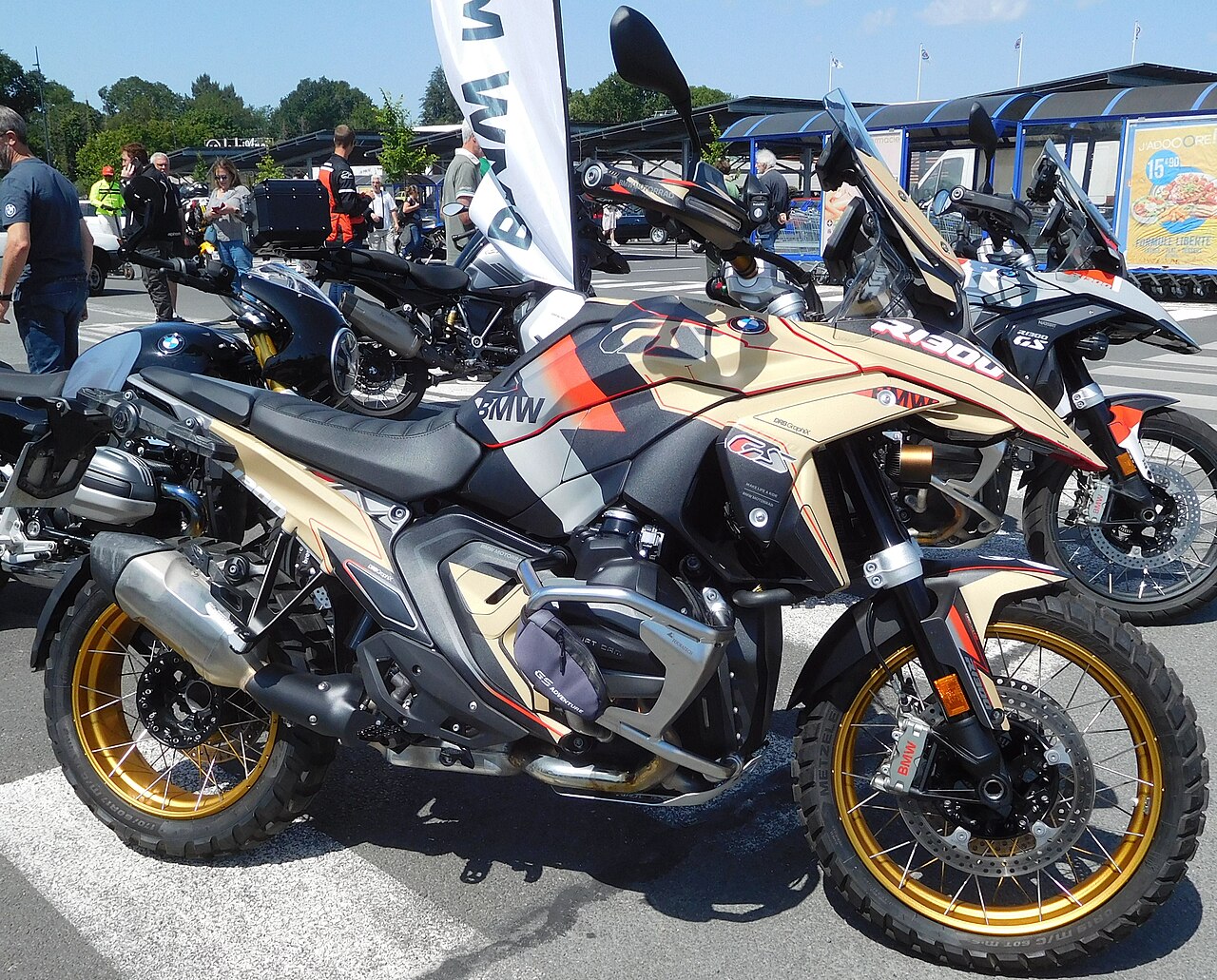
For decades the big adventure bike has been the Swiss Army knife of motorcycling — comfortable enough for continents, capable enough for gravel, fast enough to embarrass sports tourers. Two machines dominate the conversation. The BMW R 1300 GS is the reigning class benchmark, a technological tour de force that every rival is measured against. The Honda Africa Twin is the honest adventurer’s hero, less flashy but blessed with genuine dirt credibility and a price that makes the BMW blush.
This is not merely a spec-sheet duel. It is a clash of philosophies: German maximalism against Japanese pragmatism, gadgetry against grit. We took both across tarmac, gravel and rutted trail, loaded and unloaded, to find precisely where each one earns its keep and where its priorities lie.
Engine and performance
BMW’s all-new 1,300cc boxer twin is a monster in the friendliest way. With 145 hp and a colossal 149 Nm of torque, it hauls the GS forward with a locomotive shove that makes overtakes trivial and passengers grin. It is smoother and more urgent than any GS before it, with an addictive wave of low-down grunt. Honda’s 1,084cc parallel twin plays a quieter tune — 101 hp and 105 Nm — but its low, tractable delivery and 21-inch front wheel make it feel more natural when the surface turns loose and slippery.
On the road the BMW is simply quicker everywhere, and its optional Automated Shift Assistant lets you ride clutchless if you wish, blurring the line between manual and automatic. The Africa Twin, particularly with Honda’s superb DCT dual-clutch automatic, is the more relaxed companion, trading outright pace for a friendly, unflappable manner that suits long, dusty days far from a workshop. Neither engine will ever leave you wanting on a public road.
Chassis and off-road ability
The GS uses BMW’s evolved Telelever front end, which now offers adaptive ride-height control that lowers the seat at a stop and rises for clearance on the move — witchcraft that shrinks a heavy bike around you and makes a big machine feel manageable at the lights. It handles like something 50 kg lighter than it is. Yet the Africa Twin, with its longer travel, spoked wheels and genuine 21-inch front, remains the more confident tool once the tarmac ends and the ruts begin.