Everyone who has ever leaned over a used Ducati Scrambler in a dealer’s yard has felt the same tug. The trellis frame glows red under the paint, the tank is short and stubby in exactly the right way, and the whole bike promises a decade of easy, stylish riding for less money than almost anything else wearing an Italian badge. I have bought two of these things used, sold one at a loss I fully deserved, and watched enough friends get burned to say this plainly: the Scrambler is a genuinely brilliant used buy and a genuine minefield, often on the very same example.
That contradiction is the whole story. Ducati built the Scrambler to be a lifestyle object first and a motorcycle second, and it sold in numbers that flooded the used market with bikes bought by people who had never owned anything Italian before and had no idea what that actually meant, day to day. Some of those bikes were babied. Plenty were not. The trouble is they all look identical in a set of forecourt photos, and the difference between the good one and the money pit is buried in places a casual look-over will never find. Here is what actually goes wrong, what a fair price looks like, and exactly where to put your hands before you put down a deposit.
The Belt Job Nobody Budgets For
Start with the engine, because it is where the real money hides. The Scrambler’s desmodromic twin uses rubber timing belts to drive its camshafts, and Ducati has always specified that these get replaced on a calendar, not just a mileage counter. A belt that has done only a few thousand miles over several years still needs changing on schedule, because the rubber perishes with age and heat cycling whether or not the bike has actually been ridden anywhere. This is the single most common thing I see private sellers either not know about or quietly not mention, and it is not a cheap job to discover you need after the fact.
The maddening part is how invisible a missed belt service is from the saddle. The bike starts, idles and rides exactly the same right up until the day it does not, and a badly deteriorated belt on a desmodromic engine is not a gentle limp-home fault — it can put a valve where a piston very much does not want it to be. Ask for the invoice, not the verbal assurance. “It’s been serviced” from a seller who cannot produce a single dated receipt is not information; it is a hope you are being asked to buy alongside the bike. Budget accordingly even on a bike that looks freshly serviced, because you are inheriting whatever clock is already running the moment you sign — if the last belt change was years ago and the interval has quietly lapsed, you are not buying a sorted motorcycle, you are buying a bill with a number plate, and that reality should be reflected hard in the price you are prepared to pay.
The Trellis Frame Rot Hiding Under the Tank
The Scrambler’s steel trellis frame is one of its best design flourishes and one of its quietest liabilities. It sits exposed and low down, and — crucially — largely hidden under the fuel tank and side panels, where road grime, salt and moisture collect and simply stay put for years between anyone bothering to look. On a bike that has spent winters parked outside, surface corrosion on the frame tubes under the tank is extremely common, and on the worst-neglected examples it has progressed well past cosmetic.
This is less a Ducati design flaw than a Ducati inspection failure, because most buyers never think to lift the tank on a naked bike the way they would instinctively check the sills on a used car. Pull the seat, get a torch on the frame junctions and the area around the airbox, and look for bubbling paint, white powdery corrosion or actual pitting rather than just surface dust. A frame left to quietly rot through a few winters is a far bigger problem than a scuffed exhaust or a scratched tank, and it is dramatically easier to miss on a quick viewing.
That Rattle Is Probably Not the Emergency It Sounds Like
Almost every new Scrambler owner has the same moment of panic at idle: a distinct, dry, clattering rattle from the engine that sounds exactly like the notorious dry-clutch clatter older Ducatis are famous for. The Scrambler does not actually run a dry clutch — it uses a wet, hydraulically operated unit — but the desmodromic valve gear and slipper-clutch basket on these engines are simply audibly busier than a Japanese twin, and at idle it can sound alarmingly like something has come loose inside.
I do not want to wave this away entirely, because a rattle that changes character under load, gets noticeably worse with heat, or arrives alongside a clutch that feels grabby or inconsistent is a different matter, and deserves a mechanic’s opinion before you buy, not after. But the baseline mechanical clatter that spooks so many first-time Ducati owners into an unnecessary panic — and sometimes an unnecessary discount demand, or worse, an unnecessary walk-away — is, on a healthy example, simply how these engines sound. Know the difference before you judge a seller for it, or talk yourself out of a perfectly sound motorcycle.
Patchy Dealer History Is the Norm, Not the Exception
Here is the uncomfortable truth about the Scrambler’s ownership base: a huge proportion of these bikes were bought by riders drawn in by the styling rather than the badge’s racing pedigree, and plenty of them serviced the bike the way they would service a scooter. Ducati main dealers are not everywhere, official servicing is not cheap, and a meaningful slice of the used Scrambler population has spent at least part of its life at an independent garage, or worse, at nobody’s garage at all beyond an occasional oil change.
This matters because a full, documented main-dealer history genuinely commands a premium on this bike, more than it would on something mechanically simpler and more forgiving. A stack of independent-specialist receipts is not automatically a red flag — plenty of excellent Ducati specialists work outside the franchised network — but a service book with gaps, guesswork or nothing at all should worry you specifically on a Scrambler, because the belt and valve-clearance work that keeps this engine healthy is exactly the kind of job that gets quietly skipped by an owner chasing a cheap annual test rather than genuine mechanical health.
What a Fair Used Scrambler Actually Costs
Every year, tens of thousands of new riders in the UK pass their CBT, walk into a dealership or scroll through a marketplace listing, and make exactly the same mistake. They buy the cheapest 125cc scooter on the lot, congratulate themselves on the saving, and ride off into three years of quietly haemorrhaging money. It feels like the sensible decision. It is almost never the cheap one. I have watched this play out at dealerships, in comment sections and in my own inbox often enough to know it is not a one-off blunder — it is the default UK commuter mistake.
I have run these numbers for readers, for mates buying their first bike, and for my own commute, and the pattern never changes. The scooter that costs £700 to £1,000 less on day one is very rarely the one that costs less by the time you come to sell it. Spend a little more up front, on a proper 125 to 160cc commuter rather than the bottom-of-the-barrel option, and the maths swings back in your favour almost every time. This is the opinion piece I wish someone had handed me before my first scooter purchase, and it is the one I now repeat to anyone who will listen.
The False Economy of the Cheapest 125
The sticker price is the only number most first-time buyers actually compare, and dealer finance adverts make that worse by quoting a weekly payment instead of a total cost. But a scooter is not a single transaction. It is a three-year subscription made up of insurance, fuel, servicing and whatever you eventually claw back at resale, and the purchase price is only the entry fee. Ask to see the honest out-the-door cost over three years rather than the number chalked on the showroom window, and the picture usually looks very different.
Cheap scooters are usually cheap for structural reasons, not because a manufacturer has found some clever efficiency. Thinner components, unproven engines, patchy parts supply and a name nobody at the used-bike counter recognises all show up later as bigger bills or a resale offer that makes you wince. None of that is a moral failing on the buyer’s part — it is simply what a rock-bottom price has to sacrifice somewhere, and it is rarely obvious which corner has been cut until you are the one paying to fix it. The saving you banked in month one has a habit of reappearing, with interest, in month thirty-six.
Your Licence Tier Changes the Sums
Here is the detail that trips people up most. If you are riding on a CBT certificate with L-plates, or you have passed your A1 test, you are legally capped at 125cc and 11kW regardless of what you buy. In that world, more money does not buy more legal performance, and it is tempting to conclude the cheapest 125 is therefore just as good as any other. It is not — you are still choosing between brakes that work properly and brakes that just about work, between an engine that sips fuel and one that gulps it, and between a bike that will still be worth something in three years and one that will not.
If you already hold a full A2 licence, or you are working towards one, the argument gets even stronger. You have room to step up into the 150 to 300cc class — machines like the Honda PCX160 or Vespa GTS 300 — and that extra displacement buys real, usable headroom: confident dual-carriageway cruising, genuine pillion capability, and a bike that does not feel flustered the moment a slip road appears. For a rider who has outgrown a starter 125, that is where the smart upgrade money actually goes, rather than into a flashier paint job on the same small-bore engine.
Insurance: The Second Price Tag Nobody Budgets For
For a new or young rider, an annual insurance premium can rival the cost of the bike itself, and it is the figure almost nobody checks before they fall in love with a listing. Premiums swing wildly with age, postcode and no-claims history, but crucially, price and premium do not track each other neatly within that picture. A scooter’s insurance group depends on theft risk, claims history and how expensive its parts are to source, not simply on what you paid for it.
This cuts against the bargain-bin instinct in an interesting way. Popular commuter models from established names carry proper immobilisers, steering locks and a dealer network that keeps parts flowing, all of which insurers reward. An anonymous budget import, by contrast, can land in a surprisingly similar group despite costing half as much, because insurers have no confidence in its security or its claims history. Run the same rider and the same postcode through a comparison site against both bikes before you buy, not after, because the cheap bike is frequently no cheaper to cover.
Fuel Economy Over a Real Commute
A typical UK scooter commute is not exotic: a handful of miles each way, most days of the working year, adding up to somewhere in the region of 5,000 to 6,000 miles annually for a lot of riders, or roughly 15,000 to 18,000 miles across three years. That is more than enough distance for a gap in fuel economy to turn from a rounding error into a real number on a bank statement. A tired, carburetted budget 125 will often struggle to beat 65 to 75 mpg in real commuting use, whereas a modern, fuel-injected 150 to 160cc machine like the PCX160 can comfortably clear 120 mpg, with the Vespa GTS 300 landing a little behind that at closer to 80 mpg for its extra performance. Run those figures across three years of commuting miles at current UK pump prices and the efficient bike can plausibly save you several hundred pounds in fuel alone, money the cheap scooter quietly spent on your behalf, one tank at a time.
Every used Triumph I have watched change hands this year has passed through the same choke point: a dealer’s part-exchange desk, where a single number gets written on a whiteboard and presented as fact. It is not fact. It is a starting position dressed up to look final, and it is built, deliberately, to separate you from more of your bike’s value than you would ever accept if you understood how the figure was reached. I have sat in enough of these offices, on the other side of test-bike loan paperwork, to know exactly how the trick works.
None of what follows requires you to distrust every person who works at a Triumph dealership; most are decent, and the good ones will volunteer plenty of this themselves if you ask the right questions. But the system they operate inside is not built for your benefit, and pretending otherwise is how riders leave real money on the table. So here is the mechanism underneath the bonnet: how the trade-in number gets calculated, which used Triumphs the market has quietly turned against, and exactly when and how to push back.
The Trade-In Number Is Built to Work Against You
Ask any dealer for a part-exchange figure and they will run your bike through a trade guide, the same wholesale reference every dealer in the country consults, and quote you something close to the bottom of that range. That number represents roughly what your bike would fetch sold at auction, in bulk, in a hurry, to another trader. It is not what the dealer will then charge for your exact bike once it is cleaned up and sitting on their own forecourt with a full retail markup attached. The gap between those two figures, trade and retail, is the dealer’s entire profit motive on the used side of the business, and your part-exchange offer sits deliberately at the bottom of it.
The trick works because it is presented as a single, simple number, so you never see that gap for yourself. A salesperson who says “we can do $8,000 against your bike” has already decided what they can resell it for and reverse-engineered the trade-in figure to protect the difference. The fix is almost embarrassingly simple: get an independent trade valuation before you walk in, from more than one source, and treat the dealer’s number as an opening bid rather than an honest appraisal. Once you can say the guide value out loud, in the room, and separate it from whatever they hope to resell your bike for, the whole tone of the conversation changes.
Why Some Used Triumphs Fall Off a Cliff
Not every used Triumph loses value at the same rate, and the reasons have almost nothing to do with how good the bike actually is. The Triumph Speed 400 is the clearest case. It arrived to huge demand and was built specifically to sell in serious volume at an accessible price, and it has done exactly that job. The side effect is a used market now well stocked with tidy, low-mileage examples from riders trading up after a year on a restricted licence, which means supply comfortably outpaces the buyers chasing any single listing. That is wonderful news if you are shopping. It is painful news if you are the one selling.
The Street Triple 765 RS tells almost the opposite story, and it is the one that trips buyers up hardest. During its tightest production years, waiting lists ran long enough that nearly-new examples briefly commanded close to what buyers had paid brand new, a genuine seller’s market. That memory lingers stubbornly. Plenty of owners who bought during the shortage still price their bikes as if the scarcity never ended, and plenty of buyers, working from outdated forum chatter, still pay it. The waiting list is gone. Supply has long since caught up. Anyone quoting you a 765 RS at anything close to those old peak prices is selling nostalgia, not a fair market rate, and you are entitled to say so out loud.
The Trident 660 sits in a quieter, less flattering spot. It was built to be Triumph’s value play into the middleweight naked class, and it does that job well, but “value” is exactly the word that undercuts its resale. Buyers shopping used naked triples tend to compare it directly against a Street Triple that carries far more badge appeal for not dramatically more money, and the Trident usually loses that comparison at the point of sale. The Tiger 900, meanwhile, has been through enough model-year revisions — updated electronics, reshuffled trim levels, styling tweaks — that pre-facelift examples can age in the listings almost overnight the moment a refreshed version reaches showrooms, whatever their genuine mechanical condition underneath.
Which Used Triumph Actually Holds Its Money
Put plainly, here is how I would rank a buyer’s leverage across the range right now, based on where supply and desirability currently sit against each other rather than on how each bike rides.
- Triumph Speed 400 — oversupplied and depreciating quickly; expect real leverage, and do not pay anywhere near new-bike money for a one-year-old example with a handful of miles on it.
- Triumph Trident 660 — undervalued by its own sensible reputation; sellers often price it high out of habit, so counter with genuine naked-triple comparables rather than accepting the asking figure.
- Triumph Tiger 900 — buy the outgoing model-year hard once a refresh is announced; the badge premium for last year’s specification quietly evaporates within weeks.
- Triumph Street Triple 765 RS — the exception that proves the rule; genuinely desirable and well built, so save your hardest negotiating for any seller still pricing off the old waiting-list high.
A part-exchange offer is not an appraisal of your bike. It is the opening line of a negotiation the dealer has already rehearsed, and you almost certainly have not.— Marcus Vale, Chief Road Tester
Time the Purchase Around the Model Year
Triumph, like most manufacturers, reveals its updated line-up in a concentrated window each year, and that single fact is worth more to a used buyer than almost any haggling technique you could learn. The moment a refreshed Tiger, Trident, Street Triple or Speed model gets announced, every outgoing example sitting on a forecourt or in a private seller’s garage instantly becomes “last year’s bike” in the eyes of the market, regardless of what actually changed underneath. Dealers know this better than anyone, and they would far rather move that stock at a discount now than carry it through a whole model year while a shinier version sits in the showroom window stealing its attention.
That timing gives you a genuine window, roughly from the announcement through the following few months, where outgoing-model stock is priced to move rather than priced to sit and wait for the right buyer. It is also, not coincidentally, close to the period when dealers are chasing registration numbers against targets set from above, targets that can unlock bonuses for the whole dealership regardless of the margin on any single sale. Walk in during that overlap, on a bike the showroom is visibly keen to clear, and you are negotiating from a position the salesperson’s own manager is quietly pushing them toward anyway.
The Leverage Points Worth Using
Beyond timing, a handful of specific tactics consistently move the final number, and none of them require confrontation. They simply refuse to let the dealer control the frame of the conversation from the first handshake.
- Get your trade-in valued independently before any conversation about the new bike’s price even starts, and insist on negotiating the two numbers separately rather than as one blended “deal”.
- Collect quotes from at least two other dealers on the same model, and put the actual figures on the table rather than merely implying they exist.
- Ask for the total out-the-door price before any options or finance are discussed, so add-ons cannot be used to disguise a worse headline number.
- Treat an extended warranty or a free service plan as a bargaining chip in place of cash off; dealers often have more room to move there than on price itself.
- Shop the closing days of the month or the final weeks of a sales quarter, when the dealership’s own targets are quietly doing some of your negotiating for you.
None of this makes a dealership the enemy. Good ones will match a fair valuation without much of a fight, because they would rather earn a smaller margin on a deal that actually happens than lose the sale entirely while chasing one that never does. But the number that lands on the whiteboard first is never the best number available, on either side of the transaction, and the only way to find the real one is to already know roughly what it should be before you sit down.
So do the homework before the showroom visit, not during it. Know the trade guide figure for your own bike, know which used Triumph you are shopping for is genuinely scarce and which is quietly oversupplied, and know exactly where you sit in the model-year cycle. Walk in with all three, and the dealer’s opening number stops being the whole conversation. It becomes the number you politely, confidently improve on — and that, more than any single haggling line I could teach you, is the actual secret nobody on the forecourt is in a hurry to share.
Every learner rider in Australia has stood in a dealership doing the exact same piece of mental arithmetic: this bike costs three or four thousand dollars less than that one, so it must be the smarter buy. I have watched a lot of new riders make that call over the past few years, and I have watched an uncomfortable number of them make it twice — because the cheap bike they bought to save money turned out to be the single most expensive motorcycle they will ever own.
That is not a typo. The cheapest LAMS-legal bike on the showroom floor is very often the one that costs the most once you tally up what actually happens to it over two or three years of ownership: the resale value that quietly evaporates, the maintenance bills that shouldn’t exist on a bike this young, and the near-certainty that you will be trading it in for something bigger before your restriction is even close to lifting. Buying cheap on a learner bike rarely saves you money. It mostly just delays the bill, with interest.
The Sticker Price Is a Trap
Australia’s Learner Approved Motorcycle Scheme exists for good reason — it keeps new riders off machines that could genuinely hurt them, using a power-to-weight cap of roughly 150kW per tonne to decide what qualifies. What the scheme does not police is build quality, parts availability or how gracefully a bike ages, and that gap is exactly where the bargain end of the market lives. A sub-$6,000 single-cylinder learner special and a properly engineered 650 or 660 twin can both wear a LAMS sticker and sit on the same dealership floor, and on a finance calculator they look like two versions of the same decision. They are not.
The cheap end of that list is dominated by small-capacity machines built to hit a price point rather than a standard. Budget suspension that never improves no matter how many clicks you turn, switchgear that starts to rattle within a year, fasteners and finishes that corrode faster than they should, and a thin dealer network that may not stock parts locally because import volumes are too small to justify it. None of that shows up on the spec sheet in the brochure. All of it shows up on your second or third service invoice, usually right when you can least afford the surprise.
Why Cheap LAMS Bikes Lose Their Shirt at Resale
Resale is where the maths really turns against the bargain bike. Every learner in the country is shopping the same handful of cheap models for the same reason — the lowest number on the windscreen — which means the secondhand market for them is permanently flooded with near-identical bikes, all listed by riders trying to move on the moment their twelve months of restriction feel over. Buyers know this. They also know these bikes were bought to be cheap rather than kept, and they negotiate accordingly. You are not selling a motorcycle; you are competing with everyone else who bought the same one, trying to sell it in the same narrow window.
Compare that against something like the Kawasaki Z650 or Yamaha MT-07. Both sit toward the pricier end of the LAMS bracket, both are proven, long-running models with a decade of reputation behind them, and both attract buyers well beyond the learner segment — riders coming off their restriction who want to keep the exact bike they are already riding, not just newcomers hunting for the cheapest way onto the road. A wider, more willing pool of buyers at resale time is worth far more to your bank balance than the few thousand dollars you saved walking in the door, and it shows up every time one changes hands.
The Bike You Outgrow Is the Bike You Buy Twice
The second, quieter cost of the cheap option is that you outgrow it embarrassingly fast. A restricted single that already feels breathless merging onto the highway on day one is not going to feel more capable in month ten, once your skills, your confidence and your commute have all grown past whatever it can offer. I meet riders constantly who bought the cheapest thing on the lot, spent a year wishing it had another gear’s worth of overtaking urge, and then sold at a loss to finally buy the bike they wanted from the very start.
That is buying a motorcycle twice, and Australia’s transfer costs make sure you feel every part of it. Stamp duty on the transfer, fresh registration and CTP, a new insurance policy set up from scratch, and very likely a trade-in offer that reflects exactly how many other learners are offloading the same cheap model that same month. None of that is optional, and none of it appears in the finance calculator when you are standing in the showroom chasing the lowest figure on the sticker.
What "buying twice" really costs you
- Stamp duty and transfer fees, paid a second time in full on the replacement bike.
- A trade-in or private-sale price dragged down by every other learner selling the same cheap model that month.
- A second round of insurance setup, often landing on a worse premium than your first policy.
- Months of riding confidence lost while you nurse a bike that already feels behind you.
- Dealer margin and finance or brokerage fees, already paid once, now cheerfully paid again.
The cheapest bike in the showroom is really just a loan against your own future upgrade — and the interest rate on it is brutal.— Hana Kobayashi, Features Writer
The Smarter End of the LAMS Market
Spend a little more upfront and the whole equation flips. The Kawasaki Z650, Yamaha MT-07, Honda CBR650R and Triumph Trident 660 all sit toward the pricier end of Australia’s LAMS bracket, and all four are worth every extra dollar they ask for. Each comes from a manufacturer with a genuine Australian dealer network, each has years of proven reliability behind it in exactly this market, and — crucially — each is restricted rather than built small to begin with. That distinction matters far more than most new riders realise until they have felt it for themselves.
A restricted 650 or 660 keeps its full-size chassis, its proper brakes, its real-world weight distribution and its flexible, torque-rich engine character even while output is capped to satisfy the LAMS power-to-weight rule. It feels like a grown-up motorcycle that happens to be dialled back, not a small motorcycle straining to feel adequate at every set of lights. That is the difference between a bike you merely tolerate for a year and one you are almost sorry to see de-restricted when the time finally comes.
Buying your first motorcycle is one of the great rites of passage in a rider’s life, and it should feel exciting. It can also feel overwhelming, because the choice you make shapes how quickly you build confidence, how much you spend and whether the whole adventure sticks. Get it right and the bike becomes a trusted teacher; get it wrong and it becomes an expensive ornament gathering dust in the corner of the garage.
The good news is that choosing well is mostly about honesty and patience rather than horsepower. This guide walks you through every stage — understanding your own needs, matching a category to your riding, weighing new against used, setting a realistic budget and inspecting a machine before any money changes hands. Take your time here and the reward is a bike you will actually enjoy learning on.
Start With an Honest Self-Assessment
Before you look at a single listing, take stock of who you are as a rider. How tall are you, and can you get the balls of both feet down comfortably at a stop? What is your typical journey — city gridlock, open motorway, or twisting back roads? How much genuine seat time do you have? New riders almost always overestimate the machine they can handle. A bike you feel relaxed on will be ridden often and mastered quickly, while an intimidating one quietly stays parked and teaches you nothing.
Licensing rules also shape your options, and they vary from country to country. Many regions operate tiered systems — such as Europe’s A1, A2 and full A licences — that cap the power a newer rider may use, and insurers frequently reward smaller-capacity machines with far lower premiums. Check exactly what you are legally entitled to ride before you fall for something you cannot yet licence or afford to insure, and treat any restriction as a helpful stepping stone rather than a frustrating limitation.
Match the Category to Your Riding
Motorcycles come in families, and each rewards a different life. For most beginners a standard or naked bike in the 300 to 500cc bracket hits the sweet spot: upright ergonomics, gentle power delivery, low weight and forgiving manners. Small adventure bikes and modern classics make superb all-rounders too. What you should avoid on day one is a litre-class supersport, which serves race-track power with no patience for mistakes.
- Standard and naked bikes — the classic first choice for their upright seating and easy manners.
- Small adventure bikes — tall, comfortable and happy on rough surfaces; the Royal Enfield Himalayan 450 is a friendly example.
- Modern classics and retros — approachable power, timeless looks and usually a low, reassuring seat.
- Small cruisers — relaxed and confidence-inspiring, though less rewarding on truly twisty roads.
- Leave full-power supersport and litre bikes until you have a season or two behind you.
New or Used: The First-Bike Question
There is a strong case for buying used as your first machine. Beginners drop bikes — in car parks, at junctions and while learning slow-speed control — and a scuffed second-hand bike hurts far less than a scratched showroom model. Used bikes also shed the steepest depreciation before you ever own them. A new bike, by contrast, brings a warranty, a known history, finance options and the reassurance that nothing has been abused. If money is tight, a well-kept used bike frees up cash for quality protective gear, which matters more.
There is an old saying among riders: dress for the slide, not the ride. On a motorcycle you have none of the crumple zones, airbags or steel cage that protect a car driver, so the gear on your body is quite literally your bodywork. The encouraging truth is that modern protective kit is lighter, cooler and more comfortable than ever, and a full outfit costs a small fraction of the bike it protects you on.
The philosophy worth adopting is ATGATT — All The Gear, All The Time. Crashes rarely announce themselves, and the short trip to the shops is exactly when people get caught out in a t-shirt. Let us work from head to toe, explaining what each item does, how it should fit and which certification marks actually mean something.
The Helmet Comes First
Nothing you own matters more. A helmet should sit snugly with no pressure points, grip your cheeks firmly and not budge when you shake your head with the strap done up. Look for a current safety standard — ECE 22.06 across Europe and much of the world, DOT in the United States, or the tougher voluntary Snell rating. Full-face designs offer the most protection because they guard the chin and jaw, the most commonly struck area in a crash. Replace any helmet after a significant impact, even if it looks fine.
Fit is everything with a helmet, and it should be neither loose nor painful. A new lid feels firm and loosens slightly as the cheek padding beds in, so choose the snuggest size you can comfortably wear for an hour. Try several brands and shapes, because heads differ and a helmet that suits a friend may not suit you at all. And never buy a used helmet, because you cannot see the internal damage a previous impact may have quietly caused.
Jackets and the Armour Inside
A good jacket does two jobs: it resists abrasion so the road does not reach your skin, and it holds impact armour over your shoulders, elbows and spine. Leather offers superb abrasion resistance; modern textiles add weatherproofing and ventilation. In Europe garments are rated to EN 17092, from AAA for the most protective down to A for lighter urban wear. Whatever the shell, make sure the armour is CE-marked and, ideally, upgraded to Level 2 at the shoulders and elbows, with a proper back protector fitted rather than a token foam pad.
Fit matters here too, because armour that slides out of place in a crash protects nothing. The jacket should be snug enough to hold its protectors over the joints even as you tuck into your riding position, so try it on leaning forward rather than standing straight. Look for adjusters at the waist, arms and cuffs, and consider a jacket with both a thermal liner and vents so a single garment covers more of the year. A connecting zip to your trousers seals out draughts and keeps everything aligned.
Sooner or later every rider gets caught in the rain, and how you handle it separates the anxious from the assured. Wet roads are not something to fear so much as something to respect: grip is reduced, vision is compromised and hazards multiply, but none of it is beyond a rider who understands what is happening and adjusts accordingly. In many ways wet-weather riding makes you a better rider full stop, because it forces the smoothness that dry roads let you get away with ignoring.
This guide covers the three pillars of riding in the wet — managing traction, protecting your vision and holding your nerve — with practical technique you can apply the very next time the sky opens. Master these and a downpour becomes a minor inconvenience rather than a reason to stay home.
Understand Reduced Traction
Rain lifts oil, rubber and dust from the road surface, and the most treacherous moment is the first ten to fifteen minutes of a shower before that film washes away. Grip can drop dramatically, so recalibrate your expectations: leave more space, carry more corner-entry margin and assume everything is more slippery than it looks. Modern tyres shed water impressively well, but physics still applies, and the smoother your inputs, the more of that reduced grip you keep in reserve.
Standing water brings its own hazard: aquaplaning, where a wedge of water lifts the tyre clear of the road and grip vanishes entirely. Motorcycle tyres, being narrow and rounded, resist it better than car tyres, but deep puddles, flooded gutters and fast rivers of runoff can still catch you out. If it happens, ease off the throttle, keep the bike upright and avoid braking or steering until you are through, because fighting an aquaplaning tyre only makes matters worse.
Be Smooth With Every Input
Smoothness is the whole game in the wet. Brake earlier and more gently, squeezing the lever progressively rather than grabbing it, and use both brakes to spread the load. Roll the throttle open gradually so the rear tyre is never asked for grip it cannot give. Change direction with gentle, deliberate steering inputs and avoid abrupt mid-corner corrections. Think of yourself as riding on a layer of eggshells: every action deliberate, nothing sudden, your weight relaxed through the bars.
Your body plays a part too. Grip the tank lightly with your knees so your arms stay relaxed and free to make small corrections, rather than clamping the bars and transmitting every twitch into the steering. Sit a fraction more upright and central, keep the bike more vertical through bends by counter-steering a touch earlier, and look far ahead to give yourself time to react. A calm, loose upper body is worth more than any tyre technology when the road is wet.
For three extraordinary years, the used motorcycle market defied gravity. Pandemic lockdowns turned two wheels into a socially distanced escape, new-bike supply collapsed under semiconductor shortages, and second-hand prices climbed to levels that made no rational sense. Riders sold three-year-old bikes for close to what they paid, and dealers watched forecourts empty faster than they could restock them. That party is now firmly over, and the hangover is reshaping what riders across the market can realistically afford.
The correction has not been a crash so much as a slow, uneven deflation. Some segments have tumbled sharply while others have barely moved, and the pattern reveals a lot about what riders actually want in 2025. We dug through auction data, dealer forecourts and classified listings across several months to map where the money is going and where the deals now hide, and the picture is more nuanced than the doom-laden headlines suggest.
The Boom, Briefly Explained
To understand the fall you have to remember the rise. When factories stalled, dealers ran out of new stock, and buyers with nowhere to spend their holiday budgets turned to motorcycling in droves. A used bike you could ride away today was worth a premium over a new one you might wait a year for. Prices inflated across the board, from learner machines to exotica, and a whole cohort of riders paid peak money for bikes bought in a frenzy of pent-up demand. Those purchases are now the used stock flooding the market and driving the correction, as owners who overpaid discover just how much value has drained away.
Where Prices Are Falling Fastest
The steepest drops are hitting the bikes that were most overbought. Large-capacity adventure machines and premium sport-tourers, snapped up during lockdown by riders dreaming of trips they never took, are now depreciating hard as those same owners cash out. Higher-mileage examples of once-hot models are sitting unsold for weeks, and dealers are quietly discounting to move them. If you always wanted a big, complex, feature-laden bike but balked at the price, this is the moment the market finally tilts in your favour — provided you budget honestly for the servicing and consumables such machines demand, which can erase a bargain in a single workshop visit.
There has never been a better time to hold an A2 licence. Not long ago, the restricted category was a purgatory of underpowered commuters and plasticky learner specials, machines you tolerated until the day you could finally buy something you actually wanted. That era is over. Manufacturers have realised that A2 riders are the customers of tomorrow, and they are now building genuinely desirable bikes designed to thrive within the 35kW limit rather than merely survive it, complete with real suspension, proper brakes and styling that turns heads at the coffee stop.
For anyone unfamiliar, the A2 licence caps power at 35kW, or roughly 47 horsepower, with a power-to-weight ceiling that stops riders simply restricting a superbike and calling it a day. The clever part of the modern market is how many bikes are engineered from the outset to hit that figure while still feeling complete, exciting and grown-up. Here is where a new rider should be looking, and why the choice has never been richer or more genuinely tempting.
The Sporty All-Rounder
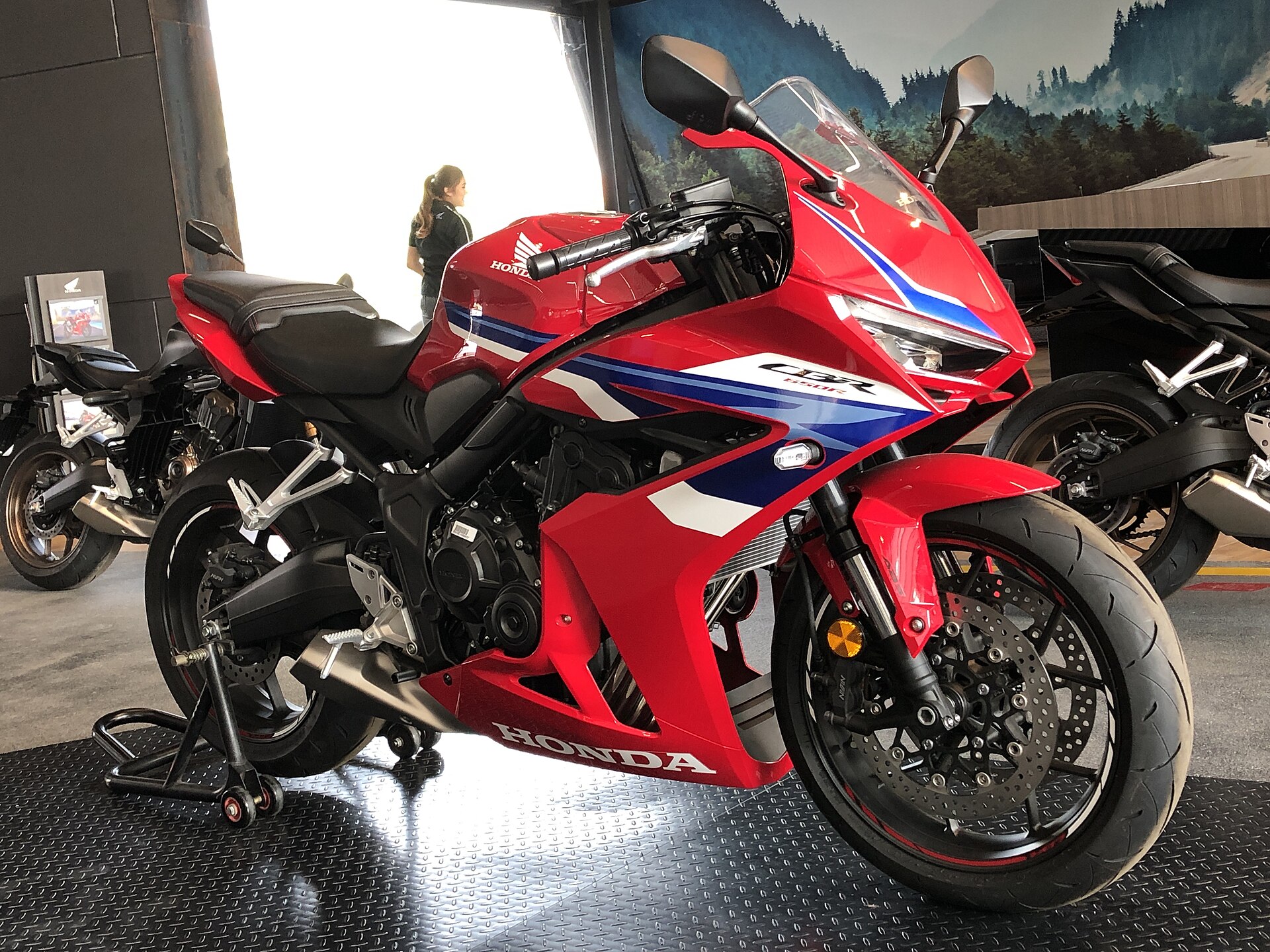
The Honda CBR650R is the poster child for how far A2 machinery has come. In restricted form it delivers a smooth, revvy inline-four soundtrack that no twin can match, wrapped in bodywork that looks every bit the proper sportbike rather than a compromised trainer. The optional E-Clutch removes stalling anxiety at junctions without turning the bike into an automatic, a genuine boon for a nervous newcomer negotiating city traffic for the first time. Crucially, when you upgrade to a full licence you simply have the restriction removed and unlock the bike’s full potential, so your first serious purchase does not become obsolete the moment your test is behind you.
The Adventure Everyman
If tarmac feels too narrow a horizon, the Royal Enfield Himalayan 450 is the most charming way into adventure riding on an A2 licence. Its 452cc single produces modest but perfectly judged power, an upright stance that builds confidence, and a price that leaves money for the gear and the trips that matter more than any spec sheet. It will never win a drag race, but it will happily carry you across a continent, and it teaches throttle control and momentum in a way that makes you a better rider for whatever comes next. There is a rare honesty to a bike that asks you to work with it rather than simply overwhelming every obstacle with power.