Every rider eventually reaches the same fork in the road: buy the machine engineered to erase distance, or buy the one engineered to ignore the road altogether. Heavyweight tourers like the Honda Gold Wing and BMW R1250RT are the first answer — rolling first-class cabins built to make a thousand-kilometre motorway day feel almost restful. Adventure-sport machines like the KTM 1290 Super Adventure S and Ducati DesertX are the second — tall, torque-heavy brutes that treat a rutted fire road as just another lane to devour.
I have swapped between both camps enough times to know the choice is rarely about which bike is better. Both categories cost broadly similar money, both will happily swallow a continent, and both will make you feel like the main character at every fuel stop. But they solve the problem of “big motorcycle” in almost opposite ways, and picking the wrong one is one of the more expensive mistakes a rider can make. This is a guide to the two philosophies, not a shootout between four specific models, so you can work out which one actually matches how — and where — you ride.
Two Very Different Answers to the Same Question
The heavyweight tourer’s entire design brief starts and ends with the rider’s comfort. Full fairings, deep adjustable screens and — on the Gold Wing — a seven-speed dual-clutch automatic gearbox with reverse all exist to strip friction out of covering ground. These are bikes built by engineers who assumed, correctly, that most owners spend the overwhelming majority of their mileage on smooth, sealed roads, often two-up, often for days at a time.
Adventure-sport bikes start from a different premise: that the destination might not have a proper road leading to it. Long-travel suspension, spoked wheels sized for genuine off-road rubber, and a chassis built to be stood on rather than sat in take priority, with touring comfort added as a welcome bonus rather than the founding principle. The DesertX’s 250mm of ground clearance and 21-inch front wheel exist for reasons the Gold Wing’s designers never had to think about.
Comfort on the Motorway: The Long, Straight Truth
Motorway comfort is where the heavyweight tourer simply does not lose. The Gold Wing’s 1833cc flat-six and the R1250RT’s 1254cc ShiftCam boxer both deliver huge, unhurried torque with almost no vibration transmitted to the rider, and both carry a fairing and screen engineered specifically to kill buffeting at sustained highway speed. Ride either one for six hours and you arrive refreshed rather than wrung out — that is the entire point of the exercise, and both machines nail it.
The adventure-sport pair can still cover big miles, but the experience is noticeably rawer. The KTM’s 1301cc V-twin and the Ducati’s 937cc Testastretta twin both have real character, and the KTM in particular offers genuinely strong radar-based adaptive cruise, but the taller, more upright stance catches more wind, the seats are firmer, and both engines transmit more of themselves through the bars and pegs. It is not unpleasant — some riders actively prefer feeling connected to the road — but it is a different species of comfort to the tourers’ isolation-tank plushness.
Weight tells the rest of the story at a standstill and in slow traffic. The Gold Wing’s 383kg and the R1250RT’s 279kg both demand respect at parking speed, and neither is a bike you casually muscle around a tight car park. The KTM at 249kg and the DesertX at 223kg are lighter and noticeably easier to paddle, filter and park, even though both still feel substantial once you are aboard and rolling.
Off the Tarmac and Down a Back Road
Take either heavyweight tourer off sealed tarmac and the conversation ends quickly. Cast wheels, road-biased tyres and modest ground clearance — 130mm on the Gold Wing, 145mm on the R1250RT — mean a gravel car park is about as adventurous as either bike is designed to get. These are exceptional machines on the surface they were built for, and honest about the surface they were not.
The KTM and the Ducati exist precisely to answer that gap. Spoked wheels, a 21-inch front hoop on the DesertX, 220mm to 250mm of ground clearance and long-travel WP or KYB suspension mean genuine gravel, hard-packed trail and washboard back road are all within reach, not just in the brochure but in reality. Dedicated off-road ride modes and adjustable traction control — and, on the DesertX, a chassis clearly influenced by rally-raid machinery — back that promise up with real substance.
It is worth being honest, though, that neither the Super Adventure S nor the DesertX is a lightweight enduro bike in disguise. At 249kg and 223kg respectively, both still ask for genuine skill and upper-body strength once the surface turns loose, steep or rutted, and they are no substitute for a proper dual-sport if serious trail riding is the actual goal rather than the occasional gravel detour. On a twisting, well-surfaced back road the picture flips again: the R1250RT’s Telelever front end and genuinely sporty chassis heritage let it carry real pace through sweepers despite its bulk, while the adventure-sport pair’s taller centre of gravity trades a little of that tarmac precision for the ability to shrug off a mid-corner pothole that would have a tourer’s rider gritting their teeth.
Luggage and Pillion Life: Living With It Day to Day
Pillion accommodation is arguably where the gap between these two categories is widest. The Gold Wing remains close to the best two-up motorcycle sold anywhere: a proper backrest, generous legroom and available heated seating front and rear turn a passenger into a genuinely happy passenger rather than a tolerant one. The R1250RT follows the same script with slightly less overall bulk but the same underlying philosophy — the pillion matters just as much as the rider.
Adventure-sport machines treat a passenger as a capability rather than a design pillar. Both the KTM and the Ducati can carry one, and both offer accessory seats and grab rails, but the narrower perch, taller reach to the pegs and reduced wind protection make a long two-up motorway stint noticeably less comfortable than on either tourer. If your riding regularly involves a partner and a proper touring itinerary, this single factor may decide the whole argument on its own.
- Integrated, weatherproof panniers and top box come standard on the heavyweight tourers; adventure-sport luggage is usually a well-designed aftermarket add-on
- A genuine two-up cockpit — backrest, armrests, heated seating options — on the Gold Wing and R1250RT that neither adventure-sport bike attempts to match
- Real off-road capability, spoked wheels and serious ground clearance on the KTM and DesertX that neither tourer can safely access
- A commanding, stand-and-see-over-traffic seating position and genuine filtering agility that only the adventure-sport pair can offer
- Strong adaptive cruise control now available across both categories, closing what used to be a clear touring-only advantage
Which Rider Actually Buys Which
The heavyweight tourer suits the rider whose year is built around long, mapped-out motorway trips, often two-up, who values plush comfort and minimal physical effort over versatility — the Gold Wing’s DCT automatic gearbox in particular removes the last bit of mechanical fuss from the equation. This is the rider who wants the destination to matter more than the journey’s texture, and who has the garage space and budget for a bike that rewards patience rather than adrenaline.
The adventure-sport buyer wants breadth. They may tour, but they also want the option of a gravel detour, a green lane, or simply a more commanding view over traffic on the daily commute. They are usually willing to trade some of the tourer’s plushness and pillion luxury for a bike that can genuinely do more things, even if it does each of them slightly less lavishly than a dedicated specialist would.
For decades the big boxer GS has been the default answer to a simple question: if you could own only one motorcycle to ride anywhere on earth, what would it be? The R 1300 GS does not merely defend that title — it moves the goalposts. BMW has thrown out the old 1250 architecture, grown the engine, shrunk the waistline and reimagined the electronics, and the sum is genuinely transformative.
Swing a leg over and the first surprise is how compact it feels for such a capable long-hauler. The new frame is narrower, the mass sits lower, and a bike that once demanded respect at walking pace now feels almost eager to be flicked around. This is a GS that has finally learned to hide its bulk.
A bigger boxer with better manners
The air- and liquid-cooled flat-twin now displaces 1300 cc and produces 145 hp with a muscular 149 Nm of torque, and the way it deploys that grunt is the GS masterstroke. There is a wall of drive from just above idle, so overtakes require nothing more than a roll of the wrist, and the characterful boxer thrum still shakes the mirrors at a standstill before smoothing out on the move.
It is not a screamer and does not want to be. Peak power lands at a relaxed 7,750 rpm, and the engine is happiest short-shifting and surfing that fat wave of torque across a mountain range. Fully loaded, two-up, with panniers stuffed, it barely notices the difference — which is precisely the point of a machine built to swallow continents.
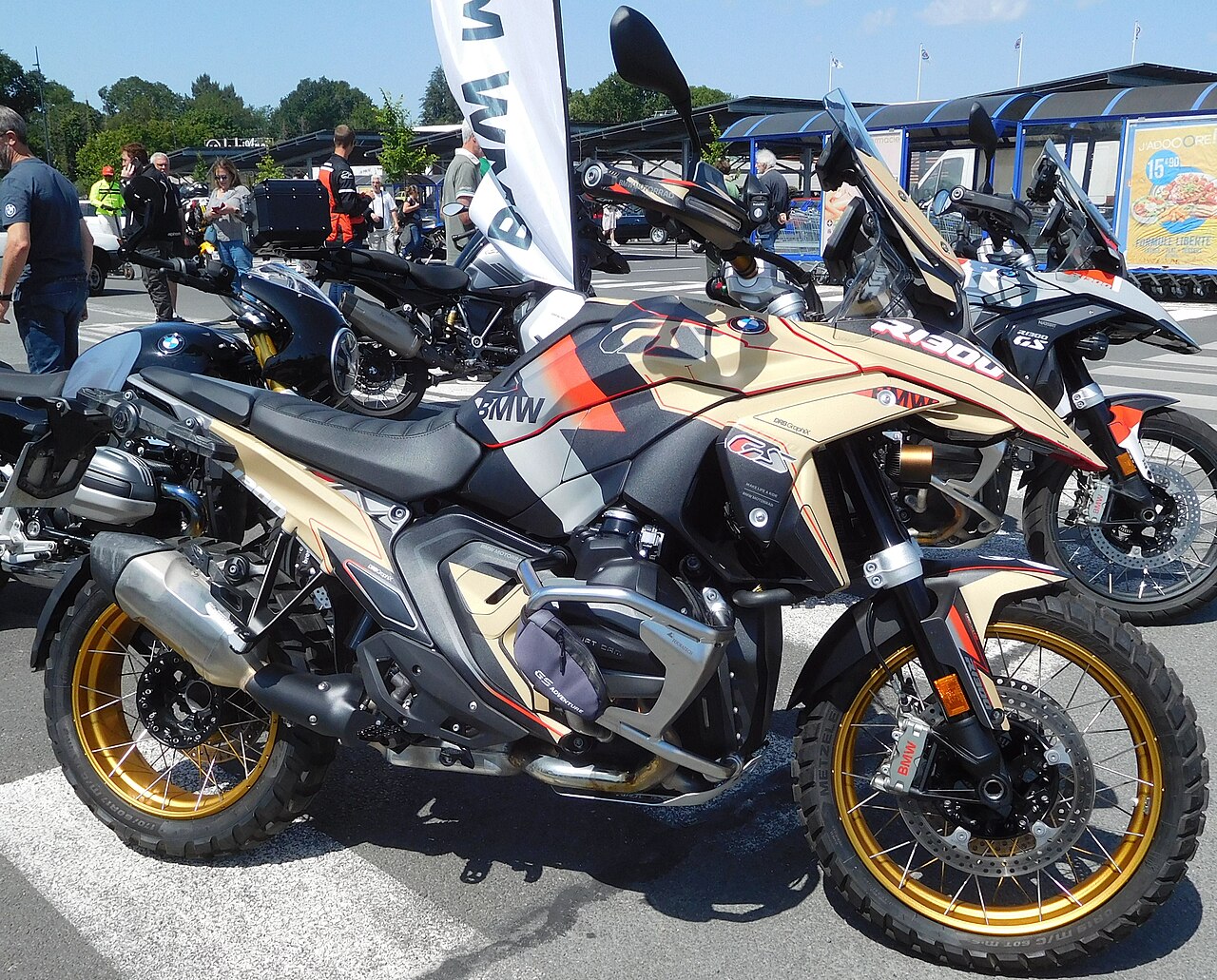
Ask ten riders to name the best all-round motorcycle on sale and most of them will say the same three letters: GS. Ask ten owners who actually live with one on wet, congested, pothole-scarred British roads what it is actually like day to day, and you get a far more complicated answer. I have spent the best part of a year running a BMW R1300GS as my only bike through a UK winter, a UK summer and every kind of traffic Britain can throw at a motorcycle, and I have some things to say that the brochure conveniently leaves out.
None of it changes the fact that this is a phenomenal motorcycle. That is precisely what makes it worth talking about honestly. The GS is sold, and often reviewed, as the machine that does everything — comfortable enough for Cornwall to the Cairngorms in a day, tech-laden enough to feel like the future, and still, allegedly, an off-road adventurer at heart. Live with one daily in the UK, though, and three uncomfortable truths surface fast: it is heavy, it is expensive to keep fed with tyres, and BMW’s idea of a service bill is not quite the same as yours or mine. None of that makes it a bad bike. It makes it a bike you need to go into with your eyes open.
The Weight You Feel At Every Set Of Lights
On paper, 237 kg kerb weight doesn’t sound especially alarming — plenty of tourers and cruisers carry more. On a UK high street at 8:40 on a Tuesday morning, hemmed in by white vans and roadworks, it feels like a great deal more than the number on the spec sheet suggests. The GS carries its mass high and a long way from the ground, and while BMW’s excellent Telelever front end and the optional adaptive ride height do a genuinely impressive job of disguising that weight once you’re rolling, none of that clever engineering helps much at a dead stop on a cambered junction with a delivery driver leaning on his horn behind you. The seat drops as you slow and rises again once you’re moving, which is a genuinely clever party trick for shorter riders — it just does not make the bike any lighter to actually manhandle.
Filtering is where the compromise really bites. Britain, unlike much of Europe, actually lets you filter through queued traffic, and it is one of the great everyday joys of commuting by bike here. Do it on a GS for any length of time and your shoulders and forearms will know about it by Friday. The bars are wide, the mirrors stick out further than you would like between two lines of wing mirrors, and hustling 237 kg through a gap that a Yamaha MT-07 rider barely notices requires a level of commitment, and a level of low-speed clutch control, that plenty of riders never build up simply because they never need to on anything smaller. It is not badly engineered; it is simply engineered for motorways, not Camden on a Friday evening.
Every few years the adventure-bike class convinces itself that the answer to “go anywhere” is a bigger engine, another screen, and one more menu of ride modes than anyone will ever cycle through in the dirt. Yamaha looked at that arms race, shrugged, and kept building the Ténéré 700 almost exactly as it always has. In 2026, that stubbornness looks less like nostalgia and more like the smartest engineering decision in the segment.
This is a bike that still measures success in kilos and Newton-metres rather than menus and megabytes, and against a field of rivals that have grown heavier, pricier and more electronically dense with every generation, that restraint has aged brilliantly. We got back on the T7 to see whether the formula still holds up in 2026 — and whether simple is still a compliment once you have ridden everything else in the class.
What actually changed for 2026
The honest answer is: almost nothing, and Yamaha would probably take that as a compliment. There is no bigger engine, no new dash, no sudden electronics overhaul. What you get is a fresh colourway or two and some detail running changes under the skin, riding on the same basic recipe Yamaha nailed at launch and has had the discipline to leave alone ever since.
That is not laziness, it is confidence. Where rivals feel obligated to reinvent themselves every couple of years to justify a new brochure, Yamaha has let the World Raid and Extreme variants soak up the extra kit — bigger tanks, crash protection, rally-spec suspension — while the standard Ténéré 700 stays the accessible, unfussy entry point into the family. For 2026 it remains exactly what made it a cult hit in the first place: a proper rally bike you can actually afford and actually live with.
The CP2 twin: still the whole point
Strip away the badge and the Ténéré’s 689 cc CP2 parallel-twin is the reason none of the rest matters much. It makes a modest-on-paper 72 hp, but the figure that actually shapes the riding experience is 68 Nm of torque arriving at just 6,500 rpm, and Yamaha’s crossplane crank gives it a lumpy, characterful pulse that feels closer to a big single than a conventional twin.
On a technical trail that translates into something rarer than horsepower: trust. You can meter the throttle over rocks and roots without the engine snatching or stalling, and there is enough low-down shove to loft the front over a ledge without slipping the clutch to death. It will see 190 km/h if you are patient about it, but that has never been the point — this engine’s real talent is making difficult terrain feel unhurried, and it has built a reputation for shrugging off neglect that far more complex rival engines simply cannot match.
A rally chassis that still means it
The chassis is where the Ténéré 700 quietly embarrasses bikes costing twice as much. A slim, 21-inch-front tubular-steel frame, a fully adjustable 43 mm upside-down fork and a rally-honed riding position add up to a bike that feels like it was actually designed by people who race in the desert, rather than one dressed up to look like it was.
At 204 kg kerb weight, it is meaningfully lighter than most of the class, and that number matters more off-road than any spec sheet suggests. Picking the bike up after a low-speed tip-over, muscling it through a rutted climb, or simply standing on the pegs for hours at a time is a different experience entirely when there is not an extra 20 or 30 kg to manhandle — and it still holds a fast road line composed enough for the motorway blast between trailheads.
Where the simplicity costs you
None of this comes free, and Yamaha has never pretended otherwise. There is no cruise control on the standard bike, the electronics package amounts to switchable ABS and not much else, and the 16-litre tank is stingy next to adventure-touring rivals built around three-figure daily distances. Riders chasing radar-guided cruise control or cornering traction control should look elsewhere; the T7 simply does not offer it.
The seat is on the firm, tall side too, at 875 mm, and taller riders will get on with it far more easily than shorter ones. None of these are surprises to anyone who has followed the bike since launch, but they are worth stating plainly: this is a machine that asks you to want less kit in exchange for less weight, less cost and less to go wrong.
The Ténéré 700 has never tried to win the spec sheet. It has spent nearly a decade quietly winning the argument that matters more — the one about what an adventure bike is actually for.— Diego Marroquín
Who it's for
- Riders who want to properly explore off-road, not just look the part
- Anyone who values low weight and mechanical simplicity over gadgets
- Buyers priced out of premium adventure bikes who refuse to sacrifice real capability
- Taller riders comfortable with a tall, purposeful seat height
- Owners who would rather service a simple twin themselves than pay a dealer for a complex one
Everyone selling you an “adventure” motorcycle right now uses the same photograph: red dirt, blue sky, a bike leaned against nothing in particular while the sun does the marketing for them. It is a beautiful lie, and the Australian outback has spent years quietly exposing it. Corrugations that never end, heat that climbs past 40°C by mid-morning, fuel stops separated by distances that make a European touring map look like a joke — this is where “go-anywhere” branding gets tested against something considerably less forgiving than a press launch loop through Spain.
I have ridden most of the current adventure-bike crop across genuinely remote Australian tracks, not the groomed fire trails used for launch photography, and the results split the class cleanly in two. Some of the most hyped, most road-brochure-glamorous machines on sale today are, underneath the rally graphics, road bikes wearing a costume. Others — often cheaper, always simpler — just get on with it. This is my attempt to separate the two, without pretending any of it is a mystery once you have actually broken down four hundred kilometres from the nearest servo.
The Corrugation Problem Nobody Puts in the Brochure
Corrugations are the great leveller. A washboard track vibrates a motorcycle at a frequency that has nothing to do with how expensive it is, and everything to do with how it was engineered. Fasteners work loose that a torque wrench swore would never move. Plastic bodywork panels flex against their mounts thousands of times an hour until the tabs holding them simply give up. Screens crack at the mount. None of this shows up on a spec sheet, and none of it happens on the smooth gravel car park where most adventure bikes get their glossy first photos taken.
This is where the heavier, more heavily bodied machines start to suffer. The KTM 1290 Super Adventure S is a phenomenal piece of engineering on a fast, flowing road, but at 249 kg kerb weight with a tall, top-heavy stance at a standstill, it is not a bike that shrugs off two hundred kilometres of washboard with anything like the composure it shows on tarmac. Its semi-active suspension and road-biased tyres are tuned for continent-crushing at speed, not for absorbing endless small hits at sixty kays an hour with a laden pannier rack shaking everything behind the headstock loose. Compare that to the Yamaha Ténéré 700, which carries far less mass, fewer electronics to rattle, and a chassis tuned from day one around exactly this kind of abuse. It simply does not care.
Fuel Range: The Spec That Actually Decides Whether You Get There
On a road bike, fuel range is a mild inconvenience. In the outback, it is the entire trip-planning exercise. Stretches of two or three hundred kilometres between fuel stops are ordinary once you get past the black-soil plains, and a bike that quietly burns through its tank faster than advertised — because you have been fighting a headwind and holding higher revs through sand — is not a footnote. It is the difference between arriving and pushing a very heavy motorcycle the last forty kilometres yourself.
This is exactly where the badge-first buyers get caught out. The BMW F900GS wears the GS name that built BMW’s entire adventure reputation, and it is a genuinely capable, well-sorted trail bike in isolation. But its own spec sheet gives the game away: a 14.5-litre tank, smaller than almost anything else claiming this kind of ambition. The Ducati DesertX is arguably the more talented off-road chassis of the two, with proper long-travel suspension and the correct wheel sizes, yet even Ducati concedes a short standard fuel range as one of its defining compromises. Genuine outback tools do not make you apologise for the tank.
Every generation gets one adventure-bike argument that actually matters, and right now it’s this one. Forget the six-figure boxer-twin flagships with their radar cruise control and semi-active suspension — the real battleground for genuine, everyday adventure riding is happening at the affordable end of the class, and it comes down to two bikes: the Royal Enfield Himalayan 450 and the KTM 390 Adventure. Both are small-capacity, single-cylinder machines built to be thrashed on gravel, ridden to work on Monday, and loaded up for a three-week trip in October. Only one of them is right for you.
I’ve spent real miles on both — pavement, fire roads, and the kind of rutted, rock-strewn trail that makes you question your line choice and your life choices simultaneously. What struck me is how differently these two machines interpret the same brief. The Himalayan 450 is built by a company that has spent decades sending riders across actual Himalayan passes and racing works bikes through rally-raid gravel. The 390 Adventure is built by a company that has spent decades winning Dakar outright with bigger bikes, then applying its sharpest road-going engineering to a small ADV that would rather carve a canyon than crawl a riverbed. Same category, wildly different soul.
Two singles, two very different personalities
Royal Enfield’s Sherpa 450 is a 452cc, liquid-cooled single that makes a claimed 40 hp at 8,000 rpm and roughly 40 Nm of torque lower in the rev range. On paper it sounds unremarkable next to the KTM. In practice it’s a deliberately relaxed, long-legged engine tuned for tractability over drama — the kind of motor that lets you feed in throttle over loose rock without the rear end stepping out unexpectedly. It doesn’t rev with any enthusiasm past seven grand, and it doesn’t need to.
KTM’s LC4c — the 399cc single that also powers the 390 Duke — is a punchier, more highly strung unit, claiming around 45 hp at 8,500 rpm with slightly less outright torque than the Sherpa but delivered with far more urgency. It likes to be worked. Roll it on hard out of a corner and it responds with a keenness the Himalayan simply doesn’t have, and that single extra gear’s worth of eagerness defines almost everything else about how these two bikes feel on the road. The KTM feels like a sportbike engine wearing hiking boots; the Royal Enfield feels like a diesel generator that happens to be genuinely likeable.
Off the beaten path: who's the real adventurer
This is where the Himalayan 450 earns its name. Long-travel Showa suspension, a proper 21-inch front wheel, and a chassis tuned first for the dirt and second for the tarmac make it feel unflappable once the road turns to washboard or worse. Royal Enfield’s rally programme — which genuinely campaigns Himalayan-based machines in rough-country events — isn’t just a marketing footnote; it shows up in how forgiving this bike is when you get a line wrong. The low-end torque delivery does the hard work for you on loose surfaces, and the whole package feels like it was engineered by people who actually expect you to drop it.
The Africa Twin carries a name soaked in Paris–Dakar history, and unlike many modern adventure bikes it actually lives up to the promise once the tarmac runs out. Where rivals have grown ever more road-biased and ever heavier with luxury kit, Honda has kept its big twin focused on the original mission: crossing continents and conquering dirt with a mechanical dependability you can genuinely stake a trip on.
That is the Africa Twin’s quiet superpower. It may not top the class for outright horsepower or the longest gadget list, but it offers a rare combination of real off-road credibility and legendary Honda reliability. For the rider planning to ride somewhere remote and get home again, that balance matters more than any spec-sheet bragging right.
A parallel-twin built for the long game
The 1084 cc parallel-twin produces a modest-sounding 101 hp, but the figure that matters is the 105 Nm of torque delivered low and early. This is an engine tuned for tractability, chugging cleanly from just above idle so you can pick your way over rocks and ruts without slipping the clutch, then pulling with satisfying muscle when you open it up on a fast gravel road or a motorway on-ramp.
The 270-degree firing order hands it a pleasant V-twin-like thrum and a broad, usable spread of grunt rather than a peaky top-end rush. It will crack a relaxed 200 km/h and sip fuel at around 21 km/l on a steady cruise, and crucially it never feels intimidating — the power is there when you want it and utterly manageable when you do not.
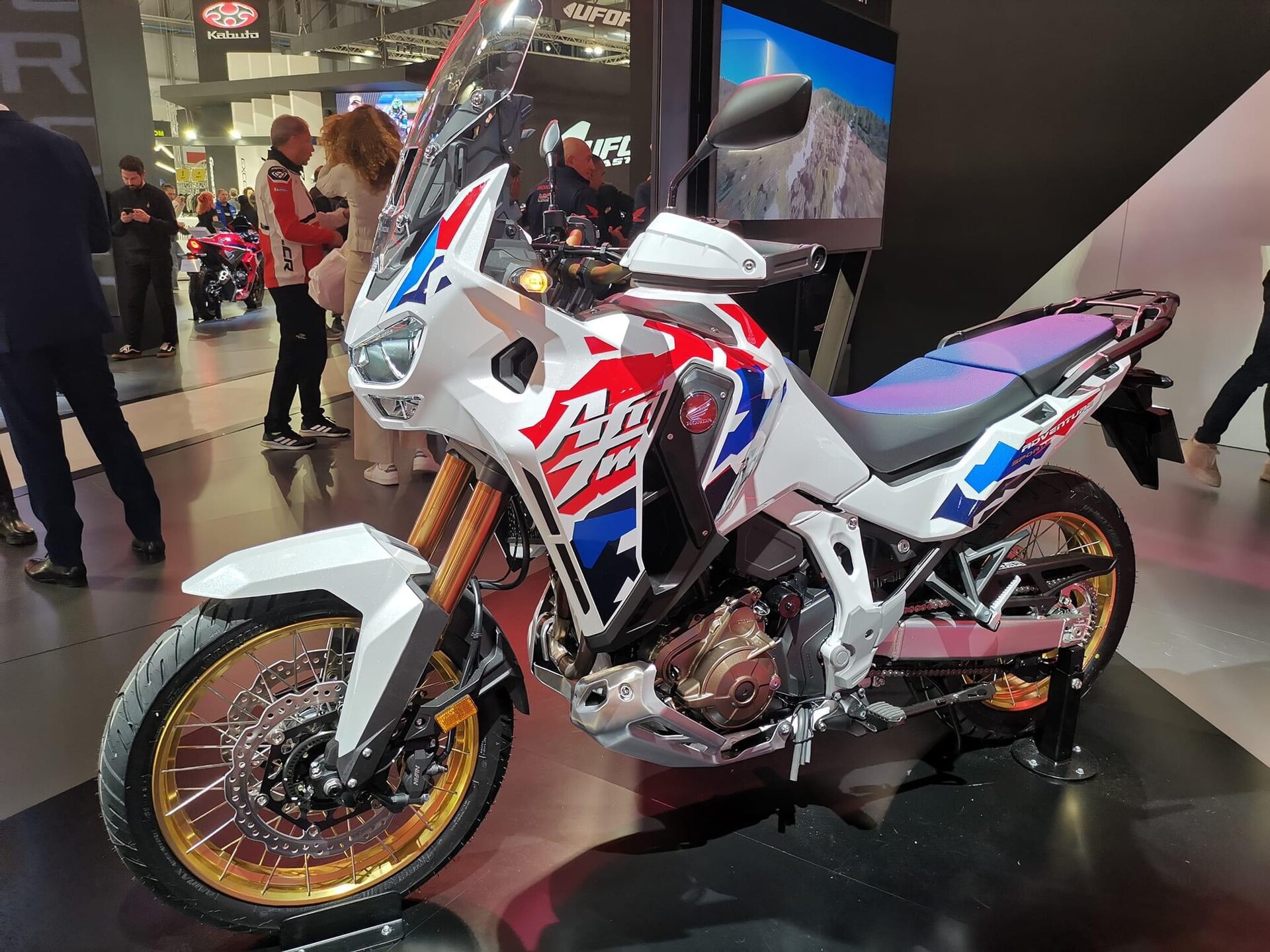
Adventure motorcycling has quietly become an expensive habit, with flagship machines now costing as much as a small car and weighing nearly as much too. The Himalayan 450 is Royal Enfield’s cheerful rebuttal. Here is a genuinely capable adventure bike, built to tackle the world’s roughest roads, that costs less than the accessory catalogue of some of its rivals — and it is all the more likeable for it.
This is not the crude, underpowered Himalayan of old, either. The 450 is a comprehensive reinvention, built around an all-new engine and chassis, and it transforms the bike from a charming budget curio into a serious, modern proposition. For new adventurers and hard-up dreamers alike, it changes the conversation entirely.
The Sherpa engine: modest but eager
The new liquid-cooled 452 cc single, named Sherpa, is the making of this bike. Producing a genuine 40 hp and 40 Nm, it is willing, flexible and far more refined than the old air-cooled lump it replaces. It pulls cleanly from low revs — ideal for picking a line up a rocky climb — and revs out with real enthusiasm when you want to make progress on a flowing back road.
This is not a fast motorcycle in outright terms, cracking 100 km/h in a leisurely 6.9 seconds and topping out around 150 km/h. There is some vibration high in the rev range, and sustained motorway cruising is not its forte. But for the winding, unhurried, exploratory riding this bike was built for, the Sherpa has exactly the right character and just enough power.
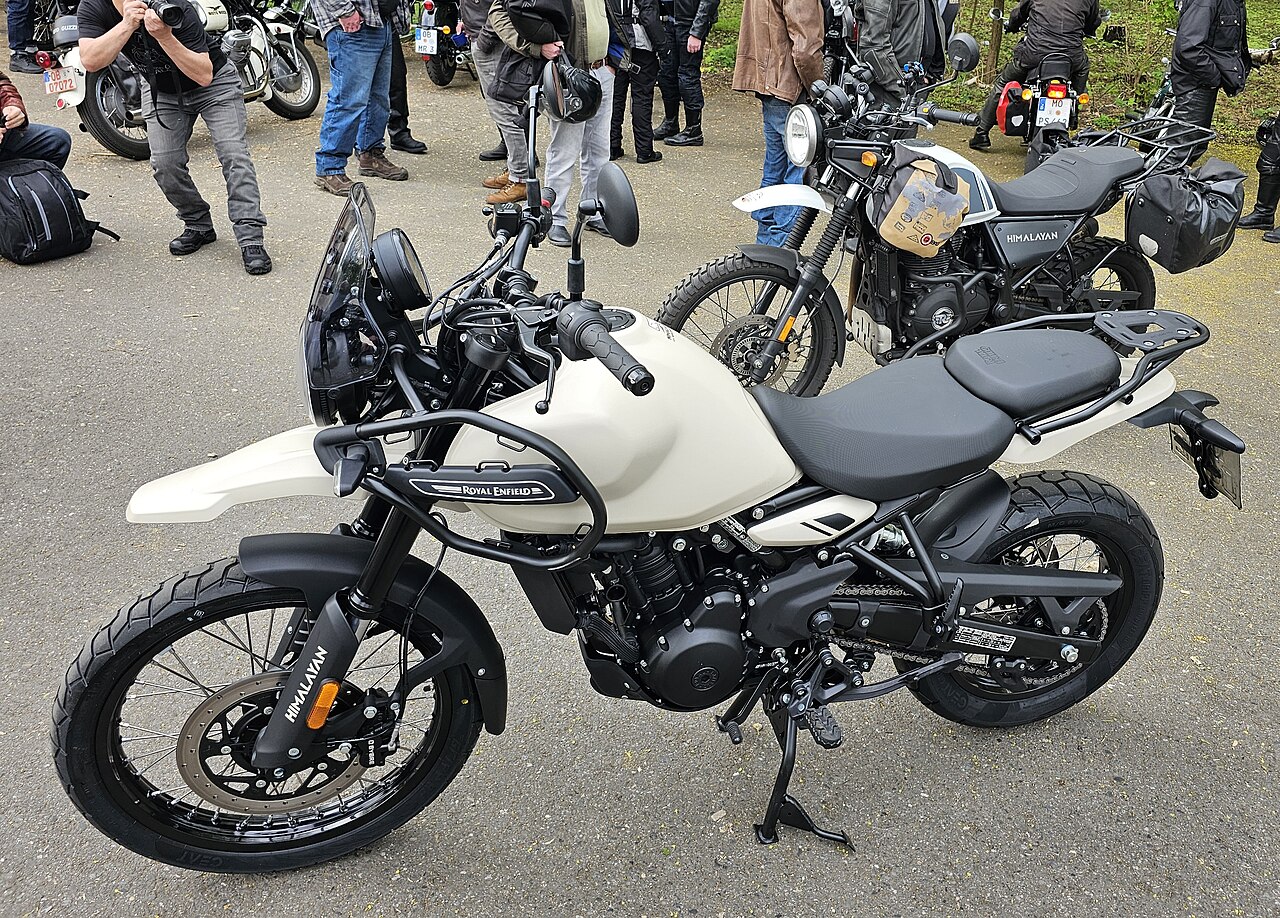
The premise of the Multistrada V4 sounds impossible: take the ferocious performance of a Ducati superbike, wrap it in the comfort and range of a long-distance tourer, and add just enough adventure-bike stance to tackle a gravel road. Somehow, improbably, Ducati has pulled it off. This is a machine that will devastate a mountain pass in the morning and cosset you across a country by nightfall.
It is the ultimate do-everything motorcycle for riders who refuse to compromise on pace, and it represents a genuine leap over the V-twin Multistradas that came before. The switch to a V4 changed the bike’s entire character — smoother, faster, and, crucially, far easier to live with day to day.
The Granturismo V4: pace and patience
The 1158 cc V4 Granturismo is a marvel of dual personality. It produces a thumping 170 hp and 125 Nm, enough to fire the Multistrada to 100 km/h in around 3.2 seconds and on to a 250 km/h top speed, with a spine-tingling V4 wail when you chase the redline. This is genuine superbike performance, delivered from an upright and comfortable seat.
Yet the same engine is a model of civility when you want it to be, pulling smoothly from low revs and cruising with unruffled ease. The masterstroke is its maintenance: Ducati quotes an astonishing 60,000 km valve-check interval, banishing the costly, frequent servicing that once haunted its high-performance machines and making the V4 a genuinely sensible long-distance proposition.
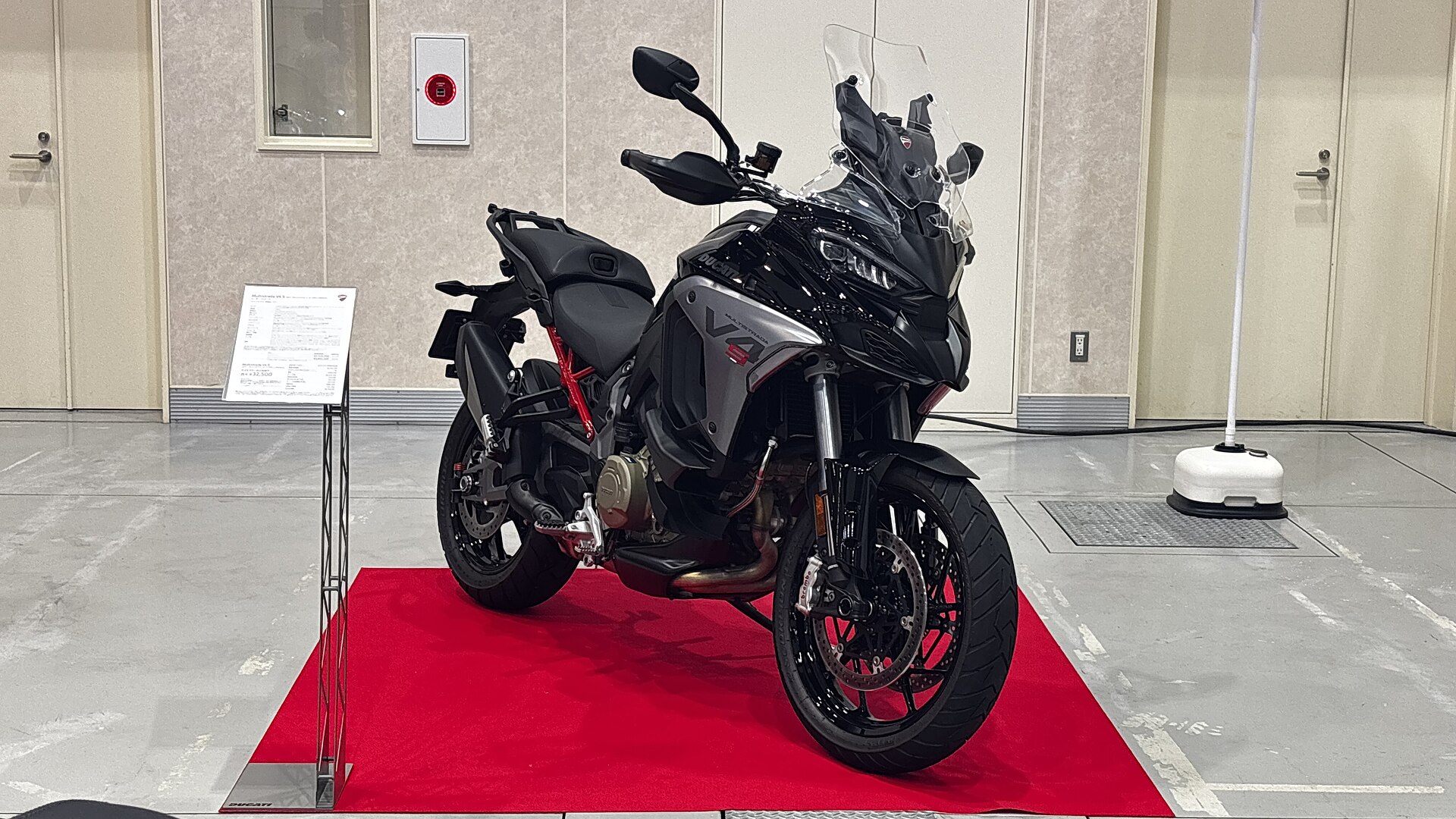
For decades the big adventure bike has been the Swiss Army knife of motorcycling — comfortable enough for continents, capable enough for gravel, fast enough to embarrass sports tourers. Two machines dominate the conversation. The BMW R 1300 GS is the reigning class benchmark, a technological tour de force that every rival is measured against. The Honda Africa Twin is the honest adventurer’s hero, less flashy but blessed with genuine dirt credibility and a price that makes the BMW blush.
This is not merely a spec-sheet duel. It is a clash of philosophies: German maximalism against Japanese pragmatism, gadgetry against grit. We took both across tarmac, gravel and rutted trail, loaded and unloaded, to find precisely where each one earns its keep and where its priorities lie.
Engine and performance
BMW’s all-new 1,300cc boxer twin is a monster in the friendliest way. With 145 hp and a colossal 149 Nm of torque, it hauls the GS forward with a locomotive shove that makes overtakes trivial and passengers grin. It is smoother and more urgent than any GS before it, with an addictive wave of low-down grunt. Honda’s 1,084cc parallel twin plays a quieter tune — 101 hp and 105 Nm — but its low, tractable delivery and 21-inch front wheel make it feel more natural when the surface turns loose and slippery.
On the road the BMW is simply quicker everywhere, and its optional Automated Shift Assistant lets you ride clutchless if you wish, blurring the line between manual and automatic. The Africa Twin, particularly with Honda’s superb DCT dual-clutch automatic, is the more relaxed companion, trading outright pace for a friendly, unflappable manner that suits long, dusty days far from a workshop. Neither engine will ever leave you wanting on a public road.
Chassis and off-road ability
The GS uses BMW’s evolved Telelever front end, which now offers adaptive ride-height control that lowers the seat at a stop and rises for clearance on the move — witchcraft that shrinks a heavy bike around you and makes a big machine feel manageable at the lights. It handles like something 50 kg lighter than it is. Yet the Africa Twin, with its longer travel, spoked wheels and genuine 21-inch front, remains the more confident tool once the tarmac ends and the ruts begin.