Magazine / Guides
Adventure-Touring Buyer’s Guide: Big GS or Nimble Middleweight?
From continent-crushing flagships to featherweight trail bikes, the adventure class has never been broader — this guide helps you match capacity, weight and budget to the roads you will genuinely ride.
· Dec 11, 2025
The adventure-touring bike has become the do-everything motorcycle of our age: comfortable enough for a thousand-kilometre motorway day, capable enough to tackle a gravel pass, and practical enough to commute on come Monday. That versatility is exactly why choosing one is so hard. The category now stretches from towering 1300cc flagships to friendly 450cc trail bikes, and the right choice depends far more on the roads you actually ride than on the ones you dream about.
The most important question is not which bike is best, but which bike is best for you. Weight, seat height and power all rise together as you climb the range, and a machine that feels majestic on a fast highway can feel like a burden when you drop it on a remote trail. Let us break the class into its three natural tiers and be honest about what each one asks of its rider.
What Adventure-Touring Really Means
An adventure bike blends long-travel suspension, an upright riding position, a large fuel tank and wind protection into one tall, commanding package. Some are firmly road-biased, wearing cast wheels and touring tyres; others are genuine dirt-capable machines with spoked rims, knobbly-friendly tyres and serious ground clearance. Deciding where on that road-to-dirt spectrum you sit is the single biggest filter you can apply before you shortlist a single model.
Wheels are the quickest clue to a bike’s intent. Cast alloy wheels and road-biased rubber signal a machine happiest on tarmac, while spoked wheels, a larger front rim and knobbly-compatible tyres mark out a serious off-road tool. Ground clearance, suspension travel and the presence of a metal bash plate tell the same story. Decide honestly how much dirt you will really ride, because a road-biased adventure bike is far easier to live with day to day.
The Big-Bore Flagship
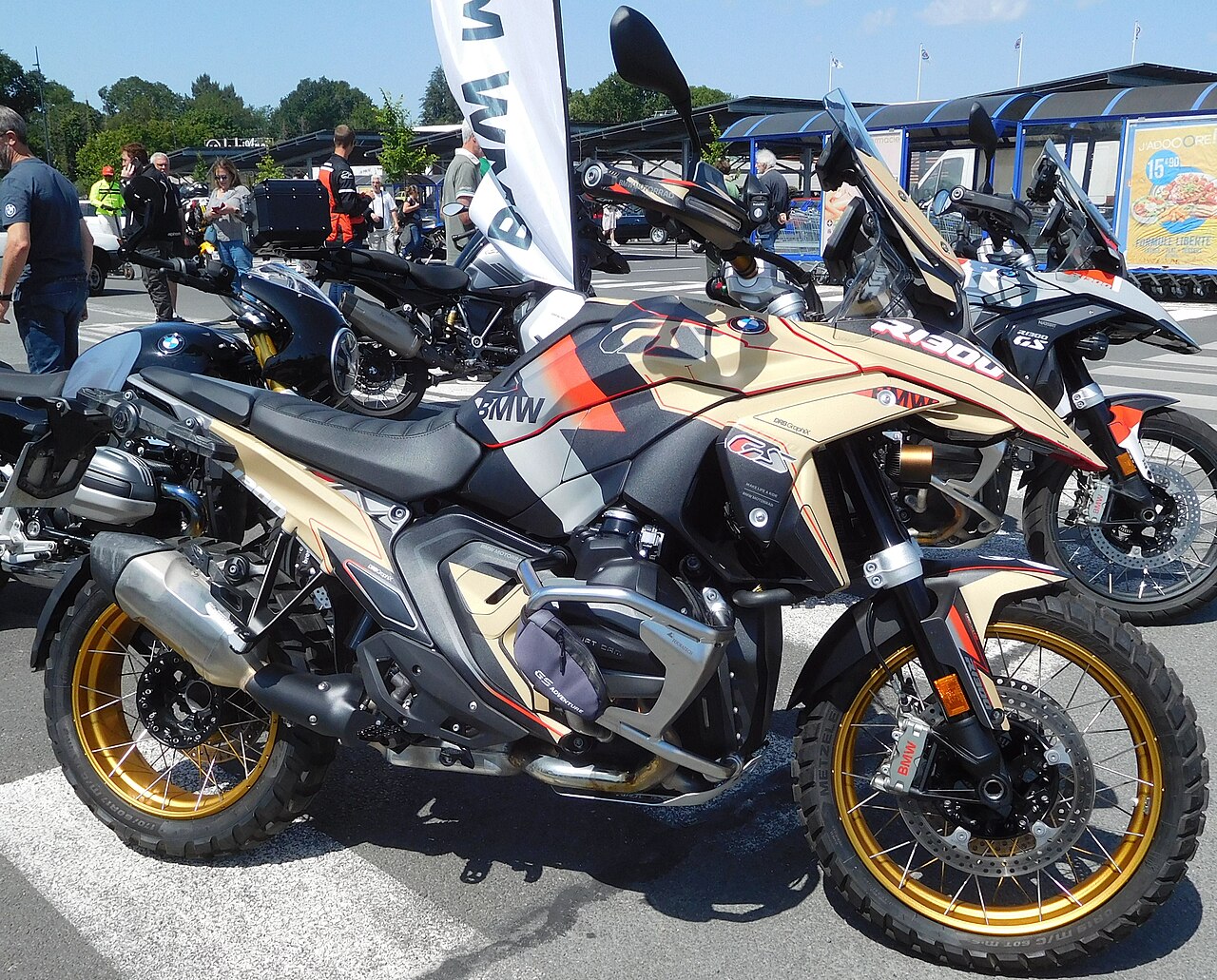
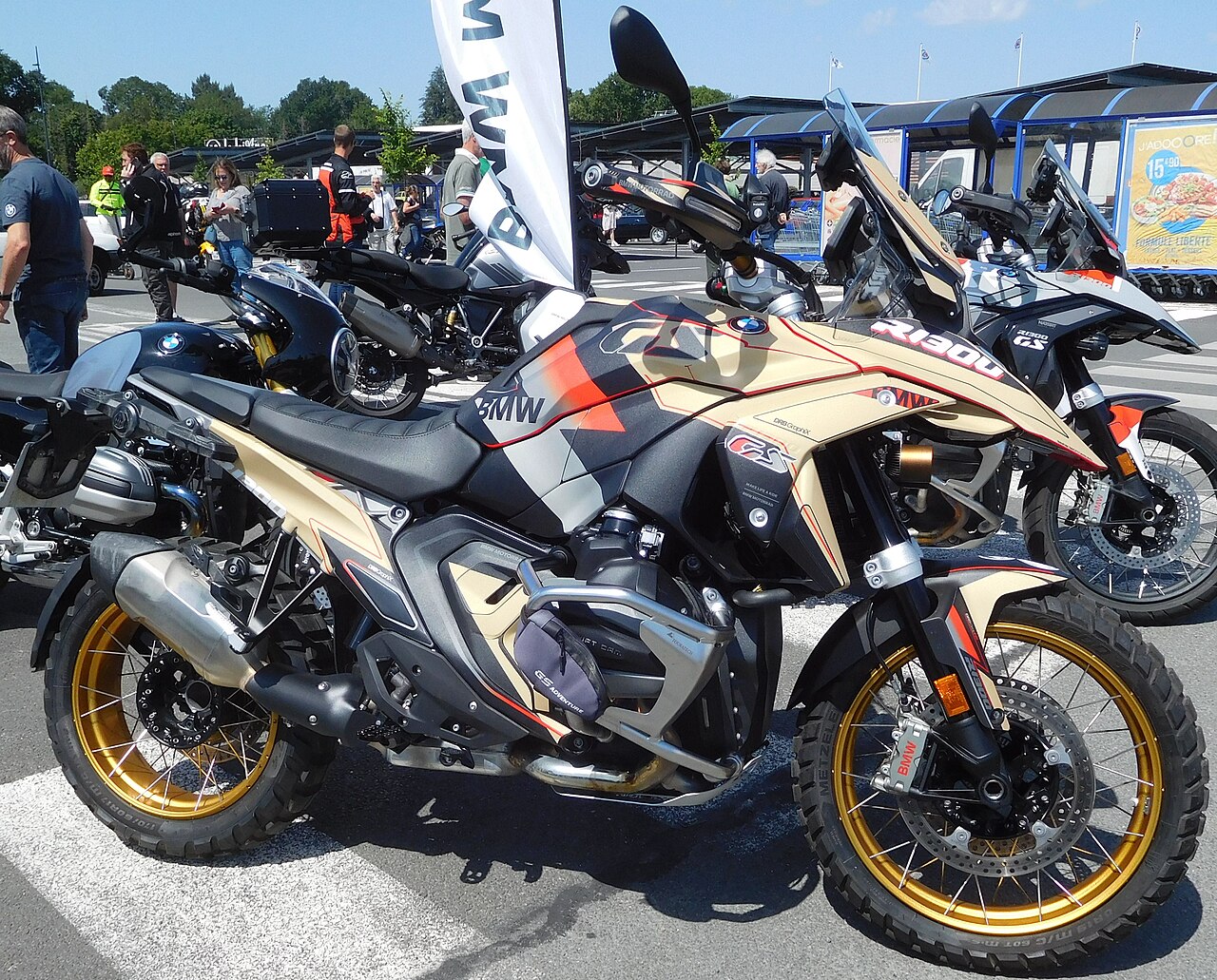
The BMW R 1300 GS is the definitive big adventure bike, and it earns its reputation. With around 145 horsepower from its boxer twin, semi-active suspension and radar-assisted rider aids, it crushes distance like nothing else and remains astonishingly agile for its size. But make no mistake: at roughly 237kg fully fuelled it demands respect on loose surfaces and a confident rider to pick it up. Buy big only if most of your miles are tarmac and two-up touring, not tight singletrack.
That capability comes at a price beyond the sticker, though. Big adventure bikes are tall, top-heavy at a standstill and costly to insure and service, and their sophisticated electronics reward a rider who takes time to learn them. If you tour long distances, ride two-up and rarely leave the tarmac, none of that will trouble you and the GS will feel like a magic carpet. Just be honest about whether you will ever use its off-road potential, because most owners never truly do.
The Middleweight Sweet Spot
For a huge number of riders the middleweight is the honest answer. The Triumph Tiger 900 Rally Pro typifies it: a characterful 888cc triple with roughly 108 horsepower, long-travel suspension, spoked wheels and a manageable footprint. It carries luggage and a passenger happily, yet it is light enough that a slip on gravel does not end the day. If you want one bike for commuting, touring and the occasional green lane, this tier deserves the top of your list.
Middleweights also make sound financial sense. They sip fuel, wear tyres and brakes more slowly than the big flagships, and their lower mass means a slip on a loose surface is an inconvenience rather than a full recovery operation. For riders stepping up from their first bike, or anyone who wants genuine versatility without the intimidation, this is the tier that quietly does everything asked of it and asks remarkably little in return.
The Lightweight and Value End
At the accessible end sits the Royal Enfield Himalayan 450, and its charm is real. A single-cylinder engine making around 40 horsepower will never win a motorway drag race, but at roughly 196kg with an approachable seat it is confidence itself off-road, gentle on a learner’s nerves and kind to a tight budget. For new adventurers, shorter riders or anyone whose adventures are more dirt-track than autobahn, less genuinely is more.
There is a purity to the lightweight experience that heavier bikes cannot match. With less mass to manage you learn faster, explore more confidently and worry far less about dropping the bike miles from anywhere. The trade-off is modest motorway pace and a smaller luggage capacity, so a lightweight suits shorter trips, technical terrain and riders who value simplicity. For many, that honest, unintimidating character turns out to be exactly the point of adventure riding.