Magazine / Opinion
The Popular Bikes That Fail the Outback Test — And the Ones That Don’t
Corrugations, forty-degree heat and three hundred kilometres between fuel stops have a habit of separating adventure bikes that are actually built for the job from ones merely dressed for it — and after testing most of the current crop out here, I have strong opinions about which is which.
· May 10, 2026
Everyone selling you an “adventure” motorcycle right now uses the same photograph: red dirt, blue sky, a bike leaned against nothing in particular while the sun does the marketing for them. It is a beautiful lie, and the Australian outback has spent years quietly exposing it. Corrugations that never end, heat that climbs past 40°C by mid-morning, fuel stops separated by distances that make a European touring map look like a joke — this is where “go-anywhere” branding gets tested against something considerably less forgiving than a press launch loop through Spain.
I have ridden most of the current adventure-bike crop across genuinely remote Australian tracks, not the groomed fire trails used for launch photography, and the results split the class cleanly in two. Some of the most hyped, most road-brochure-glamorous machines on sale today are, underneath the rally graphics, road bikes wearing a costume. Others — often cheaper, always simpler — just get on with it. This is my attempt to separate the two, without pretending any of it is a mystery once you have actually broken down four hundred kilometres from the nearest servo.
The Corrugation Problem Nobody Puts in the Brochure
Corrugations are the great leveller. A washboard track vibrates a motorcycle at a frequency that has nothing to do with how expensive it is, and everything to do with how it was engineered. Fasteners work loose that a torque wrench swore would never move. Plastic bodywork panels flex against their mounts thousands of times an hour until the tabs holding them simply give up. Screens crack at the mount. None of this shows up on a spec sheet, and none of it happens on the smooth gravel car park where most adventure bikes get their glossy first photos taken.
This is where the heavier, more heavily bodied machines start to suffer. The KTM 1290 Super Adventure S is a phenomenal piece of engineering on a fast, flowing road, but at 249 kg kerb weight with a tall, top-heavy stance at a standstill, it is not a bike that shrugs off two hundred kilometres of washboard with anything like the composure it shows on tarmac. Its semi-active suspension and road-biased tyres are tuned for continent-crushing at speed, not for absorbing endless small hits at sixty kays an hour with a laden pannier rack shaking everything behind the headstock loose. Compare that to the Yamaha Ténéré 700, which carries far less mass, fewer electronics to rattle, and a chassis tuned from day one around exactly this kind of abuse. It simply does not care.
Fuel Range: The Spec That Actually Decides Whether You Get There
On a road bike, fuel range is a mild inconvenience. In the outback, it is the entire trip-planning exercise. Stretches of two or three hundred kilometres between fuel stops are ordinary once you get past the black-soil plains, and a bike that quietly burns through its tank faster than advertised — because you have been fighting a headwind and holding higher revs through sand — is not a footnote. It is the difference between arriving and pushing a very heavy motorcycle the last forty kilometres yourself.
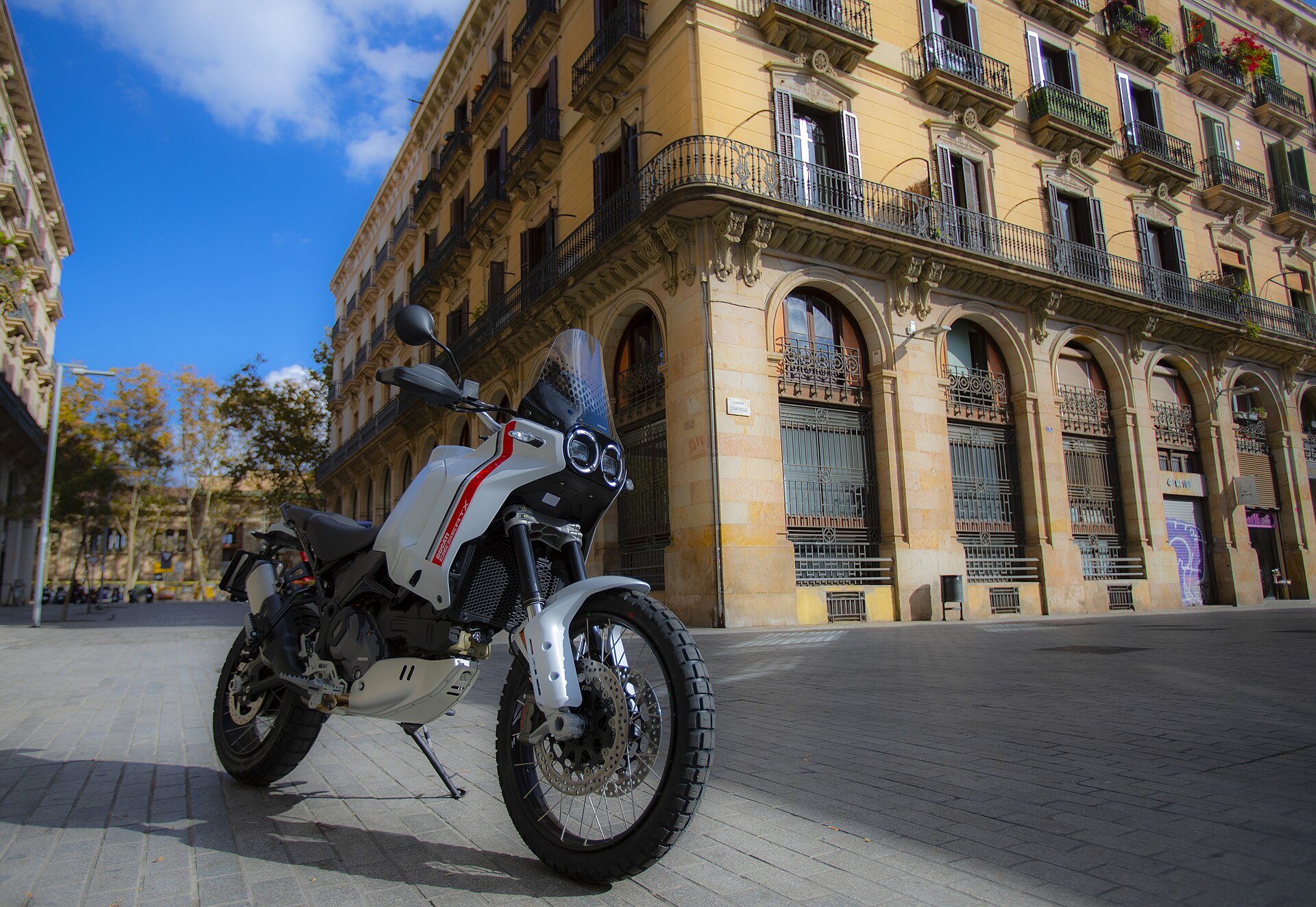
This is exactly where the badge-first buyers get caught out. The BMW F900GS wears the GS name that built BMW’s entire adventure reputation, and it is a genuinely capable, well-sorted trail bike in isolation. But its own spec sheet gives the game away: a 14.5-litre tank, smaller than almost anything else claiming this kind of ambition. The Ducati DesertX is arguably the more talented off-road chassis of the two, with proper long-travel suspension and the correct wheel sizes, yet even Ducati concedes a short standard fuel range as one of its defining compromises. Genuine outback tools do not make you apologise for the tank.